
Introduction
In the tapestry of medieval Asian history, few figures are as pivotal yet enigmatic as Zhou Daguan (周达观, Zhōu Dáguān). This Chinese literatus, appointed as part of a Yuan imperial delegation, traveled to Angkor — the heart of Cambodia’s legendary Khmer Empire — at the close of the 13th century. The narrative he produced, The Customs of Cambodia (《真臘風土記》, Zhēnlà Fēngtǔ Jì), remains the single most vivid and influential eyewitness account of Angkor at its zenith. Through his meticulous and often poetic observations, generations of scholars and lay readers have glimpsed Angkorian civilization, its grandeur, and its everyday life. The story of Zhou Daguan and his book crosses not only cultures but also centuries and languages, entrenching itself as a foundation of both Cambodian and world history.
The Life and Mission of Zhou Daguan
Zhou Daguan was born around 1270 in Yongjia — present-day Wenzhou, in southeastern China. His life unfolded during the Yuan dynasty, which was founded by the Mongols and expanded Chinese influence across Asia. By the mid-1290s, the Yuan court, under Emperor Temür Khan (Emperor Chengzong), had grown increasingly interested in the affairs of Southeast Asia. In 1296, Zhou was selected — likely for his scholarly acumen rather than political rank — to join an official delegation to Chenla, the Chinese name for the Khmer Empire.
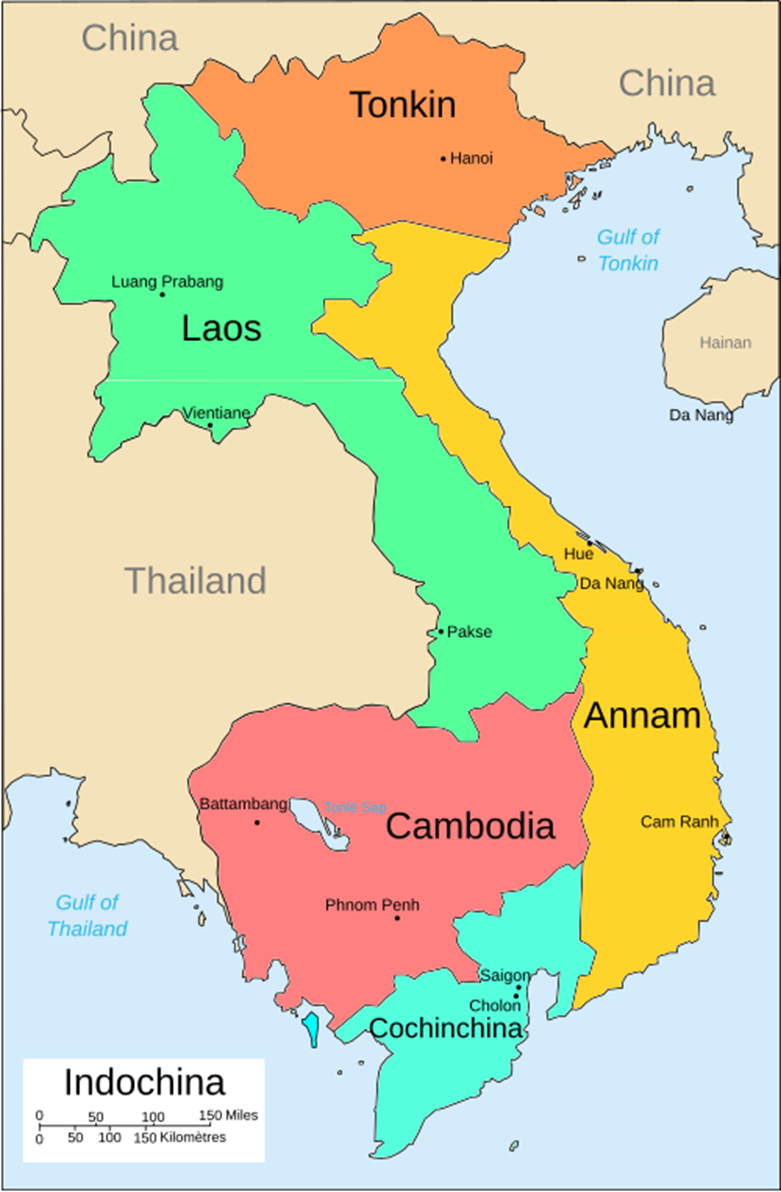
The group departed from Mingzhou (modern Ningbo), traveling by sea and river, passing through important coastal and riverine ports in China, Champa, and Cambodia. After arriving in Angkor in August 1296, Zhou resided near the royal court for about eleven months. He returned to China in July 1297; within fifteen years, he composed his slender but extraordinary record of this epochal journey.
Little concrete is known about Zhou’s later life, save for hints in historical records suggesting he lived well into the 14th century. Zhou sometimes signed his works as Thatched Courtyard Recluse (草庭逸民, cǎotíng yìmín), suggesting a scholarly withdrawal from worldly affairs.
The Customs of Cambodia
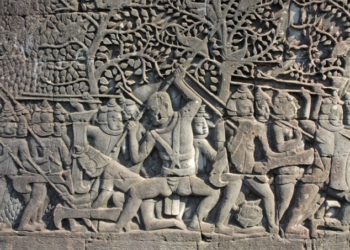
Zhou’s book, The Customs of Cambodia, is not only a travelogue but an anthropological and sociopolitical treasure chest. Despite its modest length the book is revered for its vivid depiction of Angkor. Zhou provided firsthand observations on architecture, governance, court life, religious customs, festivals, markets, costumes, agriculture, and even the intricacies of family life and gender roles. His description of Angkor Thom, complete with its famed city walls, five monumental gates, and moated grandeur, still captivates scholars today.
What sets Zhou’s account apart is its human touch. He marveled at the elegant, independent women of Angkor, the religious tolerance in daily life, and the intricate social hierarchy surrounding the king. He noticed the many Chinese men living in the city and offered subtle, sometimes critical, commentary on local customs. Occasionally, his narrative reveals personal discomfort or confusion — but also curiosity and genuine admiration for Khmer civilization.
Zhou’s narrative has fueled not only academic debates but also inspired artistic works — stage plays, historical fiction, and visual art.
The Afterlife of a Manuscript: Preservation and Transmission
The original manuscript of The Customs of Cambodia has not survived, and all modern editions derive from later anthologies, mainly a Ming dynasty collection titled Sea of Stories Old and New (《古今說海》, Gǔjīn shuōhǎi). The truncated state of the surviving text means scholars must read Zhou’s account with care, supplementing it with temple inscriptions and archaeological data.
Translations Across Languages and Cultures
One distinguishing feature of Zhou Daguan’s legacy is the global voyage of his book through translation:
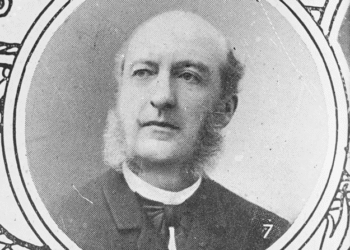
- French: First rendered in 1819 by Jean-Pierre Abel-Rémusat, revised by Paul Pelliot in 1902 and posthumously in 1951. Pelliot’s meticulous translation became the standard for many decades and formed the base for further linguistic journeys.
- English: First appeared in 1967 (J. Gilman d’Arcy Paul) and again in 2001 (Michael Smithies), both based on Pelliot’s French version. In 2007, Peter Harris published the first direct Chinese-to-English translation, marking a major advance in accuracy and readability. The Harris edition, A Record of Cambodia: the Land and Its People, remains the most widely cited English reference today.
- Khmer: A Khmer translation of questionable quality was produced by Ly Theam Teng in 1971, ensuring Zhou Daguan’s account would remain central to Cambodian historical consciousness.
- Thai: Notably translated by Chalerm Yongbunkiat in 1967, with reprints continuing to serve students and general readers in Thailand.
- Vietnamese: Published as Chu Đạt Quan, Chân Lạp phong thổ ký (Zhou Daguan, Chenla Land and People), giving Vietnamese people their own window into ancestral lands.
- German: A 2006 edition by Walter Aschmoneit.
- Spanish: Astrid Haardt’s rendition of Harris’ translation, Vida y costumbres de Camboya, appeared in 2013.
This polyglot afterlife speaks to the universality and enduring allure of Zhou’s observations. Each translation has reflected and shaped the intellectual and political climate of its time — sometimes emphasizing different aspects of Zhou’s narrative, and supplementing (or correcting) earlier translations.
Interpretative Significance and Scholarly Impact
No other single source offers such an intimate, detailed account of Angkorian civilization at its apex. All the more remarkable is that Zhou’s record comes from the outside; as a “foreign gaze,” it balances both cultural distance and immersive, firsthand detail. The text has not escaped controversy, however — scholars continue to debate its sometimes fragmentary nature, factual reliability, and the ethnocentric lens through which Zhou sometimes viewed Khmer customs.
Yet, for all these caveats, The Customs of Cambodia is indispensable. It stands as the only surviving, sustained narrative based on eyewitness observation rather than temple inscription. Through Zhou’s eyes, historians can reconstruct everything from royal ceremonies to fish-trapping techniques, from the king’s daily meals to the layout of the great Angkor Wat and Bayon complexes.
Legacy
The legacy of Zhou Daguan extends far beyond Chinese diplomacy. His concise yet rich account has played a central role in reimagining Angkor in the modern mind. It provides a blueprint for archaeologists, a source of pride for Cambodians, and a wellspring for artists and writers around the world.
Above all, Zhou’s The Customs of Cambodia is a unique bridge across time and space, connecting ancient Angkor to the global public. Through translation into so many tongues — French, English, Khmer, Thai, Vietnamese, German, Spanish, Japanese, and more — it continues to shape our understanding of one of Asia’s greatest civilizations.
In modern times, Zhou Daguan’s account stands as an enduring reminder of what can be achieved by open curiosity, careful observation, and the courageous crossing of cultural frontiers.