(Estimated reading time: 9 minutes – enough for a cup of coffee, or a glass of iced sugar cane juice if you want to stay historically accurate.)
Meet Hem Chieu, a Cambodian Buddhist monk who turned sermons into subtle political lessons and helped ignite Khmer nationalism under French rule. His arrest in 1942 sparked the famous Umbrella Protest in Phnom Penh and transformed monks into symbols of resistance. From Poulo Condor prison to Wat Ounalom, his journey says a lot about Cambodia’s road to independence.
Who Was Hem Chieu?
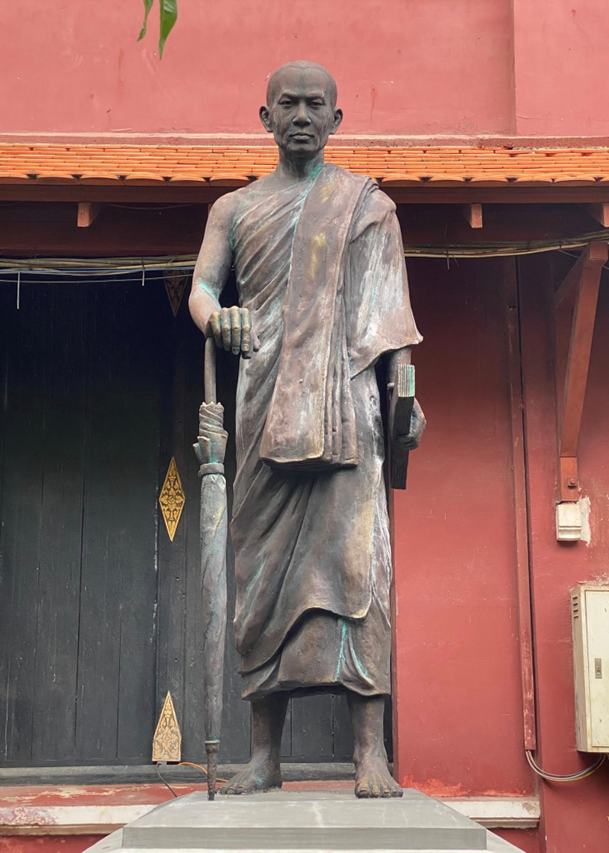
Hem Chieu (Khmer: ហែម ចៀវ) was born in 1898 and became a respected Buddhist monk, known as an achar, at a time when Cambodia was firmly under French colonial rule. By the 1930s and early 1940s he had gained a reputation as both a learned monk and a quietly determined nationalist, deeply concerned with the fate of the Khmer people and their culture.
Unlike the stereotype of the apolitical monk floating through life on incense and abstraction, Hem Chieu engaged actively with lay intellectuals such as Pach Chhoeun and the circle around the nationalist newspaper Nagara Vatta. This network linked monastic education, modern print culture, and anti-colonial sentiment in a way that alarmed French authorities far more than any number of “purely religious” sermons ever could.
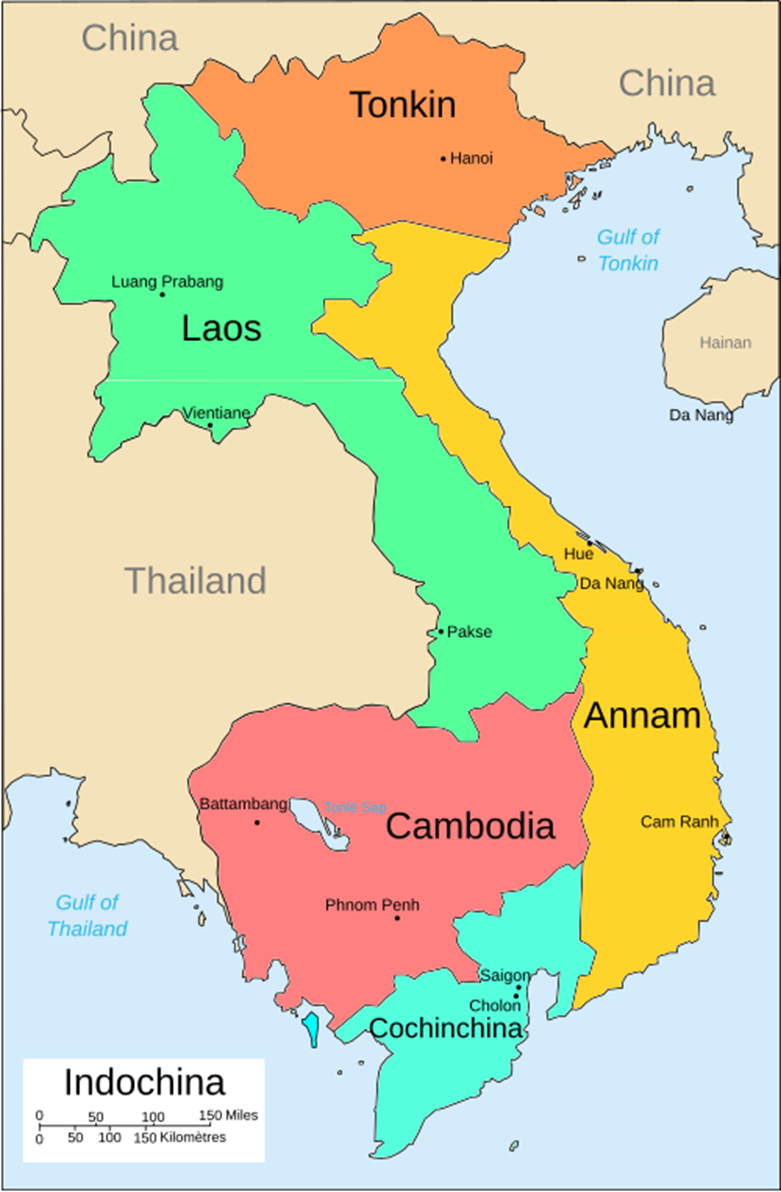
To understand why a monk like Hem Chieu became a problem, we need the broader context of the French protectorate of Cambodia. Created in the late nineteenth century, the protectorate limited Cambodian sovereignty while presenting itself as a civilizing, stabilizing force that also “protected” the monarchy.
By the time of the Second World War, colonial rule had produced a small, educated elite, a cautious royal court, and an increasingly impatient group of nationalists who resented not only French dominance but also territorial losses such as the western provinces ceded to Thailand. In this climate, monks teaching Khmer history, identity, and moral responsibility could easily be recast as political agitators, especially if their students started asking uncomfortable questions about sovereignty and justice.
Hem Chieu, the Nationalist Monk
Monastic classroom as political space
Hem Chieu’s activism was rooted in teaching and discourse rather than in armed rebellion. According to later accounts, French administrators suspected him of planning to take up arms, although historians note that he actually opposed violence and favored a moral and intellectual awakening instead.
His influence radiated through students and fellow monks who would later play roles in Cambodia’s political transformations. In a setting where most rural Cambodians encountered education only through pagodas, a charismatic monk with nationalist leanings was arguably more dangerous to colonial order than a stack of clandestine flyers.
Hem Chieu’s name is closely linked with the Nagara Vatta newspaper, one of the key nationalist publications in pre-independence Cambodia. Edited by figures such as Pach Chhoeun and associated with activists like Son Ngoc Thanh, Nagara Vatta blended cultural pride, political critique, and an insistence that Khmers take charge of their own destiny.
This newspaper helped circulate Hem Chieu’s ideas and made his circle visible enough for the French to keep a nervous eye on them. In colonial bureaucratic logic, a monk connected to a nationalist newspaper was not just a preacher: he was a potential ringleader.
On July 17, 1942, French authorities arrested Hem Chieu on suspicion of involvement in an anti-French plot. The arrest was carried out with particular brutality from a Buddhist perspective: he was rapidly disrobed so that he could be treated as a civilian, not protected by the prestige of the robe.
Historian Henri Locard notes that colonial administrators believed he and his group were planning to take up arms, although this accusation appears to have been unfounded. What is clear is that his arrest outraged both lay intellectuals and a wide swath of the sangha, who saw in this act not only political repression but also a profound insult to Buddhism.
A march of monks and umbrellas
Three days after Hem Chieu’s arrest, on July 20, 1942, more than a thousand supporters marched through Phnom Penh to demand his release. About half of them were monks, the others laypeople, all walking in the sun toward the office of the French Resident Supérieur, many carrying umbrellas to shield themselves from the heat.
This demonstration, led in large part by the writer and activist Pach Chhoeun, became known as the Umbrella Protest or Umbrella Uprising. The image of rows of monks with umbrellas converging peacefully on colonial offices has since become one of the most iconic moments in Cambodian anti-colonial history, where religious calm met political audacity.
French repression and consequences
The protest was peaceful, but the French response was not. As soon as Pach Chhoeun presented the petition demanding Hem Chieu’s release, he was arrested; the authorities then cracked down even more harshly on nationalist activities, shutting down Nagara Vatta and tightening control over religious institutions.
The Umbrella Protest demonstrated how quickly Buddhist monks could become visible actors in political life, and it frightened the colonial administration into measures that, paradoxically, made them look weak and defensive. Decades later, Norodom Sihanouk would reference this protest when commemorating the anti-French struggles that preceded independence.
Tried before a French military tribunal, Hem Chieu and Pach Chhoeun were accused of making anti-French statements, regretting territorial losses to Thailand, and plotting an armed rebellion. Initially sentenced to death, they saw their punishment commuted to life imprisonment in the notorious Poulo Condor (Côn Đảo) penal colony in what is now Vietnam.
Poulo Condor was a harsh island prison where many political detainees from across Indochina were held under brutal conditions. Hem Chieu died there in 1943, reportedly from dysentery, becoming one of the early martyrs of Cambodian nationalism whose sacrifice preceded the more widely known struggles of the 1950s.
From colonial prison to Wat Ounalom
In the early 1970s the Cambodian government under Lon Nol sent a mission to retrieve the remains of Cambodian prisoners who had died in Poulo Condor, including those of Hem Chieu. His remains were brought back and placed at Wat Ounalom in Phnom Penh, a key monastic center that also became a symbolic site of modern Khmer history and nationalism.
This reinterment turned Hem Chieu from a name in reports into a tangible presence in the capital’s sacred geography. For visitors today, knowing his story adds a layer of meaning when walking through Wat Ounalom’s compounds, where religious devotion and national memory intersect so closely.
Streets, symbols and later politics
In 1979 the new government in Phnom Penh renamed Avenue General de Gaulle after Achar Hem Chieu, placing his name literally on the city map. This symbolic reversal, replacing a French hero with a Cambodian monk who died in a French prison, says a lot about how Cambodian memory reworked the colonial past after independence and war.
Hem Chieu’s influence also worked indirectly through students and later activists such as Khieu Chum, who participated in later nationalist movements and even the 1970 coup that overthrew the monarchy. In that sense, the “nationalist monk” appears both as an historical figure and as an archetype that reappears whenever monks step into public politics in Cambodia.
Why Hem Chieu Still Matters Today
For contemporary Cambodians, Hem Chieu represents an early fusion of Buddhist ethics and political responsibility. His refusal to separate spiritual life from concern for the nation challenges the convenient idea that monks should stay quietly in the pagoda and leave “serious matters” to politicians and generals.
For visitors and students, his story offers a useful lens to read Phnom Penh and its monuments. When you see monks crossing busy streets near Wat Ounalom or when you hear about religious figures speaking up on social issues, remembering Hem Chieu helps place these scenes in a longer history of engagement and sacrifice.
Practical Tips for Exploring Hem Chieu’s World
If you are walking in Phnom Penh, keep an eye out for roads and landmarks named after Hem Chieu, especially the avenue renamed in his honor after 1979. Street names in Cambodia are a bit like whispered footnotes; once you know who is behind the name, every tuk-tuk ride becomes an impromptu history lesson.
Combine a visit to Wat Ounalom with a short detour to look for these toponyms, and imagine the 1942 Umbrella Protest making its way through the city toward colonial offices that have long since changed occupants. It is one of the rare cases where modern traffic jams and historical marches share roughly the same urban stage.
Students and teachers of Cambodian history can use Hem Chieu’s life as a compact case study of colonialism, religion, and nationalism interwoven together. His biography touches on key themes: the role of monks in society, the impact of print media, the contradictions of “protectorate” rule, and the persistence of memory through monuments and rituals.
For those teaching outside Cambodia, the Umbrella Protest offers an accessible example of nonviolent resistance, one that contrasts nicely with more famous cases from India or Vietnam while remaining very much rooted in specifically Khmer realities. And if your students complain that history is boring, you can always bring up the fact that in this story, even umbrellas have political agency.
Hem Chieu’s life may have ended in a distant colonial prison, but his influence returned to Phnom Penh in the form of protests, street names, and a place of honor at Wat Ounalom. As a Cambodian nationalist monk, he stands at the crossroads of faith and politics, reminding us that in Cambodia’s journey toward independence, some of the most powerful voices wore saffron robes and carried not weapons, but umbrellas and ideas.
Pascal Médeville is a writer and digital publisher based in Cambodia, where he runs the multilingual project “Wonders of Cambodia”. He focuses on Cambodian history, culture, and Buddhist heritage, with a special interest in the way everyday places hide extraordinary stories. He regularly writes about temples, food, and the people who connect them across time.