Wonders of Cambodia
  • Home
  • Culture
  • Cuisine
  • Tourism
  • Business
  • Life in Cambodia
  • 中文
  • ខ្មែរ
  • Français
  • Tiếng Việt
  • e-Books
No Result
View All Result
  • Home
  • Culture
  • Cuisine
  • Tourism
  • Business
  • Life in Cambodia
  • 中文
  • ខ្មែរ
  • Français
  • Tiếng Việt
  • e-Books
No Result
View All Result
Wonders of Cambodia
No Result
View All Result
Home Books

Books: A Record of Cambodia: The Land and Its People

Pascal Medeville by Pascal Medeville
March 3, 2026
in Books
Reading Time: 4 mins read
0

A Record of Cambodia: The Land and Its People
by Zhou Daguan, translated by Peter Harris
ISBN: 9789749511244
Publisher: Silkworm Books / Trasvin Publications LP
Publication Date: October 18, 2007

Peter Harris’s translation of Zhou Daguan’s book, A Record of Cambodia: The Land and Its People, (Chinese: 《真腊风土记/真臘風土記》) is a landmark modern translation of Zhou Daguan’s legendary fourteenth-century travel account. Zhou Daguan was a Yuan dynasty envoy who visited Angkor—the heart of the Khmer Empire—in 1296–97, during one of its most vibrant periods. His eyewitness account remains the only comprehensive text from an outsider about daily life and culture at Angkor in its prime. Harris’s edition, first published by Silkworm Books in 2007, is celebrated for its meticulous, direct translation from Chinese and its wealth of contextual analysis.

Harris’s Approach and Contribution

Peter Harris’s translation stands out because it relies directly on the original Chinese text, not on previous French or English renderings, which sometimes lost nuance or accuracy. Harris brings expert linguistic and historical insight, presenting not only Zhou’s vivid observations, but also a 30-page introduction that establishes the historical setting, details Zhou’s diplomatic background, and compares his work to contemporaneous travelogues by Marco Polo and Ibn Battuta. This introduction is not merely scholarly apparatus—it helps readers grasp the uniqueness of Zhou’s Cambodian encounter and the structure of the Khmer Empire.

Harris also provides copious end-notes and appendices, drawing out details and correcting prior translation errors or misinterpretations. He situates Zhou’s account alongside Chinese and Southeast Asian sources, illuminating key points such as royal ceremonies, the Khmer social hierarchy, and trade networks. Harris’s expertise in Asian history and languages (with academic tenures in New Zealand and China) ensures both fidelity to the original and accessibility for modern readers.

Content and Structure of the Book

Zhou Daguan’s record is divided into 40 concise chapters, each themed around different elements of Khmer society. Some chapters amount to paragraphs, while others paint a rich picture of Angkor: clothing customs, slavery practices, architecture, sexuality, religious rituals, agriculture, commerce, the court, and food. Though Zhou’s voice is sometimes marked by biases typical of his era, Harris’s translation and commentary contextualize these perspectives, offering a critical reading that neither romanticizes nor distorts the original.

Harris’s notes also address the challenges presented by centuries of textual transmission. Some original material was lost, or adapted, and Harris draws on annotated editions (notably by Xia Nai, 1980) and the latest scholarship to resolve discrepancies about measurements, disease names, and even the identities of people mentioned in Zhou’s text.

Zhou Daguan’s Unique Perspective

Zhou’s eyewitness report is profoundly important: it provides nearly all we know about Angkor’s everyday life, royal rituals, city planning, and the attitudes of its elite and commoners at a time just before its decline. His account reveals both the splendors and social tensions of Angkor—describing monumental architecture, interactions between Khmer and foreign communities, and details of material culture. He documents not only the king’s court and buildings, but also women’s bodies (with a fascination that some scholars debate as “othering”), agricultural routines, slave markets, cultural festivals, and the complex bureaucracy underpinning Khmer civilization.

Scholarly Reception and Legacy

Harris’s translation is lauded by leading scholars, including David Chandler, who writes that it is a “masterly version of Zhou’s timeless and fascinating account,” essential both for specialists and visitors. The translation is now the preferred English-language edition for research in Khmer studies, Cambodian history, and comparative Southeast Asian studies. Tour guides and historians in Cambodia rely heavily on Zhou Daguan, as his account forms the backbone of narratives about Angkor and its people.

However, scholars continue to debate aspects of Zhou’s reliability. Did he really witness everything he described? Harris himself interrogates Zhou’s lack of descriptive enthusiasm for aspects of Angkor (such as the Bayon’s monumental towers), and points out where Zhou’s viewpoint as an imperial diplomat shaped his perceptions. By contrasting Zhou’s work with other travelers, Harris reveals both the merits and the limitations of his singular voice.

Modern Significance

Harris’s book serves as more than a translation. It is both a critical resource and a historical bridge, connecting modern readers to the vanished world of classical Angkor. It helps us appreciate the depth of cultural cross-currents—how a Chinese visitor could record details that Cambodians later identified as foundational to their heritage. This edition marks a milestone in both translation studies and Khmer historiography, making Zhou Daguan’s testimony newly available—and newly vital—for a global audience.

In sum, Peter Harris’s translation and scholarly apparatus provide the definitive English window into Zhou Daguan’s invaluable account, illuminating Angkor’s grandeur and the complexities of historical narrative for a new generation of readers.


Buy this book on Bookshop.

Don’t miss our upcoming articles!

We don’t spam!

Check your INBOX or SPAM folder to confirm your subscription.

Tags: Cambodian HistoryHistory of AngkorKhmer CivilizationSoutheast Asian studiestravel account in ancient CambodiaZhou Daguan
ShareTweet
Previous Post

Picture of the day: Palanquin Hook and Ring

Next Post

Sofitel Phnom Penh Phokeethra: French Elegance on the Mekong

Pascal Medeville

Pascal Medeville

Author of the blog Wonders of Cambodia, I share my passion for Cambodia through stories, cultural insights, and personal reflections on the country. I'm also the founder of Simili Consulting, where we provide high-quality, professional translation services to international clients.

Related Posts

Sideshow by William Shawcross
Books

Book: Sideshow: Kissinger, Nixon and the Destruction of Cambodia

July 7, 2026
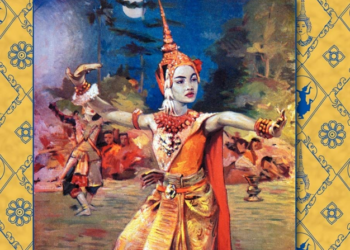
Book: Georges Groslier’s Cambodian Dancers: Ancient and Modern
Books

Book: Georges Groslier’s Cambodian Dancers: Ancient and Modern

June 24, 2026
Reference: Stolen Gods of Angkor – Cambodia’s Lost Statues
Books

Reference: Stolen Gods of Angkor – Cambodia’s Lost Statues

June 21, 2026
Cover of Pauline Dy Phon’s trilingual Dictionary of Plants Used in Cambodia in Khmer, French, and English
Books

Reference: Bringing Pauline Dy Phon’s “Plants Used in Cambodia” Online – A New Life for a Botanical Classic

May 26, 2026
Cozy corner of the Angkor Database Documentation Center with floor‑to‑ceiling wooden bookshelves, a striped chair, and a reading desk filled with books and maps.
Books

Video: Angkor Database Documentation Center

May 21, 2026
Books: A History of Cambodia by David Chandler: A Cornerstone Guide to the Khmer Past
Books

Books: A History of Cambodia by David Chandler: A Cornerstone Guide to the Khmer Past

March 17, 2026
Next Post
Sofitel Phnom Penh Phokeethra: French Elegance on the Mekong

Sofitel Phnom Penh Phokeethra: French Elegance on the Mekong

  • Trending
  • Comments
  • Latest
The French Protectorate of Cambodia (1863–1953): An Overview

The French Protectorate of Cambodia (1863–1953): An Overview

July 13, 2025
The Franco-Siamese Treaty of 23 March 1907: Borders, Politics, and the Return of Angkor

The Franco-Siamese Treaty of 23 March 1907: Borders, Politics, and the Return of Angkor

February 11, 2026
Cambodian-Vietnamese War (1978-1989)

Cambodian-Vietnamese War (1978-1989)

July 13, 2025
The Legend of Preah Ko Preah Keo: Guardians of Cambodia’s Lost Treasures

The Legend of Preah Ko Preah Keo: Guardians of Cambodia’s Lost Treasures

February 23, 2026
Kampot Province

Takeo Province: A Cradle of Cambodian History and Culture

3
Kratié Town on the Mekong: Colonial Echoes, River Life, and Irrawaddy Dolphins

Kratié Town on the Mekong: Colonial Echoes, River Life, and Irrawaddy Dolphins

3
Banteay Meanchey Province: A Gateway to Cambodia’s Rich Heritage

Banteay Meanchey Province: A Gateway to Cambodia’s Rich Heritage

2
Stung Treng Province: The Gateway to Cambodia’s Northern Wilderness

Stung Treng Province: The Gateway to Cambodia’s Northern Wilderness

2
Sandstone lintel at Prasat Neang Khmao in Takeo, Cambodia, showing a central mythic face flanked by naga bodies, floral scrolls, and tiny seated figures above, carved in 10th century Khmer Koh Ker style on a brick temple façade.

Wonders of Cambodia – Pictures of the Week: Flavors, Heritage and Everyday Beauty (July 13th~July 19th, 2026)

July 20, 2026
出土于吴哥遗址的唐代开元通宝铜钱样本,展示正反两面。钱币为圆形方孔铜钱,表面磨损和锈蚀较为明显,部分铭文仍可辨认,为研究唐代中国与吴哥王朝之间的贸易和文化交流提供了重要考古证据。

吴哥出土的中国古钱币,揭开了一个鲜为人知的历史真相

July 20, 2026
Traditional roasted chicken served at Phnom Chisor, Cambodia, prepared from naturally fed free-range chickens with herbs and local seasonings.

Picture of the day: Phnom Chisor Roasted Chicken: Cambodia’s Natural Flavor

July 20, 2026
Two halves of a ripe red-fleshed dragon fruit on a white plate, showing vibrant magenta flesh dotted with tiny black seeds, with whole dragon fruits in the background.

Dragon Fruit in Cambodia: A Complete Guide to the Kingdom’s Vibrant Superfruit

July 19, 2026

Recent News

Sandstone lintel at Prasat Neang Khmao in Takeo, Cambodia, showing a central mythic face flanked by naga bodies, floral scrolls, and tiny seated figures above, carved in 10th century Khmer Koh Ker style on a brick temple façade.

Wonders of Cambodia – Pictures of the Week: Flavors, Heritage and Everyday Beauty (July 13th~July 19th, 2026)

July 20, 2026
出土于吴哥遗址的唐代开元通宝铜钱样本,展示正反两面。钱币为圆形方孔铜钱,表面磨损和锈蚀较为明显,部分铭文仍可辨认,为研究唐代中国与吴哥王朝之间的贸易和文化交流提供了重要考古证据。

吴哥出土的中国古钱币,揭开了一个鲜为人知的历史真相

July 20, 2026
Traditional roasted chicken served at Phnom Chisor, Cambodia, prepared from naturally fed free-range chickens with herbs and local seasonings.

Picture of the day: Phnom Chisor Roasted Chicken: Cambodia’s Natural Flavor

July 20, 2026
Two halves of a ripe red-fleshed dragon fruit on a white plate, showing vibrant magenta flesh dotted with tiny black seeds, with whole dragon fruits in the background.

Dragon Fruit in Cambodia: A Complete Guide to the Kingdom’s Vibrant Superfruit

July 19, 2026
Wonders of Cambodia

Exploring Culture, Nature, and Spirit in the Land of Wonder.

Follow Us

Browse by Category

  • Architecture
  • Architecture
  • Art
  • Books
  • Business
  • Business
  • Cinema
  • Costume
  • Costume
  • Cuisine
  • Culture
  • Defense
  • Du lịch
  • e-Books
  • Education
  • Expat life
  • Fauna
  • Festival
  • Flora
  • Food providers
  • Français
  • Geography
  • Handicraft
  • Health
  • Histoire
  • History
  • Hotels
  • Khmer Stories
  • Khmer stories
  • Knowledge
  • Language
  • Last posts
  • Lịch sử
  • Life in Cambodia
  • Literature
  • Meet the neigbhors
  • Music
  • Pictures
  • Politics
  • Population
  • Press review
  • Professional services
  • Proverbs
  • Reference
  • Reference
  • Religion
  • Restaurants
  • Temples
  • Textile
  • Tiếng Việt
  • Tourism
  • Tourisme
  • Transport
  • Uncategorized
  • Vidéo
  • Video
  • Vie quotidienne
  • Who's who
  • ខ្មែរ
  • ទេសចរណ៍៖
  • បគ្គលល្បី
  • ប្រវត្តិសាស្ត្រោ
  • សៀវភៅ
  • 中文
  • 书籍
  • 历史
  • 商业
  • 旅游
  • 生活

Recent News

Sandstone lintel at Prasat Neang Khmao in Takeo, Cambodia, showing a central mythic face flanked by naga bodies, floral scrolls, and tiny seated figures above, carved in 10th century Khmer Koh Ker style on a brick temple façade.

Wonders of Cambodia – Pictures of the Week: Flavors, Heritage and Everyday Beauty (July 13th~July 19th, 2026)

July 20, 2026
出土于吴哥遗址的唐代开元通宝铜钱样本,展示正反两面。钱币为圆形方孔铜钱,表面磨损和锈蚀较为明显,部分铭文仍可辨认,为研究唐代中国与吴哥王朝之间的贸易和文化交流提供了重要考古证据。

吴哥出土的中国古钱币,揭开了一个鲜为人知的历史真相

July 20, 2026
  • About Us
  • Advertise
  • Privacy & Policy
  • Contact Us

© 2025 - Made with 💫 by TechFlow.

No Result
View All Result
  • Home
  • Culture
  • Cuisine
  • Tourism
  • Business
  • Life in Cambodia
  • 中文
  • ខ្មែរ
  • Français
  • Tiếng Việt
  • e-Books

© 2025 - Made with 💫 by TechFlow.