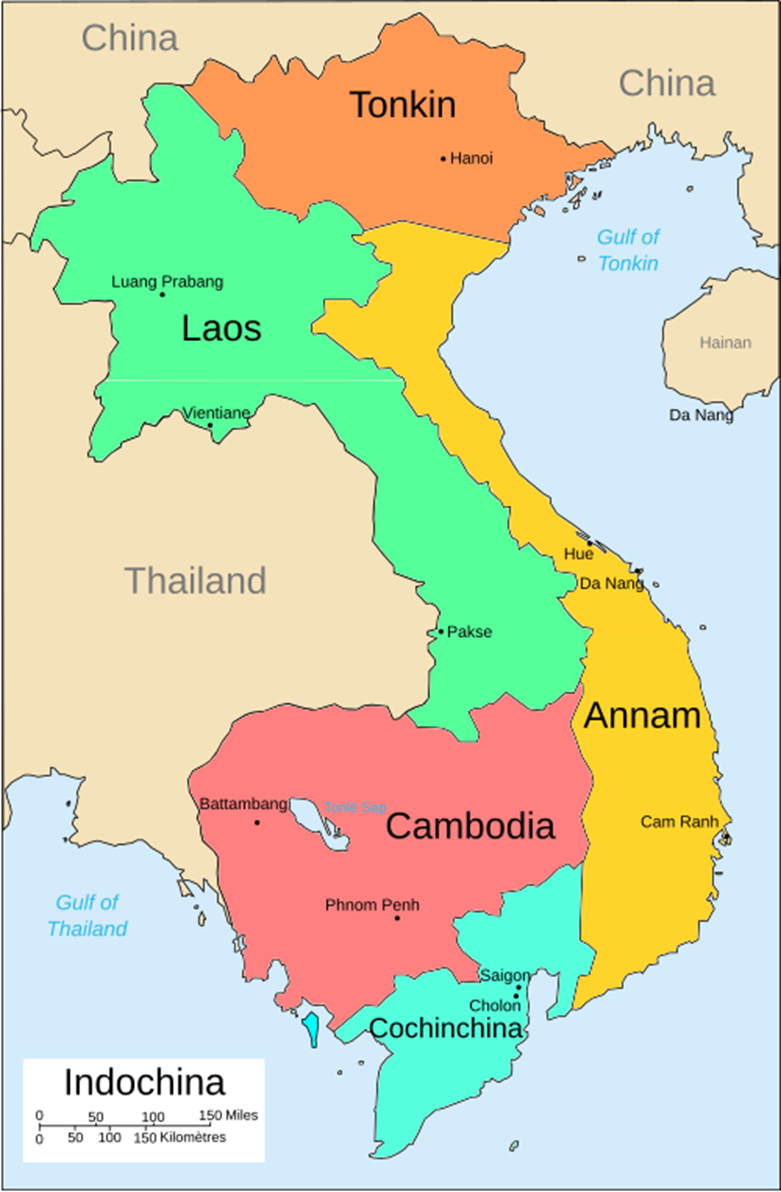
The Franco-Siamese Treaty of 23 March 1907 stands as a defining episode in Southeast Asian history, reshaping borders, colonial power, and national identity for generations. This pivotal agreement between France and Siam (now Thailand) not only altered the map of mainland Indochina but also had profound ramifications for Cambodia, Siam, and the intricate interplay of European colonial ambitions and regional sovereignties.

Historical Background
In the late 19th and early 20th centuries, Siam found itself wedged between competing colonial powers: the French in Indochina and the British in Burma and Malaya. Encroaching French influence, especially following the Franco-Siamese crisis of 1893, had already compelled Siam to cede substantial territory, gradually shrinking its domain and compelling it to navigate a precarious diplomatic path between colonial interests and survival as an independent kingdom.
Previous treaties—particularly those of 1893 and 1904—had forced Siam to surrender control over large Lao populations and set a precedent for foreign intervention in domestic affairs. This series of events culminated, after years of negotiation and pressure, in the 1907 agreement.
The Treaty: Content and Context
Signed in Bangkok by French minister Victor Collin de Plancy and Siamese Foreign Minister Prince Devawongse, the March 23, 1907 treaty formalized a profound territorial exchange:
- Siam ceded Inner Cambodia: The provinces of Battambang, Siem Reap (including the historic Angkor complex), and Sisophon were returned to France’s colonial protectorate of Cambodia after over a century of Siamese administration.
- France ceded other territories: In exchange, France returned the district of Trat and the Dan Sai region to Siam, modest territorial gains which were far less strategically or culturally significant than the lands lost.
- Border Demarcation: The treaty stipulated detailed recommendations for the final demarcation of the boundary between Siam and French Indochina, involving both practical and symbolic measures such as the preservation of certain transit routes and recognition of rivers and watersheds as natural borders.
The Return of Angkor and Cultural Identity
Perhaps the most celebrated aspect of the 1907 treaty, from a Cambodian perspective, was the return of Angkor and its surrounding territory. For Cambodia, regaining Angkor—heart of the ancient Khmer empire and home to its greatest architectural and spiritual monuments—was not only a geographic victory, but also a restoration of cultural identity and historical pride. These territories included highly fertile rice-growing plains and fisheries, which were vital for economic development and for reuniting Khmer populations split by previous colonial partitions.
Following the transfer, the French colonial administration assigned Jean Commaille of the École Française d’Extrême-Orient as the first Conservator of Angkor, marking the beginning of systematic archaeological conservation and research in Cambodia.
Territorial, Legal, and Social Implications
Redefining Borders
The 1907 treaty fixed the modern borders between Thailand (Siam) and Cambodia, although its implementation would ultimately generate new disputes, most notably over the temple of Preah Vihear—an issue that would resurface in the 20th and 21st centuries.
Legal Sovereignty and Extraterritoriality
A pivotal but sometimes overlooked clause of the treaty addressed foreign legal privileges in Siam. For the first time, France agreed to phase out extraterritorial rights—meaning its Asian subjects in Siam (such as Vietnamese, Khmer, and Laotian minorities) would fall under Siamese, not French, jurisdiction once new local legal codes were in place. This step was crucial for Siam’s campaign to modernize its legal system and diminish colonial-era humiliations, even though European extraterritoriality continued for some time.
Social Transformations
The demographic map of the region shifted as well. The return of the Khmer provinces to Cambodia allowed for governmental, economic, and cultural reintegration, affecting the lives of hundreds of thousands. For Siam, the loss of these territories meant relinquishing direct rule over large Cambodian and Lao populations, reinforcing the ethnic composition of the modern Thai state.
Long-Term Impact
The 1907 Franco-Siamese treaty marked the final major territorial agreement between Siam and France and is often seen as the end of decades of colonial encroachment on Siamese sovereignty. While the arrangement secured a more stable international position for the Kingdom of Siam—preserving its independence and allowing for domestic modernization—it effectively completed the partition of the former Khmer Empire and etched the contours of the modern Cambodian-Thai border.
Yet, ambiguities and controversies endured. Discrepancies between treaty texts and later border surveys, especially around sacred sites like Preah Vihear, sowed seeds for future disputes. Furthermore, Cambodian nationalists and historians would remember the 1907 treaty as a moment of both loss and cultural resurrection, symbolizing the persistent complexity of Southeast Asian history.
Conclusion
The Franco-Siamese Treaty of 23 March 1907 is a testament to the intersection of colonial power, regional diplomacy, and cultural identity. Its legacy continues to shape the political landscapes, historical narratives, and national consciousness of Cambodia and Thailand today, underscoring the enduring significance of treaties in the making and unmaking of nations.