When people picture World War II in Asia, they usually think of Nanjing, Manila, or Singapore, not Phnom Penh. Yet from 1941 to 1945, Imperial Japan gradually imposed control over French Cambodia, then briefly turned it into a puppet “independent” kingdom. This article explains how Japanese rule worked, what Cambodians experienced, and why these years mattered for the country’s later independence.

Cambodia’s World War II story is often told too quickly. France was there, Japan arrived, Sihanouk declared independence in 1945, then the French came back. All true, but rather like saying Angkor Wat is “a temple” and leaving it at that.
In reality, Imperial Japanese control over Cambodia developed in stages. For most of the war, Japanese troops coexisted with the Vichy French colonial administration. Then, in March 1945, Japan pushed the French aside and sponsored a short-lived Kingdom of Kampuchea under King Norodom Sihanouk.
This article is for readers who want a clear, practical explanation of what happened in Cambodia during World War II and why it still matters. Along the way, it also looks at the Umbrella Revolution, the repression of Cambodian activists sent to Poulo Condore, and the tragic death under Japanese torture of George Groslier, one of the great early guardians of Khmer art and heritage.
Cambodia before Japanese control
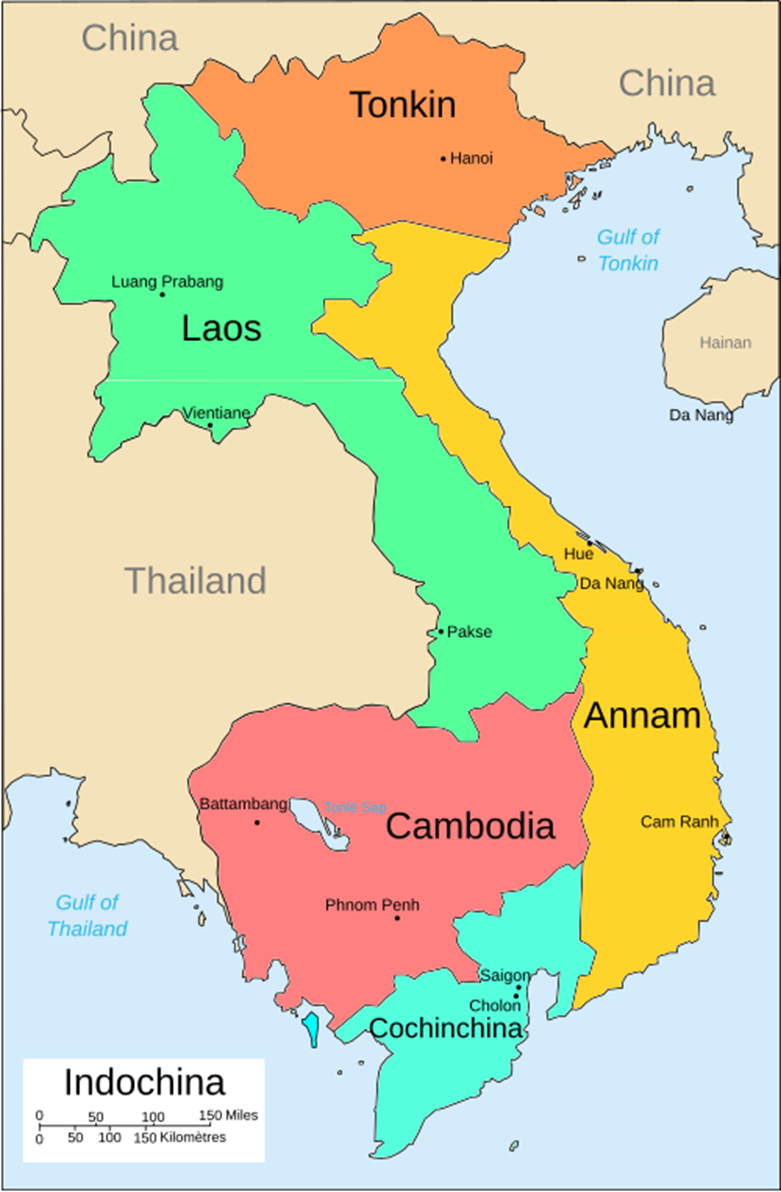
A French protectorate inside Indochina
Before the Japanese entered Cambodia, the kingdom was part of French Indochina and remained under French colonial supervision, even if the monarchy still stood as a visible symbol of continuity. Major decisions on defense, foreign affairs, and much of the administration were controlled by the French colonial system centered elsewhere in Indochina.
That structure made Cambodia vulnerable when France collapsed in 1940 and the Vichy regime took over its colonial possessions. Suddenly, the protector looked much less protective, which is never a reassuring development for a small kingdom placed between stronger neighbors.
The Franco-Thai War and territorial loss
The first wartime shock came with the Franco-Thai War of 1940 to 1941, when Thailand attacked French Indochina and sought to recover territories in western Cambodia and Laos. Japan acted as mediator, but this mediation favored Thailand and forced France to cede territories including Battambang and Siem Reap.
For Cambodians, this was a warning that French authority had weakened badly. It also showed that Japan was not a distant power passing through Southeast Asia, but a decisive actor capable of redrawing borders and humiliating European colonial rulers.
The Japanese arrival in Cambodia
A garrison without immediate full takeover
In August 1941, the Imperial Japanese Army entered Cambodia and established a military presence that reportedly numbered about 8,000 troops. Yet this was not, at first, a full administrative takeover. Japan allowed the Vichy French authorities to continue governing day-to-day life while Japanese forces secured strategic access across southern Indochina.

This arrangement created a kind of dual control. The French still ran the bureaucracy, taxes, police, and schools, while the Japanese held the decisive military advantage in the background. It was an awkward setup, rather like having two drivers hold the same steering wheel while pretending the road is perfectly straight.
Daily life under wartime dual rule
Compared with other parts of Asia under Japanese occupation, Cambodia experienced fewer large-scale battles and less direct violence for much of the war. That relative calm can be misleading, however, because Japanese military needs still affected economic life through requisitions, shortages, and political pressure, while the French continued to govern with the usual colonial reflexes.
For many ordinary Cambodians, the war meant rising prices, tighter surveillance, and a growing sense that colonial authority was no longer solid. Japanese propaganda also promoted the language of Asian liberation through the so-called Greater East Asia Co-Prosperity Sphere, even though in practice Tokyo’s goals were strategic and imperial.
The Umbrella Revolution and colonial repression
Hem Chieu and the Phnom Penh protests
One of the clearest signs of rising Cambodian nationalism came in 1942 with the arrest of the monk Hem Chieu by the French authorities. His detention helped trigger a protest in Phnom Penh that became known as the Umbrella Revolution, or Umbrella Demonstration, because many monks and supporters marched carrying umbrellas.
The protest was not a military uprising, but it was politically important because it brought nationalist feeling into public view through monks, students, and lay supporters. In colonial Southeast Asia, when the pagoda entered politics, officials had reason to sweat politely through their uniforms.
During the Umbrella Demonstration, the Japanese military maintained a cautious presence in Phnom Penh. A small number of troops were deployed, but they did not intervene as monks and civilians marched through the city. This restrained stance reflected Japan’s delicate position – officially cooperating with the French administration while quietly observing the rise of anti-colonial sentiment.
Arrests and deportation to Poulo Condore
The French response was harsh. The demonstration was violently broken up, activists were arrested, and some leading figures linked to the agitation were sentenced or imprisoned. Hem Chieu himself was condemned by a military tribunal, with his death sentence later commuted to life imprisonment with hard labor.
He was deported to the notorious prison on Côn Sơn Island, better known in French colonial usage as Poulo Condore, where he died in October 1943. His imprisonment and death turned him into a nationalist martyr, and the use of distant penal colonies showed that wartime Cambodia was not simply quiet under Japanese shadow but also deeply repressive under French rule.
Conditions in Poulo Condore were notoriously harsh, with prisoners subjected to brutal discipline, inadequate food, and exhausting forced labor. Mortality rates were high, and many detainees did not survive their sentences. These realities are described in detail by Bun Chan Mol, author of Political Prison, whose accounts recount both the events surrounding the Umbrella Demonstration and the severe conditions endured by prisoners in the colonial penal system, offering a rare Cambodian perspective on repression during this period.
The arrests made during the demonstration mattered beyond the fate of one monk. They revealed how fragile colonial order had become and how quickly France resorted to prison islands once monks and activists challenged its authority in public. The Japanese watched all this closely, because every French crackdown made Tokyo’s anti-colonial rhetoric sound a little more attractive, even if it came wrapped in its own imperial ambitions.
Japanese control tightens in 1945
By early 1945, Japan feared that the French in Indochina might turn decisively toward the Allies as the war moved against Tokyo. In March 1945, the Japanese launched a coup across French Indochina, disarmed French forces, and removed the colonial administration from effective power.
In Cambodia, this was the moment when indirect influence became open rule. The French were pushed aside, and Japan moved quickly to replace colonial dependence with a more useful fiction, namely independence under Japanese supervision.
On 13 March 1945, King Norodom Sihanouk proclaimed an independent Kingdom of Kampuchea under Japanese pressure and sponsorship. The move gave Cambodia a formal break from French protectorate status, but the new state remained heavily dependent on Japanese military power and wartime circumstances.
The symbolism was still important. The name Kampuchea gained official prominence, Cambodian sovereignty was publicly declared, and the French aura of permanence was broken. Even puppet states can leave behind real political memories, which is one of history’s less tidy habits.

Son Ngoc Thanh and nationalist opportunity
Japan also facilitated the return of nationalist figure Son Ngoc Thanh, who became foreign minister and later prime minister in the closing phase of the war. For Cambodian nationalists, 1945 created a fleeting opening to imagine self-rule outside the French framework, even if Japan remained the real power in the room.
This moment did not last long, but it mattered. It offered a precedent for later independence claims and showed that colonial rule could collapse faster than many people had assumed.
George Groslier and war’s cultural tragedy
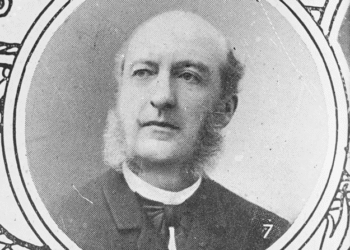
The wartime story in Cambodia was not only political. It also struck at people who had devoted their lives to studying and preserving Khmer culture. Among the most tragic cases was George Groslier, the scholar, artist, and museum figure closely associated with the founding and development of the National Museum of Cambodia.
In June 1945, Groslier was arrested by the Japanese and died after torture on 16 June 1945. His death is a grim reminder that even in Cambodia, where wartime violence was often less extensive than elsewhere in Asia, the Japanese occupation could still be brutal and lethal.
Groslier’s fate matters not only because of the cruelty involved, but because of who he was in Cambodian cultural history. He was deeply involved in the preservation of Khmer art and museum culture, so his death links the wartime occupation to the broader story of Cambodia’s heritage, not just its politics.
For readers of Cambodian history, this is an important correction. The war did not merely interrupt administrations and rearrange flags. It also damaged lives tied to the safeguarding of the country’s artistic memory.
The end of Japanese rule and its legacy
Japan’s surrender and the French return
Japan surrendered in August 1945, ending its wartime empire across Asia and collapsing the political structure it had built in Cambodia. The Kingdom of Kampuchea quickly unraveled, Allied forces moved into the region, and the French returned to restore colonial authority in Phnom Penh by October 1945.
Son Ngoc Thanh was arrested by the French and removed from power, while Sihanouk remained on the throne within a restored, though weakened, French framework. On paper, the colonial order was back. In reality, it had lost much of its old mystique.
Historians often note that Cambodia experienced a less transformative Japanese occupation than countries such as Vietnam, Burma, or the Philippines. That is true if one looks only at battlefield destruction or the scale of mass violence. It is less true if one looks at political consequences, nationalist mobilization, prison repression, and the collapse of French prestige.
The Umbrella Revolution, the deportation and death of Hem Chieu in Poulo Condore, the brief Kingdom of Kampuchea, and the torture death of George Groslier all reveal a more complex wartime Cambodia than the standard summary suggests. Japanese control over Cambodia was uneven and often indirect, but it still helped destabilize colonial rule and reshape the political imagination of the country.
Imperial Japanese control over Cambodia in World War II was never just a footnote to French Indochina. It was a layered period of military presence, colonial repression, nationalist awakening, symbolic independence, and human tragedy, from the Umbrella Revolution to the death of George Groslier. Understanding these years gives a much richer picture of how Cambodia moved from protectorate status toward the harder, more uncertain politics of modern independence.
Pascal Médeville is a writer and digital publisher based in Cambodia. He writes about Cambodian history, culture, heritage, and everyday life, with a particular interest in the lesser-known episodes that connect local stories to wider Asian and global history.