(Reading time: 5 minutes — Just enough time to discover a forgotten genius.)
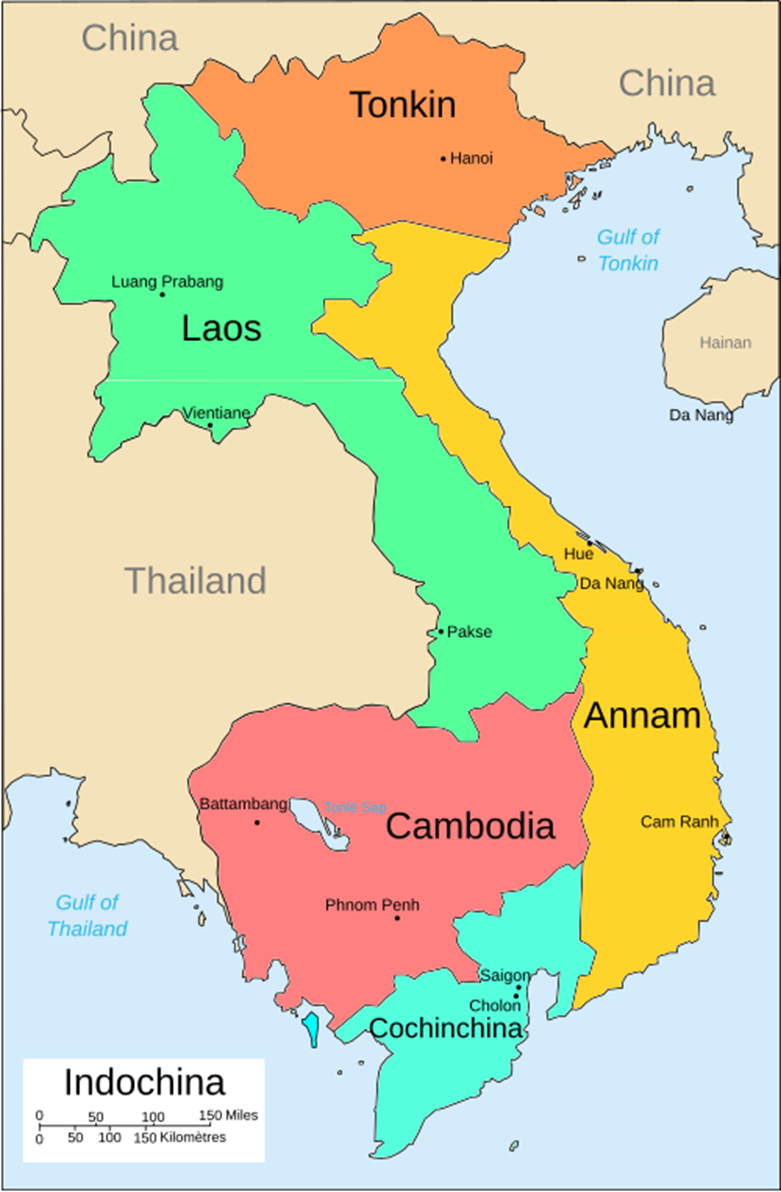
Behind the grandest murals decorating Cambodia’s Royal Palace stands a largely overlooked figure whose artistic vision helped define Khmer cultural identity during a critical period of the nation’s history. Oknha Tep Nimit Mak was born in 1856 into an artistic family in Phnom Penh. His life’s work would span painting, architecture, and cultural preservation at a time when Cambodia navigated the complexities of French colonial rule and struggled to maintain its traditional arts.

Early Life and Rise to Prominence
Tep Nimit Mak (Khmer: ទេពនិម្មិត ម៉ក់) began his formal training in traditional Cambodian arts at age 12 in Phnom Penh. By 1883, he had already earned the title of head craftsman of the Royal Palace, a position that recognized his exceptional skill and understanding of Khmer artistic traditions. His ascent continued when, in 1897 at age 41, King Norodom elevated him to the prestigious rank of Oknha, signifying his high status and influence within the court. This honorific title placed him among Cambodia’s elite, acknowledging not just his technical mastery but also his cultural significance.
To perfect his knowledge of mural painting, Tep Nimit Mak traveled to Bangkok, where he studied the techniques employed at the Grand Palace of Siam. This journey would prove instrumental in preparing him for his most ambitious undertaking: the monumental murals that would come to define his legacy.
The Reamker Murals: A Monumental Achievement
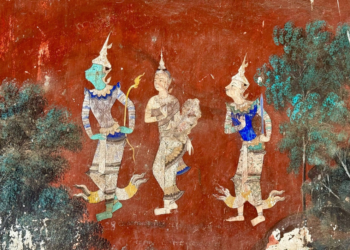
Between 1903 and 1904, Tep Nimit Mak directed what remains the largest wall painting project in Southeast Asia. Leading a team of 40 classically-trained Cambodian artists and students, including painter Vichitre Chea, he oversaw the creation of the Reamker murals that adorn the walls surrounding the Silver Pagoda at the Royal Palace. The Reamker, Cambodia’s version of the Indian epic Ramayana, unfolds across 642 meters of gallery walls, each panel standing 3 meters high.
These murals depict the complete narrative of the Reamker, starting from the eastern gallery on the south side and encircling the entire temple grounds. The paintings showcase divine kingship and connect the Cambodian monarchy to the grandeur of Angkor, serving both artistic and political purposes during a period of colonial subordination. Despite working within the French colonial context, Tep Nimit Mak maintained creative autonomy in these projects, ensuring the murals remained authentically Khmer in style and execution.
Collaboration with George Groslier
The relationship between Tep Nimit Mak and French scholar George Groslier represents a fascinating chapter in Cambodian cultural preservation. When Groslier arrived in Phnom Penh in 1917 with a mission to found a Cambodian art museum and organize a school of Cambodian arts, he immediately recognized the value of Cambodian expertise. In 1917, Groslier installed Tep Nimit Mak as an administrator of the newly established School of Cambodian Arts, later known as the Royal University of Fine Arts.
Groslier’s philosophy centered on the principle that only Cambodians should create and teach Cambodian art. He eulogized Tep Nimit Mak as an “old and faithful native collaborator,” a characterization that, while reflecting colonial-era language, acknowledged the artist’s deep commitment to preserving and promoting Khmer arts. Together, they worked to assemble Cambodian master artists to teach at the school, with Groslier maintaining a deliberate hands-off approach to ensure authentic transmission of traditional techniques.
Beyond his painting, Tep Nimit Mak served as the architect of the Silver Pagoda, also known as Wat Preah Keo Morakot. His architectural vision shaped one of Cambodia’s most sacred Buddhist temples, which houses numerous treasures including statues made of gold, silver, and diamonds. The temple’s design and the surrounding mural-covered walls create an integrated artistic environment that remains one of Phnom Penh’s most significant cultural landmarks.
His dual expertise in architecture and painting allowed him to conceive spaces holistically, ensuring that structure and decoration worked in harmony to communicate Buddhist teachings and Khmer cultural values.
The French colonial administration awarded Tep Nimit Mak the French Legion of Honor for his services, recognizing his contributions to both art and cultural preservation. However, his most enduring recognition comes from the works themselves, which have survived political upheaval, war, and the passage of more than a century to continue telling Cambodia’s stories.
The murals at the Silver Pagoda have undergone restoration efforts to preserve them for future generations, testament to their ongoing cultural significance. Art historians and scholars continue to study Tep Nimit Mak’s techniques and the collaborative workshop model he employed, which allowed multiple artists to contribute while maintaining stylistic coherence.
Tep Nimit Mak’s career unfolded during Cambodia’s transitional period under the French Protectorate, a time when traditional arts faced existential threats from Western influences and colonial policies. His work represented resistance through preservation, maintaining Khmer artistic traditions while adapting to new institutional frameworks like the School of Cambodian Arts. The fact that he could collaborate with French administrators while maintaining the authenticity of Cambodian artistic expression speaks to both his diplomatic skill and his unwavering commitment to cultural integrity.
His influence persists in the ongoing appreciation of Cambodian culture and artistry, with the Reamker murals serving as both tourist attraction and sacred space, educational resource and national treasure. For contemporary Cambodian artists, Tep Nimit Mak’s example demonstrates how traditional arts can survive periods of foreign domination through dedicated practice, institutional support, and the transmission of knowledge to new generations.
When you visit the Royal Palace complex in Phnom Penh today and stand before those magnificent murals depicting Preah Ream’s adventures, you’re experiencing the vision of a man who understood that art isn’t merely decoration – it’s memory made visible, identity rendered permanent, and heritage given form.
About the Author
Pascal Médeville is a writer and digital publisher based in Cambodia, specializing in Southeast Asian cultural heritage, Khmer history, and traditional arts. Through his website Wonders of Cambodia, he explores the artists, monuments, and cultural figures who shaped Cambodia’s rich artistic legacy, making lesser-known stories accessible to contemporary audiences.