(Estimated reading time: 7 minutes — just enough to travel from the Ganges to Angkor without leaving your chair.)
The concept of “Greater India” often sounds abstract, yet its imprint on Cambodia is strikingly concrete – from temple architecture to language, religion, and royal symbolism. This article explores how Indian civilization traveled across seas, took root in Khmer soil, and evolved into something uniquely Cambodian, leaving a legacy still visible in Angkor and beyond.

If you have ever walked through Angkor Wat at sunrise or admired the serene faces of Bayon, you have already encountered one of the most remarkable cultural exchanges in history: the spread of Indian civilization into Southeast Asia, often referred to as “Greater India.”
This article is for curious travelers, history enthusiasts, and anyone interested in Cambodia’s deep cultural roots. You will discover how Indian ideas – religious, political, linguistic, and artistic – crossed the Bay of Bengal and blended with local traditions to shape the Khmer Empire. More importantly, you will understand why Cambodia did not simply “copy” India, but transformed these influences into something distinct and enduring.
The term “Greater India” describes the cultural and intellectual influence of Indian civilization across Southeast Asia, particularly between the 1st and 13th centuries.
A Cultural Network, Not an Empire
Contrary to what the name might suggest, Greater India was not a political empire. There were no Indian armies conquering Cambodia. Instead, influence spread through:
- Trade routes across the Indian Ocean
- Brahmin priests and Buddhist monks
- Merchants and scholars
- Royal diplomacy and marriage alliances
Think of it less as colonization and more as cultural osmosis – with a strong maritime flavor.
Why Southeast Asia Was Receptive
Local rulers in Southeast Asia, including early Cambodian kingdoms, actively adopted Indian ideas because they offered:
- Prestigious models of kingship
- Sophisticated religious systems (Hinduism and Buddhism)
- Writing systems and administrative tools
- Monumental architectural styles
In short, Indian civilization provided a ready-made toolkit for building powerful states.
Early Indian Influence in Cambodia
The Indianization of Cambodia began early, around the first centuries CE, with the kingdom of Funan.
Funan: The First Indianized State
Funan (c. 1st-6th century) is often considered the earliest example of Indian influence in Cambodia.
Chinese records describe:
- Sanskrit being used in administration
- Hindu rituals at court
- Indian-style political organization
Archaeological finds, such as inscriptions and artifacts, confirm strong links with India.
Chenla: Transition and Consolidation
Following Funan, the kingdom of Chenla (Zhenla) (6th-8th century) continued this cultural integration.
During this period:
- Sanskrit inscriptions became more widespread
- Hindu deities like Shiva and Vishnu gained prominence
- Temple construction began to take recognizable form
This set the stage for the rise of the Khmer Empire.
The Khmer Empire: Indian Influence at Its Peak
From the 9th to the 15th century, the Khmer Empire transformed Indian cultural elements into something uniquely Cambodian.
One of the most important imports from India was the idea of divine kingship.
The Khmer adapted the Hindu concept of the god-king (Devaraja), where the king was seen as a manifestation of Shiva or Vishnu. This concept:
- Reinforced political authority
- Unified the kingdom under a sacred ideology
- Justified large-scale temple construction
Jayavarman II, often credited with founding the Khmer Empire, played a key role in institutionalizing this idea.
Angkor Wat: A Hindu Cosmological Masterpiece
Angkor Wat is perhaps the most famous symbol of Indian influence in Cambodia.
Built in the 12th century by King Suryavarman II, it reflects:
- Hindu cosmology (Mount Meru at the center of the universe)
- Sanskrit inscriptions
- Bas-reliefs depicting Indian epics like the Ramayana and Mahabharata
Yet, it is distinctly Khmer in scale, layout, and artistic style.
Angkor Thom and the Buddhist Shift
Later, under Jayavarman VII, the empire embraced Mahayana Buddhism.
This transition shows:
- The adaptability of Indian religious ideas
- A shift from Hindu gods to Buddhist compassion
- New architectural expressions, such as the Bayon temple
Again, Cambodia did not passively receive Indian culture – it reshaped it.
Language and Writing: Sanskrit Meets Khmer
One of the most enduring legacies of Greater India in Cambodia is linguistic.
Sanskrit as a Prestige Language
For centuries, Sanskrit functioned as the language of:
- Royal inscriptions
- Religious texts
- Elite communication
It conveyed authority and sacred legitimacy.
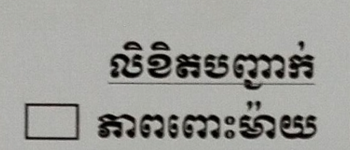
The Khmer writing system was derived from Indian scripts, particularly from South India.
Over time:
- It evolved into a distinct script
- It became the foundation of modern Khmer writing
- It enabled the recording of local history and administration
If you read Khmer today, you are indirectly reading a legacy of Greater India.
Religion: From Hinduism to Buddhism
Religion is perhaps the most visible aspect of Indian influence in Cambodia.
Early Cambodian religion was heavily influenced by Hinduism, especially:
- Shiva worship (linga cults)
- Vishnu devotion
- Temple rituals led by Brahmins
Many early temples were dedicated to these deities.
By the late Angkor period, Theravada Buddhism became dominant.
This shift:
- Reduced the emphasis on divine kingship
- Made religion more accessible to the general population
- Shaped Cambodian society up to the present day
Today, Cambodia is overwhelmingly Buddhist, but its temples still carry Hindu DNA.
Art and Architecture: A Khmer Reinvention
Indian artistic principles inspired Khmer art, but local creativity took them to another level.
Indian concepts influenced:
- Temple mountains representing Mount Meru
- Axial layouts and symbolic geometry
- Use of sacred orientation
However, Khmer architects expanded these ideas into massive complexes like Angkor.
Khmer art borrowed themes from Indian mythology but developed its own style:
- Softer, more fluid forms
- Distinctive facial expressions
- Unique interpretations of gods and apsaras
The result is unmistakably Cambodian.
Why Cambodia Matters in the Story of Greater India
Cambodia is not just a recipient of Indian culture – it is one of its most impressive reinterpretations.
Rather than copying India, the Khmer:
- Selected what suited them
- Adapted it to local beliefs and environment
- Created a new cultural synthesis
This is why Angkor feels both familiar (if you know India) and entirely unique.
The influence of Greater India is still visible in Cambodia today:
- Religious practices
- Language and script
- Cultural symbols and rituals
- National identity (Angkor Wat on the flag)
Few places illustrate this cultural exchange as clearly.
Practical Insight for Visitors
If you are visiting Cambodia, understanding Greater India will enrich your experience.
When exploring Angkor:
- Look for scenes from the Ramayana and Mahabharata
- Notice the central towers symbolizing Mount Meru
- Observe the blend of Hindu and Buddhist elements
A temple visit becomes far more meaningful when you recognize these layers of influence.
The story of Greater India in Cambodia is not about cultural domination, but about exchange, adaptation, and creativity. Indian ideas traveled far, but in Khmer hands, they became something new – powerful, elegant, and enduring. To understand Cambodia is to appreciate this transformation, where borrowed concepts evolved into one of the world’s greatest civilizations.
Pascal Médeville is a writer and digital publisher based in Cambodia. He focuses on history, culture, and heritage, with a particular interest in how global influences shape local identities. Through his work on Wonders of Cambodia, he explores the stories behind the country’s most iconic sites and traditions.