Wonders of Cambodia
  • Home
  • Culture
  • Cuisine
  • Tourism
  • Business
  • Life in Cambodia
  • 中文
  • ខ្មែរ
  • Français
  • Tiếng Việt
  • e-Books
No Result
View All Result
  • Home
  • Culture
  • Cuisine
  • Tourism
  • Business
  • Life in Cambodia
  • 中文
  • ខ្មែរ
  • Français
  • Tiếng Việt
  • e-Books
No Result
View All Result
Wonders of Cambodia
No Result
View All Result
Home Culture

Takeo Province: A Cradle of Cambodian History and Culture

Pascal Medeville by Pascal Medeville
July 13, 2025
in Culture, Geography, Tourism
Reading Time: 3 mins read
3

Takeo Province (ខេត្តតាកែវ), located in southern Cambodia, is one of the country’s most historically rich and culturally significant regions. Often referred to as the “Cradle of Cambodian Civilization,” Takeo is known for its ancient temples, archaeological treasures, and tranquil rural landscapes. Though it is less frequented by international tourists compared to provinces like Siem Reap or Phnom Penh, Takeo offers a unique window into Cambodia’s past and present.

Geography and Demographics
Takeo shares its southern border with Vietnam and is bordered by Kandal, Kampot, and Kampong Speu provinces. The province covers an area of approximately 3,563 square kilometers and is home to over 900,000 people. The landscape is primarily flat, with fertile rice fields, canals, and ponds shaped by the flow of the Mekong and Bassac rivers. The region’s agricultural potential has supported communities here for thousands of years.
The provincial capital, also named Takeo, serves as the administrative and commercial center. It is about 77 kilometers south of Phnom Penh and is connected by National Road 2, making it easily accessible by road.

Historical and Archaeological Significance
Takeo is often regarded as the birthplace of the ancient Khmer civilization. It was the center of the Funan and Chenla kingdoms, which predate the Angkor Empire. The province is dotted with important archaeological sites that provide insights into Cambodia’s early history.
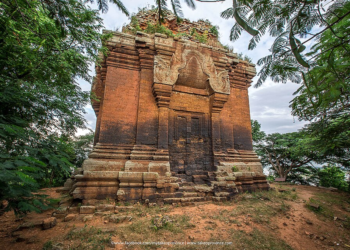
One of the most notable sites is Angkor Borei, believed to have been a major urban center of the Funan Kingdom around the 1st to 6th centuries AD. Excavations have uncovered ancient artifacts, pottery, and foundations of structures, suggesting a highly developed society. Nearby is the Phnom Da temple, a hilltop sanctuary dating back to the 6th century. The temple, constructed from laterite and sandstone, features bas-reliefs and inscriptions that reflect early Hindu influence in the region.
These sites are not just historical landmarks but are living symbols of Cambodia’s cultural continuity. They offer valuable insights into the architectural and spiritual development that would later flourish in Angkor.

Economy and Agriculture
Takeo is predominantly an agricultural province. Rice farming is the main occupation, thanks to the flat terrain and abundant water supply. In addition to rice, locals cultivate vegetables, sugar palm, and fruit. Fishing, especially in the southern wetlands and along rivers, also plays a vital role in the local economy.
In recent years, the government and development partners have invested in improving irrigation systems and rural infrastructure to support farmers and increase productivity. There is also a growing interest in promoting ecotourism and cultural tourism in the region, although it remains underdeveloped compared to more popular destinations.

Culture and Daily Life
Life in Takeo moves at a peaceful pace, with strong community ties and a deep respect for tradition. Buddhism is the dominant religion, and pagodas are central to spiritual and community life. Festivals like Khmer New Year, Pchum Ben, and the Water Festival are celebrated with enthusiasm, often involving temple visits, traditional games, and cultural performances.
Takeo is also known for its traditional silk weaving, especially in the district of Prek Phnov. The province’s artisans produce handwoven silk scarves, or krama, using techniques passed down through generations. These products are sold both locally and in urban markets, contributing to the preservation of Cambodia’s cultural heritage.

Tourism and Development Potential
Though not yet a major tourist hub, Takeo holds immense potential. Visitors interested in history, archaeology, and authentic Cambodian rural life will find Takeo a rewarding destination. The development of tourism infrastructure, combined with conservation efforts, could help transform Takeo into a significant cultural and ecological tourism site.

Takeo Province is a hidden gem in Cambodia’s cultural and historical landscape. With its ancient temples, agricultural heritage, and peaceful countryside, it offers a unique experience for those seeking to understand the roots of Khmer civilization. As development continues and awareness grows, Takeo is poised to gain the recognition it deserves—as both a historical treasure and a vibrant part of modern Cambodia.

Don’t miss our upcoming articles!

We don’t spam!

Check your INBOX or SPAM folder to confirm your subscription.

Tags: Angkor BoreiPhnom Daprovinces of CambodiaTakeoTakeo province
ShareTweet
Previous Post

Power cuts in Phnom Penh and Kandal province, June 5 to 8, 2025

Next Post

Cambodia River Prawn: A Culinary Treasure

Pascal Medeville

Pascal Medeville

Author of the blog Wonders of Cambodia, I share my passion for Cambodia through stories, cultural insights, and personal reflections on the country. I'm also the founder of Simili Consulting, where we provide high-quality, professional translation services to international clients.

Related Posts

Two halves of a ripe red-fleshed dragon fruit on a white plate, showing vibrant magenta flesh dotted with tiny black seeds, with whole dragon fruits in the background.
Cuisine

Dragon Fruit in Cambodia: A Complete Guide to the Kingdom’s Vibrant Superfruit

July 19, 2026
Rows of mature rubber trees in a plantation in Tbong Khmum Province, Cambodia, with a dirt road in the foreground and green vegetation surrounding the estate
History

French Introduction of Rubber Plantations to Cambodia: How Colonial Ambition Changed the Kingdom’s Landscape

July 19, 2026
Stone pyramid temple of Prasat Thom at Koh Ker, Cambodia, seen from the front with steep central stairway and green vegetation covering its tiers.
History

Who’s Who: Jayavarman IV, The King Who Moved Angkor

July 18, 2026
Kai Yuan Tong Bao (開元通寶) Tang dynasty copper‑alloy cash coins, heavily corroded, shown at high magnification in two paired front‑and‑back views with square central holes and partially legible Chinese characters, to document examples found at Angkor
History

History: Chinese Coins Reveal Hidden Stories of Angkor

July 18, 2026
Crispy Cambodian fried bread topped with pork and fish cake, served with cucumber, cabbage, herbs and dipping sauces on a leaf lined tray at Maedy restaurant in Siem Reap.
Restaurants

5 Favorite Khmer Restaurants in Siem Reap (2026 Guide)

July 17, 2026
AI‑generated scene of a person forcefully mixing fermented fish paste in a huge clay jar, splashes flying, in front of an ornate, weathered Cambodian village structure
Proverbs

Proverb: When you reach into prahok, reach to the armpit

July 15, 2026
Next Post
Cambodia River Prawn: A Culinary Treasure

Cambodia River Prawn: A Culinary Treasure

Comments 3

  1. Pingback: Cambodia River Prawn: A Culinary Treasure - Wonders of Cambodia
  2. novaTopFlex says:
    1 year ago

    Excellent information about the wonders of Cambodia!

  3. Pingback: Last publications on Wonders of Cambodia (June 5~June 15) - Wonders of Cambodia
  • Trending
  • Comments
  • Latest
The French Protectorate of Cambodia (1863–1953): An Overview

The French Protectorate of Cambodia (1863–1953): An Overview

July 13, 2025
The Franco-Siamese Treaty of 23 March 1907: Borders, Politics, and the Return of Angkor

The Franco-Siamese Treaty of 23 March 1907: Borders, Politics, and the Return of Angkor

February 11, 2026
Cambodian-Vietnamese War (1978-1989)

Cambodian-Vietnamese War (1978-1989)

July 13, 2025
The Legend of Preah Ko Preah Keo: Guardians of Cambodia’s Lost Treasures

The Legend of Preah Ko Preah Keo: Guardians of Cambodia’s Lost Treasures

February 23, 2026
Kampot Province

Takeo Province: A Cradle of Cambodian History and Culture

3
Kratié Town on the Mekong: Colonial Echoes, River Life, and Irrawaddy Dolphins

Kratié Town on the Mekong: Colonial Echoes, River Life, and Irrawaddy Dolphins

3
Banteay Meanchey Province: A Gateway to Cambodia’s Rich Heritage

Banteay Meanchey Province: A Gateway to Cambodia’s Rich Heritage

2
Stung Treng Province: The Gateway to Cambodia’s Northern Wilderness

Stung Treng Province: The Gateway to Cambodia’s Northern Wilderness

2
出土于吴哥遗址的唐代开元通宝铜钱样本,展示正反两面。钱币为圆形方孔铜钱,表面磨损和锈蚀较为明显,部分铭文仍可辨认,为研究唐代中国与吴哥王朝之间的贸易和文化交流提供了重要考古证据。

吴哥出土的中国古钱币,揭开了一个鲜为人知的历史真相

July 20, 2026
Traditional roasted chicken served at Phnom Chisor, Cambodia, prepared from naturally fed free-range chickens with herbs and local seasonings.

Picture of the day: Phnom Chisor Roasted Chicken: Cambodia’s Natural Flavor

July 20, 2026
Two halves of a ripe red-fleshed dragon fruit on a white plate, showing vibrant magenta flesh dotted with tiny black seeds, with whole dragon fruits in the background.

Dragon Fruit in Cambodia: A Complete Guide to the Kingdom’s Vibrant Superfruit

July 19, 2026
Rows of mature rubber trees in a plantation in Tbong Khmum Province, Cambodia, with a dirt road in the foreground and green vegetation surrounding the estate

French Introduction of Rubber Plantations to Cambodia: How Colonial Ambition Changed the Kingdom’s Landscape

July 19, 2026

Recent News

出土于吴哥遗址的唐代开元通宝铜钱样本,展示正反两面。钱币为圆形方孔铜钱,表面磨损和锈蚀较为明显,部分铭文仍可辨认,为研究唐代中国与吴哥王朝之间的贸易和文化交流提供了重要考古证据。

吴哥出土的中国古钱币,揭开了一个鲜为人知的历史真相

July 20, 2026
Traditional roasted chicken served at Phnom Chisor, Cambodia, prepared from naturally fed free-range chickens with herbs and local seasonings.

Picture of the day: Phnom Chisor Roasted Chicken: Cambodia’s Natural Flavor

July 20, 2026
Two halves of a ripe red-fleshed dragon fruit on a white plate, showing vibrant magenta flesh dotted with tiny black seeds, with whole dragon fruits in the background.

Dragon Fruit in Cambodia: A Complete Guide to the Kingdom’s Vibrant Superfruit

July 19, 2026
Rows of mature rubber trees in a plantation in Tbong Khmum Province, Cambodia, with a dirt road in the foreground and green vegetation surrounding the estate

French Introduction of Rubber Plantations to Cambodia: How Colonial Ambition Changed the Kingdom’s Landscape

July 19, 2026
Wonders of Cambodia

Exploring Culture, Nature, and Spirit in the Land of Wonder.

Follow Us

Browse by Category

  • Architecture
  • Architecture
  • Art
  • Books
  • Business
  • Business
  • Cinema
  • Costume
  • Costume
  • Cuisine
  • Culture
  • Defense
  • Du lịch
  • e-Books
  • Education
  • Expat life
  • Fauna
  • Festival
  • Flora
  • Food providers
  • Français
  • Geography
  • Handicraft
  • Health
  • Histoire
  • History
  • Hotels
  • Khmer Stories
  • Khmer stories
  • Knowledge
  • Language
  • Last posts
  • Lịch sử
  • Life in Cambodia
  • Literature
  • Meet the neigbhors
  • Music
  • Pictures
  • Politics
  • Population
  • Press review
  • Professional services
  • Proverbs
  • Reference
  • Reference
  • Religion
  • Restaurants
  • Temples
  • Textile
  • Tiếng Việt
  • Tourism
  • Tourisme
  • Transport
  • Uncategorized
  • Vidéo
  • Video
  • Vie quotidienne
  • Who's who
  • ខ្មែរ
  • ទេសចរណ៍៖
  • បគ្គលល្បី
  • ប្រវត្តិសាស្ត្រោ
  • សៀវភៅ
  • 中文
  • 书籍
  • 历史
  • 商业
  • 旅游
  • 生活

Recent News

出土于吴哥遗址的唐代开元通宝铜钱样本,展示正反两面。钱币为圆形方孔铜钱,表面磨损和锈蚀较为明显,部分铭文仍可辨认,为研究唐代中国与吴哥王朝之间的贸易和文化交流提供了重要考古证据。

吴哥出土的中国古钱币,揭开了一个鲜为人知的历史真相

July 20, 2026
Traditional roasted chicken served at Phnom Chisor, Cambodia, prepared from naturally fed free-range chickens with herbs and local seasonings.

Picture of the day: Phnom Chisor Roasted Chicken: Cambodia’s Natural Flavor

July 20, 2026
  • About Us
  • Advertise
  • Privacy & Policy
  • Contact Us

© 2025 - Made with 💫 by TechFlow.

No Result
View All Result
  • Home
  • Culture
  • Cuisine
  • Tourism
  • Business
  • Life in Cambodia
  • 中文
  • ខ្មែរ
  • Français
  • Tiếng Việt
  • e-Books

© 2025 - Made with 💫 by TechFlow.