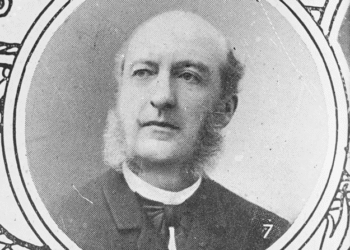
So Phim is one of those names that appear in footnotes, yet his decisions helped shape Cambodia’s tragic 1970s. Guerrilla fighter against the French, powerful Khmer Rouge commander, then branded traitor and driven to suicide, he embodies both the rise of Democratic Kampuchea and the purges that devoured it. This article unpacks his life, role and paradoxes.
Introduction: A man in the shadows of history
For anyone trying to understand how the Khmer Rouge actually worked, names like Pol Pot, Nuon Chea or Ieng Sary come quickly to mind; So Phim does not, yet he ranked just below them in the party hierarchy. He was secretary of the Eastern Zone, a “full-right” member of the Communist Party of Kampuchea’s Central Committee and a key figure in both armed struggle and later state power.
This article is for readers who already know the broad outline of Democratic Kampuchea and now want to go one level deeper: who implemented policies on the ground, who hesitated, who resisted — and who paid the price. By following the trajectory of So Phim, we get a more nuanced picture of Khmer Rouge internal politics than slogans and courtroom summaries usually allow.
Along the way, we will see how a man who once fought the French under the Issarak banner ended up directing repression against Cham Muslims, ordering attacks on Vietnam, then dying hunted by his own comrades. It is not a comforting story, but it is a necessary one if we want to understand how revolutions eat their children — and sometimes their midwives as well.
From peasant boy to Issarak guerrilla
So Phim (Khmer: សោ ភឹម) was born into a peasant family in eastern Cambodia, most likely in the mid‑1920s, with 1925 often cited though not firmly documented. Like many rural Cambodians of his generation, he grew up under the French Protectorate, in a world where colonial administrators, local notables and Buddhist monks defined the horizons of village life.

Before turning fully to rebellion, he even spent a short period in the colonial army, an experience that probably gave him some familiarity with weapons, hierarchy and the art of obeying orders — skills that would later be repurposed in less imperial contexts.
Joining the Issarak and the Vietnamese‑led left
In the late 1940s, So Phim joined the United Issarak Front, the umbrella for Khmer anti‑French guerrillas closely linked to the Viet Minh and Vietnamese communists. He took the revolutionary name So Vanna (Khmer: សូ វណ្ណា) and soon emerged as an effective commander in Prey Veng, where resistance bands were reorganized into a mobile unit named after Achar Hem Chieu, the monk who had led the 1942 “umbrella uprising” against the French.
In August 1951, he became one of the five founding members of the Vietnamese‑inspired People’s Revolutionary Party of Kampuchea (PRPK), the direct ancestor of the later Communist Party of Kampuchea. After the Geneva Accords in 1954, as the first Indochina War ended and Sihanouk’s police tightened the screws on leftists, he moved to Phnom Penh, where a sympathetic official found him and his comrades jobs as carpenters — a very practical cover for clandestine politics.
From provisional committees to the Standing Committee
As the PRPK reorganized, So Phim joined the four‑member provisional committee that led the party in the mid‑1950s, a sign of the trust placed in this relatively little‑educated but battle‑hardened cadre. In 1960, he became an alternate member of the newly formed Communist Party of Kampuchea (CPK) Standing Committee, and by 1963 he had risen to full member, ranking roughly fourth or fifth in the leadership.
These positions meant that, long before the Khmer Rouge appeared in international headlines, So Phim already sat in the small group that designed strategy, oversaw armed struggle and navigated the delicate triangle of Sihanouk, Hanoi and Beijing. He was not a theoretician like Pol Pot, but he was indispensable on the organizational and military side.
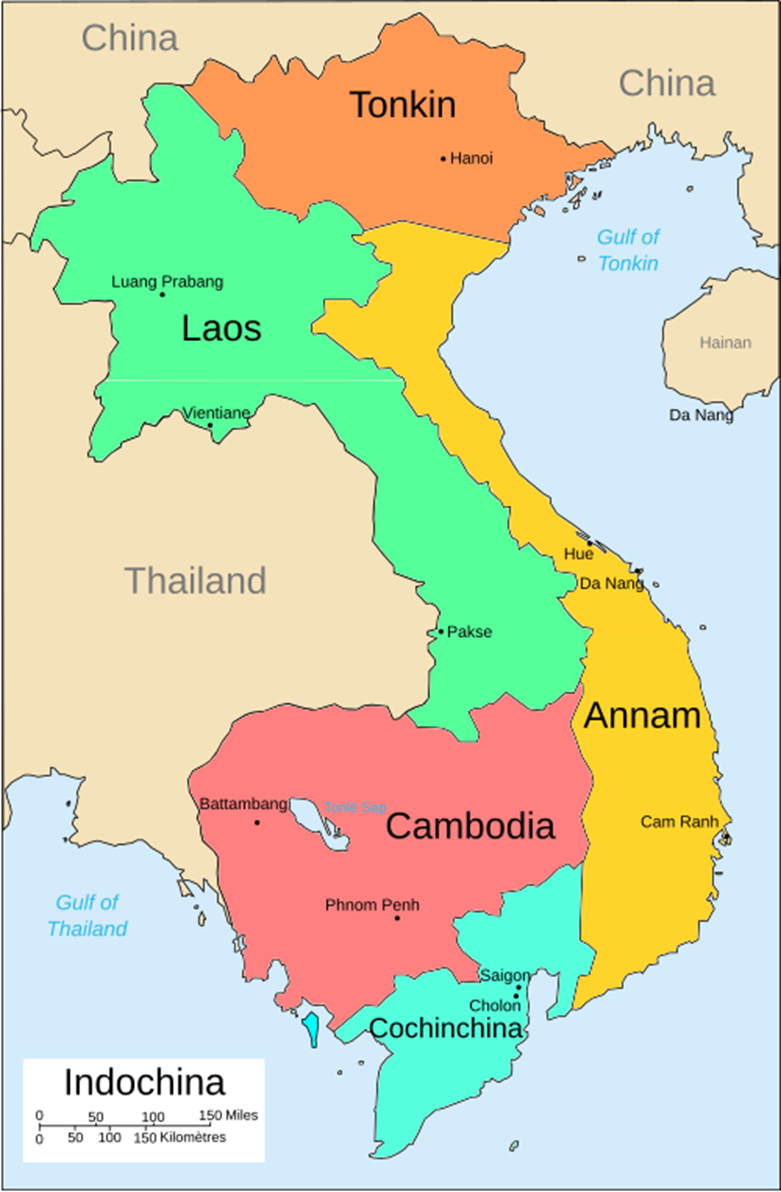
From 1960 until his death in 1978, So Phim headed the CPK Eastern Zone, a region that included Prey Veng, Svay Rieng and parts of Kampong Cham along the Vietnamese border. The Eastern Zone was both strategically important — adjacent to Vietnam — and politically sensitive, because its cadres had long, intimate ties with Vietnamese communists.
In the late 1960s and early 1970s, he played a role in uprisings such as Samlaut, and his forces grew in strength as the civil war deepened, backed in no small part by Vietnamese logistical support. By the time Phnom Penh fell in April 1975, he was firmly established as one of the top figures of the victorious movement: secretary of the Eastern Zone, deputy head of the People’s National Liberation Armed Forces of Kampuchea, and a leading member of both the Central Committee and the Military Bureau.
Power and repression under Democratic Kampuchea
A “moderate” who signed harsh orders
After 1975, So Phim became First Deputy Chairman of the State Presidium and remained in charge of the Eastern Zone, which was sometimes portrayed as more pragmatic and less extreme than other regions. Some accounts describe him as relatively well‑liked by his men, with a reputation — perhaps exaggerated — for moderation compared to ultra‑radical Southwest Zone leaders.
Yet any idea of a gentle Eastern Zone must be carefully qualified: under his authority, severe repression also took place, including an infamous crackdown on Cham Muslim villages in Kampong Cham province in December 1974, where a rebellion against Khmer Rouge rules was brutally crushed. Later, as Democratic Kampuchea confronted Vietnam, he signed orders for attacks across the border, aligning his forces with Pol Pot’s aggressive stance despite his long‑standing Vietnamese connections.
Implementing—and being trapped by—the “great leap”
Institutionally, So Phim was part of the joint leadership pushing the rapid socialist revolution that would become synonymous with the Cambodian genocide: forced collectivization, mass transfers and purges. He ordered and reported on population movements, including transfers of Cham from the Eastern to the Northern Zone, and he communicated military developments on the Vietnamese front up the chain of command.
At the same time, his zone’s proximity to Vietnam and its history of collaboration with Vietnamese communists fed growing suspicion among Pol Pot and Nuon Chea, who saw any hint of “Hanoi influence” as treasonous. In a system where ideological purity was measured by the number of supposed enemies one uncovered, the Eastern Zone’s mixed record — efficient, battle‑hardened, but politically suspect — made So Phim a very exposed man.
In 1977–1978, relations between Democratic Kampuchea and Vietnam deteriorated sharply into open warfare, with cross‑border raids and retaliatory Vietnamese incursions into the Eastern Zone. After Eastern Zone troops failed to repel a major Vietnamese attack, Pol Pot began to suspect that So Phim was secretly in league with Hanoi’s leadership — a suspicion historians largely view as unfounded but entirely consistent with the regime’s paranoid logic.
Pol Pot ordered a massive purge of the Eastern Zone, targeting not only old Issarak cadres but also their families and ordinary villagers, in what would later be known as the Eastern Zone massacres. Testimonies describe arrests, forced transfers and widespread executions, as Southwest and West Zone soldiers moved in to replace local structures seen as compromised.
Initially, So Phim reportedly refused to believe that Pol Pot had turned against him, sending messages to Phnom Penh asking to be escorted into the capital — a loyalty that, in retrospect, looks almost tragically naïve. As Southwest forces surrounded Eastern Zone positions and arrests mounted, he gathered troops and called on them to “join hands” in resistance, encouraging a rebellion against the incoming units.
By mid‑1978, encircled near the Vietnamese border and facing certain arrest, he chose to commit suicide rather than be captured, according to both witnesses and later tribunal documentation. His wife and children were reportedly killed shortly afterwards as they prepared his body for Buddhist funeral rites — an almost cruelly symbolic reminder that in Democratic Kampuchea, even the dead were not safe from politics. After his death, Nuon Chea and other trusted Southwest‑linked figures took control of the Eastern Zone.
Legacy: between complicity and opposition
A complicated figure for historians
So Phim’s legacy resists simple labels like “heroic dissident” or “cold‑blooded killer”; he was, at different times, both revolutionary and perpetrator, victim and enforcer. He helped found the Cambodian communist movement, led guerrilla struggles and climbed to the inner circle of the Khmer Rouge, while also signing orders that led to massacres of Cham Muslims and attacks on Vietnam.
Only late in the game, when the purges reached his own doorstep, did he move toward open resistance, reportedly establishing a dissident structure sometimes referred to as the “Authentic Revolutionary Forces of Kampuchea” and encouraging Eastern cadres to oppose Pol Pot. Many of those who survived fled to Vietnam, where they would later help form the Vietnamese‑backed Front that overthrew the Khmer Rouge in 1979.
For contemporary readers, especially in Cambodia and its diaspora, studying So Phim offers a way to understand how mid‑level and regional leaders navigated loyalty, ideology and survival in a system built on secrecy and fear. His story reminds us that regimes like Democratic Kampuchea are not run by one man alone but by networks of cadres who may themselves oscillate between conviction, doubt and self‑preservation.
In a more personal sense, he embodies the tragedy of a generation that began by fighting colonial domination and ended up participating in, or being destroyed by, one of the worst episodes of mass violence in the twentieth century. That tension — between early ideals and later crimes — is precisely what makes So Phim a crucial figure in any serious “who’s who” of the Khmer Rouge era.
So Phim’s journey from Issarak guerrilla to Eastern Zone commander and finally hunted “traitor” encapsulates the inner contradictions of Democratic Kampuchea: radical hopes, brutal policies, and a revolution that devoured its own architects. To understand who he was is to see more clearly how ideology, fear and suspicion shaped the Cambodian tragedy of the 1970s.
Sources & further reading / To know more
- So Phim – Wikipedia (English) – Concise overview of his life, party positions, and role in the Eastern Zone, with references for further academic reading.
- Sciences Po – Mass Violence and Resistance: “So Phim” – Scholarly profile detailing his trajectory from Issarak fighter to top Khmer Rouge leader and eventual victim of purges.
- ECCC (Khmer Rouge Tribunal) – Profile of Sao Phim – Judicial summary of his positions, alleged responsibilities and the context of his death during the Eastern Zone purge.
- Eastern Zone massacres – Wikipedia – Background on the purge of Eastern cadres and populations and the links to Vietnamese intervention and later resistance movements.
- Conflict between East Zone and Southwest/West Zone forces – Cambodia Tribunal Monitor – Witness testimony on the fighting, internal tensions and So Phim’s last stand.
- DC‑Cam – Khmer Rouge crimes on Easterners (PDF) – Documentation of repression in the Eastern Zone and the fate of cadres and families after So Phim’s fall.
Pascal Médeville is a French writer and digital publisher based in Cambodia, specializing in Asian history, languages and the often‑complex afterlives of colonial and revolutionary projects. He writes regularly about Cambodian culture, politics and memory on various online platforms, aiming to make serious research accessible to curious readers. In this “Who’s who” series, he explores the human faces — famous or obscure — behind Cambodia’s twentieth‑century upheavals.