Wonders of Cambodia
  • Home
  • Culture
  • Cuisine
  • Tourism
  • Business
  • Life in Cambodia
  • 中文
  • ខ្មែរ
  • Français
  • Tiếng Việt
  • e-Books
No Result
View All Result
  • Home
  • Culture
  • Cuisine
  • Tourism
  • Business
  • Life in Cambodia
  • 中文
  • ខ្មែរ
  • Français
  • Tiếng Việt
  • e-Books
No Result
View All Result
Wonders of Cambodia
No Result
View All Result
Home Culture History

Pol Pot: The Architect of Cambodia’s Killing Fields

Pascal Medeville by Pascal Medeville
July 13, 2025
in History, Politics, Who's who
Reading Time: 3 mins read
0
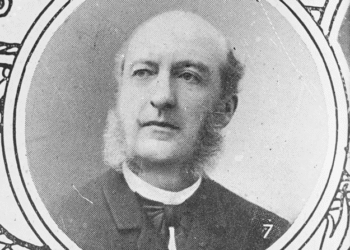
Portrait of Pol Pot (Public domain)

Pol Pot (ប៉ុលពត), born Saloth Sar (សាឡុត ស) on May 19, 1925, was the leader of the Khmer Rouge and the prime minister of Democratic Kampuchea from 1976 to 1979. His radical communist regime orchestrated one of the deadliest genocides of the 20th century, resulting in the deaths of an estimated 1.7 to 2 million Cambodians—nearly a quarter of the country’s population. His policies of forced labor, mass executions, and social engineering left Cambodia in ruins, with scars that persist to this day.

Early Life and Radicalization
Pol Pot was born into a relatively prosperous farming family in Prek Sbauv, a small village in French Indochina (now Cambodia). As a young man, he studied in Phnom Penh and later won a scholarship to study in France. While in Paris, he became involved with communist circles, influenced by Marxist-Leninist ideology and anti-colonial movements. He joined the French Communist Party and later became a key figure in Cambodia’s communist movement, adopting the pseudonym “Pol Pot” to conceal his identity.
Upon returning to Cambodia in the 1950s, he joined the underground communist movement, which later became the Khmer Rouge. The group initially fought against Cambodia’s U.S.-backed government, but after the 1970 coup by General Lon Nol—which overthrew Prince Norodom Sihanouk—the Khmer Rouge gained momentum, exploiting rural discontent and anti-American sentiment fueled by U.S. bombings during the Vietnam War.

Rise to Power and the Khmer Rouge Regime
In April 1975, the Khmer Rouge captured Phnom Penh, marking the beginning of their brutal reign. Pol Pot sought to create an agrarian utopia, abolishing money, private property, religion, and education. He envisioned a classless society, free from Western influence, where peasants would lead a self-sufficient revolution.
Within days of taking power, the Khmer Rouge forcibly evacuated cities, sending millions into the countryside to work in labor camps. Intellectuals, professionals, and even those who wore glasses (seen as a sign of education) were targeted. Families were separated, and children were indoctrinated to spy on their parents. The regime executed perceived enemies—former government officials, teachers, doctors, and ethnic minorities—in brutal purges.
The infamous Tuol Sleng prison (S-21) became a symbol of the regime’s cruelty, where an estimated 20,000 people were tortured and killed. Mass graves, later known as the Killing Fields, were filled with victims of execution, starvation, and disease.

Downfall and Legacy
Pol Pot’s regime collapsed in 1979 when Vietnam, after years of border clashes, invaded Cambodia and installed a new government. The Khmer Rouge retreated to the jungles, where they continued a guerrilla war for years. Pol Pot remained a shadowy figure, occasionally appearing in propaganda videos but largely avoiding accountability.
In 1997, after internal purges within the Khmer Rouge, Pol Pot was arrested by his own followers and sentenced to house arrest. He died in 1998 under mysterious circumstances—officially from heart failure, though suspicions of poisoning or suicide persist. He never faced an international tribunal for his crimes.
The Extraordinary Chambers in the Courts of Cambodia (ECCC), established in the 2000s, prosecuted a handful of surviving Khmer Rouge leaders, but many, including Pol Pot, escaped justice. Cambodia still grapples with the trauma of his rule—families torn apart, a lost generation of educated citizens, and lingering political instability.

Pol Pot’s legacy is one of unimaginable suffering. His fanatical pursuit of a communist agrarian society led to one of history’s worst atrocities. The Killing Fields stand as a grim reminder of the dangers of extremist ideology and unchecked power. Today, Cambodia remembers its past through memorials and education, ensuring that future generations never forget the horrors of Pol Pot’s regime.

Don’t miss our upcoming articles!

We don’t spam!

Check your INBOX or SPAM folder to confirm your subscription.

Tags: Cambodian genocideKhmer RougePol PotSaloth SarTuol Slengខ្មែរក្រហមប៉ុល ពតសាឡុត ស
ShareTweet
Previous Post

Kampot Pepper: Cambodia’s Prized Spice

Next Post

Kampot Province

Pascal Medeville

Pascal Medeville

Author of the blog Wonders of Cambodia, I share my passion for Cambodia through stories, cultural insights, and personal reflections on the country. I'm also the founder of Simili Consulting, where we provide high-quality, professional translation services to international clients.

Related Posts

Statue of a robed Buddhist monk standing on a pedestal in front of a dark doorway and red wall, holding a closed umbrella and a book
History

Hem Chieu, the Monk Who Dared – Cambodian Nationalism in a Saffron Robe

May 31, 2026
Japanese Imperial Army troops and supply wagons advancing along a dirt road through rural Indochina in 1940, with mountains visible in the background
History

Imperial Japanese Control over Cambodia in World War II, From Quiet Garrison to Puppet Kingdom

May 30, 2026
A close-up of a weathered sandstone door pillar at Prasat Krachap in Koh Ker, Cambodia, carved with lines of ancient Sanskrit script from a 928 CE inscription dedicating the temple to the deity Tribhuvanadeva
History

Sanskrit in Cambodia: How an Ancient Language Still Shapes Modern Khmer

May 18, 2026
Bas-relief at Bayon temple showing Khmer archers and crossbowmen marching in formation, carved in sandstone with detailed clothing and weaponry.
History

Picture of the day: Khmer Archers and Crossbowmen at Bayon

May 17, 2026
Map of Asia showing regions shaped by Indian cultural influence, with India and surrounding South and Southeast Asian countries highlighted.
Culture

Greater India and Cambodia: How Indian Civilization Shaped the Khmer World

May 3, 2026
Hanuman fighting demon in Reamker mural at the Silver Pagoda in the Royal Palace Phnom Penh by Tep Nimit Mak 1903-1904
Art

Oknha Tep Nimit Mak: The Master Artist Who Painted Cambodia’s Royal Heritage

April 27, 2026
Next Post
Kampot Province

Kampot Province

  • Trending
  • Comments
  • Latest
The French Protectorate of Cambodia (1863–1953): An Overview

The French Protectorate of Cambodia (1863–1953): An Overview

July 13, 2025
The Franco-Siamese Treaty of 23 March 1907: Borders, Politics, and the Return of Angkor

The Franco-Siamese Treaty of 23 March 1907: Borders, Politics, and the Return of Angkor

February 11, 2026
Cambodian-Vietnamese War (1978-1989)

Cambodian-Vietnamese War (1978-1989)

July 13, 2025
Working in Cambodia in 2026: Visas, Work Permits and Everyday Reality for Foreigners

Working in Cambodia in 2026: Visas, Work Permits and Everyday Reality for Foreigners

February 9, 2026
Kampot Province

Takeo Province: A Cradle of Cambodian History and Culture

3
Kratié Town on the Mekong: Colonial Echoes, River Life, and Irrawaddy Dolphins

Kratié Town on the Mekong: Colonial Echoes, River Life, and Irrawaddy Dolphins

3
Banteay Meanchey Province: A Gateway to Cambodia’s Rich Heritage

Banteay Meanchey Province: A Gateway to Cambodia’s Rich Heritage

2
Stung Treng Province: The Gateway to Cambodia’s Northern Wilderness

Stung Treng Province: The Gateway to Cambodia’s Northern Wilderness

2
Sandstone 7th‑century Devi statue from Sambor Prei Kuk style, showing elegant Khmer feminine form with high jata hairstyle and sampot, displayed against a warm backdrop.

Picture of the day: Devi Statue from Sambor Prei Kuk Gracefully Reimagined

June 4, 2026
Illustration of a Cambodian folk scene at a riverside: a large fish leaps dramatically out of the water in the foreground while a rabbit watches from the grassy bank, and in the background a couple in traditional clothing stands near a stilted thatched house, suggesting a moment from a village proverb.

When the Rabbit Escapes and the Fish Slips Away: A Khmer Proverb about Greed

June 3, 2026
Avion de la compagnie AirAsia peint en rouge avec la mention Cambodia sur le fuselage, volant dans le ciel avant l’atterrissage

A New boost for Cambodia tourism

June 3, 2026
Rectangular plate of Cambodian rice sautéed with finely chopped garlic, served on a wooden table in a small Kampong Thom street restaurant.

Picture of the day: Kampong Thom Garlic Fried Rice Comfort

June 3, 2026

Recent News

Sandstone 7th‑century Devi statue from Sambor Prei Kuk style, showing elegant Khmer feminine form with high jata hairstyle and sampot, displayed against a warm backdrop.

Picture of the day: Devi Statue from Sambor Prei Kuk Gracefully Reimagined

June 4, 2026
Illustration of a Cambodian folk scene at a riverside: a large fish leaps dramatically out of the water in the foreground while a rabbit watches from the grassy bank, and in the background a couple in traditional clothing stands near a stilted thatched house, suggesting a moment from a village proverb.

When the Rabbit Escapes and the Fish Slips Away: A Khmer Proverb about Greed

June 3, 2026
Avion de la compagnie AirAsia peint en rouge avec la mention Cambodia sur le fuselage, volant dans le ciel avant l’atterrissage

A New boost for Cambodia tourism

June 3, 2026
Rectangular plate of Cambodian rice sautéed with finely chopped garlic, served on a wooden table in a small Kampong Thom street restaurant.

Picture of the day: Kampong Thom Garlic Fried Rice Comfort

June 3, 2026
Wonders of Cambodia

Exploring Culture, Nature, and Spirit in the Land of Wonder.

Follow Us

Browse by Category

  • Architecture
  • Architecture
  • Art
  • Books
  • Business
  • Business
  • Cinema
  • Costume
  • Costume
  • Cuisine
  • Culture
  • Defense
  • Du lịch
  • e-Books
  • Education
  • Expat life
  • Fauna
  • Festival
  • Flora
  • Food providers
  • Français
  • Geography
  • Handicraft
  • Health
  • Histoire
  • History
  • Hotels
  • Khmer Stories
  • Khmer stories
  • Knowledge
  • Language
  • Last posts
  • Lịch sử
  • Life in Cambodia
  • Literature
  • Music
  • Pictures
  • Politics
  • Population
  • Press review
  • Professional services
  • Proverbs
  • Reference
  • Reference
  • Religion
  • Restaurants
  • Textile
  • Tiếng Việt
  • Tourism
  • Tourisme
  • Transport
  • Uncategorized
  • Video
  • Vie quotidienne
  • Who's who
  • ខ្មែរ
  • ទេសចរណ៍៖
  • បគ្គលល្បី
  • ប្រវត្តិសាស្ត្រោ
  • 中文
  • 书籍
  • 历史
  • 旅游
  • 生活

Recent News

Sandstone 7th‑century Devi statue from Sambor Prei Kuk style, showing elegant Khmer feminine form with high jata hairstyle and sampot, displayed against a warm backdrop.

Picture of the day: Devi Statue from Sambor Prei Kuk Gracefully Reimagined

June 4, 2026
Illustration of a Cambodian folk scene at a riverside: a large fish leaps dramatically out of the water in the foreground while a rabbit watches from the grassy bank, and in the background a couple in traditional clothing stands near a stilted thatched house, suggesting a moment from a village proverb.

When the Rabbit Escapes and the Fish Slips Away: A Khmer Proverb about Greed

June 3, 2026
  • About Us
  • Advertise
  • Privacy & Policy
  • Contact Us

© 2025 - Made with 💫 by TechFlow.

No Result
View All Result
  • Home
  • Culture
  • Cuisine
  • Tourism
  • Business
  • Life in Cambodia
  • 中文
  • ខ្មែរ
  • Français
  • Tiếng Việt
  • e-Books

© 2025 - Made with 💫 by TechFlow.