
King Ang Duong អង្គឌួង (1796–1860) is one of Cambodia’s most pivotal monarchs, renowned for his efforts to restore, modernize, and defend his kingdom during a period of intense foreign pressure and internal instability. His reign, from 1848 until his death in 1860, laid the groundwork for modern Cambodian governance, legal standards, and national identity, while his diplomatic balancing between neighboring powers and emerging European colonial interests shaped the fate of the kingdom for generations.
Early Life and Background
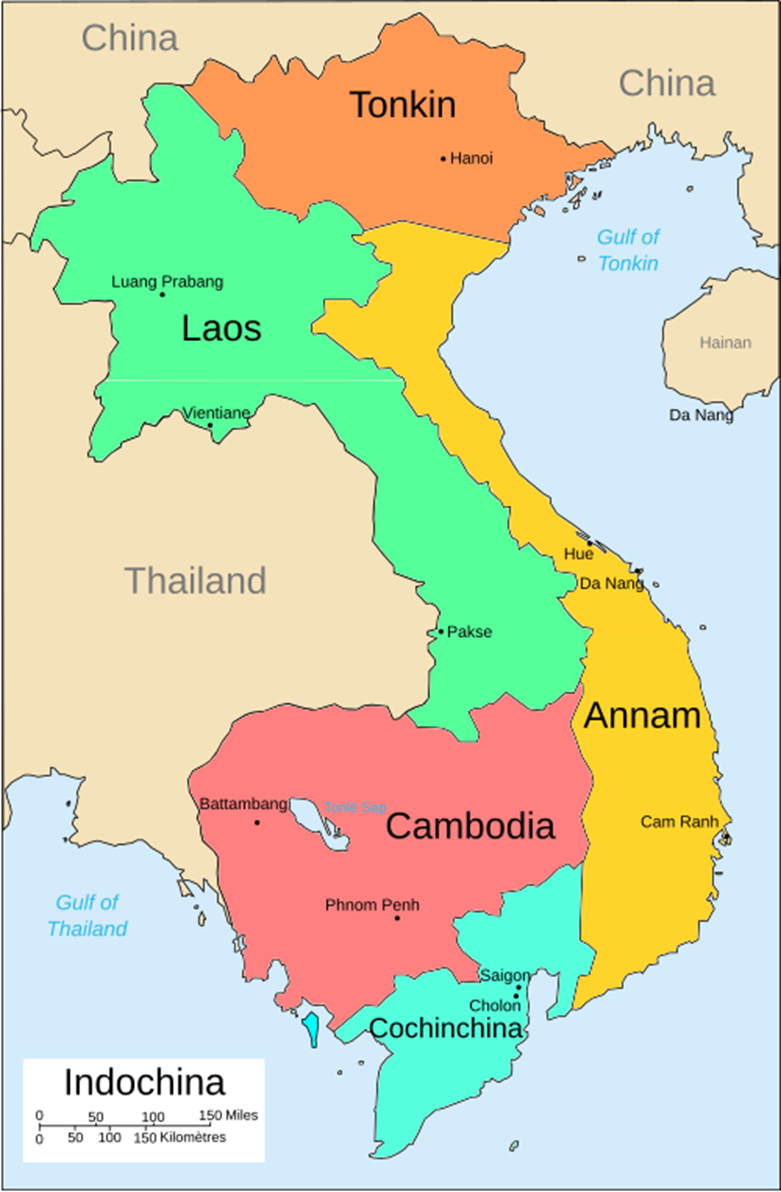
Born on 12 June 1796 in Oudong, Ang Duong was the son of King Ang Eng and Queen Vara, who was of Thai descent. From an early age, Cambodia was caught between the military and political ambitions of Siam (now Thailand) and Vietnam, each seeking to exert control over the country. This dual vassalage became a defining theme in Ang Duong’s life.
During his youth — especially after age 16 — Ang Duong spent nearly three decades in Bangkok. There he received an education steeped in classical literature, Buddhist principles, and the traditions of both Khmer and Thai courts. His literary aptitude was remarkable: he became known for composing poetry, translating Cambodian folktales like Vorvong & Sorvong into Thai, and even authoring works such as Neang Kakey — the latter remains influential in Cambodian literature and theatre today.
Path to the Throne
The early 19th century was a tumultuous era for Cambodia. The country suffered invasions, civil strife, and a continual struggle between Siam and Vietnam for dominance. The Vietnamese, seeking to colonize and civilize Cambodia according to their own vision, forced the adoption of Vietnamese customs, fueling recurrent rebellion from the Khmer population.
Amid this chaos, Siam and Vietnam eventually agreed to a form of joint hegemony and, after years of war and shifting alliances, Ang Duong was crowned king at Oudong in 1848. His coronation was a rare moment of political consensus and a critical point from which he sought to rebuild the realm.
Political and Administrative Reforms
King Ang Duong’s reign is particularly noted for his drive to centralize authority and modernize Cambodia’s political institutions. Realizing that internal weakness made Cambodia vulnerable to foreign domination, he:
- Implemented the first major revision of Cambodia’s legal code in centuries, establishing a platform for more consistent governance.
- Pursued a policy of national unity, working tirelessly to overcome the deep divisions that had plagued the kingdom.
- Sought to curb the influence of regional governors and the aristocracy, trying to forge a more centralized and assertive administration.
These reforms were instrumental in restoring a measure of internal order — a remarkable achievement considering the kingdom’s dire circumstances.
Cultural Renaissance and Economic Innovation
Beyond governance, Ang Duong is celebrated as a champion of Cambodian culture. He promoted the arts, supervised the revitalization of classical Khmer dance, and fostered the publication of Khmer literature and poetry. His court became a hub for artists, poets, and scholars, contributing to a cultural renaissance after decades of neglect and decline.
Economically, Ang Duong introduced the machine-made Cambodian Tical — a national currency made from precious metals, which streamlined domestic and regional trade. This innovation drew the attention of French observers and distinguished Cambodia’s economy from its neighbors.
Managing Foreign Relations
One of Ang Duong’s greatest challenges was managing Cambodia’s exposure to the ambitions of Siam and Vietnam. Both sought to annex Cambodian territory and assimilate its people culturally and politically. Faced with the reality of exploitative “protection” from both neighbors, Ang Duong adopted a pragmatic strategy:
- He initially sought Western support to counterbalance regional threats, reaching out to the British in Singapore. When this attempt proved fruitless, he turned to the French.
- Ang Duong sent secret communications to Napoleon III, proposing some form of protection or alliance that would preserve Cambodia’s sovereignty.
Contrary to assertions from some colonial-era French historians, Ang Duong did not actively seek to subject Cambodia to outright French colonial rule; rather, he hoped for an unequal, yet protective, relationship that would shield Cambodia from being completely absorbed by Siam or Vietnam.
Limitations and Legacy
Despite Ang Duong’s vision and personal energy, his efforts were often hamstrung by the kingdom’s poverty, limited resources, and endemic internal dissent. Rebellions among ethnic minorities, rivalries within the royal family, and continued pressure from neighboring states and colonial powers all sapped his ability to enact lasting change.
Nevertheless, the legacy of Ang Duong’s reign is profound:
- His sons, King Norodom and King Sisowath, would found the two major branches of Cambodia’s royal family, shaping the nation’s political future.
- When Ang Duong died in 1860, the groundwork he laid allowed Norodom to negotiate the 1863 Treaty that established Cambodia as a French protectorate, thus — paradoxically — preserving Cambodian identity and autonomy (albeit in constrained form) at a moment when outright annexation by either Siam or Vietnam seemed imminent.
Under French rule, Cambodia survived as a distinct nation rather than being dissolved into its more powerful neighbors. Many historians and modern Cambodians recognize that, without Ang Duong’s foresight, Cambodia’s unique heritage and statehood might not have endured.
Family and Succession
King Ang Duong fathered many children — records indicate at least 18 legitimate sons and daughters with his wives and a much larger number of descendants through concubines and consorts. His legacy was perpetuated through the Norodom and Sisowath dynasties, both central to Cambodian history over the next century.
Commemoration
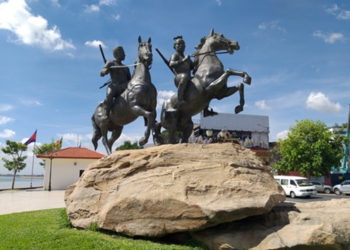
Today, Ang Duong is revered in Cambodia as a symbol of national resilience and a preserver of national identity. Statues, such as the one in Kampot, serve as enduring monuments to his leadership and vision, drawing locals and visitors alike to reflect on Cambodia’s history and the king’s pivotal role within it.
His reign is remembered not only for its reforms and diplomatic balancing acts but for his vision in steering a deeply fragile society toward survival, continuity, and eventual recovery as a nation-state.
Conclusion
King Ang Duong stands as a remarkable figure in Cambodian history: a reformist king, cultural patron, and diplomatic strategist whose actions were crucial to the preservation of Cambodia during one of its darkest eras. Despite formidable obstacles, he reinforced the foundations of Cambodian identity, protected its sovereignty as best he could, and provided a pathway for the kingdom’s continuity under the looming shadow of colonialism. His life and legacy continue to inform Cambodia’s sense of itself and inspire its ongoing efforts to define its place in the world.