Wonders of Cambodia
  • Home
  • Culture
  • Cuisine
  • Tourism
  • Business
  • Life in Cambodia
  • 中文
  • ខ្មែរ
  • Français
  • Tiếng Việt
  • e-Books
No Result
View All Result
  • Home
  • Culture
  • Cuisine
  • Tourism
  • Business
  • Life in Cambodia
  • 中文
  • ខ្មែរ
  • Français
  • Tiếng Việt
  • e-Books
No Result
View All Result
Wonders of Cambodia
No Result
View All Result
Home Culture History

King Sisowath: Reclaimer and Modernizer of Cambodia

Pascal Medeville by Pascal Medeville
March 19, 2026
in History, Who's who
Reading Time: 6 mins read
0
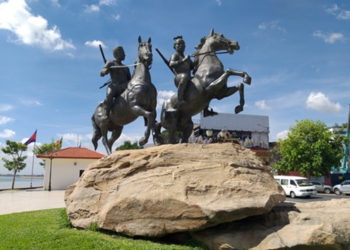
Monument commemorating the restoration of the three provinces of Banteay Meanchey, Battambang and Siem Reap in 1907 (Brett epic at the English Wikipedia, CC BY-SA 3.0)

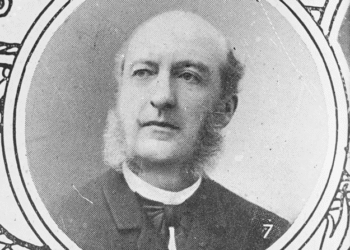
King Sisowath (Khmer: ព្រះសិរីសុវត្ថិ) (1840 – 1927) stands as a pivotal figure in Cambodian history — an emblem of royal resilience and adaptive leadership during the height of colonial intervention. His reign, from 1904 to 1927, was marked by extraordinary political maneuvering, cultural revival, and national reclamation, even as Cambodia existed under the ever-watchful gaze of French colonial authorities.

Early Life and Background

Born as Ang Sar in Battambang province when Cambodia struggled under dual Siamese (Thai) and Vietnamese influence, Sisowath was the son of King Ang Duong. Like his half-brother Norodom, Sisowath spent his formative years in Bangkok, educated under Siamese supervision, a policy designed by overlords keen to mold Cambodian royalty to their liking[1][2]. The death of King Ang Duong in 1860 was a catalyst for Sisowath’s return to Oudong, the then-capital, to safeguard the throne amid dynastic rivalries.

Politics, Exile, and Return

The mid-19th century in Cambodia was characterized by instability and foreign manipulation. When Norodom was crowned under French auspices in 1864 — ushering in the French Protectorate — Sisowath went into self-imposed exile in Saigon, South Vietnam. Here, he became something of a diplomatic bargaining chip; the French subsidized his stay to pressure Norodom to comply with colonial policies, always keeping the possibility open of installing Sisowath on the throne if Norodom wavered in loyalty[2][1].

This tense political chess continued as anti-French uprisings broke out in Cambodia. In 1867, Sisowath was asked to return to help quell the unrest. His return and collaboration with French authorities solidified his position as a trusted royal figure, ultimately leading him to reside in Phnom Penh and align with the colonial administration[2][1].

Ascension to the Throne

After Norodom’s death in 1904, the French orchestrated Sisowath’s ascension, sidelining Norodom’s sons in favor of a king proven to be a reliable partner. Sisowath’s coronation on 27 April 1904 solidified his position as a modern monarch on the international stage while still, in practice, functioning as a figurehead within the French administration[1][2].

Sisowath’s reign, however, demonstrated an adeptness at balancing tradition, national pride, and colonial realities. He visited France in 1906, the first Cambodian sovereign to travel to Europe, dazzling observers with royal regalia and a classical Khmer dance troupe. This cultural diplomacy not only showcased Khmer richness to the West but also revived a sense of national pride domestically[3][4].

The Reclamation of Lost Provinces

Sisowath’s greatest legacy is arguably the restoration of Cambodia’s heartland provinces: Siem Reap, Battambang, and Serei Saophoan (Banteay Meanchey), including the ancient temples of Angkor. These territories had languished under Siamese control since 1795. Negotiating skillfully with his French patrons, Sisowath secured their return in 1907 — a triumph that reverberated throughout the nation and rekindled Khmer memories of imperial grandeur[1][5].

Modernization and Cultural Revival

While Cambodia remained under colonial sway, Sisowath leveraged French support to usher in an era of modernization. Railways were constructed linking Phnom Penh to Battambang, and the wooden Royal Palace was replaced with an elegant modern throne hall in 1919[1]. Schools, notably Preah Sisowath High School, and institutions for the study of Pali and Sanskrit sprang up, as did new pagodas and the National Museum to preserve treasures of the Angkorian past[1].

Sisowath’s reign also rejuvenated the royal ballet and classical arts, dispatching troupes across Europe. This reinforced Cambodia’s distinct cultural identity in an era when external influences threatened to erode the fabric of tradition[1][3].

Life at Court and Relationship with France

Sisowath’s rule was defined by close cooperation with the French. He was provided with comfortable privileges, including a newly built palace, a steam yacht, and an official ration of luxury goods[1]. His diplomatic acumen created a relationship where the monarchy remained relevant and protected — if not entirely sovereign — within the confines of a protectorate system.

Despite being branded a “figurehead,” Sisowath exercised agency by resisting rival factions, channeling French power to Cambodia’s advantage, and methodically restoring lost lands.

Final Years and Legacy

Sisowath ruled until his death in Phnom Penh in 1927, aged 86, as one of the world’s oldest reigning monarchs at the time. He was succeeded by his son, Sisowath Monivong[1][6].

Today, King Sisowath is commemorated as a monarch who, though constrained by the era’s political realities, deftly wove threads of autonomy, modernization, and cultural pride into the Cambodian tapestry. His statue, located in the heart of Phnom Penh, stands as a tribute to this complex legacy: a monarch who navigated colonialism with rare skill, reclaimed lands lost for over a century, and planted seeds for a future Cambodian renaissance[7][8].

King Sisowath’s life illustrates how even in times of foreign domination and limited sovereignty, effective leadership and strategic diplomacy can restore lost heritage, preserve identity, and sow the seeds of future renewal.

  1. https://en.wikipedia.org/wiki/Sisowath_of_Cambodia         
  2. https://www.britannica.com/biography/Sisowath   
  3. https://www.phnompenhpost.com/national/museum-s-catalogue-reveals-king-sisowath-s-1906-odyssey 
  4. https://www.khmertimeskh.com/501320318/last-chance-to-see-king-sisowath-exhibition/
  5. https://www.reddit.com/r/cambodia/comments/1dtmqxa/sisowath_the_diplomatic_khmer_king_who_convinced/
  6. https://en.wikipedia.org/wiki/Sisowath_Monivong
  7. https://evendo.com/locations/cambodia/phnom-penh/attraction/statue-of-king-sisowath
  8. https://helloangkor.com/attractions/statue-of-king-sisowath/

Don’t miss our upcoming articles!

We don’t spam!

Check your INBOX or SPAM folder to confirm your subscription.

Tags: Angkor WatCambodian HistoryFrench IndochinaKing Sisowath
ShareTweet
Previous Post

Picture of the day: Areca fruit

Next Post

Électricité du Cambodge announces power cuts from July 31st to August 3rd, 2025

Pascal Medeville

Pascal Medeville

Author of the blog Wonders of Cambodia, I share my passion for Cambodia through stories, cultural insights, and personal reflections on the country. I'm also the founder of Simili Consulting, where we provide high-quality, professional translation services to international clients.

Related Posts

Statue of a robed Buddhist monk standing on a pedestal in front of a dark doorway and red wall, holding a closed umbrella and a book
History

Hem Chieu, the Monk Who Dared – Cambodian Nationalism in a Saffron Robe

May 31, 2026
Japanese Imperial Army troops and supply wagons advancing along a dirt road through rural Indochina in 1940, with mountains visible in the background
History

Imperial Japanese Control over Cambodia in World War II, From Quiet Garrison to Puppet Kingdom

May 30, 2026
A close-up of a weathered sandstone door pillar at Prasat Krachap in Koh Ker, Cambodia, carved with lines of ancient Sanskrit script from a 928 CE inscription dedicating the temple to the deity Tribhuvanadeva
History

Sanskrit in Cambodia: How an Ancient Language Still Shapes Modern Khmer

May 18, 2026
Bas-relief at Bayon temple showing Khmer archers and crossbowmen marching in formation, carved in sandstone with detailed clothing and weaponry.
History

Picture of the day: Khmer Archers and Crossbowmen at Bayon

May 17, 2026
Map of Asia showing regions shaped by Indian cultural influence, with India and surrounding South and Southeast Asian countries highlighted.
Culture

Greater India and Cambodia: How Indian Civilization Shaped the Khmer World

May 3, 2026
Hanuman fighting demon in Reamker mural at the Silver Pagoda in the Royal Palace Phnom Penh by Tep Nimit Mak 1903-1904
Art

Oknha Tep Nimit Mak: The Master Artist Who Painted Cambodia’s Royal Heritage

April 27, 2026
Next Post

Électricité du Cambodge announces power cuts from July 31st to August 3rd, 2025

  • Trending
  • Comments
  • Latest
The French Protectorate of Cambodia (1863–1953): An Overview

The French Protectorate of Cambodia (1863–1953): An Overview

July 13, 2025
The Franco-Siamese Treaty of 23 March 1907: Borders, Politics, and the Return of Angkor

The Franco-Siamese Treaty of 23 March 1907: Borders, Politics, and the Return of Angkor

February 11, 2026
Cambodian-Vietnamese War (1978-1989)

Cambodian-Vietnamese War (1978-1989)

July 13, 2025
Working in Cambodia in 2026: Visas, Work Permits and Everyday Reality for Foreigners

Working in Cambodia in 2026: Visas, Work Permits and Everyday Reality for Foreigners

February 9, 2026
Kampot Province

Takeo Province: A Cradle of Cambodian History and Culture

3
Kratié Town on the Mekong: Colonial Echoes, River Life, and Irrawaddy Dolphins

Kratié Town on the Mekong: Colonial Echoes, River Life, and Irrawaddy Dolphins

3
Banteay Meanchey Province: A Gateway to Cambodia’s Rich Heritage

Banteay Meanchey Province: A Gateway to Cambodia’s Rich Heritage

2
Stung Treng Province: The Gateway to Cambodia’s Northern Wilderness

Stung Treng Province: The Gateway to Cambodia’s Northern Wilderness

2
Diagram of Earth surrounded by the eight Moon phases (New, Waxing crescent, First quarter, Waxing gibbous, Full, Waning gibbous, Third quarter, Waning crescent) with clock times around Earth and arrows showing the Moon’s orbit.

Cambodian Lunar Calendar Months – Names, Meanings, and Cultural Significance

June 6, 2026
Close-up of a finely chased Khmer silver pumpkin-shaped betel nut box from Cambodia, with intricate floral and scroll repoussé patterns on a dark wooden surface.

Picture of the day: Silver Pumpkin Betel Box from Cambodia

June 6, 2026
An elderly woman crouches beside a woven basket overflowing with bananas in a sunlit tropical village, while a wide‑eyed rabbit joyfully bounds toward her, banana peels scattered across the ground

Tales of the hare, part 1 – The Clever Rabbit and the Banana Seller

June 5, 2026
Close-up of tarticlette at La Guinguette de Siem Reap, a French-style potato, bacon, onion and raclette cheese gratin served in a black dish with green salad on the side in Siem Reap, Cambodia.

Picture of the day: Tarticlette Comfort at La Guinguette in Siem Reap

June 5, 2026

Recent News

Diagram of Earth surrounded by the eight Moon phases (New, Waxing crescent, First quarter, Waxing gibbous, Full, Waning gibbous, Third quarter, Waning crescent) with clock times around Earth and arrows showing the Moon’s orbit.

Cambodian Lunar Calendar Months – Names, Meanings, and Cultural Significance

June 6, 2026
Close-up of a finely chased Khmer silver pumpkin-shaped betel nut box from Cambodia, with intricate floral and scroll repoussé patterns on a dark wooden surface.

Picture of the day: Silver Pumpkin Betel Box from Cambodia

June 6, 2026
An elderly woman crouches beside a woven basket overflowing with bananas in a sunlit tropical village, while a wide‑eyed rabbit joyfully bounds toward her, banana peels scattered across the ground

Tales of the hare, part 1 – The Clever Rabbit and the Banana Seller

June 5, 2026
Close-up of tarticlette at La Guinguette de Siem Reap, a French-style potato, bacon, onion and raclette cheese gratin served in a black dish with green salad on the side in Siem Reap, Cambodia.

Picture of the day: Tarticlette Comfort at La Guinguette in Siem Reap

June 5, 2026
Wonders of Cambodia

Exploring Culture, Nature, and Spirit in the Land of Wonder.

Follow Us

Browse by Category

  • Architecture
  • Architecture
  • Art
  • Books
  • Business
  • Business
  • Cinema
  • Costume
  • Costume
  • Cuisine
  • Culture
  • Defense
  • Du lịch
  • e-Books
  • Education
  • Expat life
  • Fauna
  • Festival
  • Flora
  • Food providers
  • Français
  • Geography
  • Handicraft
  • Health
  • Histoire
  • History
  • Hotels
  • Khmer Stories
  • Khmer stories
  • Knowledge
  • Language
  • Last posts
  • Lịch sử
  • Life in Cambodia
  • Literature
  • Music
  • Pictures
  • Politics
  • Population
  • Press review
  • Professional services
  • Proverbs
  • Reference
  • Reference
  • Religion
  • Restaurants
  • Textile
  • Tiếng Việt
  • Tourism
  • Tourisme
  • Transport
  • Uncategorized
  • Video
  • Vie quotidienne
  • Who's who
  • ខ្មែរ
  • ទេសចរណ៍៖
  • បគ្គលល្បី
  • ប្រវត្តិសាស្ត្រោ
  • 中文
  • 书籍
  • 历史
  • 旅游
  • 生活

Recent News

Diagram of Earth surrounded by the eight Moon phases (New, Waxing crescent, First quarter, Waxing gibbous, Full, Waning gibbous, Third quarter, Waning crescent) with clock times around Earth and arrows showing the Moon’s orbit.

Cambodian Lunar Calendar Months – Names, Meanings, and Cultural Significance

June 6, 2026
Close-up of a finely chased Khmer silver pumpkin-shaped betel nut box from Cambodia, with intricate floral and scroll repoussé patterns on a dark wooden surface.

Picture of the day: Silver Pumpkin Betel Box from Cambodia

June 6, 2026
  • About Us
  • Advertise
  • Privacy & Policy
  • Contact Us

© 2025 - Made with 💫 by TechFlow.

No Result
View All Result
  • Home
  • Culture
  • Cuisine
  • Tourism
  • Business
  • Life in Cambodia
  • 中文
  • ខ្មែរ
  • Français
  • Tiếng Việt
  • e-Books

© 2025 - Made with 💫 by TechFlow.