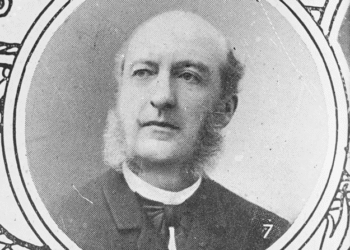
Nuon Chea, better known as “Brother Number Two”, sat at the very heart of the Khmer Rouge machine that turned Cambodia into a vast, deadly worksite between 1975 and 1979. Chief ideologue, strategist of terror, and later unrepentant defendant before the Khmer Rouge Tribunal, he is a crucial figure to understand if you want to make sense of Democratic Kampuchea.
Introduction: Meeting Brother Number Two
If you are interested in Cambodian history, the Khmer Rouge period, or simply trying to disentangle who did what in that opaque leadership circle around Pol Pot, Nuon Chea is one of the names you cannot avoid. He was the movement’s chief ideologue, the man who translated radical theory into lethal policy, and for decades managed to stay in the shadows while others spoke in his name.
This article offers a clear, accessible portrait of Nuon Chea: his early life, his rise to “Brother Number Two”, his central role in Khmer Rouge crimes, and his long-delayed encounter with justice at the Extraordinary Chambers in the Courts of Cambodia (ECCC). It is written for readers, students, or travelers in Cambodia who keep hearing his name in museums, books and documentaries but want a structured “who’s who” profile rather than yet another avalanche of acronyms.
Along the way, we will see how a law student in Bangkok became the architect of a radical agrarian utopia – and how that utopia translated into mass starvation, forced labor, and genocide. A sobering story, yes, but one that can be told with a little light erudition, if only to resist the dull vocabulary of bureaucratic evil.

From Long Bunruot to Nuon Chea
Provincial childhood and Bangkok student
Nuon Chea (Khmer: នួន ជា) was born Long Bunruot in Battambang province, to a peasant family of modest means: his father farmed corn and his mother worked as a seamstress. Like many future Khmer Rouge leaders, he was part of a generation shaped by colonial Cambodia and regional currents of anti‑colonial politics.
In the 1940s, he studied at Wat Benchamabophit School and then at the Faculty of Law of Thammasat University in Bangkok, where he also worked part-time at the Thai Ministry of Foreign Affairs. There he joined the Communist Party of Siam, discovering Marxism‑Leninism not in a Parisian café, as some of his comrades did, but in Thai student circles and clandestine meetings.
Enter the Cambodian communist movement
By the late 1950s and early 1960s, Long Bunruot had become Nuon Chea and was deeply embedded in the Cambodian communist movement. In September 1960 he was elected Deputy General Secretary of the Workers Party of Kampuchea, which later became the Communist Party of Kampuchea (CPK). In party terms, this meant he was second only to Pol Pot, but with very real power over organization, security and ideology.
Historians and tribunal findings converge on one point: Nuon Chea was not a mere lieutenant carrying orders; he was a principal architect of the project. Craig Etcheson has even argued that, as the person in charge of organization and security, he may at times have had more practical influence over Khmer Rouge policies than Pol Pot himself.
“Brother Number Two” inside Democratic Kampuchea
Chief ideologue of the Khmer Rouge
During Democratic Kampuchea (1975–1979), Nuon Chea was widely known as “Brother Number Two”, the regime’s chief ideologue and Pol Pot’s right-hand man. While Pol Pot’s name became synonymous with the regime abroad, Nuon Chea provided the doctrinal backbone, preaching a harsh, self‑reliant Marxism‑Leninism that mistrusted both Vietnam and the West.
He played a central role in formulating the party’s stance on “revolutionary violence”, the use of armed struggle and terror as legitimate tools to purify the party and society. The ECCC later found that he was a key actor in setting CPK policies and had authority to instruct lower-level cadres to commit crimes.
Agrarian utopia, mass suffering
Nuon Chea’s ideological vision translated into some of the regime’s most infamous decisions: the evacuation of Phnom Penh, the crushing of “enemies” through purges, and the relentless push towards an agrarian, autarkic Cambodia. Nearly two million city dwellers were forced into the countryside in 1975 as the leadership tried to turn the whole country into a gigantic rice field and labor camp.
The result was catastrophic: around 1.7 million Cambodians – more than a quarter of the population – died from starvation, disease, overwork and executions linked to these policies. The ECCC later described a joint criminal enterprise whose aim was to achieve a rapid socialist revolution “by whatever means”, including mass displacement and systematic brutality. Nuon Chea, far from being a distant theorist, was judged to be a prime mover in this enterprise.
Security, Purges and Tuol Sleng
The man behind the machinery of fear
Nuon Chea’s responsibilities extended deep into the grim heart of the Khmer Rouge security apparatus. He oversaw ideological education and internal purges, including the elimination of suspected traitors within the party ranks and “intellectuals” deemed unreliable. In practice, this meant that the constant climate of fear, denunciation and arrests did not emerge spontaneously; it was carefully cultivated from the top.
Sources attribute to him a major role in planning and directing purges that decimated internal opponents, often on the flimsiest suspicion of “Vietnamese influence” or “revisionism”. The party was, in the words later used in his defense, “cleaved with deep factional divisions”, but the judges found that he used those divisions rather than merely suffered them.
Tuol Sleng and other killing sites
Nuon Chea has also been linked to the notorious S‑21 security center, known today as the Tuol Sleng Genocide Museum. While he denied direct responsibility, evidence and tribunal findings underline his command role over the security services that ran S‑21 and other detention and execution sites.
The ECCC determined that he ordered, planned, instigated, aided and abetted crimes at Tuol Po Chrey and in connection with mass executions of Khmer Republic officials. Thousands of prisoners were tortured and killed in facilities operating under the security policies he helped design. In short, Brother Number Two was not only the theorist of the revolution; he was one of the men who ensured that its violence was systematic, organized and relentless.
From guerrilla elder to tribunal defendant
Years in the jungle and quiet retirement
After the fall of the Khmer Rouge regime in 1979, Nuon Chea fled with Pol Pot and other leaders to continue the struggle as guerrillas along the Thai border. For nearly two decades he remained an influential figure in the movement, even as it gradually fragmented under military pressure and shifting international politics.
In the 1990s, as the Khmer Rouge disintegrated, Nuon Chea defected and eventually lived quietly near the Thai‑Cambodian border, giving occasional interviews in which he minimized his responsibility and shifted blame to others. This curious period – the former Brother Number Two receiving journalists on his veranda – only added to the sense of unfinished business for survivors and families of victims.
Arrest, trials and life sentences
The creation of the Extraordinary Chambers in the Courts of Cambodia in 2006 finally brought Nuon Chea within reach of formal justice. He was arrested in 2007 and charged with crimes against humanity, genocide and other grave offences committed under Democratic Kampuchea.
In Case 002/01, the ECCC found him guilty of crimes against humanity, including extermination, persecution on political grounds, forced transfer and other inhumane acts, and sentenced him to life in prison. In Case 002/02, the tribunal went further, convicting him of genocide, additional crimes against humanity, and war crimes, again imposing a life sentence. These judgments stressed that he had “ultimate decision‑making power with Pol Pot” and ordered, planned or abetted key crimes, including the forced evacuation of Phnom Penh.
Nuon Chea died in 2019 at the age of 93, still in detention, and unrepentant in his public statements. His death closed one chapter of the tribunal’s work but left many questions lingering about the limits of delayed justice and the uneven memory of the Khmer Rouge years in today’s Cambodia.
Why Nuon Chea matters for understanding Cambodia
Studying Nuon Chea allows us to see how abstract doctrines and party discipline can be translated, step by step, into concrete policies that devastate an entire country. He embodied the fusion of theory and practice typical of radical communist movements in the Cold War era, yet applied in an extraordinarily radical and autarkic Cambodian version.
For historians, students and visitors who walk through Tuol Sleng or the killing fields today, putting a face and a biography to “Brother Number Two” helps avoid the trap of imagining the Khmer Rouge as a faceless force of nature. There were names, debates, decisions and signatures – and Nuon Chea’s name appears consistently at the center of that web.
Memory, denial and the uses of history
Nuon Chea’s appearances before the tribunal also illustrate the difficulties of dealing with perpetrators who remain convinced, or pretend to remain convinced, of the righteousness of their cause. He frequently downplayed his role, emphasized external threats, and tried to reframe the mass deaths as unintended consequences or the responsibility of others.
For educators, museum guides and writers in Cambodia, this poses a challenge: how to present his story in a way that honors victims without turning him into a dark celebrity. One useful approach is to situate Nuon Chea in a wider context – regional conflicts, Cold War dynamics, and local political struggles – while never letting those contexts dilute his responsibility as established by the ECCC.
Nuon Chea, “Brother Number Two” of the Khmer Rouge, was not a shadowy extra in the tragedy of Democratic Kampuchea but one of its key authors: chief ideologue, security mastermind and, ultimately, twice‑convicted perpetrator of crimes against humanity and genocide. Understanding who he was, what he believed, and how he exercised power is essential to grasp the mechanics of the Cambodian genocide – and to recognize, behind the impersonal term “regime”, the very human decisions that made it possible.
Sources & further reading / To know more
- ECCC – Nuon Chea charged profile
Official summary of Nuon Chea’s roles, the charges against him, and the key findings that led to his life sentences at the Khmer Rouge Tribunal. - UN News – Life sentences for Khmer Rouge leaders
Press release outlining the ECCC’s first major judgment against Nuon Chea and Khieu Samphan, with a concise explanation of the crimes involved. - BBC – “Nuon Chea: Cambodia’s unrepentant perpetrator of genocide”
Narrative obituary that sketches his life story, his role in the regime, and his attitude during and after the trials. - Sciences Po – Mass Violence and Resistance, “Nuon Chea”
Analytical profile situating Nuon Chea within the structure of the Communist Party of Kampuchea and the broader history of Khmer Rouge violence.
Pascal Médeville is a writer and digital publisher based in Cambodia, where he explores the long shadows of history on today’s landscapes and lives. He writes mainly about Cambodian history, culture and memory, with a particular interest in how sites like Tuol Sleng and figures like Nuon Chea are narrated to new generations. His work aims to make complex, often painful topics accessible without flattening their depth.