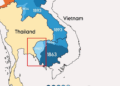
French Indochina, officially known as the Indochinese Union (and renamed the Indochinese Federation after 1941), stands as one of history’s most strategically significant colonial territories. Established in 1887, this federation of French-dependent territories in Southeast Asia represented the apex of French imperial expansion in Asia, encompassing modern-day Vietnam, Cambodia, Laos, and briefly the Chinese leasehold of Guangzhouwan. For nearly seven decades, French colonial administrators consolidated control over a region of over 750,000 square kilometers and a population exceeding sixteen million people, transforming the political, economic, social, and cultural landscape of mainland Southeast Asia. The French colonial project was ambitious and multifaceted, driven by commercial extraction, geopolitical rivalry with Britain, and an ideological commitment to the “civilizing mission.” Yet from its inception, French Indochina faced persistent indigenous resistance, and by 1954, the colonial empire had collapsed entirely, reshaping the region’s trajectory into the modern era.

The Formation and Territorial Composition
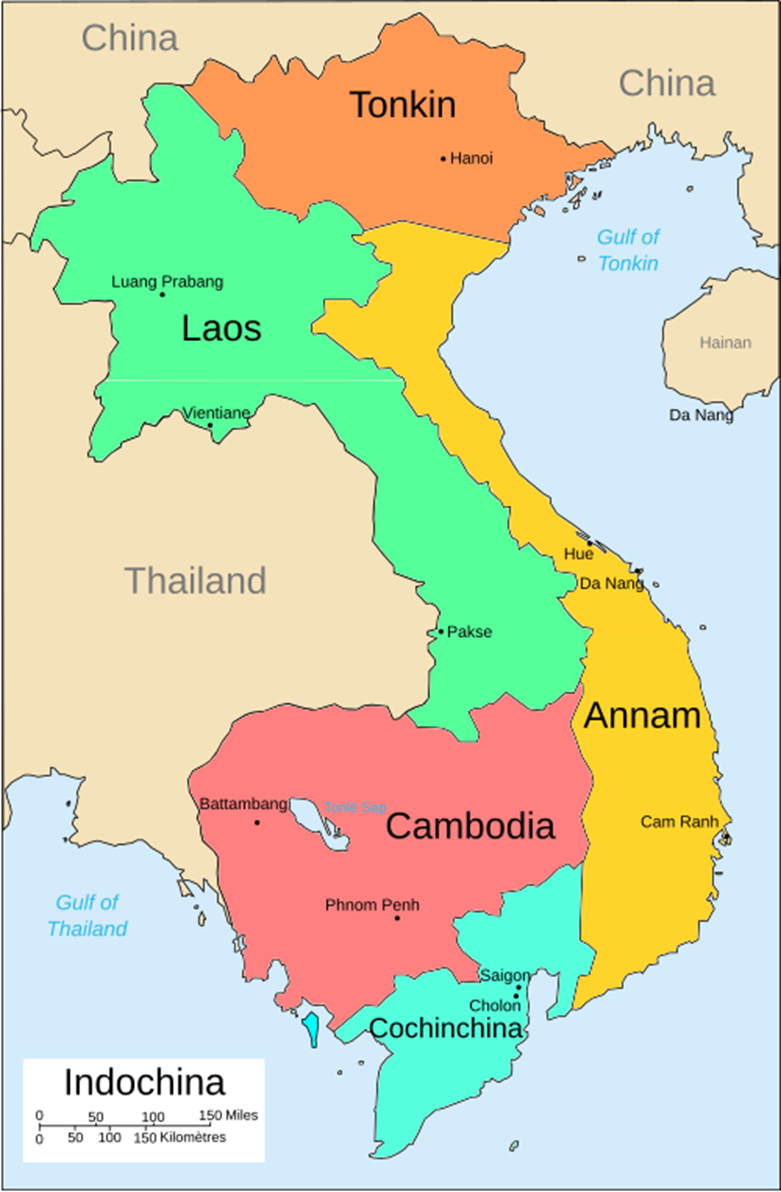
The creation of French Indochina was not instantaneous but rather evolved through incremental conquest and diplomatic maneuvering spanning three decades. French involvement in Vietnam began in earnest in 1858 when Admiral Rigault de Genouilly, under orders from Napoleon III, attacked the port city of Tourane (modern-day Da Nang). Though this initial campaign proved inconclusive, subsequent military operations led to the capture of Saigon in February 1859. By the Treaty of Saigon in June 1862, the Vietnamese emperor was forced to cede three eastern provinces to France, formally establishing the colony of Cochinchina (southern Vietnam) in 1864. The French then methodically expanded northward, absorbing additional Mekong Delta territories in 1867.
In Cambodia, French protection followed a different path. Cambodian King Norodom, facing pressure from both Siam (Thailand) and Vietnam, requested French protection in 1863, a request formalized through treaty and later recognized by Siam in 1867. France subsequently faced a critical challenge in its northern ambitions: resistance from the Vietnamese court and military. Following the Sino-French War (1884–1885), France defeated Chinese forces and imposed protectorates over Tonkin (northern Vietnam) and Annam (central Vietnam). The consolidation of these territories occurred officially on October 17, 1887, with the establishment of the Indochinese Union, which combined the colony of Cochinchina with the protectorates of Annam, Tonkin, and Cambodia. Laos was added to the federation in 1899 following the Franco-Siamese crisis of 1893, when France compelled Siam to cede territories east of the Mekong River. Finally, the Chinese leasehold of Guangzhouwan was incorporated in 1898 but returned to China in 1945.

Administrative Structure and Governance
French Indochina operated under a centralized administrative system with supreme authority vested in a French governor-general. The governor-general, supported by an advisory Indochinese Supreme Council, wielded absolute legislative, executive, and military power. Hanoi served as the capital from 1902 to 1945, with Saigon assuming the role before and after this period. The federation comprised one direct colony (Cochinchina) and four protectorates (Annam, Tonkin, Cambodia, and Laos), each with distinct administrative arrangements.
In Cochinchina, as a direct French colony, French administrators governed through a colonial governor, with local French officials heading each district. The protectorates ostensibly preserved indigenous monarchies—the Nguyễn emperors ruled Annam and Tonkin nominally, while kings governed Cambodia and Laos—yet real authority rested entirely with French resident-superiors who controlled taxation, military matters, justice, and administration. From 1898 onward, as French administrator Ernest Lévecque noted, “in the Kingdom of Annam there are no longer two governments, but only one,” reflecting France’s systematic consolidation of power. Local rulers became figureheads; their decrees required French approval, and their kingdoms existed as subordinate administrative entities within the greater imperial structure.
Economic Exploitation and Development
French Indochina was explicitly designated a colonie d’exploitation—a colony for economic exploitation. Governor-General Paul Doumer, who arrived in 1897 and initiated systematic economic reorganization, viewed Indochina primarily as a source of raw materials and markets for French industries. This policy generated immense wealth for France and a small colonial elite, while impoverishing the vast indigenous majority.
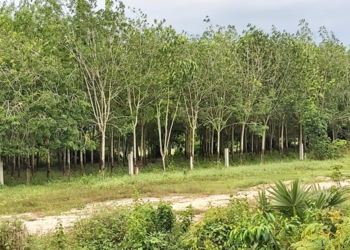
The colonial economy rested on several pillars. First, monopolies on opium, salt, and rice alcohol generated approximately 44 percent of the colonial government’s budget in 1920, though this proportion declined to 20 percent by 1930 as economic diversification occurred. Second, agricultural extraction expanded dramatically: rice production in the Mekong Delta quadrupled between 1880 and 1930 through investment in irrigation infrastructure; rubber plantations flourished in Cochinchina and Annam, employing tens of thousands of workers under brutal conditions; and new crops including corn, cotton, tea, and coffee were introduced. Third, mining operations extracting coal, tin, and rare minerals enriched French investors. Fourth, France invested heavily in infrastructure—railways like the Hanoi-Saigon line and the Kunming-Haiphong route, ports, roads, and bridges—though these were designed primarily to facilitate resource extraction and colonial control rather than indigenous development.
By 1940, French Indochina was the second most invested-in French colony after Algeria, with cumulative investments totaling 6.7 million francs. However, profits were overwhelmingly exported to France; reinvestment in local economic development remained minimal. Moreover, the colonial government financed infrastructure through heavy taxation of indigenous populations. Peasants bore the dual burden of increased taxes and forced labor (the corvée system), while colonial monopolies ensured indigenous populations paid inflated prices for essentials. This economic model created a stark divide: French settlers, colonial administrators, and a thin layer of indigenous landowners and merchants prospered, while millions of peasants endured impoverishment, debt bondage, and periodic famine.
Education, Infrastructure, and Cultural Transformation
One of France’s most enduring legacies in Indochina was educational reform. In 1906, Governor-General Jean Baptiste Paul Beau established the Councils for the Improvement of Indigenous Education, initiating the systematic replacement of Confucian education with French-style schooling. The French gradually abolished classical Chinese examinations and Confucian curricula, introducing French language instruction, Western subjects, and French pedagogical methods. By the 1920s, a Franco-Vietnamese educational system had emerged, with French and French-Vietnamese schools serving as instruments to transmit French ideology and administrative practice to a new generation of indigenous functionaries.
This educational transformation was profound. For the first time in Vietnamese history, education became systematized, with distinct levels from primary through university, standardized curricula, and trained teaching corps. French universities and technical schools in Indochina trained indigenous doctors, engineers, and administrators. Yet this modernization served colonial interests: education aimed at creating obedient colonial subjects, not independent thinkers. Despite this limitation, Vietnamese and Cambodian intellectuals who encountered French thought and European civilization often became the vanguard of nationalist movements, as education exposed them to Enlightenment ideals of liberty and self-determination that stood in sharp contradiction to their colonial subjugation.
Additionally, French Indochina experienced substantial infrastructure development. The construction of roads, railways, hospitals, and government buildings modernized urban centers like Hanoi, Ho Chi Minh City (then Saigon), and Phnom Penh. Health and sanitation improvements, though unevenly distributed, contributed to population growth. The French legal system—rooted in the Napoleonic Code—replaced or subordinated indigenous legal traditions, introducing modern administrative law and reshaping property relations.
Resistance, Nationalism, and World War I
From the outset, French rule sparked indigenous resistance. In Vietnam, the Cần Vương (Loyalty to the King) movement of 1885–1889 mobilized peasants and traditional elites against French conquest, resulting in the deaths of approximately 40,000 Christians accused of collaboration with French authorities. Though ultimately suppressed, the Cần Vương presaged deeper nationalist sentiment.
The early twentieth century witnessed organized nationalist movements. The Duy Tân Hội (Modernization Association), founded in 1904 by Phan Bội Châu and Prince Cường Để, sought to expel the French through armed insurrection and Japanese support. The Tonkin Free School, established in Hanoi in 1907, promoted Vietnamese modernization through Western and Japanese models before French authorities closed it. Sporadic uprisings occurred throughout the 1910s, including the Thái Nguyên uprising of 1917–1918 and widespread revolts in Cochinchina and Cambodia. These movements reflected a growing conviction among Vietnamese and other indigenous intellectuals that independence and modernization were prerequisites for national survival.
World War I intensified nationalist sentiment. The French conscripted and recruited approximately 100,000 Vietnamese to serve in Europe, either as combat soldiers or laborers. Nearly 44,000 served in direct combat at the Battles of the Vosges and Verdun. Exposure to European social egalitarianism, political debates, and the brutality of modern war transformed Vietnamese consciousness. Upon returning home, many joined nationalist movements, including the fledgling Communist Party founded by Hồ Chí Minh. Between 1915 and 1920, French Indochina contributed 367 million gold francs to Metropolitan France’s war effort—approximately 60 percent of all colonial financial contributions—and supplied 340,000 tons of raw materials, yet these sacrifices generated resentment rather than gratitude among the indigenous population.
Japanese Occupation and the Collapse of French Authority
The fall of France in June 1940 shattered the myth of French invincibility. Japan, expanding its influence in Asia and seeking to blockade supply routes to China, pressured Vichy French authorities in Indochina. Admiral Jean Decoux, appointed governor-general, negotiated an uneasy modus vivendi with Japanese forces. Under the protocol signed on July 29, 1940, Japan was granted eight airfields, troop deployment rights, and access to Indochina’s financial resources, while French colonial administrators nominally retained their positions. This hybrid arrangement—Franco-Japanese collaboration—lasted until March 1945, when Japan, fearing French collaboration with the approaching Allies, executed a coup de force deposing French administrators and establishing puppet regimes including the puppet Empire of Vietnam under Bảo Đại.
Japanese occupation, though brief, precipitated the final collapse of French colonial legitimacy. The Việt Minh, a nationalist and communist coalition led by Hồ Chí Minh and General Võ Nguyên Giáp, exploited Japanese weakness during the war’s closing months to secure control of northern Vietnam and declare independence on September 2, 1945, establishing the Democratic Republic of Vietnam (DRV).
The First Indochina War and the End of French Rule
France, seeking to restore colonial control, returned to Indochina with British military support in 1945–1946, precipitating the First Indochina War (1946–1954). For eight years, French Union forces battled the Việt Minh across Vietnamese, Cambodian, and Laotian territory. The conflict was brutal and costly, with over 100,000 French military casualties and an estimated one million Vietnamese deaths.
The war’s climax came at the Battle of Điện Biên Phủ in northwestern Vietnam from March to May 1954. French paratroopers, commanded by General Henri Navarre, established a fortified camp intending to sever Việt Minh supply lines into neighboring Laos. However, General Võ Nguyên Giáp maneuvered vast quantities of heavy artillery through difficult mountain terrain and besieged the French garrison. After a two-month siege featuring tenacious ground combat, the French garrison was overwhelmed, with most French soldiers surrendering. This decisive defeat shattered French political will to continue the war.
The Geneva Accords of July 21, 1954, formally ended French Indochina. Vietnam was temporarily partitioned at the seventeenth parallel, with elections planned for 1956 to reunify the country (elections that never occurred). Laos and Cambodia gained independence. France’s colonial empire in Southeast Asia—built over nearly a century through military conquest and sustained through economic exploitation—disintegrated over the course of a single generation.
French Indochina represents a pivotal chapter in Southeast Asian and world history. Over its 67-year existence, French colonial administration transformed the region’s economic structures, educational systems, urban landscapes, and political consciousness. Yet French rule was fundamentally exploitative, enriching metropolitan France and a colonial elite while impoverishing indigenous peasantries through taxation, forced labor, and economic subordination. The colonial project generated the very nationalist movements that ultimately destroyed it: French education exposed Vietnamese, Cambodian, and Laotian intellectuals to liberalism and socialism; French bureaucracy demonstrated the possibility of efficient modern governance; and the experience of Indochinese soldiers in World War I and World War II demonstrated the possibility of defeating European powers.
The legacy of French Indochina extends beyond 1954. The French legal, administrative, and educational systems left lasting imprints on Vietnam, Cambodia, and Laos. The First Indochina War set the stage for the subsequent Vietnam War and decades of regional instability. The Geneva Accords’ partition of Vietnam would generate conflict for two more decades. In broader perspective, French Indochina exemplifies how colonial exploitation, combined with indigenous resistance and international context, inevitably leads to decolonization and nationalist state-building—processes that continue shaping Southeast Asia to the present day.