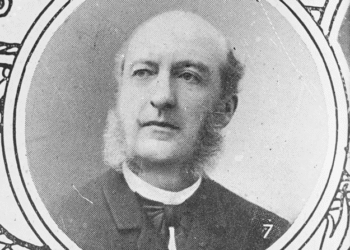
French sinologist Paul Pelliot is usually filed under “Dunhuang” and “Silk Road,” but his work quietly reshaped how we understand Cambodia and the broader history of mainland Southeast Asia. From rediscovering a key Chinese source on Angkor to building libraries that made Khmer studies possible, his legacy runs much deeper than a single cave full of manuscripts.

Introduction: Why Paul Pelliot Matters for Cambodia and Southeast Asia
If you are interested in Cambodian history, Angkor, or the broader story of Southeast Asia in Asian and global perspectives, Paul Pelliot is one of those names that appears in the small print — but influences absolutely everything. He is the scholar who unearthed, edited and translated Chinese sources that are now basic tools for reconstructing Cambodia’s past.
This article focuses less on Pelliot the Central Asian explorer and more on Pelliot the quiet architect of Southeast Asian historiography. You will see how his translation of Zhou Daguan, his work with EFEO, and his approach to Chinese sources made it possible to place Cambodia in a larger, connected Asian narrative rather than treat it as an isolated monument with a few impressive temples.
By the end, you will have a clearer view of what, exactly, Pelliot contributed to Cambodian and Southeast Asian history, how those contributions are still used today, and why it is worth remembering that one of the key “Angkor historians” never actually made a career as a Khmer specialist — he just built the toolbox.
The Chinese Window on Angkor: Pelliot and Zhou Daguan
“The Customs of Cambodia”: a cornerstone for Angkor
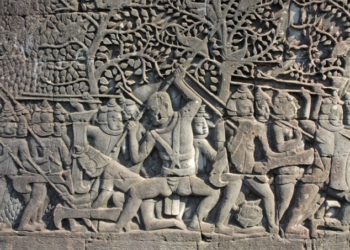
For Cambodian history, Pelliot’s most decisive contribution is his work on Zhou Daguan’s 13th‑century account, often referred to in English as “The Customs of Cambodia.” This Chinese text is the only detailed eyewitness description of Angkor at its political and architectural peak. Without it, historians would have inscriptions, art and archaeology — but far fewer words from someone who actually walked through the city.
Pelliot produced the first rigorous modern edition and French translation of Zhou Daguan, combining philological precision with historical commentary. His edition clarified difficult terms, proposed identifications for places and customs, and linked Zhou’s observations with known features of Angkorian architecture and ritual. Most later translations into European languages have relied directly or indirectly on Pelliot’s work, which means that when we read about Angkor’s royal processions, markets or daily life, Pelliot’s philological fingerprints are often there, silently shaping the narrative.

Reconstructing Angkorian society through a Chinese lens
Thanks to Pelliot’s edition of Zhou Daguan, historians gained a much sharper picture of Angkorian society:
- The structure of the royal court and the king’s ritual centrality.
- The urban layout, with canals, causeways, markets and residential zones.
- Everyday practices, from clothing and food to marriage customs and forms of public punishment.
Pelliot’s commentary helped integrate this Chinese text with Khmer epigraphy and archaeology. In other words, he showed how a foreign observer could be used not as a standalone “exotic” source, but as one piece of a larger Khmer puzzle. This approach allowed Cambodian history to be written as a dialogue between local and external sources rather than as a one‑sided story told only from stone inscriptions.
Building the Tools: EFEO, Libraries and Southeast Asian Studies
Feeding EFEO with books and documents
Before he became famous for Central Asia, Pelliot worked with the Mission archéologique d’Indochine, which evolved into the École française d’Extrême‑Orient (EFEO). In those years, he was a relentless collector of books, pamphlets and documents in Asia, sending thousands of items back to the EFEO library.
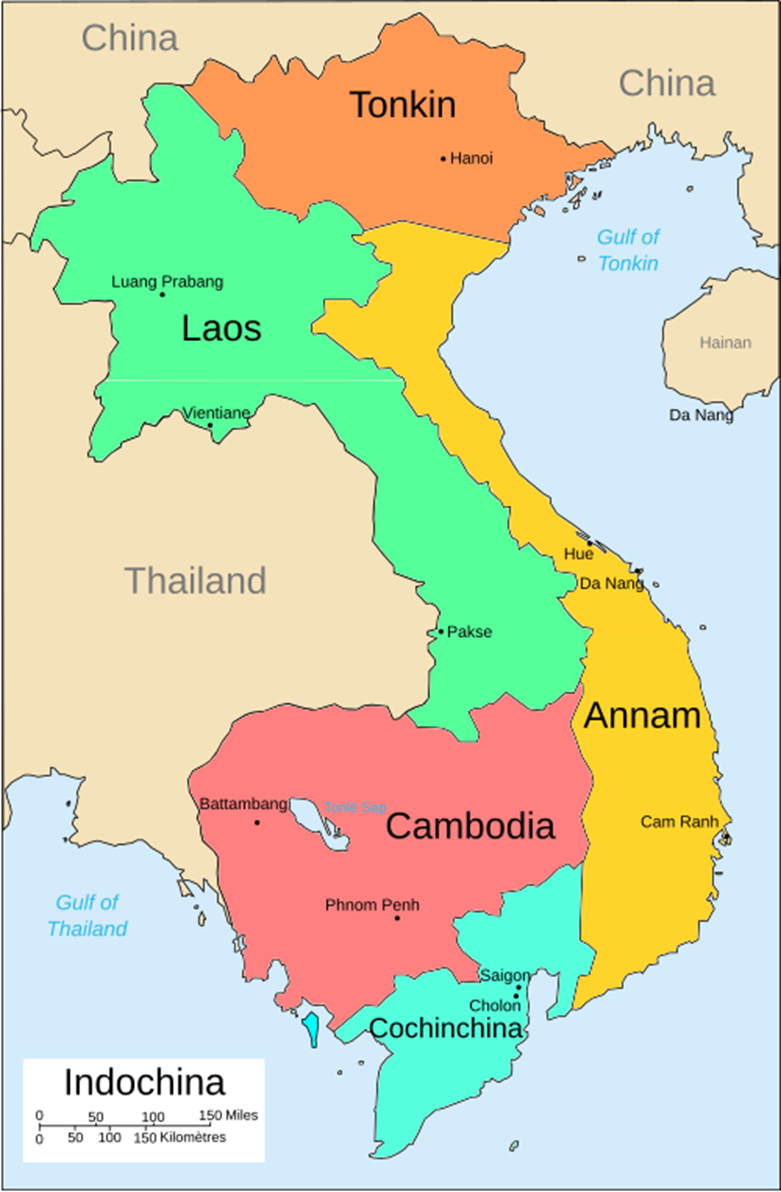
This may sound like mere logistics, but for Southeast Asian history it was infrastructure‑building. The EFEO library in Hanoi (and, later, its offshoots and partner collections) became a major resource for scholars working on Cambodia, Laos, Vietnam, Thailand and beyond. Pelliot’s acquisitions included Chinese works that touched on Southeast Asia — dynastic histories, travel accounts, geographical treatises — that would later be mined for references to the Khmer kingdom, Champa, Dai Viet and the maritime routes of the region.
Pelliot also published a famous article about Chinese sources that gives precious information about Southeast Asie. See our presentation here.
Making Cambodia visible in Chinese sources
One of Pelliot’s specialties was tracking obscure names and places across Chinese historical texts. He identified, re‑identified and sometimes re‑argued the Chinese denominations for Khmer territories, polities and cities. This sort of work sounds dry, but it is crucial: if we cannot link the Chinese “Zhenla” or “Funan” to specific places and periods, the Chinese archives become a blur instead of a usable map of early Southeast Asia.
By refining the way these names were read and placed, Pelliot helped historians situate Cambodia within broader patterns of tribute, diplomacy and trade recorded in Chinese sources. This made it possible to connect the rise and fall of Khmer polities to wider regional dynamics — Chinese court politics, maritime trade shifts, or the changing importance of the Gulf of Thailand and the Mekong corridor.
Beyond Cambodia: Pelliot and the Connected History of Southeast Asia
Central Asia, China and the Southeast Asian crossroads
Pelliot’s Central Asian expeditions and Dunhuang work may seem far from Phnom Penh, but they contributed indirectly to Southeast Asian history by clarifying the broader networks in which Cambodia was embedded. His research on Silk Road routes, Buddhism and Mongol‑era communications illuminated how ideas, motifs, religious texts and even administrative practices could travel from India and Central Asia through China to mainland Southeast Asia.
For example, understanding the spread of certain Buddhist texts and iconographic programs from Central Asia into China and further south helps explain why some elements at Angkor or in mainland Southeast Asian art look surprisingly “cosmopolitan.” Pelliot’s comparative work, linking Chinese records, Central Asian manuscripts and Southeast Asian traces, supported the idea that Khmer civilization was part of a pan‑Asian conversation, not a closed, local development.
Southeast Asia in the mental map of Asian studies
By the early 20th century, sinology and Indian studies were already established fields; Southeast Asia was often treated as a vague middle zone between the two. Pelliot’s attention to Chinese sources on Cambodia and his collaboration with EFEO colleagues working on inscriptions and archaeology contributed to giving Southeast Asia its own profile in academic studies.
In practice, that meant:
- Cambodia appeared regularly in major sinological debates about foreign relations, diplomacy and maritime trade.
- Khmer history was integrated into wider syntheses of Asian history rather than relegated to a side chapter of “Indochina.”
- Students and researchers working on Asia encountered Cambodian topics thanks to the prominence of Pelliot’s editions, articles and bibliographical notes.
He did not “invent” Southeast Asian studies, but he helped ensure that Cambodia and its neighbors would be visible in the large reference works and scholarly ecosystems that shaped the field.
How Pelliot Still Shapes Cambodian and Southeast Asian History Today
Modern Angkor studies still walk in his footsteps
If you read a modern book on Angkor in English, French or another European language, there is a very high chance that:
- Its treatment of Zhou Daguan is based, directly or indirectly, on Pelliot’s edition.
- Its chronology and identification of certain Chinese references to Khmer polities draw on his work or on scholarship that responded to him.
Archaeologists and art historians may be focusing on temples, reservoirs and ceramics, but when they need textual cross‑checks, they often end up in a bibliography where Pelliot’s name appears — sometimes several times. His influence is thus baked into the basic reference framework of Angkor studies and Cambodian medieval history.
A resource — and a reminder of asymmetry
At the same time, Pelliot’s career reminds us that much of what we know about Cambodia and Southeast Asia has passed through foreign hands and foreign archives. Many key sources were edited, translated and interpreted in Paris, Hanoi, London or Tokyo before local scholars could access them easily.
Today, as Cambodian and regional scholars gain greater access to Chinese, French and other archives — and as digital projects open collections to everyone — Pelliot’s work is being revisited, corrected, expanded and localized. His contributions remain valuable, but they are now part of a broader, more inclusive rewriting of Southeast Asian history that brings Cambodian voices and perspectives to the center of the story.
Paul Pelliot may be best known as the man who vanished into a Dunhuang cave and emerged with armfuls of manuscripts, but for Cambodia and Southeast Asia his legacy is more subtle and perhaps more important. By rescuing Zhou Daguan’s “Customs of Cambodia,” by feeding EFEO and other institutions with Asian materials, and by clarifying Chinese references to Khmer and neighboring polities, he helped give historians the tools to write Cambodia into the wider history of Asia. Today, as that history is re‑examined from the region itself, Pelliot’s work stands both as a foundational layer and as a reminder of the long, sometimes uneven journey by which Southeast Asia entered the global historical conversation.
Sources & further reading / To know more
- Editions and translations of Zhou Daguan’s “Customs of Cambodia”
Modern translations and studies that discuss Pelliot’s pioneering edition and how it shaped our understanding of Angkor. - Works on Chinese sources for early Southeast Asian history
Surveys and monographs that explore how Chinese dynastic histories and travelogues depict Khmer, Champa, and neighboring polities. - Histories of the École française d’Extrême‑Orient (EFEO)
Institutional histories showing how EFEO’s collections and staff, including Pelliot, contributed to building Cambodian and regional studies. - Studies on the integration of Southeast Asia in Asian trade and diplomacy
Research highlighting how Chinese and other external records place Cambodia within wider maritime and overland networks. - Biographical essays on Paul Pelliot
Scholarly and more popular portraits of Pelliot that emphasize his role in linking Chinese, Central Asian and Southeast Asian materials. - Angkor and global medieval history
Works that situate Angkorian Cambodia in a connected medieval world, often relying on the very textual traditions that Pelliot helped bring to light.
Pascal Médeville is a writer and digital publisher based in Cambodia, specializing in Asian history, languages and heritage. He writes regularly about Cambodian and Southeast Asian topics, from Angkorian chronicles to modern cultural networks, and enjoys following the paper trails that connect local stories to wider Asian archives.