Estimated reading time: 7 minutes. About the time it takes a Cambodian train to make you appreciate the scenery.
Cambodia’s railway system has survived colonial rule, war, neglect and reconstruction. From the first trains to Battambang and Poipet to today’s revived routes to Sihanoukville, its history mirrors the country’s turbulent modern journey.
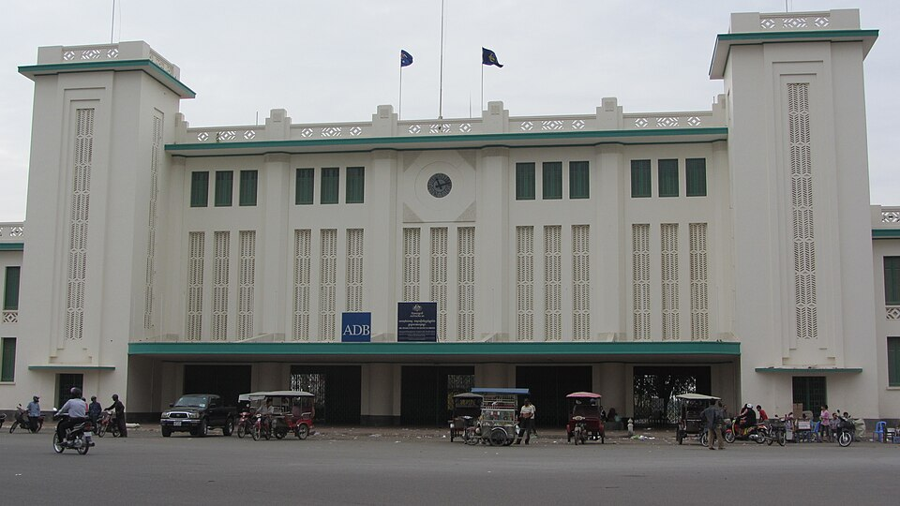
Cambodia’s railway system is more than a collection of tracks crossing the countryside. It is a remarkably good way to understand the country’s modern history. The railway was introduced during the French colonial period, expanded after independence, damaged during decades of conflict, and eventually brought back to life through a major international rehabilitation program.
Today, Cambodia has two principal railway lines. The Northern Line connects Phnom Penh with Poipet on the Thai border, while the Southern Line links the capital with Sihanoukville and its deep-water port. Together, they form a network of roughly 650 kilometers.
For travelers, the railway offers an alternative way to see Cambodia. For historians, however, it tells a much larger story about colonial ambitions, economic independence, war, reconstruction and Cambodia’s continuing integration with its neighbors.
The Birth of Cambodia’s Railway
French colonial ambitions
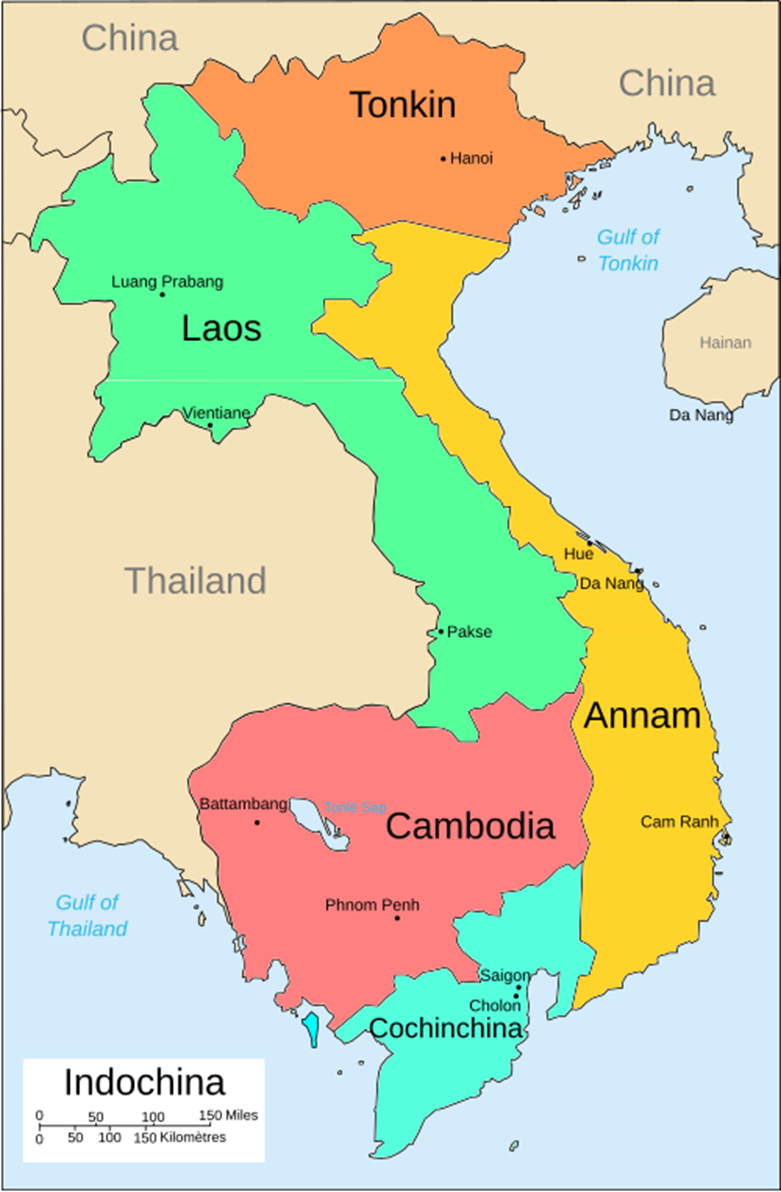
The origins of Cambodia’s modern railway system lie in the French colonial period. By the early twentieth century, railway construction was becoming an essential part of the infrastructure of French Indochina. Railways could move agricultural products, passengers, troops and commercial goods more efficiently than Cambodia’s traditional network of waterways and rough roads.
The first major Cambodian railway was the Northern Line, designed to connect Phnom Penh with the northwest of the country and ultimately with the railway system of Thailand.
Construction began around 1929 and continued in stages. The first section, from Phnom Penh toward Pursat, opened in 1932. The line subsequently advanced through the important agricultural areas of western Cambodia, including Battambang and Sisophon. The final connection toward Poipet and the Thai border was completed in 1942.
The railway was built as a single-track, one-meter-gauge line, a technical choice that would remain characteristic of Cambodia’s railway system.
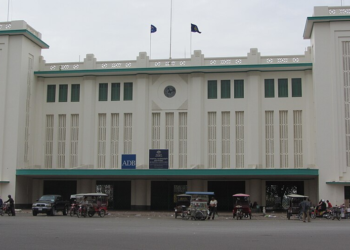
Phnom Penh Railway Station
The opening of Phnom Penh’s railway station in 1932 marked an important moment in the country’s transportation history. The station became one of the capital’s significant pieces of colonial infrastructure and remains a recognizable landmark today.
The railway transformed the relationship between Phnom Penh and the provinces. Battambang, in particular, was an important destination because of its agricultural wealth and rice production.
The railway was therefore not simply about passengers. It was also about moving Cambodia’s agricultural output toward markets and connecting the country’s economic heartland with the capital.
The Northern Line and Cambodia’s Western Frontier
The Northern Line eventually stretched about 386 kilometers from Phnom Penh to Poipet. Its route passes through several historically and economically important parts of Cambodia, including Pursat, Battambang and Sisophon.
Its connection with Thailand was particularly significant. Railways do not respect national borders very well when they are working properly, which is precisely their usefulness.
The Cambodian network could potentially become part of a much larger regional railway system linking Thailand and the rest of mainland Southeast Asia. But politics repeatedly interrupted this possibility.
Cambodia’s northwest was affected by territorial changes and the complex relations between Cambodia, Thailand and French Indochina. Cross-border railway services were interrupted more than once during the turbulent decades surrounding the Second World War and Cambodian independence.
In 1952, railway lines within Cambodia were consolidated under Cambodian administration, marking an important step toward a national railway system.
Building a Railway to the Sea
After Cambodia gained independence in 1953, the country’s transportation priorities changed.
One of the most important projects of the new Cambodian state was the development of an independent deep-water port at Sihanoukville, then commonly known as Kompong Som. Cambodia had historically depended heavily on ports outside its territory, particularly Saigon and facilities in Thailand.
A railway connecting Phnom Penh with the new port was therefore more than a transportation project. It was part of Cambodia’s effort to strengthen its economic independence.
The Southern Line
Construction of the Southern Line began in 1960 with assistance from several international partners, including France, West Germany and China. The 264-kilometer line eventually connected Phnom Penh with Sihanoukville and was completed in 1969.
The Southern Line became an important freight corridor. It connected the capital and the country’s interior with Sihanoukville’s maritime gateway, allowing goods to move between the railway network and international shipping.
The railway system had now acquired a clear national purpose: the Northern Line connected Cambodia with its western frontier and Thailand, while the Southern Line connected the country to the sea.
Railways During War and Revolution
The Cambodian railway system’s most difficult period came during the decades of war and political upheaval beginning in the late 1960s and continuing through the 1970s.
Railway infrastructure became vulnerable to sabotage, attacks and military operations. Bridges, tracks, rolling stock and railway facilities were damaged, while insecurity made regular civilian transportation increasingly difficult.
The situation became catastrophic under the Khmer Rouge regime, when normal economic and transportation systems collapsed. Railway services were suspended and significant parts of the infrastructure were damaged or destroyed.
The railway, like so much of Cambodia’s physical infrastructure, emerged from the period of conflict severely weakened.
The Long Road Back
After 1979, railway services gradually resumed, but rebuilding the system was extremely difficult.
Cambodia had limited financial resources, damaged infrastructure and continuing security problems. Tracks and bridges required extensive repairs, while locomotives and carriages were increasingly old. In some areas, railway infrastructure had suffered from years of inadequate maintenance.
For a country recovering from decades of conflict, rebuilding a railway was a formidable undertaking.
By the 2000s, the situation had become particularly serious. Passenger services had been discontinued on major sections, while freight operations were constrained by poor infrastructure and unreliable equipment. Cambodia’s railway system was in danger of becoming little more than a historical curiosity with tracks.
Fortunately, history had not quite finished with it.
The Great Railway Rehabilitation
A major turning point came in the 2000s with an ambitious rehabilitation program supported by the Asian Development Bank, the Australian government and other partners.
The project involved rehabilitating hundreds of kilometers of track, bridges and associated infrastructure, reconstructing the missing railway connection to Thailand and improving railway access to Sihanoukville Port.
The work was neither simple nor painless. Railway rehabilitation affected communities living alongside the tracks, and the project involved a major resettlement program. Thousands of households were affected by efforts to restore a safer and more modern railway corridor.
The Southern Line was progressively reopened, with sections returning to service between 2010 and 2012. The railway connection to Sihanoukville was subsequently restored, giving Cambodia an important rail link between the capital and its principal seaport.
Reconnecting Cambodia by Rail
The restoration of the Northern Line was even more symbolically important.
For decades, a section between Sisophon and Poipet had been missing. Reconstructing this roughly 48-kilometer section restored the physical connection between Cambodia and Thailand. The northern railway connection was completed in 2018.
This was not simply an engineering achievement. It restored an important piece of Cambodia’s pre-war transportation geography.
The railway once again stretched from Phnom Penh toward the Thai border, creating the possibility of Cambodia participating more fully in regional railway connectivity.
Cambodia’s Railway System Today
Today, Cambodia’s railway network remains relatively modest compared with those of neighboring Thailand and Vietnam. It consists principally of the Northern and Southern lines, both using single-track, one-meter-gauge infrastructure.
Railway operations are associated with Royal Railway Cambodia, which operates passenger and freight services under a concession arrangement with the Cambodian government. The company entered into its railway concession agreement in 2009, during the broader period of railway rehabilitation.
The railway has regained a practical role in passenger and freight transportation, although it remains considerably slower than road transport on many routes.
That is not necessarily a disadvantage for travelers.
A Cambodian train is not designed to win a race against a minivan. Its appeal lies elsewhere: the slower pace allows passengers to see villages, rice fields, sugar palms, markets and rural landscapes that can pass by in a blur from a highway.
The Future of Cambodia’s Railways
Cambodia’s railway revival is not necessarily the end of the story.
The government and development partners have been considering further improvements to railway capacity and regional connectivity. Development plans include potential new railway routes, industrial connections and improvements to existing infrastructure. There have also been discussions about upgrading existing lines and studying higher-speed railway options.
The strategic importance of the railway is considerable. Cambodia sits between Thailand and Vietnam, while its ports provide access to international maritime trade. Better railway connections could therefore strengthen freight transportation and Cambodia’s role in regional supply chains.
The biggest challenge is finding the right balance between investment, speed, freight capacity and passenger demand. A railway does not have to become a high-speed train to be useful. Sometimes a reliable, affordable and well-maintained railway is already a very good start.
Conclusion
The history of Cambodia’s railway system is ultimately a story of resilience. Built under French colonial rule, expanded by an independent Cambodia, shattered by war and revolution, and painstakingly reconstructed after decades of conflict, the railway has repeatedly adapted to the country’s changing circumstances. Today, its tracks once again connect Phnom Penh with the provinces, the sea and the Thai frontier, giving Cambodia’s railway a future as well as a past.
About the author
Pascal Médeville is a writer and digital publisher based in Cambodia and the author of Wonders of Cambodia. His work focuses on Cambodian history, culture, places, traditions and everyday life, combining research with an accessible and personal style. For articles such as this one, he is particularly interested in the infrastructure and historical connections that help explain how modern Cambodia came to be.