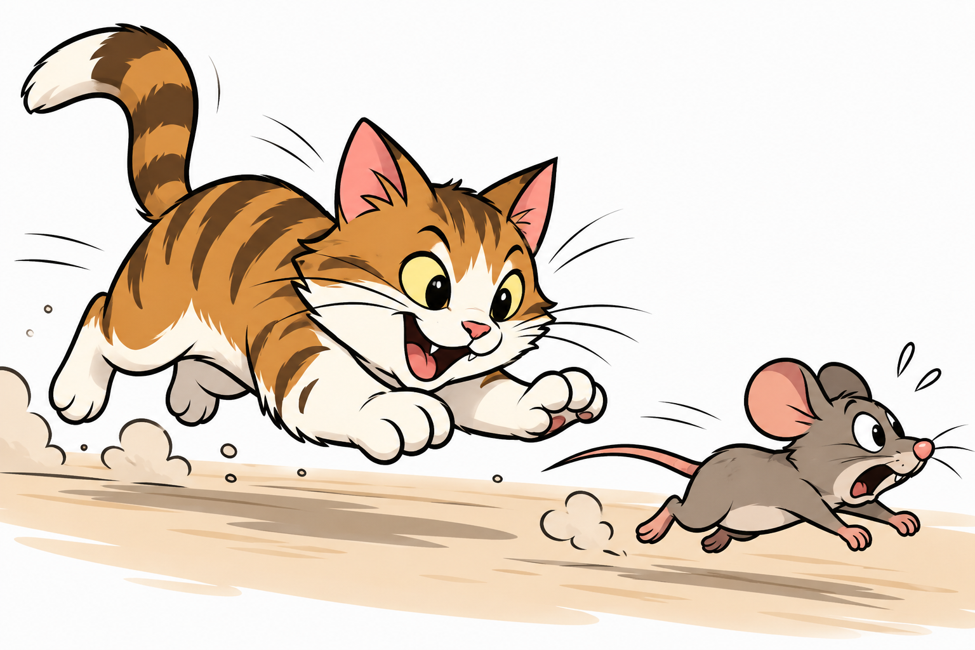
A child has a small lump on the neck, and a Cambodian parent may do something that looks rather mysterious to an outsider: draw a cat on the skin above it.
Why a cat?
The answer is hiding in the Khmer language. The medical term កូនកណ្ដុរ (koun kândor) means a lymph node. But taken literally, the expression means “little mouse.” So when a child has an enlarged lymph node in the neck, the little mouse has, quite logically, attracted a cat. It is a charming example of how a Khmer word can turn an ordinary medical problem into a little piece of everyday humor.
A lymph node called a little mouse
In Khmer, កូនកណ្ដុរ is the term used for a lymph node. When the nodes in a child’s neck become enlarged, they can be felt as small lumps under the skin.
The expression itself is wonderfully concrete. កូន means a child, offspring, or little one, while កណ្ដុរ means mouse. Put together, កូនកណ្ដុរ is literally a “little mouse.”
For someone learning Khmer, this is the sort of expression that can easily make you stop and wonder why an anatomical structure has been given such an unexpected name. For Cambodian children, however, the little mouse may occasionally acquire a very visible predator.
Enter the cat
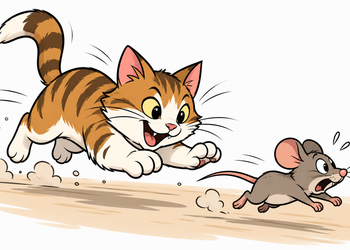
This is where the traditional practice becomes amusing: when a child has an enlarged lymph node, some Cambodian parents traditionally draw a cat’s head on the neck, near the affected area. The reasoning is wonderfully simple: if there is a little mouse, draw a cat to catch it.
There is no need to look for an elaborate symbolism. The connection comes from the literal meaning of the Khmer word itself.
A medical term has produced a tiny visual joke:
កូនកណ្ដុរ, the little mouse → the cat comes to catch it.
The drawing should not be confused with a modern medical treatment. An enlarged lymph node has a medical cause, often related to an infection, and persistent or concerning swelling should be assessed appropriately by a healthcare professional. The cat belongs to popular practice, not clinical medicine.
When language becomes a picture
What makes this custom particularly interesting is that the joke is lost in translation. If កូនកណ្ដុរ is translated simply as “lymph node,” there is nothing particularly funny about the cat. But keep the literal meaning, “little mouse,” and the whole scene becomes immediately understandable.
This is one of the pleasures of learning another language. Words sometimes carry associations that disappear completely in translation.
English medical terminology tends to be descriptive or technical. Khmer, like many languages, can also use vivid everyday imagery to name parts of the body and things people encounter in ordinary life. Here, a lymph node becomes a little mouse, and the mouse naturally suggests its feline enemy.
A small piece of Khmer everyday humor
There is something wonderfully economical about the idea. Nobody needs to explain a complicated theory. The child has a កូនកណ្ដុរ. The word says “little mouse.” Someone draws a cat. The result is almost a miniature cartoon appearing on the child’s neck.
For an outsider, the cat may seem completely inexplicable. For someone who understands the Khmer word, the logic is hiding in plain sight. It also shows how cultural knowledge can reside in apparently ordinary vocabulary. A single Khmer word can carry a medical meaning, a literal image, and a joke at the same time.
The cat is in the vocabulary
The interesting thing about this Cambodian practice is therefore not really the drawing itself. It is the chain of associations created by language. កូនកណ្ដុរ is a lymph node. Literally, it is a little mouse. Once the mouse appears, the cat is never far behind.
It is a tiny example of something that happens constantly in everyday language: words create images, images create associations, and associations sometimes become habits.
A Cambodian child may simply have a swollen lymph node. But in Khmer, that lymph node has already become a little mouse. And if there is a mouse on the neck, someone might as well send in the cat.
Conclusion
The cat drawn on a Cambodian child’s neck makes much more sense once you know the Khmer word កូនកណ្ដុរ. It is the medical term for a lymph node, but its literal meaning is “little mouse.” That simple linguistic coincidence explains the feline visitor.
It is a wonderfully small example of Khmer cultural logic: practical, visual, and occasionally mischievous. Sometimes the best way to understand an everyday Cambodian custom is not to search for an ancient legend, but to pay attention to what the words literally say.