The story of the Khmer Krom is one of rivers, rice paddies, and resilience – a chapter in Southeast Asia’s long narrative of borders that move while people stay put. From ancient empires to modern politics, their history tells us much about where identity truly resides.

The Khmer Krom (ខ្មែរក្រោម) – literally “Lower Khmer” – are ethnic Khmers living south of today’s Cambodian border, in the Mekong Delta region of Vietnam. Their ancestral homeland of Kampuchea Krom once formed the southern heartland of the Khmer Empire before slipping, inch by inch and treaty by treaty, under Vietnamese rule. Yet the people remained, keeping their language, Theravāda Buddhist faith, and cultural memory alive.
For history enthusiasts, travelers, and anyone curious about the subtle politics of borders in Southeast Asia, this story matters. It reveals not just how frontiers moved on maps, but how identities endure through centuries of conquest, colonial rearrangements, and modern statecraft.
Understanding the Khmer Krom is to see that borders are mercurial things – drawn by emperors, colonial administrators, and generals – but belonging, that invisible thread of culture and memory, rarely obeys the same logic.
From Angkor’s Southern Provinces to the Mekong Delta
Long before Angkor, the Mekong Delta had already seen civilization glimmer across its waterways. The ancient kingdom of Funan (1st-6th centuries CE), centered around the delta and coastal areas, was one of Southeast Asia’s earliest urbanized states. Traders from India and China sailed upriver to ports like Oc Eo, bringing Sanskrit inscriptions, Buddhist relics, and bronze artistry. Funan laid the foundations of early Khmer culture and maritime prosperity – proof that long before politics bent borders, the Khmer world was already flowing freely between river and sea.

In the glory days of Angkor (9th to 15th centuries), the Khmer world stretched far into what is now southern Vietnam. The Khmer called it Kampuchea Krom (កម្ពុជាក្រោម) (“Lower Cambodia”), an area laced with waterways and fertile floodplains where rice thrived as abundantly as the lotus blossoms in temple ponds.
But geography, as ever, is destiny. The Mekong Delta, with its endless rivers and open coasts, attracted Vietnamese settlers moving southward – a process known as Nam Tiến (“the Southern Advance”). By the 17th century, waves of migration, encouraged by Vietnamese rulers, were reshaping the region’s demographic landscape.
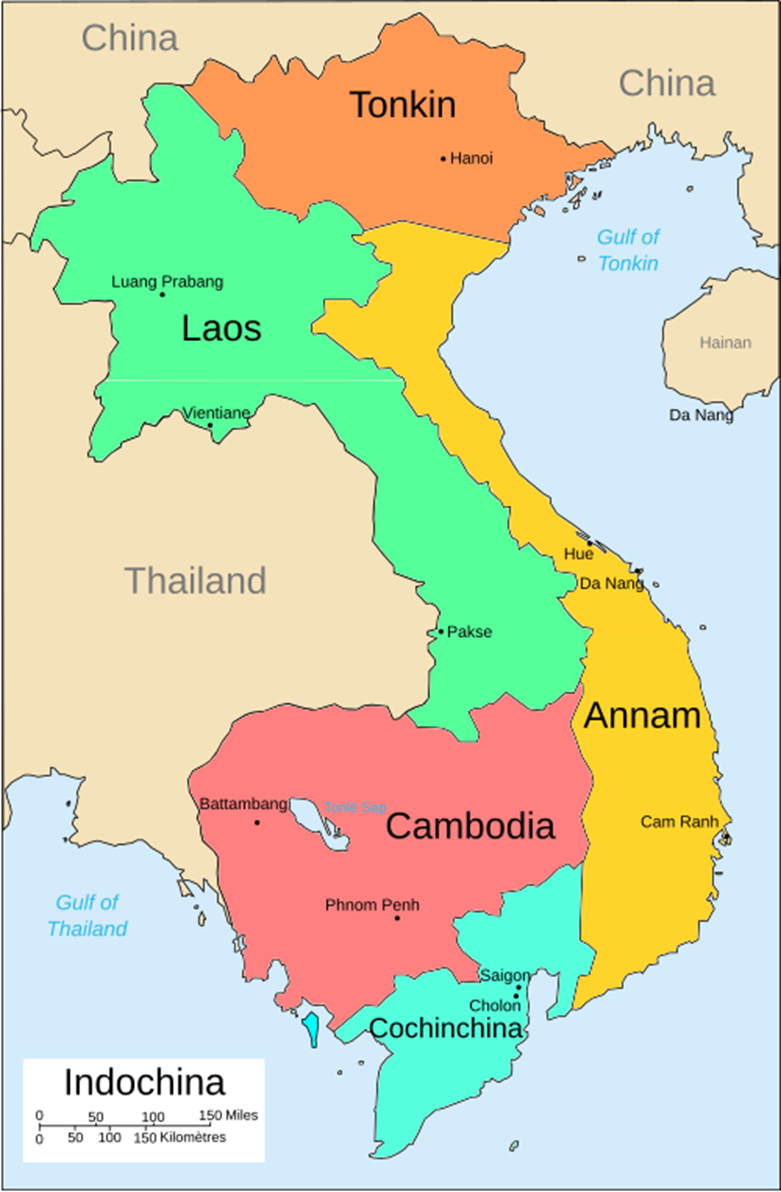
Border changes often happened quietly, through feudal marriages, trade accords, and later, French colonial bureaucracy. When the French unified Cambodia, Vietnam, and Laos into Indochine Française, they treated the delta as part of Cochinchina (southern Vietnam). This decision, once scribbled into colonial administrative maps, proved remarkably durable.
For Cambodians, the loss of Kampuchea Krom remains a historical wound – a symbol of national contraction and a rallying point for cultural pride. For the Khmer Krom themselves, it has meant living as minorities within a state that sees them as Vietnamese citizens first and Khmer only by heritage.
Despite centuries under Vietnamese governance, many Khmer Krom communities speak Khmer at home and follow the same Theravāda Buddhist traditions as monks across Cambodia. Pagodas (or wats) are not only places of worship but also schools, cultural centers, and archives of identity. In these temple compounds, ancient scripts are recited, Pali chants echo, and boys still dream of ordination.
However, maintaining these traditions hasn’t always been easy. Reports by human rights observers and NGOs over the past decades note restrictions on religious and linguistic expression, though experiences vary widely depending on local authorities.
The delicate position of the Khmer Krom lies in being doubly bound – legally Vietnamese, culturally Khmer. This duality reflects the whole Southeast Asian paradox: borders are recent and political; identities are ancient and lived.
Khmer Krom monks occasionally travel to Cambodia for education, often finding themselves welcomed as brothers but also perceived as “from across the border.” Such moments show how belonging, like rivers, divides yet connects.
The Politics of Memory and Belonging
In Phnom Penh, the Khmer Krom issue still stirs emotion. Monks and intellectuals frequently invoke Kampuchea Krom as a reminder of lost land and enduring kinship. Yet official Cambodian policy remains diplomatic: the government recognizes Vietnam’s current borders as defined by international treaties. Still, symbolic solidarity – through cultural events, discussions, and support networks – helps keep the flame alive.
From Hanoi’s viewpoint, the Khmer Krom are part of Vietnam’s rich ethnic mosaic, one among dozens of minority groups. The government promotes a narrative of national unity, emphasizing development and integration. Critics, however, note that state narratives often dilute ethnic distinctiveness in favor of a seamless “Vietnamese identity,” leaving limited space for pluralism.
The Khmer Krom diaspora, especially in the United States, Canada, and France, plays a crucial role in keeping issues of recognition and cultural rights on the global agenda. Organizations in these communities document oral histories, publish literature, and campaign for greater cultural autonomy and heritage preservation.
One might say the Khmer Krom, dispersed yet connected, have become the quiet historians of their own survival.
Living Between Rivers: Culture in the Everyday
Food, Festivals, and the Flow of Continuity
Cultural endurance often hides in plain sight – in a pot of samlor korko simmering on a delta stove, or in the lilting rhythm of Khmer lullabies sung in Vietnamese air. The Khmer Krom observe traditional festivals such as Chaul Chnam Thmey (Khmer New Year) and Pchum Ben, keeping calendars that don’t always match those of their neighbors but mark a calendar of memory nonetheless.
Monks continue to be central to social cohesion. Even in bustling delta towns like Trà Vinh or Sóc Trăng, temple gatherings blend Khmer sermons, Vietnamese translation, and a spontaneous mix of laughter, incense, and the smell of coconut sticky rice – cultural diplomacy of the gentlest kind.
Borders in Southeast Asia are rarely static. They flow like the Mekong itself – eroding here, depositing there, and reshaping identity along the way. The history of the Khmer Krom is therefore not just about loss; it is also about persistence. Their communities remind us that culture can survive without territory, though not without memory.
For modern readers – researchers, travelers, or anyone seeking to grasp the region’s complexity – the Khmer Krom story illustrates how national narratives often simplify what the landscape refuses to confirm. In other words, the borders moved, but the people remained Khmer in heart and habit.
The Khmer Krom embody the messy elegance of Southeast Asian history: where empires fade, languages persist, and the rice still grows tall regardless of what the map says. To understand them is to understand that identity, like water, finds its own continuity – sometimes quietly, always enduring.
Sources & further reading / To know more
- Chandler, David P. — A History of Cambodia: A foundational text covering Khmer civilization and territorial shifts.
- UNESCO Archives on Southeast Asian Cultural Heritage: Broad overviews of intangible heritage shared across Vietnam and Cambodia.
- Southeast Asian Studies Journal (Kyoto University): Several papers on Mekong Delta ethnography and borderland identities.
Brief list of notable Khmer Krom figures:
Son Ngoc Thanh (Sơn Ngọc Thành) – Khmer nationalist and politician, born in Trà Vinh; briefly prime minister in 1945 and later a key anti-Sihanouk opposition figure.
Son Ngoc Minh – Early Cambodian communist leader and co-founder of the Communist Party of Kampuchea.
Son Sen – Senior Khmer Rouge leader, Minister of National Defence in Democratic Kampuchea, originally from a Khmer Krom background.
Tou Samouth – Influential communist organizer and early mentor of Pol Pot, listed among notable Khmer Krom.
Chau Sen Cocsal – Cambodian politician and brief prime minister in 1962, identified as Khmer Krom.
Dien Del – Khmer Krom general who served in the army of the Khmer Republic and later in anti-Vietnamese resistance forces.
Chavay Kuy (Son Kuy) – Revered Khmer Krom leader and martyr from the Mekong Delta region, remembered for resisting Vietnamese encroachment and symbolizing Khmer Krom resilience and cultural pride.
Kaing Kek Iew (Duch) – Former head of the Khmer Rouge S-21 prison at Tuol Sleng, widely reported to be of Khmer Krom origin, later tried and convicted by the Extraordinary Chambers in the Courts of Cambodia.
Ieng Sary – Khmer Rouge member and Minister of Foreign Affairs of Democratic Kampuchea
About the author
Pascal Médeville is a writer and digital publisher based in Cambodia. He explores Southeast Asian history, culture, and cross-border identities through his online projects, including Wonders of Cambodia and Khmerologie. His work often weaves local color with historical curiosity – and the occasional dash of dry humor.