Hidden in plain sight across Thailand’s Lower Isan, the Khmer Surin – or Northern Khmer – form one of mainland Southeast Asia’s largest “invisible” minorities. How many are they, where do they live, and what does their demographic story tell us about the long, tangled relationship between Cambodia and Thailand? Let’s put some numbers (and nuance) on the map.

Introduction: Counting a People Between Two Worlds
When people think of the Khmer, they usually picture Cambodia: Angkor Wat at sunrise, Phnom Penh’s riverside, a country where Khmer identity is the obvious majority. Step a little further north into Thailand’s Lower Isan, however, and you meet a quieter branch of the same family: the Khmer Surin (Khmer: ខ្មែរសុរិន្ទ), or Northern Khmer, a community that is numerous, ancient, and surprisingly under‑documented.
This article looks at one deceptively simple question: how many Khmer Surin are there today? We will explore population estimates, provincial distributions, and the reasons why their numbers are so hard to pin down with confidence. Along the way, we will touch on history, language, and the politics of census-taking in Thailand – because counting minorities is rarely a neutral exercise.
If you are interested in Khmer culture beyond Cambodia’s borders, in Isan’s multi-layered ethnic map, or in the delicate art of estimating populations that states prefer to blur, this guide is for you. You will not emerge with a single magic number, but with a clearer understanding of the range, the margins of error, and the forces shaping them.
“Khmer Surin” is a popular label for the Northern Khmer, ethnic Khmers native to Thailand’s northeastern region of Isan, especially the provinces of Surin, Sisaket and Buriram. They are often described as “Thais of Khmer origin,” a diplomatic expression which conveniently emphasizes nationality while leaving ethnicity politely in the background.
Linguistically, Khmer Surin speak a regional variety of Khmer (Northern Khmer), closely related to standard Cambodian Khmer but with its own sound shifts and a good dose of Thai and Isan influence. Culturally, they share many practices with Cambodians across the border, from Theravada Buddhism to ancestor rituals and festivals, while also being deeply embedded in Thai state institutions, schooling and media.
A Long Presence North of the Border
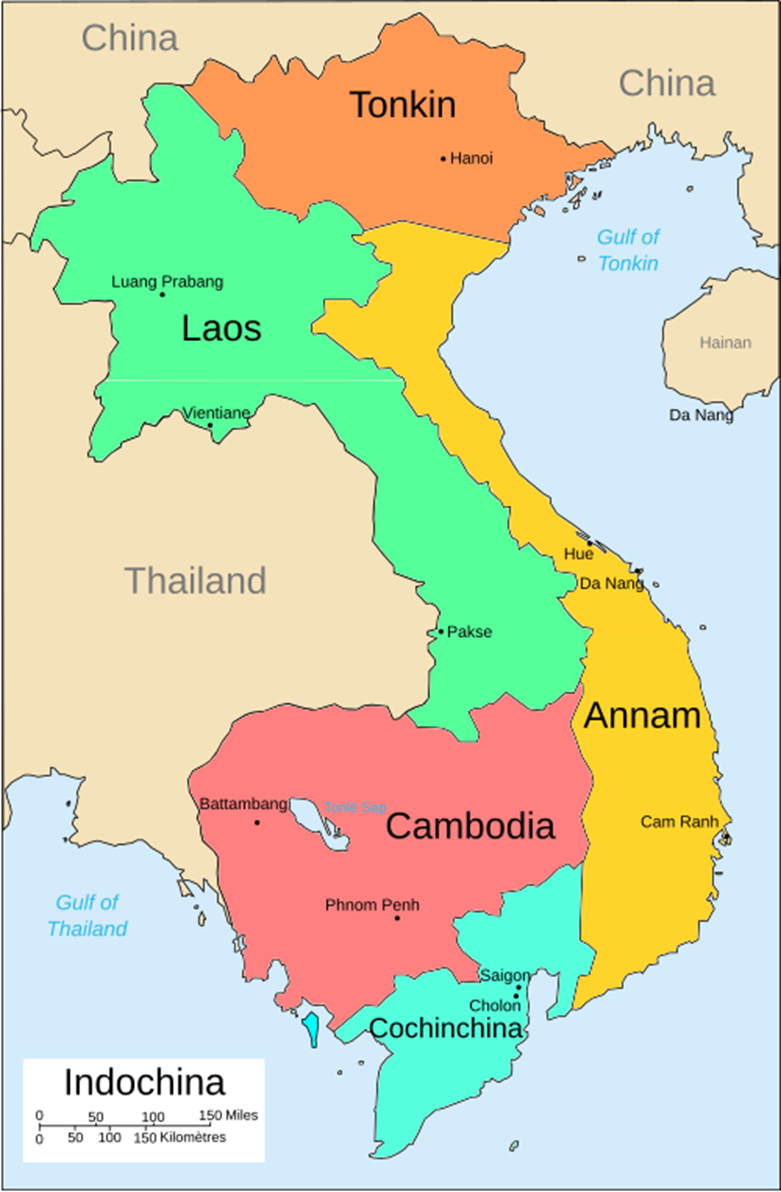
Northern Khmer communities did not “migrate” en masse to Thailand last week; they are heirs to the old Khmer-speaking polities that once controlled much of what is now southern Isan. Surin itself was historically part of the Khmer cultural zone and was formally annexed into the expanding Thai kingdom only in the 18th century.
In other words, many Khmer Surin did not move to Thailand; Thailand moved to them. Borders shifted, states consolidated, and over time Khmer villagers north of the modern frontier became Thai citizens, often without moving more than a few kilometers. This historical layering explains why a large Khmer-speaking population still exists in Surin, Buriram and Sisaket today.
How Many Khmer Surin Are There?
The Most Common Estimate: Around 1.5 Million
A widely cited estimate for the Northern Khmer / Khmer Surin population in Thailand is about 1.5 million people. One major ethnolinguistic database, for instance, lists roughly 1,496,000 Northern Khmer within Thailand, with a near-identical figure when counting the same people group across all countries – essentially confirming that almost all Northern Khmer live inside Thailand’s borders.
More general overviews of the Khmer people converge on a similar order of magnitude, noting that over one million Khmer live in Thailand, mostly in Surin, Buriram and Sisaket. When you see phrases such as “more than one million” or “around 1.5 million,” you are looking at the same demographic ballpark – a sizeable minority, roughly comparable to the population of a small European country.
Of course, a good demographer never trusts a single number without asking: how was it produced, and what exactly is being counted? “Khmer speakers”? “People of Khmer origin”? “Self-identified Khmers”? Each category comes with a different headcount and a different political sensitivity.
Historical Benchmarks: Hundreds of Thousands in the 1960s
To appreciate today’s estimates, it helps to look back at older figures. A study in the mid‑1960s suggested that there were already more than 600,000 Khmers in just three Lower Isan provinces: Buriram, Surin and Sisaket. This number did not even attempt to count Khmer minorities in other Thai provinces such as Trat or Sa Kaeo.
If you take those 1960s figures as a baseline and factor in several decades of natural population growth (even accounting for urban migration and assimilation), it is entirely plausible that the Khmer Surin population would now sit comfortably above one million, and potentially around the 1.5 million mark often quoted today.
In short, both historical and contemporary sources agree on one point: the Khmer Surin are not a tiny relic group but a major regional population inside Thailand.
Where Do the Khmer Surin Live?
Geographically, Khmer Surin communities are concentrated in the Lower Northeastern region of Thailand, commonly known as Lower Isan. The core provinces are:
- Surin – long recognized as having the largest Khmer-speaking population in the country and a historic center of Khmer culture north of the border.
- Sisaket – home to numerous Khmer villages and temple sites, especially along the Cambodian frontier.
- Buriram – a province where the Khmer presence has become more visible in recent decades, both in heritage promotion and in language use statistics.
Northern Khmer speakers are also found in pockets of other border provinces such as Prachinburi, Sa Kaeo, Trat and Chanthaburi, though in smaller proportions.
Provincial Percentages: Language as a Proxy
Thailand’s national census does not openly categorize citizens by ethnicity, but older data on Khmer language ability provide useful hints. In Surin province, for instance, about 63.4% of the population spoke Khmer in 1990, and 47.2% still did so in 2000 – a decline, but still nearly half the provincial population.
Comparable figures for other provinces show:
- Sisaket: around 30.2% Khmer speakers in 1990, falling to 26.2% in 2000.
- Buriram: a striking jump from 0.3% in 1990 (almost certainly an undercount or categorization issue) to 27.6% in 2000, reflecting changing survey methods or political comfort with declaring Khmer language ability.
These statistics must be handled with care – they measure language use, not ethnic identity, and they were collected more than twenty years ago. But they confirm what local observers and community organizations have long said: Khmer-speaking populations form substantial proportions of several Lower Isan provinces.
Why Is the Khmer Surin Population Hard to Measure?
National Identity vs. Ethnic Identity
One major obstacle is that the Thai state has consistently prioritized a unified Thai national identity over ethnic categories in its official statistics. Censuses typically record nationality and sometimes mother tongue, but not “Khmer” as a distinct ethnic entry in the way many Western censuses list minorities.
Moreover, many Khmer Surin are bilingual or trilingual (Northern Khmer, Isan/Lao, Central Thai) and may choose to report Thai or Isan as their primary language, especially when schooling and administration are conducted in Thai. This is not merely a technical problem; it reflects a delicate balancing act between preserving local identity and navigating national expectations.
Assimilation, Stigma and the Quiet Khmer
Another issue is assimilation over time. In some families, Khmer is no longer transmitted to the youngest generation, or is reserved for grandparents and ritual contexts, while everyday life runs in Thai or Isan. In such cases, should we count only fluent Khmer speakers, or also those who consider themselves “of Khmer descent” but no longer use the language? The headcount changes dramatically depending on the answer.
Historical stigma also plays a role. In certain periods, being marked as “Khmer” in Thailand carried associations of backwardness or foreignness, encouraging quiet assimilation into a broader Thai rural identity. This does not erase cultural practices — festivals like Saen Don Ta, an ancestor-honoring rite among ethnic Khmers in Thailand, still thrive — but it does push many people to understate their Khmer background in official contexts.
All this explains why different sources offer slightly different figures and why any population estimate for the Khmer Surin must be presented as a range rather than a rigid, perfectly precise number.
What Do These Numbers Mean for Khmer Culture in Thailand?
A Major Cultural Bridge in Mainland Southeast Asia
When you add up the estimates and look beyond the margins of error, one conclusion is hard to escape: the Khmer Surin are one of Southeast Asia’s most important “bridge communities” between Thailand and Cambodia. Their villages, temples and markets form a continuous cultural corridor where Khmer language, Buddhist rituals and local arts survive on the northern side of the border.
This has concrete implications. A population of over one million Khmer Surin means:
- A large potential audience for cultural and educational initiatives in Northern Khmer.
- A reservoir of cross-border knowledge – from rice farming techniques to ritual specialists – that links Cambodian and Thai landscapes.
- A living laboratory for studying how minority cultures adapt under a strong national framework that promotes a single language in schools and media.
Language Maintenance and Future Trends
The decline in reported Khmer language use between the 1990 and 2000 data in provinces such as Surin suggests pressure towards Thai and Isan, especially among younger generations. At the same time, there is growing interest in intangible heritage and local identities in Thailand, with festivals and cultural programs that highlight ethnic Khmer traditions.
In other words, the mid‑term future of Khmer Surin culture will likely be bilingual and hybrid rather than simply “vanishing.” The community may rely increasingly on Thai for formal domains while maintaining Khmer in rituals, music, and family memory – a pattern familiar to many minority groups across the region.
So, how many Khmer Surin are there? The best available evidence points to well over one million, and probably around 1.5 million people, concentrated in Surin, Sisaket, Buriram and neighboring provinces of Lower Isan. The exact figure will always depend on where we draw the line between language, ancestry and self-identification, but whatever the method, the Khmer Surin clearly form a major, long-standing Khmer population outside Cambodia, quietly weaving together the histories of two neighboring kingdoms.
Pascal Médeville is a writer and digital publisher based in Cambodia, where he explores the intersections of history, language and everyday culture in mainland Southeast Asia. He is the editor of Wonders of Cambodia, where he regularly writes long-form, research-driven articles on Khmer history, minorities and cross-border cultural landscapes, including communities like the Khmer Surin.