Southeast Asia, a region that stretches from the mountainous fringes of the Himalayas to the island chains of the Pacific, is home to one of the most diverse human populations on Earth. Its mosaic of cultures, languages, and ethnic identities reflects centuries of migration, trade, conquest, and adaptation to varied environments. From the megacities along the coasts to the remote highland villages tucked within tropical forests, the population of Southeast Asia represents both continuity and change, ancient roots and modern transformations.

Diversity of Ethnic Groups
The peoples of Southeast Asia are often described as a great ethnolinguistic kaleidoscope. The region resounds with hundreds of languages and dialects, belonging primarily to five large families: Austroasiatic, Austronesian, Tai-Kadai, Sino-Tibetan, and Hmong-Mien. Within these broad categories, countless subgroups define their identities through their oral traditions, rituals, and localized histories.
The Austroasiatic family, with Khmer and Mon as its best-known representatives, carries echoes of some of the earliest settled civilizations in the region. The Khmer of Cambodia, numbering over 16 million today, form a nation rooted in the legacies of Angkor, while the smaller Mon communities in Myanmar and Thailand remind us of once-powerful kingdoms now long absorbed into larger polities.
The Austronesian peoples, with their mastery of seafaring and dispersed settlements, dominate much of island Southeast Asia. From the Tagalog and Visayan peoples of the Philippines to the Javanese, Balinese, and Bugis of Indonesia, they represent an oceanic civilization that stretches as far as Madagascar in the west and Polynesia in the east. The Malays form another key branch, straddling the coasts of Malaysia, southern Thailand, Indonesia, and Brunei, historically tied together through the currents of Islam and maritime commerce.
The Tai-Kadai peoples, such as the Thai, Lao, and Shan, trace their cultural and linguistic origins to migrations from the southern fringes of China, bringing with them traditions of wet rice cultivation and Buddhist kingship. Their spread reshaped the mainland valleys where they established lasting monarchies. Sino-Tibetan groups, including the numerous Chinese communities across the region, form both ancient trading diasporas and more recent migrant communities, with significant influence on the economies and urban landscapes of Singapore, Malaysia, Thailand, and beyond.
Finally, the Hmong-Mien peoples, concentrated in upland zones of Vietnam, Laos, and Thailand, represent the vibrancy of highland traditions—colorful textiles, shifting cultivation, and clan-based social systems. Beyond these main blocs exist smaller groups such as the Chamic-speaking peoples, descendants of the Champa kingdom, or the Papuan communities of eastern Indonesia, whose ancestral ties link them to Melanesia.
Distribution of Populations
Southeast Asia is not only diverse but also unevenly populated. The great river valleys and coastal plains have long attracted dense settlement. Java, an island barely the size of England, counts more than 150 million inhabitants, making it one of the most densely populated regions in the world. The Red River Delta of Vietnam and the Chao Phraya basin of Thailand likewise support dense populations through intensive rice agriculture.
In contrast, the forests, mountains, and archipelagos of Borneo, New Guinea, and the northern highlands remain sparsely inhabited, populated by smaller communities that maintain distinctive traditions. This uneven balance between fertile valleys and frontier zones has shaped political dynamics for centuries, as lowland kingdoms sought to draw upland peoples into tributary networks, with varying degrees of success.
Urbanization is a more recent factor reshaping distribution. Jakarta, Manila, Bangkok, Ho Chi Minh City, and Kuala Lumpur have become sprawling megacities, drawing migrants from rural areas and transforming cultural patterns, while also creating immense social pressures in terms of housing, infrastructure, and inequality.
Historical Forces
The story of Southeast Asia’s population cannot be separated from the great historical forces that have shaped the region. Indianization and the spread of Hindu-Buddhist polities brought not only new cosmologies but also formed powerful centers of population around temples and palaces. The spread of Islam from the 13th century onward created new networks of identity, uniting far-flung trading ports under a shared religious framework.
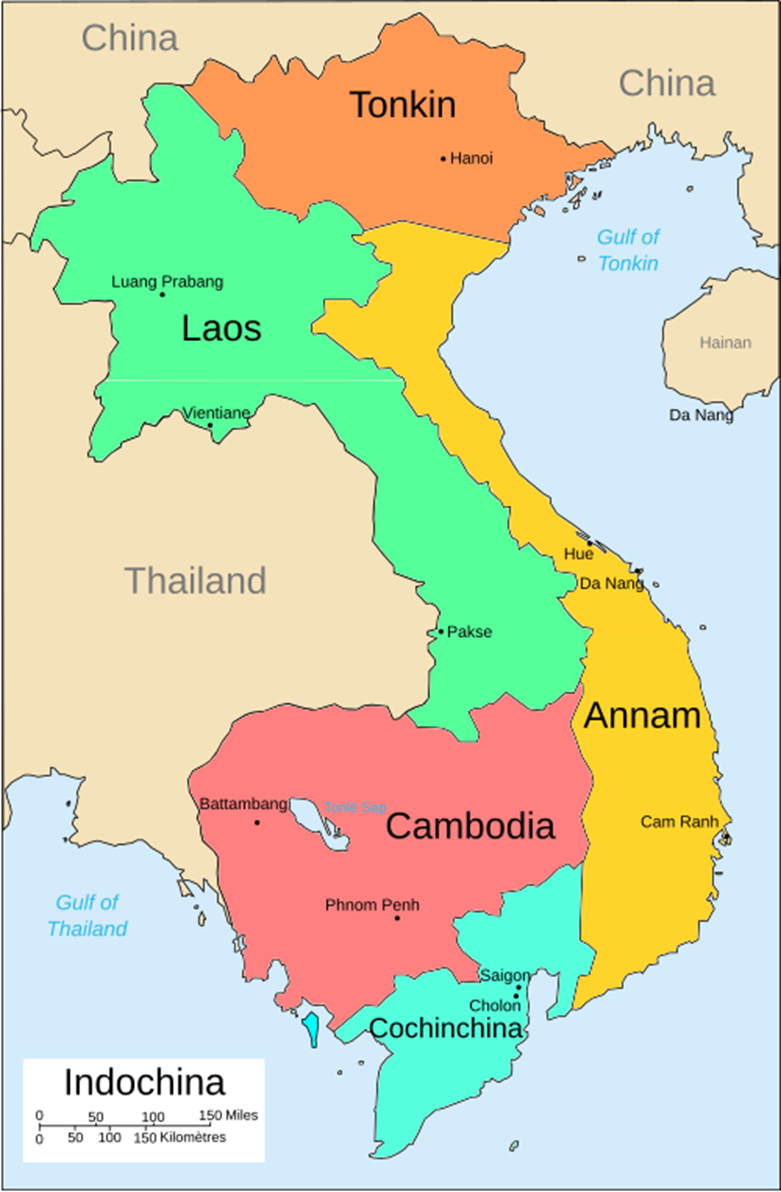
Colonialism dramatically reshaped demographics. The Spanish promoted Catholicism in the Philippines, creating the only majority-Christian nation in Asia outside of East Timor. The Dutch and British cultivated commercial crops on estates, importing Chinese and Indian laborers whose descendants remain a crucial part of today’s populations. The French in Indochina encouraged infrastructural integration that tied remote villages into colonial economies. Such interventions often redefined ethnic relations, favoring some groups for administrative roles while marginalizing others—a legacy still evident in social tensions today.
Migration has been equally transformative. The Chinese diaspora, often called the overseas Chinese, built strong mercantile communities from Saigon to Penang, Manila to Singapore. Indian merchants, Tamils and Gujaratis among them, settled in Malaysia and Myanmar, leaving vibrant Hindu temples and culinary influences. Over time, most of these communities developed hybrid identities, mixing ancestral customs with local practices.
Languages and Identities
Language is central to the population landscape of Southeast Asia. Bahasa Indonesia and Malay connect millions across islands and peninsulas, functioning as lingua francas that bridge dozens of smaller tongues. Thai and Lao remain emblematic of their nations, tied to Buddhist rituals and political sovereignty. Vietnamese, with its tonal richness, reflects Sino-Tibetan influence while expressing a fierce national continuity.
Yet in remote corners, fragile languages persist, often spoken by only a few thousand individuals. The preservation of such tongues, from the Katuic languages of Laos to the Dayak languages of Borneo, is essential to maintaining the cultural fabric of the region. Each carries a unique worldview, embedded in proverbs, mythologies, and oral histories.
Identity, however, is rarely static. Many Southeast Asians balance multiple layers of belonging: ethnic heritage, national identity, religious affiliation, and local attachment. A person may be Tagalog but also Filipino, Catholic, and inhabitant of Manila. A Hmong farmer may see his identity framed by clan relations as much as by citizenship in Laos or Vietnam. This complexity defies simplistic categorizations.
Population Growth and Change
In demographic terms, Southeast Asia has undergone rapid transformation in the past century. Populations have grown dramatically: Indonesia now exceeds 270 million, the Philippines over 110 million, and Vietnam nearly 100 million. In contrast, nations like Brunei and Timor-Leste remain under two million, reflecting vastly different scales of society.
Population growth is uneven. Fertility rates have declined significantly in Thailand, Singapore, and Vietnam, reflecting modernization, education, and rising costs of living. By contrast, the Philippines and Timor-Leste continue to experience higher birth rates, forecasting a youthful population structure. These demographic divergences carry implications for labor markets, migration, and social development.
Migration within the region is a defining feature today. Millions of Burmese, Cambodian, and Indonesian workers travel to Thailand, Malaysia, and Singapore in search of employment, often in construction, domestic service, and fisheries. This movement sustains economies but also raises concerns over exploitation and statelessness. Simultaneously, rural-to-urban migration continues to swell the great cities, reshaping community life.
Religion and Social Cohesion
Religion intersects powerfully with population identity. Buddhism, in its Theravāda form, is the majority religion in Myanmar, Thailand, Laos, and Cambodia. Islam dominates Indonesia, Malaysia, and Brunei, forming one of the world’s largest Muslim populations. Catholicism characterizes the Philippines, while Vietnam blends Mahayana Buddhism, Confucianism, Taoism, and indigenous practices. Animist traditions survive among upland groups, intertwined with rituals tied to land, spirits, and ancestors.
These religious affiliations are not merely private beliefs but social structures that unify communities, regulate social life, and connect the living with the divine. Festivals, pilgrimages, and rituals often serve as markers of belonging, reinforcing the bonds that hold societies together even in the face of rapid modernization.
Challenges of the Future
Today, Southeast Asia’s population faces both opportunities and challenges. Its youthful demographic in many areas promises dynamism and labor capacity, but also demands education, employment, and healthcare. Urban growth, if unmanaged, risks producing vast informal settlements, with consequences for health and security.
Equally, environmental pressures loom. Rising seas threaten coastal settlements; forest loss jeopardizes the livelihoods of indigenous groups. Migration tied to climate and economy will likely continue, testing the resilience of social fabrics. The preservation of minority languages, cultures, and traditions remains uncertain amid globalization, yet many communities are actively working to safeguard their identities in creative and adaptive ways.
Conclusion
The population of Southeast Asia is not a mere collection of numbers but a living, breathing tapestry woven from centuries of movement, adaptation, and cultural exchange. Its diversity is staggering, its histories layered, and its futures uncertain yet full of potential. In every crowded market, remote mountain hamlet, and island fishing village lives a fragment of this vast human mosaic. To speak of the population of Southeast Asia is to speak of resilience, plurality, and the unending dialogue between tradition and change.