Chinese Cambodians, often called Sino-Khmers, form one of the most influential and historically rooted minority communities in the country, linking Cambodia to centuries of maritime trade and transnational Chinese networks. Their presence has shaped Cambodia’s economy, urban life, religious landscape, and cuisine, while also generating complex questions of identity, belonging, and memory in the wake of twentieth-century upheavals.

Early arrivals and royal courts
Chinese contacts with the lands that are now Cambodia go back at least to the early Funan and Chenla polities, when Chinese envoys recorded tributary missions and described a cosmopolitan trading world at the edge of the South China Sea. By the late thirteenth century, the Chinese envoy Zhou Daguan noted Chinese merchants in Angkor, signaling that permanent or semi-permanent Chinese sojourning in Cambodia was already under way. In later centuries, Chinese traders and interpreters became fixtures at royal courts, mediating commerce and diplomacy between Khmer rulers, neighboring polities, and Chinese authorities across the sea.
Waves of migration and settlement
Larger, traceable waves of Chinese migration intensified after the fall of the Song and then the Ming dynasties, when instability in southern China pushed Hokkiens, Cantonese, and Hainanese toward Southeast Asian ports. In Cambodia, especially from the seventeenth century onward, many settled in places like Phnom Penh, Kampot, Takeo, and along the Mekong-Tonle Sap river system, where they carved out roles in riverine trade, pepper and rice cultivation, and small industry. Later arrivals included Teochew and Hakka communities in the nineteenth and early twentieth centuries, often following kinship chains and dialect networks that linked specific Cambodian towns to home counties in Fujian or Guangdong.
Intermarriage and the making of Sino-Khmer
Because early migrants were disproportionately male, intermarriage with Khmer women was common, producing mixed families whose descendants might speak Khmer, practice Theravada Buddhism, yet retain Chinese surnames and ancestral rites. Many such descendants identified fully as Cambodian while preserving elements of Chinese custom such as ancestor tablets, festival foods, and small family shrines, creating layered identities rather than rigid ethnic boundaries. Over the generations, this process of creolization produced the figure of the Sino-Khmer merchant or landholder who was at once embedded in Khmer society and tied to broader Chinese commercial worlds.
Dialect communities and urban life
Within the broader label “Chinese Cambodians” exist multiple dialect and native-place communities—Hokkien, Cantonese, Teochew, Hainanese, Hakka—each historically associated with particular economic niches and urban neighborhoods. In Phnom Penh and provincial towns, these communities built assembly halls, dialect temples, and schools, creating dense social worlds where language, marriage, and business often followed dialect lines. The resulting mosaic meant that a walk through a Chinese quarter could pass shrines dedicated to different patron deities, shops bearing distinctive scripts, and associations that linked Cambodian streets to lineage halls in southern China.
Economic roles and stereotypes
For much of the colonial and postcolonial period, Chinese Cambodians were heavily represented in commerce: rice milling and export, retail shops, credit networks, market distribution, and later light industry. In rural areas, Chinese middlemen bought surplus rice, lent money to farmers, and operated transport, gaining reputations as both indispensable intermediaries and, in some Khmer narratives, as usurious creditors. Such economic visibility fed ambivalent stereotypes—admiration for business acumen and thrift coexisted with suspicion of clannishness and foreign loyalties, a pattern seen elsewhere in Southeast Asia’s Chinese diasporas.
Colonial policies and identity
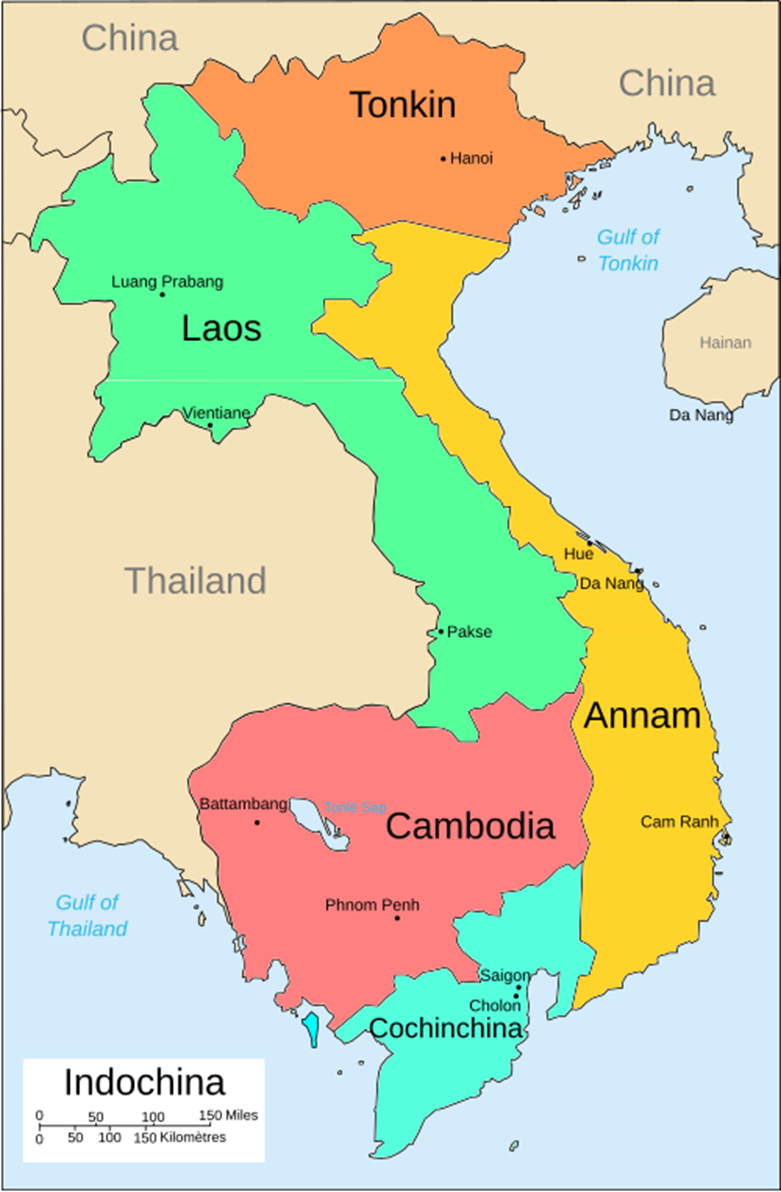
French colonial authorities both relied on and constrained the Chinese community, recognizing Chinese leaders, taxing Chinese businesses, and sometimes classifying them as a distinct legal category separate from “indigenous” Khmer. At the same time, political events in China—the 1911 revolution, Kuomintang nationalism, and later the rise of the People’s Republic—resonated strongly among Cambodian Chinese, who donated to schools, patriotic causes, and newspapers. Many families thus balanced triple frameworks of belonging: attachment to ancestral counties in China, legal residence in Cambodia, and participation in transnational Chinese politics and culture.
The Democratic Kampuchea regime (1975–1979) was catastrophic for Chinese Cambodians, who were targeted as “bourgeois” and “foreign” elements, especially in urban centers. Many were executed, deported to the countryside for forced labor, and pressured to abandon language and visible cultural markers, while others attempted to survive by blending into Khmer villages. By the 1980s, estimates suggest that a community once numbering in the hundreds of thousands had been reduced to a fraction of its prewar size, through killings, starvation, and mass flight to Vietnam and further overseas.
Post-1979 revival and new migrations
Following the fall of the Khmer Rouge and the gradual reopening of Cambodia, surviving Chinese Cambodians began to reconstitute associations, repair temples, and quietly revive clan and dialect networks. From the 1990s onward, economic liberalization and the normalization of Sino–Cambodian relations encouraged both the return of overseas Sino-Khmer families and the arrival of new migrants from mainland China, especially in construction, casinos, and trade. This has layered a fresh wave of Mandarin-speaking newcomers onto older Khmer-speaking or Teochew-speaking Chinese Cambodians, producing generational and cultural contrasts within what outsiders may see as a single “Chinese” community.
Religion, ritual, and sacred spaces
Religiously, many Chinese Cambodians practice a syncretic blend of Mahayana or popular Chinese Buddhism, folk deity worship, ancestor veneration, and, through intermarriage, elements of Theravada Buddhism. Chinese shrines dedicated to Mazu, Guan Gong, and various tutelary spirits coexist with Khmer pagodas, and some families maintain both ancestral altars at home and ties to local wats. Spirit mediumship, festival processions, and geomancy practices have all migrated into the Cambodian context, sometimes adopted or reinterpreted by Khmer neighbors in a shared ritual economy.
Before 1975, Chinese associations in Cambodia supported a lively ecosystem of Chinese-language schools and newspapers tied to different political orientations—Kuomintang, PRC-aligned, or more neutral commercial interests. These institutions were largely destroyed or suppressed under the Khmer Rouge, but since the 1990s Chinese language education has resurged through community schools, private academies, and Confucius Institutes, paralleling China’s growing soft power. For younger Sino-Khmer, this has opened paths to trilingualism—Khmer, a Chinese variety (often Mandarin today rather than ancestral dialects), and sometimes English—reshaping class and career trajectories.
Cuisine and everyday cultural influence
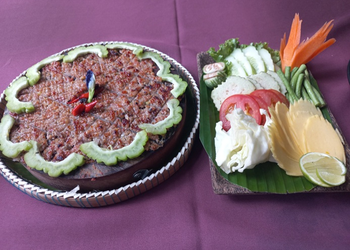
Chinese Cambodians have left a deep imprint on Cambodian foodways, especially in noodle dishes, soy-based condiments, festive sweets, and techniques like stir-frying and noodle-pulling adapted to local tastes. Phnom Penh’s markets and street stalls reflect this layering: Chinese-style roast meats, rice porridge, and Teochew-influenced noodle soups sit alongside classic Khmer curries and grilled river fish, often run by families with mixed heritage. Lunar New Year, Qingming ancestor offerings, and mid-autumn mooncakes have also become visible fixtures in urban Cambodian life, even for many families that primarily identify as Khmer.
Contemporary identity and representation
Today, Chinese Cambodians encompass a spectrum from highly assimilated Khmer-speaking families to recent arrivals who remain oriented toward mainland Chinese media, business, and social circles. Questions of identity—whether to emphasize Khmer roots, Chinese ancestry, or a hyphenated Sino-Khmer position—often intersect with class, generation, and gender, especially for youth navigating social media, migration, and global Chinese imaginaries. At the same time, public debate about China’s geopolitical and economic role in Cambodia can inadvertently flatten the diversity of Chinese Cambodian experiences, making nuanced historical and ethnographic work all the more vital.
Memory, research, and future directions
Scholarship on Chinese Cambodians continues to grow, drawing on archives, oral histories, and transnational genealogy projects to reconstruct family trajectories disrupted by war and revolution. Community initiatives, from temple committees to youth groups, are documenting rituals, dialects, and life stories, helping younger generations understand both the trauma and resilience that shaped their elders’ lives. As Cambodia’s society modernizes and diversifies, Chinese Cambodians remain a key lens for understanding how commerce, culture, and identity weave together across the South China Sea world.