Wonders of Cambodia
  • Home
  • Culture
  • Cuisine
  • Tourism
  • Business
  • Life in Cambodia
  • 中文
  • ខ្មែរ
  • Français
  • Tiếng Việt
  • e-Books
No Result
View All Result
  • Home
  • Culture
  • Cuisine
  • Tourism
  • Business
  • Life in Cambodia
  • 中文
  • ខ្មែរ
  • Français
  • Tiếng Việt
  • e-Books
No Result
View All Result
Wonders of Cambodia
No Result
View All Result
Home Culture History

The Rise and Legacy of the Khmer Empire: Southeast Asia’s Ancient Powerhouse

Pascal Medeville by Pascal Medeville
March 21, 2026
in History
Reading Time: 6 mins read
0
Map of Southeast Asia circa 900 CE, showing the Khmer Empire in red, Champa in yellow and Haripunjaya in light Green plus additional surrounding states (Jembezmamy, CC0, via Wikimedia Commons)

The Khmer Empire was one of Southeast Asia’s most influential civilizations, dominating large parts of the region from the early 9th to the mid-15th century. Its heartland was in what is now Cambodia, with Angkor as its legendary capital. The empire is renowned for its innovative urban planning, monumental architecture, and cultural legacy, which continues to shape Cambodian identity today.

Origins and Formation

The Khmer Empire emerged from the decline of the Chenla kingdom, which was itself the successor to the ancient state of Funan. Jayavarman II, a prominent Khmer prince, is traditionally credited with founding the empire. In 802 CE, he declared himself a “universal ruler” (chakravartin) on Phnom Kulen, symbolically breaking free from Javanese influence and instituting the devaraja (god-king) cult, which merged royal authority with divine status.

Political Organization and Administration

  • The empire at its peak encompassed modern Cambodia, parts of Laos, Vietnam, and Thailand.
  • A hierarchical society was ruled by the king, who presided over a sophisticated bureaucracy.
  • Society was stratified into noble families, military and high officials, administrators, artisans, farmers, and slaves.
  • The Khmer used an effective system of taxation—generally in rice—and conscripted labor for state projects.

Society and Economy

  • Most of the population were rice farmers, supported by extensive irrigation and hydraulic infrastructure.
  • The economy thrived on agriculture, particularly wet-rice cultivation aided by massive reservoirs (barays) and a complex network of canals.
  • Artisans, such as stone carvers, potters, goldsmiths, and weavers, contributed to both the local economy and the construction of monumental architecture.
  • Trade and diplomacy linked Angkor to regional powers like China and India.

Religion and Belief

  • Initially, Hinduism (particularly the worship of Shiva and Vishnu) shaped religious and political life.
  • The king was revered as a divine figure, with temple architecture and rituals reinforcing this status.
  • In the 12th–13th centuries, Mahayana Buddhism became prominent under Jayavarman VII, eventually giving way to Theravada Buddhism, which remains central in Cambodia today.
  • Temples were not just places of worship but also administrative and redistributive centers.

Urbanism, Architecture, and Art

Angkor, the empire’s capital, became the world’s largest pre-industrial city.

Major Monuments

  • Angkor Wat: Built by Suryavarman II, it is the largest religious monument on earth, celebrated for its harmony, intricate reliefs, and astronomical orientation.
  • Angkor Thom: Jayavarman VII’s grand city, including the Bayon temple, known for its iconic stone faces.
  • Other significant temples: Banteay Srei (noted for its fine carvings), Ta Prohm and Preah Khan (noted for being overgrown by jungle), and the stepped pyramid of Koh Ker.

Infrastructure

  • Sophisticated city planning featured grid layouts, ceremonial avenues, moats, and gigantic reservoirs.
  • Temples and waterworks were built in alignment with cosmological principles, reflecting the empire’s religious beliefs.

Notable Rulers

  • Jayavarman II (802–850): Founder of the empire, initiated the royal cult, and centralized power.
  • Indravarman I and Yasovarman I: Expanded irrigation systems and constructed major barays.
  • Suryavarman II (1113–1150): Built Angkor Wat, expanded militarily.
  • Jayavarman VII (1181–1219): Major builder, spread Buddhism, and developed healthcare and infrastructure.

Daily Life and Culture

  • Daily life centered on rice farming, religious festivals, temple-building, and artistic pursuits.
  • The arts flourished, especially classical dance (apsara), sculpture, and literature.
  • Society relied on communal labor for construction and maintenance of infrastructure.

Regional Relations and Military

  • The empire engaged in wars and alliances with neighboring states like Champa, Dai Viet, and Siam (Thailand).
  • Notably, Angkor was sacked by the Chams in 1177, but was later recaptured.
  • Diplomatic missions traversed as far as China and India.

Decline and Fall

Multiple factors led to the decline:

  • Environmental strain: Over-expansion of waterworks, deforestation, and droughts undermined agricultural stability.
  • Internal turmoil: Succession crises and the weakening of the god-king system reduced central authority.
  • External pressure: Invasions by Siamese, Chams, and Vietnamese eroded Khmer power.
  • Economic decentralization: Provincial lords gained autonomy, draining the core of its strength.

Angkor was captured by the Siamese in 1431. The center of Cambodian life shifted to the south, and the ruins of Angkor were gradually reclaimed by the jungle.

Legacy

  • The Khmer Empire’s architectural, cultural, and religious innovations are central to Cambodian heritage.
  • Angkor Wat is a national symbol and UNESCO World Heritage Site.
  • Modern Cambodians continue to draw on the legacy of their imperial ancestors for pride and identity.

This enduring civilization stands as a testament to the region’s rich history, blending Indian and indigenous influences into a unique and lasting cultural achievement.

Don’t miss our upcoming articles!

We don’t spam!

Check your INBOX or SPAM folder to confirm your subscription.

Tags: AngkorAngkor WatCambodian HistoryKhmer architectureKhmer EmpireKhmer kingsKingdoms of CambodiaSimili ConsultingSimili TranslationSoutheast Asian Empires
ShareTweet
Previous Post

Picture of the day: Flower of the morning glory

Next Post

Picture of the day: French Coquillettes au Gratin

Pascal Medeville

Pascal Medeville

Author of the blog Wonders of Cambodia, I share my passion for Cambodia through stories, cultural insights, and personal reflections on the country. I'm also the founder of Simili Consulting, where we provide high-quality, professional translation services to international clients.

Related Posts

Rows of mature rubber trees in a plantation in Tbong Khmum Province, Cambodia, with a dirt road in the foreground and green vegetation surrounding the estate
History

French Introduction of Rubber Plantations to Cambodia: How Colonial Ambition Changed the Kingdom’s Landscape

July 19, 2026
Stone pyramid temple of Prasat Thom at Koh Ker, Cambodia, seen from the front with steep central stairway and green vegetation covering its tiers.
History

Who’s Who: Jayavarman IV, The King Who Moved Angkor

July 18, 2026
Kai Yuan Tong Bao (開元通寶) Tang dynasty copper‑alloy cash coins, heavily corroded, shown at high magnification in two paired front‑and‑back views with square central holes and partially legible Chinese characters, to document examples found at Angkor
History

History: Chinese Coins Reveal Hidden Stories of Angkor

July 18, 2026
Sideshow by William Shawcross
Books

Book: Sideshow: Kissinger, Nixon and the Destruction of Cambodia

July 7, 2026
Fourteenth century Sukhothai bronze Buddha statue seated cross-legged in meditation, right hand resting on knee, left hand in lap, with flame-like finial on top of the head.
History

Meet the Neighbors: A Short History of the Thai People

July 6, 2026
Black‑and‑white panoramic view of Pre Rup’s upper terrace at Angkor, showing the central stepped sandstone prasat flanked by two smaller brick towers under a dramatic cloudy sky.
History

Rajendravarman II: Warrior-King Who Reunified Angkor and Reshaped the Khmer Empire

July 19, 2026
Next Post
Picture of the day: French Coquillettes au Gratin

Picture of the day: French Coquillettes au Gratin

  • Trending
  • Comments
  • Latest
The French Protectorate of Cambodia (1863–1953): An Overview

The French Protectorate of Cambodia (1863–1953): An Overview

July 13, 2025
The Franco-Siamese Treaty of 23 March 1907: Borders, Politics, and the Return of Angkor

The Franco-Siamese Treaty of 23 March 1907: Borders, Politics, and the Return of Angkor

February 11, 2026
Cambodian-Vietnamese War (1978-1989)

Cambodian-Vietnamese War (1978-1989)

July 13, 2025
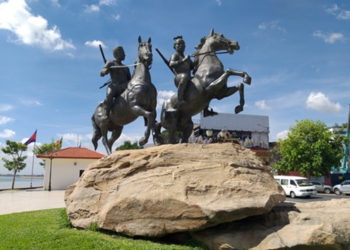
The Legend of Preah Ko Preah Keo: Guardians of Cambodia’s Lost Treasures

The Legend of Preah Ko Preah Keo: Guardians of Cambodia’s Lost Treasures

February 23, 2026
Kampot Province

Takeo Province: A Cradle of Cambodian History and Culture

3
Kratié Town on the Mekong: Colonial Echoes, River Life, and Irrawaddy Dolphins

Kratié Town on the Mekong: Colonial Echoes, River Life, and Irrawaddy Dolphins

3
Banteay Meanchey Province: A Gateway to Cambodia’s Rich Heritage

Banteay Meanchey Province: A Gateway to Cambodia’s Rich Heritage

2
Stung Treng Province: The Gateway to Cambodia’s Northern Wilderness

Stung Treng Province: The Gateway to Cambodia’s Northern Wilderness

2
កាក់ស្ពាន់លាយ Kai Yuan Tong Bao (開元通寶) សម័យរាជវង្សថាង ដែលមានសភាពពុកផុយយ៉ាងខ្លាំង ត្រូវបានថតបង្ហាញក្នុងទម្រង់ពង្រីកធំ ជារូបភាពពីរទន្ទឹមគ្នាបង្ហាញទាំងផ្នែកមុខ និងផ្នែកក្រោយ ដោយកាក់មានរន្ធរាងការ៉េនៅកណ្តាល និងអក្សរចិនដែលនៅសេសសល់អាចអានបានខ្លះៗ ដើម្បីបង្ហាញជាគំរូនៃកាក់ដែលបានរកឃើញនៅអង្គរ។

ប្រវត្តិសាស្ត្រ៖ កាក់ចិនបង្ហាញរឿងរ៉ាវអាថ៌កំបាំងរបស់អង្គរ

July 21, 2026
View of Phnom Neang Kangrei mountains reflected across a tranquil lake in Kampong Chhnang, Cambodia, under an overcast morning sky.

Picture of the day: Phnom Neang Kangrei, Kampong Chhnang

July 21, 2026
Sandstone lintel at Prasat Neang Khmao in Takeo, Cambodia, showing a central mythic face flanked by naga bodies, floral scrolls, and tiny seated figures above, carved in 10th century Khmer Koh Ker style on a brick temple façade.

Wonders of Cambodia – Pictures of the Week: Flavors, Heritage and Everyday Beauty (July 13th~July 19th, 2026)

July 20, 2026
出土于吴哥遗址的唐代开元通宝铜钱样本,展示正反两面。钱币为圆形方孔铜钱,表面磨损和锈蚀较为明显,部分铭文仍可辨认,为研究唐代中国与吴哥王朝之间的贸易和文化交流提供了重要考古证据。

吴哥出土的中国古钱币,揭开了一个鲜为人知的历史真相

July 20, 2026

Recent News

កាក់ស្ពាន់លាយ Kai Yuan Tong Bao (開元通寶) សម័យរាជវង្សថាង ដែលមានសភាពពុកផុយយ៉ាងខ្លាំង ត្រូវបានថតបង្ហាញក្នុងទម្រង់ពង្រីកធំ ជារូបភាពពីរទន្ទឹមគ្នាបង្ហាញទាំងផ្នែកមុខ និងផ្នែកក្រោយ ដោយកាក់មានរន្ធរាងការ៉េនៅកណ្តាល និងអក្សរចិនដែលនៅសេសសល់អាចអានបានខ្លះៗ ដើម្បីបង្ហាញជាគំរូនៃកាក់ដែលបានរកឃើញនៅអង្គរ។

ប្រវត្តិសាស្ត្រ៖ កាក់ចិនបង្ហាញរឿងរ៉ាវអាថ៌កំបាំងរបស់អង្គរ

July 21, 2026
View of Phnom Neang Kangrei mountains reflected across a tranquil lake in Kampong Chhnang, Cambodia, under an overcast morning sky.

Picture of the day: Phnom Neang Kangrei, Kampong Chhnang

July 21, 2026
Sandstone lintel at Prasat Neang Khmao in Takeo, Cambodia, showing a central mythic face flanked by naga bodies, floral scrolls, and tiny seated figures above, carved in 10th century Khmer Koh Ker style on a brick temple façade.

Wonders of Cambodia – Pictures of the Week: Flavors, Heritage and Everyday Beauty (July 13th~July 19th, 2026)

July 20, 2026
出土于吴哥遗址的唐代开元通宝铜钱样本,展示正反两面。钱币为圆形方孔铜钱,表面磨损和锈蚀较为明显,部分铭文仍可辨认,为研究唐代中国与吴哥王朝之间的贸易和文化交流提供了重要考古证据。

吴哥出土的中国古钱币,揭开了一个鲜为人知的历史真相

July 20, 2026
Wonders of Cambodia

Exploring Culture, Nature, and Spirit in the Land of Wonder.

Follow Us

Browse by Category

  • Architecture
  • Architecture
  • Art
  • Books
  • Business
  • Business
  • Cinema
  • Costume
  • Costume
  • Cuisine
  • Culture
  • Defense
  • Du lịch
  • e-Books
  • Education
  • Expat life
  • Fauna
  • Festival
  • Flora
  • Food providers
  • Français
  • Geography
  • Handicraft
  • Health
  • Histoire
  • History
  • Hotels
  • Khmer Stories
  • Khmer stories
  • Knowledge
  • Language
  • Last posts
  • Lịch sử
  • Life in Cambodia
  • Literature
  • Meet the neigbhors
  • Music
  • Pictures
  • Politics
  • Population
  • Press review
  • Professional services
  • Proverbs
  • Reference
  • Reference
  • Religion
  • Restaurants
  • Temples
  • Textile
  • Tiếng Việt
  • Tourism
  • Tourisme
  • Transport
  • Uncategorized
  • Vidéo
  • Video
  • Vie quotidienne
  • Who's who
  • ខ្មែរ
  • ទេសចរណ៍៖
  • បគ្គលល្បី
  • ប្រវត្តិសាស្ត្រោ
  • សៀវភៅ
  • 中文
  • 书籍
  • 历史
  • 商业
  • 旅游
  • 生活

Recent News

កាក់ស្ពាន់លាយ Kai Yuan Tong Bao (開元通寶) សម័យរាជវង្សថាង ដែលមានសភាពពុកផុយយ៉ាងខ្លាំង ត្រូវបានថតបង្ហាញក្នុងទម្រង់ពង្រីកធំ ជារូបភាពពីរទន្ទឹមគ្នាបង្ហាញទាំងផ្នែកមុខ និងផ្នែកក្រោយ ដោយកាក់មានរន្ធរាងការ៉េនៅកណ្តាល និងអក្សរចិនដែលនៅសេសសល់អាចអានបានខ្លះៗ ដើម្បីបង្ហាញជាគំរូនៃកាក់ដែលបានរកឃើញនៅអង្គរ។

ប្រវត្តិសាស្ត្រ៖ កាក់ចិនបង្ហាញរឿងរ៉ាវអាថ៌កំបាំងរបស់អង្គរ

July 21, 2026
View of Phnom Neang Kangrei mountains reflected across a tranquil lake in Kampong Chhnang, Cambodia, under an overcast morning sky.

Picture of the day: Phnom Neang Kangrei, Kampong Chhnang

July 21, 2026
  • About Us
  • Advertise
  • Privacy & Policy
  • Contact Us

© 2025 - Made with 💫 by TechFlow.

No Result
View All Result
  • Home
  • Culture
  • Cuisine
  • Tourism
  • Business
  • Life in Cambodia
  • 中文
  • ខ្មែរ
  • Français
  • Tiếng Việt
  • e-Books

© 2025 - Made with 💫 by TechFlow.