Estimated reading time: 7 minutes. A little bureaucracy never hurt a historian, although the French certainly gave it a good try.
French colonial rule in Cambodia was more complicated than a simple French takeover. The kingdom retained its king, court and Cambodian officials, while French residents gradually took control of taxation, justice, public works and provincial administration. Understanding this layered system helps explain how the French protectorate actually worked, and why Cambodia remained formally a kingdom until independence in 1953.
Introduction
The French administration of Cambodia is often described rather simply: France established a protectorate in 1863 and ruled Cambodia until independence in 1953. The reality was considerably more nuanced. Cambodia was not administered exactly like French Cochinchina, which was a colony. Instead, the French built a hybrid system in which the Cambodian monarchy survived while real administrative power gradually moved into French hands.
This article explains how that system worked, from the king and royal court in Phnom Penh to the French Resident-Superior (Résident Supérieur) and the provincial residents. It is particularly useful for readers interested in Cambodian history, French Indochina, colonial administration and the political transformation of Cambodia during the nineteenth and twentieth centuries.
The key to understanding the system is to remember one word: protectorate. On paper, Cambodia remained a sovereign kingdom. In practice, French officials increasingly controlled the machinery that made the state function.
From Protectorate to Colonial Administration
The 1863 treaty
France established its protectorate over Cambodia through the treaty signed on August 11, 1863, between King Norodom and the French authorities. The treaty promised French protection while allowing the king to continue governing his kingdom. A French representative, or Resident, was placed at the royal court under the authority of the Governor of Cochinchina.
This arrangement initially left considerable authority in Cambodian hands. The king remained the formal head of state, Cambodian officials continued to administer the provinces, and the traditional court structure survived.
But the French protectorate was never intended to be merely decorative diplomacy. France wanted control over Cambodia’s foreign relations and, increasingly, over the internal administration of the kingdom.
The decisive change came with the Convention of 1884.
The 1884 Convention
Signed on June 17, 1884, the convention considerably expanded French authority. The king of Cambodia formally accepted administrative, judicial and commercial reforms that France considered necessary to operate the protectorate. Cambodian officials were allowed to continue administering the provinces, but explicitly under French supervision.
The convention also transferred important areas of government to French control, including taxation, customs, indirect taxes and public works. French residents were to be installed in provincial capitals to maintain public order and supervise local authorities.
This was the beginning of the real French administrative state in Cambodia.
The Administrative Pyramid
The French system can be imagined as a pyramid, although Cambodian administration was rather less geometric than the metaphor suggests.
At the top stood the Governor-General of French Indochina. Below him, in Cambodia, was the Resident-Superior, who became the central French authority in the protectorate.
Below the Resident-Superior were French residents stationed in the provinces. They supervised Cambodian provincial officials and increasingly controlled the practical administration of the territory.
At the bottom of the structure were Cambodian officials, village authorities and traditional institutions, which continued to perform many everyday administrative functions.
The Governor-General of Indochina
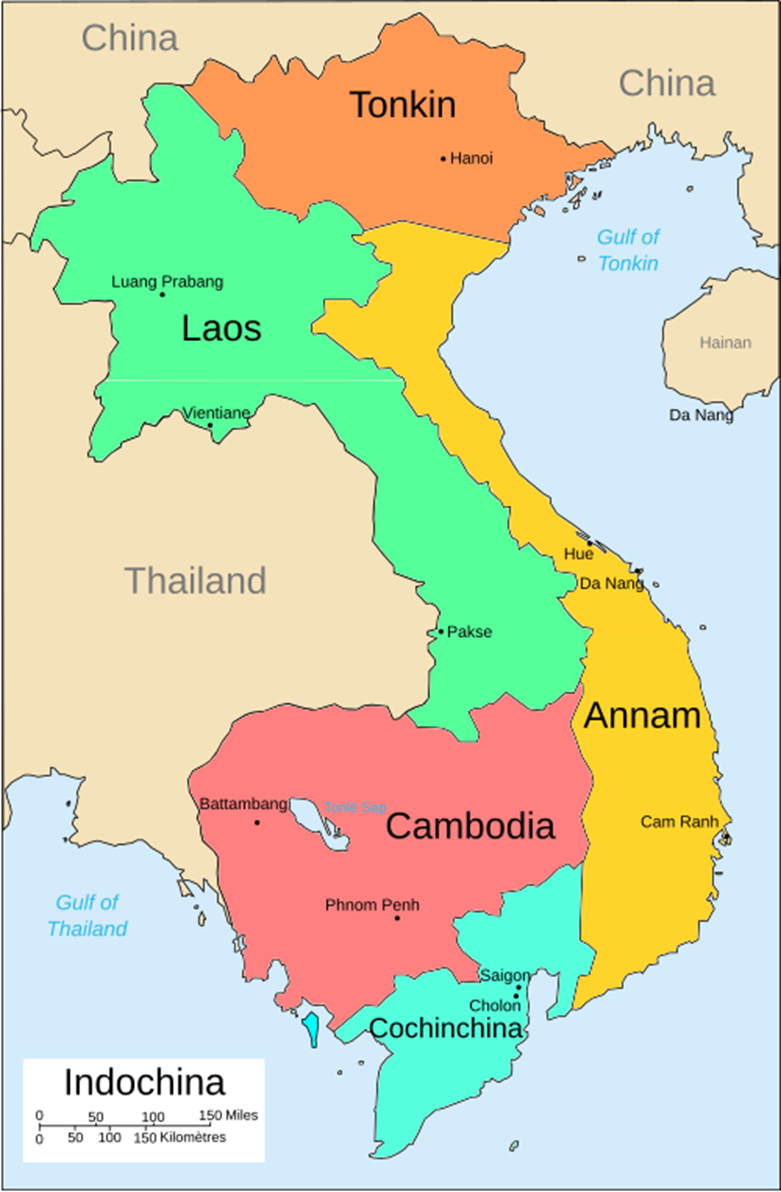
In 1887, France created the Indochinese Union, bringing Cambodia together with Cochinchina, Annam and Tonkin. Laos was added in 1893. The Governor-General of Indochina became the senior French official for the federation.
This meant that Cambodia was no longer simply linked administratively to French Cochinchina. It became part of a larger French imperial structure based in Indochina.
The Governor-General supervised the general colonial administration, finances and major policies, while the Cambodian protectorate retained its own administrative apparatus.
The Resident-Superior
The most important French official inside Cambodia was the Resident-Superior, known earlier as the Resident-General.
The title changed in 1889, but the basic function remained. The Resident-Superior represented French authority in Phnom Penh and supervised the protectorate’s administration. He was subordinate to the Governor-General of Indochina and was appointed by the French government.
The position became especially powerful after 1897, when the French Resident-Superior obtained authority that effectively placed the Cambodian government under French direction.
At this point, the distinction between protectorate and direct colonial rule became increasingly theoretical.
The King and the Cambodian Government
One of the curious features of French Cambodia was that the king did not disappear.
King Norodom remained on the throne, followed by King Sisowath in 1904 and King Monivong in 1927. The monarchy continued to provide political legitimacy and played an important role in Cambodian religious and cultural life.
But royal power was progressively restricted.
The turning point of 1897
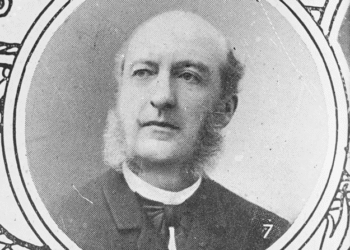
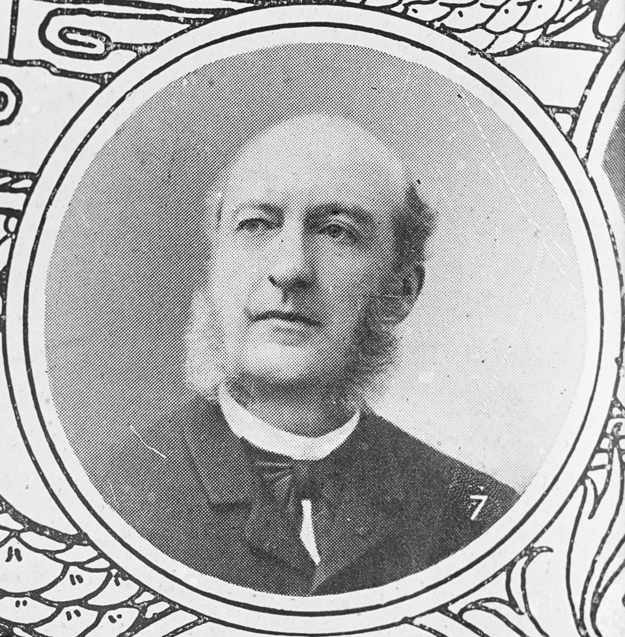
In 1897, Resident-Superior Albert Huyn de Vernéville obtained permission to assume extensive powers previously exercised by the king. The Resident-Superior could influence royal appointments, issue regulations and control important aspects of taxation and administration.
The king therefore remained the formal sovereign, but the French increasingly controlled the mechanisms of government.
This arrangement suited the colonial administration remarkably well. The monarchy gave the system Cambodian legitimacy, while French officials controlled much of the machinery behind it.
It was, in other words, a monarchy with a French administrative engine under the hood.
Administration at the Provincial Level
The provinces were where French rule became visible in everyday life.
French residents, or résidents, were stationed in major provincial centers. Their job was to supervise local administration, maintain public order and ensure that French policies were implemented.
The 1884 convention specifically provided for French residents or deputy residents in provincial capitals and other locations where their presence was considered necessary.
By 1894, Cambodia had ten French administrative residencies, including Phnom Penh, Kampot, Kampong Thom, Kampong Cham, Kampong Speu, Kratie, Banam (Prey Veng), Takeo, Kampong Chhnang and Pursat.
Cambodian officials remained important
French control did not mean that every Cambodian official was replaced by a Frenchman.
Cambodian provincial officials continued to administer much of local government. They dealt with village authorities, local disputes, records and everyday administrative matters. But they increasingly operated under French supervision.
The result was a dual system: French officials controlled the major levers of power, while Cambodian officials supplied much of the administrative labor.
This distinction is important. Colonial government was not simply a matter of a few Frenchmen governing millions of Cambodians directly. It depended heavily on Cambodian participation in the bureaucracy.
Taxation, Customs and Public Works
Some of the most important changes concerned money.
The French administration progressively took control of taxation and customs. This was not merely an accounting exercise. Control over taxation meant control over the state’s ability to function.
The 1884 convention explicitly placed the establishment and collection of taxes, customs, indirect taxation and public works under French authority.
French officials also expanded infrastructure, including roads, canals, ports and other public works. These projects were intended partly to improve economic activity and facilitate the movement of goods and officials.
The administrative state therefore grew alongside the physical state. Roads and bridges were useful, but so were tax registers, customs offices, police stations and provincial reports. The French were particularly enthusiastic about paperwork, a talent that no empire has ever managed to underestimate.
Phnom Penh and Municipal Administration
Phnom Penh occupied a special position.
The 1884 convention established a municipal commission for the capital. Its membership reflected the city’s remarkably diverse population, including French officials and merchants, Cambodians, Vietnamese, Chinese, Indians and Malays.
This is an interesting reminder that colonial Phnom Penh was already a multicultural commercial center.
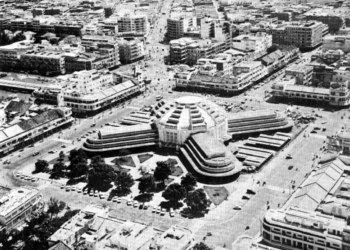
The capital gradually developed a more modern municipal administration, with new roads, public buildings, markets, drainage systems and other infrastructure.
French urban planning also transformed the appearance of Phnom Penh. The colonial city that emerged was layered over an older Cambodian royal and religious landscape rather than simply replacing it.
Justice, Police and Specialized Services
The French administration also expanded its influence over justice and public security.
Courts and legal institutions were progressively reorganized under French supervision. Police and security services became important instruments for maintaining colonial order, particularly during periods of unrest.
Specialized administrative services were developed for areas such as public works, customs, taxation, agriculture, forestry, health and communications.
This created a more centralized bureaucracy than the kingdom had previously possessed.
The French colonial state was therefore not just a political relationship between France and the Cambodian king. It was an expanding network of offices, officials, regulations and specialized departments.
Cambodia Within French Indochina
By the early twentieth century, Cambodia was firmly integrated into French Indochina.
The administrative hierarchy looked broadly like this:
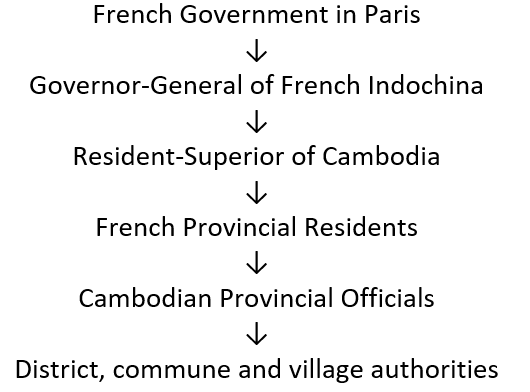
This hierarchy should not be interpreted as perfectly rigid. Cambodian institutions continued to operate, and the precise balance of power varied according to period and locality.
Nevertheless, by the early twentieth century, the French controlled the major administrative, financial and strategic functions of the Cambodian state.
The Colonial System and Cambodian Sovereignty
The French protectorate was therefore a system of limited Cambodian sovereignty under expanding French control.
The king remained visible. Royal ceremonies continued. Buddhist institutions retained their importance. Cambodian officials continued to administer much of the countryside.
Yet France controlled foreign affairs, taxation, customs, major public works and increasingly the central administration.
This explains an apparent paradox in Cambodian history. Cambodia was neither governed exactly like a French colony nor fully independent. It occupied an intermediate position within the French imperial system.
That distinction matters when comparing Cambodia with Cochinchina, which France administered as a colony, or with neighboring Siam, which remained independent while being increasingly pressured by European powers.
From French Rule to Independence
The administrative system survived major political changes during the first half of the twentieth century.
The Japanese occupation during the Second World War disrupted French authority. In March 1945, Japan removed the remaining French colonial administration and encouraged the Cambodian monarchy to proclaim independence.
French authority was restored later in 1945, and the protectorate system continued in modified form during the postwar period.
Cambodia ultimately achieved full independence under King Norodom Sihanouk in November 1953.
The French administrative structure had by then left a substantial legacy. Modern ministries, provincial boundaries, legal institutions, taxation systems, public works and bureaucratic practices all bore traces of the colonial period.
Conclusion
The French administration of Cambodia was a hybrid system that evolved from a relatively limited protectorate in 1863 into a highly centralized colonial administration by the early twentieth century. The king and Cambodian officials remained in place, but French residents, the Resident-Superior and the wider bureaucracy increasingly controlled the essential functions of government. Understanding this structure is essential for understanding both French Indochina and the formation of the modern Cambodian state.
About the author
Pascal Médeville is a writer and digital publisher based in Cambodia. His work focuses on Cambodian history, culture, heritage and everyday life, with particular interest in explaining the country’s past in an accessible way while keeping an eye for the small details that make history human.