Estimated reading time: 8 minutes. Just enough time to discover how a handful of determined scholars helped save one of the world’s greatest archaeological treasures.
The establishment of the École française d’Extrême-Orient (EFEO) in Cambodia marked a turning point in the study and preservation of Khmer civilization. From the dense forests surrounding Angkor to the archives documenting Cambodia’s cultural heritage, EFEO transformed archaeological research and conservation, leaving a legacy that continues to shape how the world understands the Khmer Empire.
Introduction
Few institutions have left such a lasting mark on Cambodia’s cultural heritage as the École française d’Extrême-Orient, better known by its French acronym, EFEO. Long before Angkor became one of Southeast Asia’s most visited destinations, its temples were slowly disappearing beneath thick vegetation, threatened by time, climate, and human neglect. The arrival of EFEO changed that story.
This article explores the establishment of EFEO in Cambodia, explaining why it was created, how it became involved in the conservation of Angkor, and why its work remains relevant today. Whether you are interested in Cambodian history, archaeology, or cultural heritage, understanding EFEO means understanding one of the greatest chapters in the preservation of the Kingdom of Wonder.
The Birth of EFEO
The École française d’Extrême-Orient was officially established in 1900 by the French colonial administration in Indochina. Its mission was ambitious: to study the civilizations, languages, religions, archaeology, and history of East and Southeast Asia through scientific research.
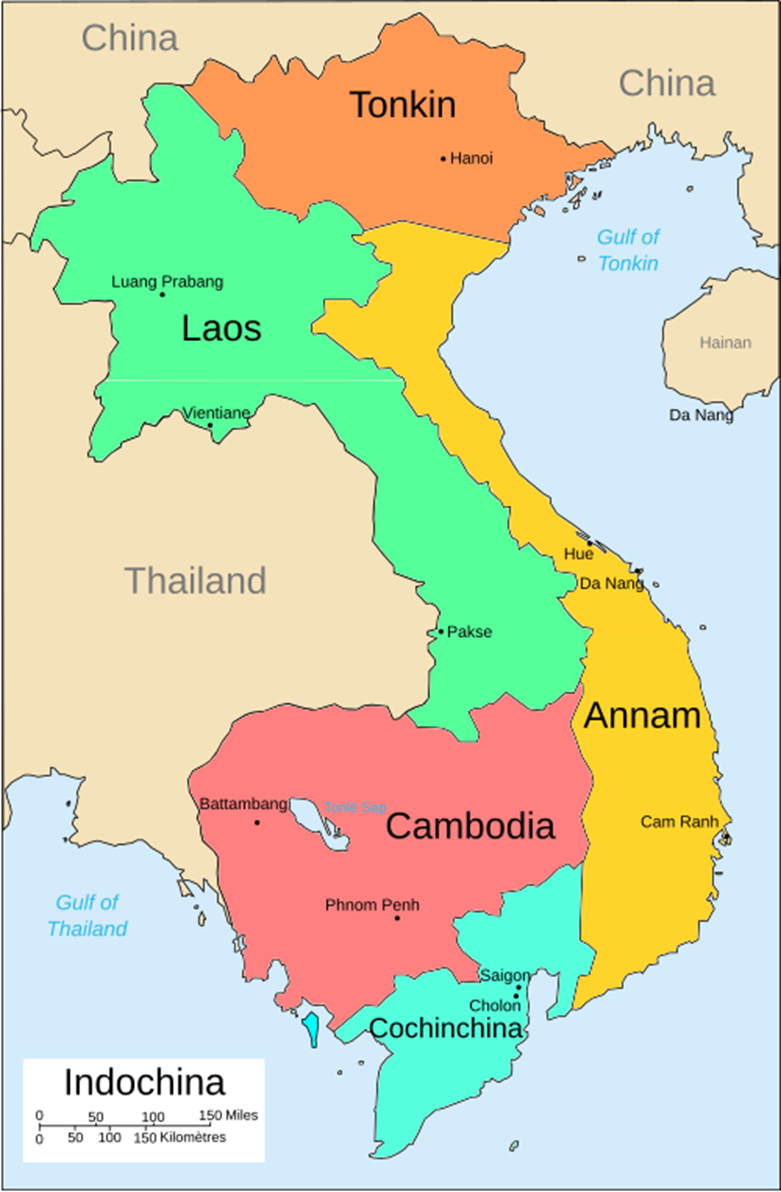
Initially headquartered in Saigon, the institution quickly expanded its activities throughout French Indochina. Cambodia naturally became one of its major fields of research. The country’s extraordinary archaeological wealth, particularly Angkor, offered scholars an almost untouched laboratory for historical and architectural studies.
Unlike many colonial institutions primarily focused on administration or commerce, EFEO was dedicated to knowledge. It brought together archaeologists, historians, linguists, epigraphists, architects, photographers, and conservators. Their combined expertise would gradually reveal the richness of Khmer civilization to the international academic community.
Cambodia Before EFEO
Angkor Hidden by the Forest
When French explorers and scholars reached Angkor during the nineteenth century, the temples were far from abandoned by local people. Buddhist monks continued to worship in Angkor Wat, and nearby communities had never forgotten the sacred significance of the monuments.
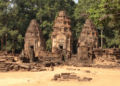
However, many temples had become engulfed by giant trees and dense tropical vegetation. Massive roots penetrated stone walls, galleries collapsed, and decorative carvings slowly eroded under centuries of rain and humidity.
The romantic image of mysterious ruins hidden in the jungle fascinated European visitors, but for archaeologists, it represented an urgent conservation challenge.
A Growing International Interest
The publication of travel accounts by explorers such as Henri Mouhot sparked worldwide curiosity about Cambodia’s ancient civilization. Although Mouhot did not “discover” Angkor, as popular myths sometimes claim, his vivid descriptions introduced the monuments to a broad European audience.
By the end of the nineteenth century, scholars increasingly recognized that systematic research and conservation were urgently needed.
EFEO Arrives in Cambodia
One decisive moment came in 1907 when Cambodia regained control of the provinces of Siem Reap, Battambang, and Sisophon from Siam under a treaty negotiated by France.
This territorial change placed Angkor firmly under French administration, allowing EFEO to establish a permanent archaeological presence near the temples.
The institution soon created the Conservation d’Angkor, an organization responsible for documenting, studying, restoring, and protecting the archaeological park.
This was no small task. Hundreds of monuments were scattered across forests covering hundreds of square kilometers. Many had never been properly mapped or documented.
The First Conservators of Angkor
Several remarkable scholars shaped the early years of EFEO in Cambodia.
Jean Commaille
Jean Commaille became the first Conservator of Angkor in 1908. He devoted enormous energy to clearing vegetation, opening access roads, documenting monuments, and establishing basic preservation methods.
His work was physically demanding and often dangerous. Tragically, Commaille was murdered by bandits in 1916 while transporting workers’ salaries.
Henri Marchal
Henri Marchal succeeded Commaille and would become one of the most influential figures in Angkor conservation.
Inspired by restoration techniques developed in Indonesia, particularly at Borobudur, Marchal introduced the method known as anastylosis. This technique carefully dismantles unstable structures before rebuilding them using the original stones whenever possible.
Although painstakingly slow, it remains one of the most respected archaeological restoration methods.
George Coedès
Another towering figure was George Coedès, one of the twentieth century’s greatest specialists in Southeast Asian history.
By studying Sanskrit and Old Khmer inscriptions, Coedès reconstructed the political and religious history of the Khmer Empire. His research fundamentally transformed our understanding of Cambodia’s medieval civilization.
Without epigraphy, Angkor would simply be beautiful ruins. Thanks to scholars like Coedès, the temples began to tell their own stories.
More Than Archaeology
Recording Khmer Inscriptions
EFEO scholars copied, translated, and published hundreds of stone inscriptions scattered across Cambodia.
These texts revealed details about royal administrations, religious foundations, taxation, agriculture, irrigation, trade, and everyday life.
Today, many inscriptions have suffered erosion. Fortunately, the copies made by EFEO continue to preserve information that might otherwise have been permanently lost.
Studying Cambodian Culture
The institution’s interests extended well beyond temples.
Researchers documented traditional architecture, village customs, Buddhist manuscripts, local languages, folklore, sculpture, ceramics, and ancient roads.
This multidisciplinary approach helped build one of the world’s richest collections of knowledge about Cambodian civilization.
Restoration Techniques That Changed Archaeology
One of EFEO’s greatest contributions was developing careful restoration principles rather than rebuilding monuments according to artistic imagination.
Earlier restoration practices in many parts of the world often replaced missing sections with newly invented architecture.
EFEO generally preferred to preserve authenticity. Missing stones remained missing unless reliable evidence allowed accurate reconstruction.
The famous temple of Banteay Srei offers an excellent example of meticulous conservation work that respected the monument’s original appearance while stabilizing its fragile sandstone carvings.
Sometimes the best restoration is surprisingly discreet. Visitors often admire temples without realizing how much invisible engineering keeps them standing.
War, Survival, and International Cooperation
The Cambodian conflicts of the 1970s interrupted archaeological research for many years.
Numerous monuments suffered neglect, while looting became a serious threat. Many specialists were forced to leave the country.
Following the restoration of peace, EFEO gradually resumed its activities through close cooperation with Cambodian authorities and international organizations.
Today, EFEO continues to support archaeological excavations, historical research, conservation projects, digital documentation, and academic training.
The institution also collaborates with APSARA National Authority, universities, museums, and researchers from around the world.
EFEO’s Legacy in Modern Cambodia
It would be difficult to imagine modern knowledge of Angkor without EFEO.
The institution produced thousands of photographs, architectural plans, excavation reports, scholarly publications, maps, and inscription catalogues.
Many of these documents remain essential references for archaeologists working today.
Even technologies such as LiDAR surveys and digital 3D mapping often build upon foundations established more than a century ago by EFEO researchers armed with notebooks, measuring tapes, and remarkable patience.
Perhaps that is archaeology’s greatest lesson. Progress often begins with someone willing to spend hours carefully measuring a single stone.
Visiting Angkor with a New Perspective
For travelers exploring Angkor today, understanding EFEO adds another layer of appreciation.
The temples are not simply ancient monuments. They are also the result of more than a century of scientific conservation, careful documentation, and international collaboration.
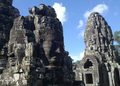
As you walk through Angkor Thom, admire the smiling faces of the Bayon, or watch sunrise at Angkor Wat, remember that generations of Cambodian specialists and international scholars have worked together to ensure these masterpieces survive for future generations.
Their efforts remind us that preserving heritage is never truly finished. Every generation becomes the temporary guardian of an inheritance far older than itself.
Conclusion
The establishment of EFEO in Cambodia marked the beginning of one of the world’s most remarkable archaeological and conservation efforts. By documenting, studying, and preserving Angkor and countless other cultural treasures, the institution helped safeguard Cambodia’s extraordinary heritage while deepening our understanding of one of Asia’s greatest civilizations.
About the author
Pascal Médeville is a writer and digital publisher based in Cambodia. Passionate about Khmer history, archaeology, cultural heritage, and travel, he regularly publishes in-depth articles that help readers better understand the remarkable civilization and living traditions of the Kingdom of Wonder.
To know more:
- Visit EFEO’s website.
- Read Maxime Prodromidès’ Angkor, Chronique d’une renaissance, in which “through a gallery of vivid portraits, the author describes the fascination Angkor triggered during the modern age among explorers, archeologists, writers, artists…and unscrupulous rogues. From Pierre Loti to Charles Carpeaux, Paul Claudel to the infamous André Malraux’s expedition to Banteay Srei.” (Angkor Database)