Estimated reading time: 6 minutes.
Cambodian men served France during World War I, some travelling thousands of miles to European battlefields. Back home, families waited for fathers and sons to return. Khmer literature preserves this human cost, while Nou Hach’s Garland of the Heart evokes another wartime experience, when the Franco-Siamese War brought conflict directly to Cambodia’s borders.
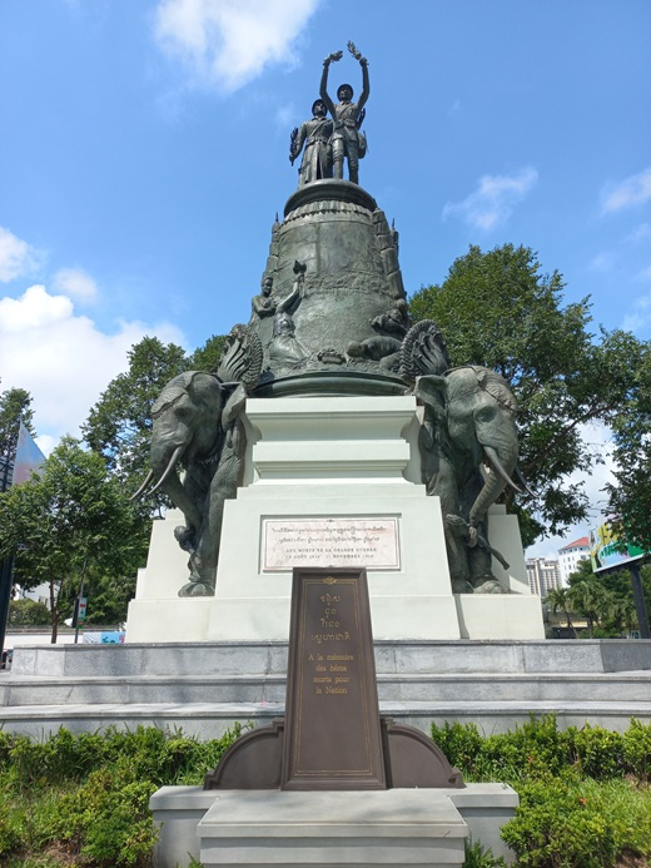
History is often written in terms of armies and treaties. In Cambodia, it is also found in the empty place at the family table.
When Cambodia Was Drawn Into France’s Wars
Cambodia’s involvement in the world wars is easily overlooked. The country was a French protectorate, and the great battles of World War I were fought thousands of kilometers away. Yet France’s colonial empire became an important source of soldiers and laborers, and Cambodian men were drawn into that enormous wartime mobilization.
For Cambodian families, this was not an abstract question of European diplomacy. A man could leave his village, travel by sea to France and disappear into a military organization whose battles were taking place in a completely unfamiliar landscape.
This history is particularly revealing when read alongside Khmer literature. The Beasly Village (ភូមិតិរច្ឆាន, Phum Tirachhean) evokes the consequences of French colonial rule and the suffering of rural Cambodian families, including the separation caused by wartime recruitment. Much later, Nou Hach’s Garland of the Heart (មាលាដួងចិត្ត, Mealea Duong Chit) offers a literary evocation of another conflict, the Franco-Siamese War of 1940–1941.
Together, these works help move the story away from troop numbers and military maps. They put Cambodian people back into it.
Cambodian Recruitment During World War I
When World War I began in 1914, Cambodia had been under French protection for several decades. The colonial administration consequently regarded the population as a potential source of manpower for France’s war effort.
French Indochina supplied both soldiers and workers. Vietnamese recruits formed the largest component of the Indochinese contingents, but Cambodians also served in French formations. Recruitment involved a complicated mixture of incentives, administrative pressure and coercion. The distinction between a man volunteering and a man responding to considerable pressure from colonial authorities was not always as clear as a modern military recruitment poster might suggest.
Cambodian men therefore became part of a war that had begun in Europe but had acquired a genuinely imperial dimension.
Some served in Indochina. Others were sent to France.
A Cambodian soldier in France
One documented example is Kan Chhum, a Cambodian soldier of the 7th Battalion of Indochinese Infantry. He left Phnom Penh and travelled by sea toward France, passing through Madagascar and around Africa before reaching Marseille in October 1916.
His war did not last long.
Kan Chhum was killed at Chemin des Dames on May 6, 1917. His story is a useful reminder that the phrase “Cambodian soldiers in World War I” refers to actual individuals, not merely a line in an imperial military report.
Other Cambodian soldiers followed similar paths. Estimates of the overall Cambodian contribution vary according to how military personnel, workers and other wartime participants are counted, but the scale was significant enough to leave a lasting mark on Cambodian society.
The journey itself was extraordinary. A Cambodian villager who had probably spent most of his life within a relatively small geographical world could suddenly find himself aboard a ship crossing the Indian Ocean, heading toward a European battlefield.
The First World War had become very international indeed.
The Families Who Waited at Home
The military history becomes more poignant when viewed from the village rather than the battlefield.
In novel The Beastly Village, the consequences of colonial recruitment are connected with the lives of ordinary Cambodian families. The novel, published in the 1960s, looks back at the colonial countryside and depicts the pressures imposed on rural society.
Among its most affecting elements is the evocation of families waiting for men who had been taken away. The father or husband who disappeared into military service was not simply absent from a military register. His absence was felt at home, by his wife and children.
This is an important detail because it changes how we understand conscription and recruitment.
A historian can count soldiers. A family counts the years.
For a Cambodian household, the departure of a father could mean fewer hands in the rice field, greater economic insecurity and the constant uncertainty of whether he would return. News from Europe travelled slowly, and the emotional distance between a Cambodian village and a battlefield in France was almost unimaginable.
Literature is particularly good at preserving this dimension of history. It allows us to understand that colonial military recruitment was also a social event.
Someone had to stay behind
Was This Really “Conscription”?
The word conscription requires some caution when discussing Cambodia under French rule.
France did impose systems of compulsory recruitment in its colonies, but the precise mechanisms varied according to period and territory. In French Indochina, wartime manpower was obtained through a combination of voluntary enlistment, recruitment quotas, administrative pressure and coercive practices.
It is therefore safer to speak of French colonial military recruitment and conscription rather than suggesting that Cambodia had exactly the same system as metropolitan France.
The distinction is more than semantic.
It reminds us that Cambodian men were being recruited as colonial subjects. Cambodia did not independently declare war on Germany or decide that Cambodian national interests required troops on the Western Front.
They served within the French imperial system.
That does not make their courage or suffering any less real. It simply explains the political circumstances in which they served.
From World War I to the Franco-Siamese War
The First World War was fought mainly far from Cambodia. The situation was very different two decades later.
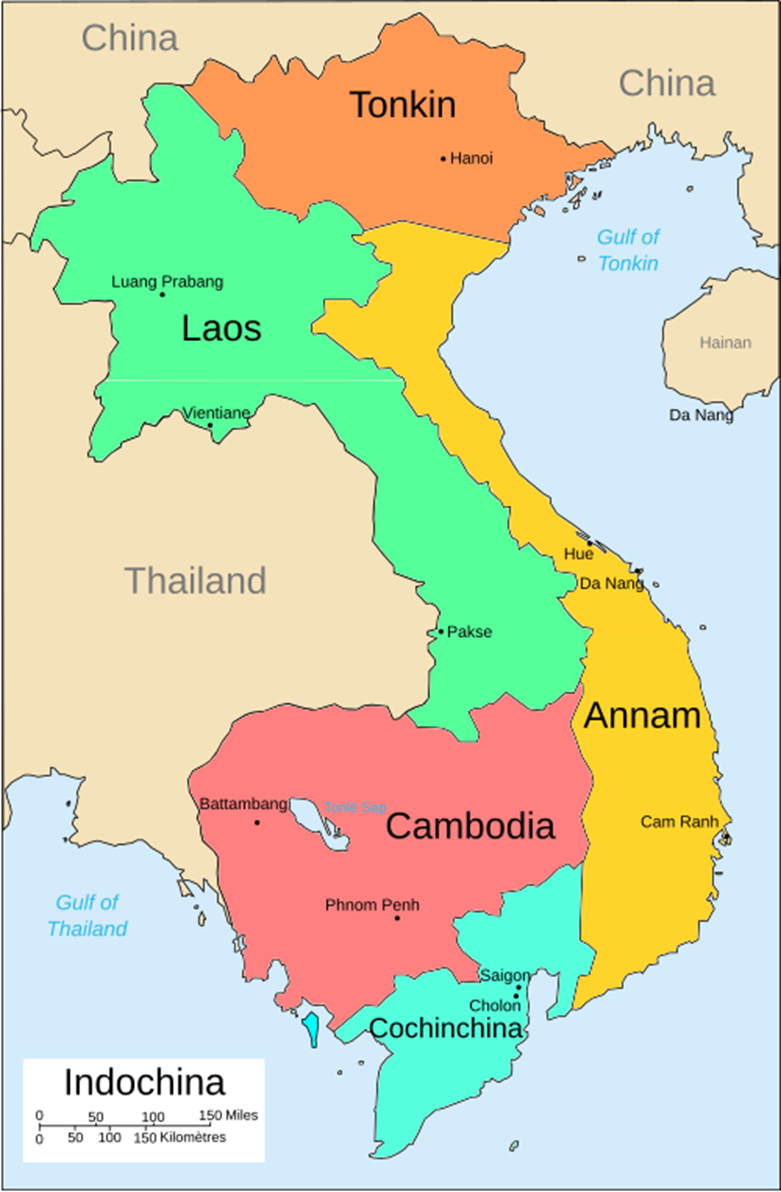
In 1940, France had been defeated by Nazi Germany. French Indochina remained under French administration, while Japan increasingly dominated the strategic situation in the region.
Thailand, which had adopted its present official name in 1939, sought to recover territories that had previously been ceded to France.
The resulting conflict is generally known as the Franco-Siamese War of 1940-1941, or the Franco-Thai War.
It is sometimes described as a Thai-Cambodian war, but that is historically misleading. The conflict was between Thailand and French Indochina. Cambodia and Laos were French colonial territories, and Cambodian troops served within French forces.
This time, the war was not thousands of miles away.
The frontier itself became the battlefield.
Garland of the Heart and the War With Siam
Nou Hach’s Garland of the Heart provides a valuable literary evocation of this period.
The novel was first published in 1972, and its story is set during the late French protectorate, extending through the dramatic events surrounding the Franco-Siamese conflict and the eventual return of Battambang to Cambodia in 1946.
Its central characters, Tikheavout and Chandamani, are drawn into a relationship that crosses the Cambodian-Siamese divide. Chandamani is the daughter of a Siamese military officer, while Tikheavout is a young Cambodian from Battambang.
Their personal story unfolds against a changing political landscape.
When war breaks out between Thailand and French Indochina, the conflict is no longer something discussed in newspapers or government offices. It affects the characters’ lives directly.
That is precisely what makes the novel useful for understanding the period.
Nou Hach does not present the Franco-Siamese War simply as a sequence of battles. He places questions of nationality, territory, colonial administration, patriotism and personal relationships within the same narrative.
The border becomes more than a line on a map.
It becomes something that can separate people.
Battambang and the return to Cambodia
The novel also reaches into the aftermath of the war.
Thailand obtained control of substantial territories from French Indochina during the conflict, including Battambang and other Cambodian territories. After World War II, these territories were returned to Cambodia in 1946.
In Garland of the Heart, this political transformation is woven into the fate of the characters. Tikheavout becomes a senior official in Battambang, and the changing political situation allows him to encounter Chandamani again.
The result is an unusually intimate way of depicting territorial history.
Treaties can change borders in a few lines.
For the people living on those borders, the consequences can last for years.
Two Novels, Two Experiences of War
The Beastly Village and Garland of the Heart approach Cambodian wartime experience from different directions.
In The Beastly Village, the First World War forms part of a broader picture of French colonial pressure. Recruitment, taxation and economic hardship affect rural communities, while families experience the painful absence of men who have been taken away.
In Garland of the Heart, the Franco-Siamese War becomes part of a story of love, nationality and territorial politics. The conflict is much closer geographically and politically. Cambodia itself is caught between French colonial interests and Siamese territorial ambitions.
The two works therefore complement each other.
One helps us imagine what it meant for a Cambodian family when a man was sent away to serve France.
The other helps us understand what happened when international and colonial politics reached Cambodian territory itself.
Both remind us that war is experienced at ground level.
Beyond the Military Statistics
There is a temptation to reduce Cambodia’s military history to numbers.
How many men were recruited? How many served in France? How many died? Which battalion did they join?
These questions are necessary, but they are not sufficient.
The history of Cambodian soldiers for France during World War I is also the history of mothers and wives waiting at home, children growing up without their fathers and villages adjusting to the disappearance of working-age men.
Likewise, the Franco-Siamese War cannot be understood only through maps showing territorial changes. For Cambodians living in Battambang and the western provinces, the transfer of sovereignty was a change in administration, nationality and everyday political reality.
Literature preserves precisely these human dimensions.
It also reminds us that Cambodia was not simply watching twentieth-century history from the sidelines. Cambodians were recruited into foreign armies, sent across oceans, involved in regional conflicts and affected by decisions made in Paris, Bangkok, Tokyo and Phnom Penh.
The world had come to Cambodia, whether Cambodia had asked for it or not.
Remembering Cambodia’s Wartime Generation
Cambodian military participation under French rule belongs to a complicated history. These men served a colonial power, but they were also individuals with families, ambitions and fears. Some travelled to France, some died there, and many returned to a Cambodia that had been changed by their absence.
The literary memory preserved in The Beastly Village is especially valuable because it brings the story back to the household. The waiting families are almost a counterpoint to the military parade: behind every departing soldier was a home hoping to see him again.
Garland of Heart, meanwhile, offers another perspective on wartime Cambodia through the Franco-Siamese conflict and its aftermath. Its story demonstrates how war can transform not only political borders but also personal relationships.
These are not merely stories about France, Siam or colonial administration.
They are stories about Cambodians living through history.
Conclusion
Cambodian participation in France’s wars reveals a side of colonial history that military statistics cannot fully capture. From the Cambodian families waiting for fathers recruited during World War I, as evoked in The Beastly Village, to the wartime frontier and changing territories portrayed in Garland of the Heart, Khmer literature brings the human experience of war into focus. The battles may have belonged to armies and governments, but their consequences belonged to families.
About the author
Pascal Médeville is a writer and digital publisher based in Cambodia. He writes about Cambodian history, culture, heritage and everyday life, with a particular interest in overlooked stories that connect Cambodia with the wider history of Asia and the world.