Estimated reading time: 8 minutes. Just enough time to revisit one of history’s most dramatic misunderstandings, where diplomacy arrived a little later than the helicopters.
The Mayaguez Incident of May 1975 remains one of the most misunderstood episodes in Southeast Asian history. Taking place just weeks after the fall of Saigon, this dramatic confrontation between the United States and Democratic Kampuchea became the last military action associated with the Vietnam War. Here is what happened, why it mattered, and how Cambodia became the unexpected stage for history.
The Mayaguez Incident is often remembered as the final battle of the Vietnam War, even though it unfolded on Cambodian territory after the official collapse of South Vietnam. It combined military urgency, political symbolism, tragic miscommunication, and considerable loss of life within just a few days.
For anyone interested in Cambodian history, Cold War politics, or the complex relationship between the United States and Southeast Asia, the Mayaguez Incident offers valuable lessons. Beyond the headlines, it reveals how uncertainty and incomplete information can shape international decisions with lasting consequences.
A Region in Turmoil
In April 1975, Southeast Asia was undergoing one of the most dramatic political transformations of the twentieth century. Phnom Penh fell to the Khmer Rouge on April 17. Less than two weeks later, Saigon collapsed, marking the end of the Vietnam War.
The newly established government of Democratic Kampuchea immediately adopted an extremely hostile posture toward foreign vessels entering what it considered Cambodian territorial waters. The revolutionary leadership sought to demonstrate its sovereignty and independence, especially after years of foreign intervention in Cambodia.
Against this tense backdrop, an American merchant ship unexpectedly became the center of an international crisis.
The Capture of the SS Mayaguez
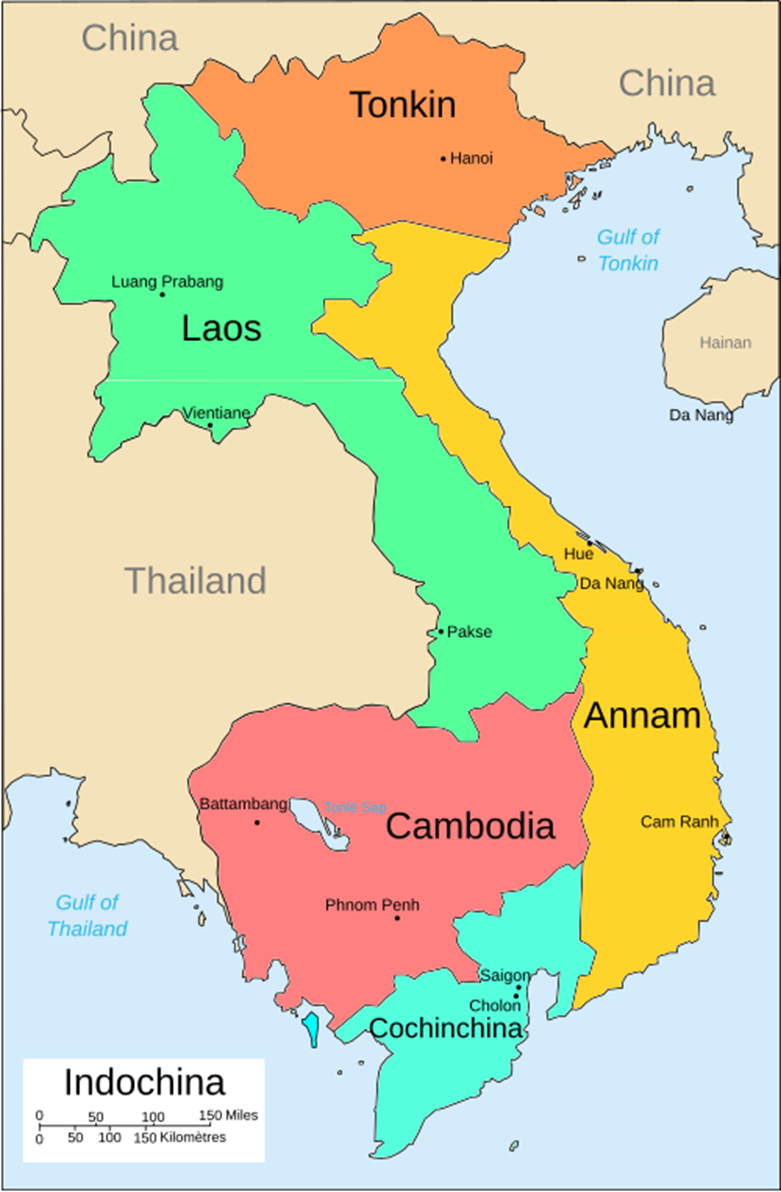
On May 12, 1975, the American container ship SS Mayaguez, owned by Sea-Land Service, was sailing through the Gulf of Thailand. Khmer Rouge naval forces intercepted the vessel near Poulo Wai Island, claiming that it had violated Cambodian territorial waters.
The crew of 39 sailors was detained and transferred to another location. Although the seizure was serious, the Khmer Rouge did not harm the crew.
News of the capture quickly reached Washington, where the administration of President Gerald Ford faced a difficult decision. The United States had just withdrawn from Vietnam. Another military setback could weaken American credibility at a moment when the country was still processing years of conflict.
President Ford’s Response
President Ford chose a rapid military response.
American intelligence believed that the crew was being held on Koh Tang, a small Cambodian island located off the country’s southern coast. Plans were immediately prepared for a rescue operation involving the U.S. Marines, Air Force, and Navy.
The objective seemed straightforward:
- recover the crew
- retake the ship
- demonstrate that attacks on American vessels would not be tolerated
Unfortunately, reality proved much more complicated.
Koh Tang: A Difficult Battlefield
Intelligence Failures
American planners underestimated the Khmer Rouge presence on Koh Tang.
Initial estimates suggested only a small defensive force. In reality, several hundred well-armed Khmer Rouge fighters occupied the island.
At the same time, American intelligence did not realize that the Cambodian authorities had already decided to release the Mayaguez crew.
This lack of information would prove fatal.
The Marine Assault
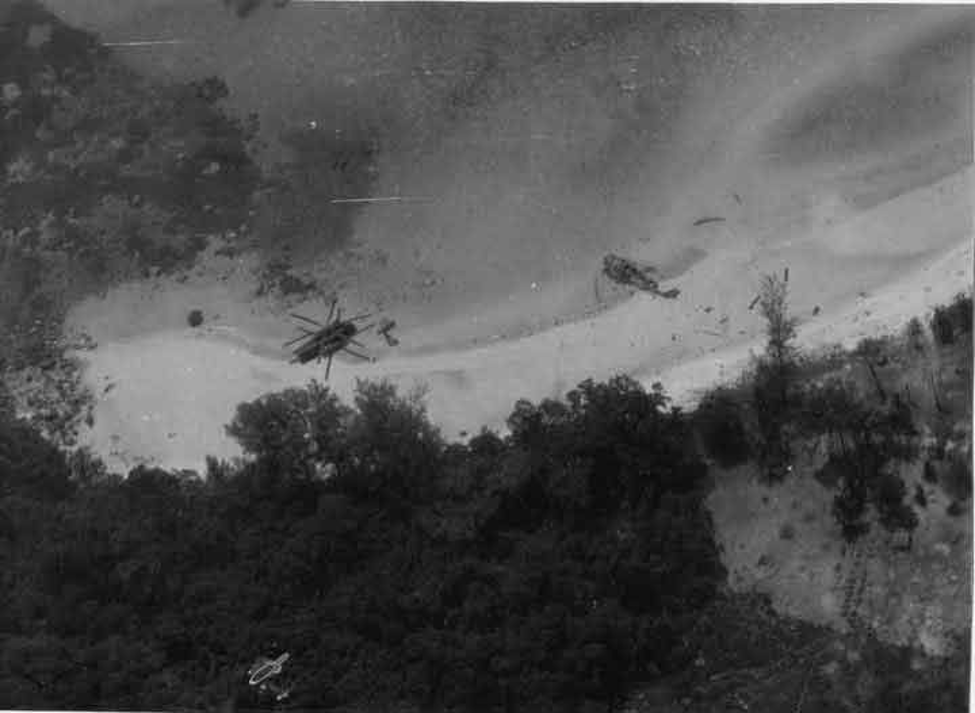
On May 15, helicopters carrying U.S. Marines approached Koh Tang under intense enemy fire.
Several helicopters were shot down or severely damaged before they could safely land troops.
The fighting rapidly became chaotic.
Marines established small defensive positions while attempting to locate the crew, who were no longer on the island.
Heavy resistance forced repeated evacuation attempts under dangerous conditions.
The Forgotten Rescue
While fierce combat continued on Koh Tang, another development unfolded almost unnoticed.
The Khmer Rouge had already placed the Mayaguez crew aboard a Thai fishing boat and released them.
An American destroyer intercepted the fishing boat, recovering all 39 crew members alive.
Ironically, the military battle continued for hours after the hostages had already been freed.
Communication delays and confusion prevented commanders from immediately stopping the assault.
History occasionally displays a peculiar sense of irony.
Casualties and Human Cost
Although the hostages survived without fatalities, the battle itself proved costly.
The United States lost 41 service members during the operation. Some died in helicopter crashes, while others were killed during the fighting on Koh Tang.
Perhaps the most tragic episode occurred after the evacuation.
Three U.S. Marines, Joseph Hargrove, Gary Hall, and Danny Marshall, were accidentally left behind on Koh Tang during the hurried withdrawal. They were later captured by Khmer Rouge forces and are believed to have been executed.
Cambodian casualties remain uncertain, with estimates varying considerably depending on available sources.
For both sides, the incident demonstrated how quickly limited military actions can escalate into deadly confrontations.
Why the Mayaguez Incident Matters
The Last Battle of the Vietnam War
Although it occurred after the official fall of Saigon, many historians regard the Mayaguez Incident as the final military engagement of the Vietnam War era.
For the United States, it symbolized an attempt to restore confidence following years of difficult conflict.
For Cambodia, it marked one of the first confrontations between the newly established Khmer Rouge regime and a major world power.
A Lesson in Intelligence
Military academies continue to study the Mayaguez Incident because it illustrates several classic operational challenges.
- Poor intelligence assessments
- Incomplete diplomatic information
- Rapid political decision making
- Communication delays between commanders.
Each factor individually creates risks. Combined, they can produce costly mistakes even during limited operations.
Cambodia’s Strategic Waters
The incident also highlighted the strategic importance of Cambodia’s coastline.
The Gulf of Thailand has long served as an important maritime route connecting Southeast Asia with international shipping lanes.
Control over islands such as Koh Tang and nearby waters remains strategically significant today, although fortunately under very different political circumstances.
Koh Tang Today
Today, Koh Tang presents a remarkably peaceful appearance.
Located within Cambodia’s marine environment, the island attracts divers, marine researchers, and adventurous travelers interested in coral reefs and relatively untouched nature.
Few visitors realize that these quiet beaches witnessed one of the Cold War’s final military confrontations.
Nature has a remarkable ability to soften the scars of history, although historians continue to preserve the memory of what occurred there.
The Historical Legacy
The Mayaguez Incident continues to generate debate among historians.
Some argue that the military response successfully demonstrated American resolve during a difficult geopolitical moment.
Others believe diplomatic efforts might have achieved the same result without significant casualties, especially since the crew had already been released before the main assault reached its conclusion.
For Cambodia, the incident represents one of the earliest international episodes involving Democratic Kampuchea, preceding the much larger humanitarian catastrophe that would soon unfold under Khmer Rouge rule.
Today, the event serves as an important reminder that historical episodes rarely fit into simple narratives of victory or defeat. They are often shaped by uncertainty, limited information, and decisions made under extraordinary pressure.
Conclusion
The Mayaguez Incident occupies a unique place in both Cambodian and American history. Remembered as the final battle associated with the Vietnam War, it illustrates how rapidly regional tensions, imperfect intelligence, and political urgency can converge. More than fifty years later, the events around Koh Tang remain a powerful lesson in the costs of misunderstanding and the enduring importance of accurate information during moments of international crisis.
About the author
Pascal Médeville is a writer and digital publisher based in Cambodia. Through Wonders of Cambodia, he explores the country’s history, heritage, culture, and lesser-known stories, connecting local events with their wider regional and international significance. He regularly writes about Cambodia’s past to help readers better understand its present.