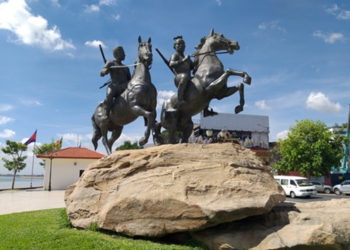
In the 1940s, few believed that Cambodia could regain full independence through diplomacy. Yet King Norodom Sihanouk engineered a masterstroke of political finesse and royal theatrics that turned the tide of history. This is the story of Cambodia’s “Royal Crusade for Independence.”
It may sound dramatic — The Royal Crusade for Independence — and indeed it was. Between 1949 and 1953, King Norodom Sihanouk transformed from a youthful monarch with limited authority into a political virtuoso who achieved what once seemed impossible: the peaceful decolonization of Cambodia from French rule.
This article revisits that extraordinary chapter, not as an academic fossil buried in dusty archives, but as a compelling real-life drama filled with courage, self-reinvention, and cunning diplomacy. Readers curious about modern Cambodian history — and the art of achieving independence without firing a shot — will find much to enjoy here.
Let us rewind to a time when colonialism was beginning to crack, and one young king decided that patience was not a royal virtue.

Setting the Stage: Cambodia Between Two Empires
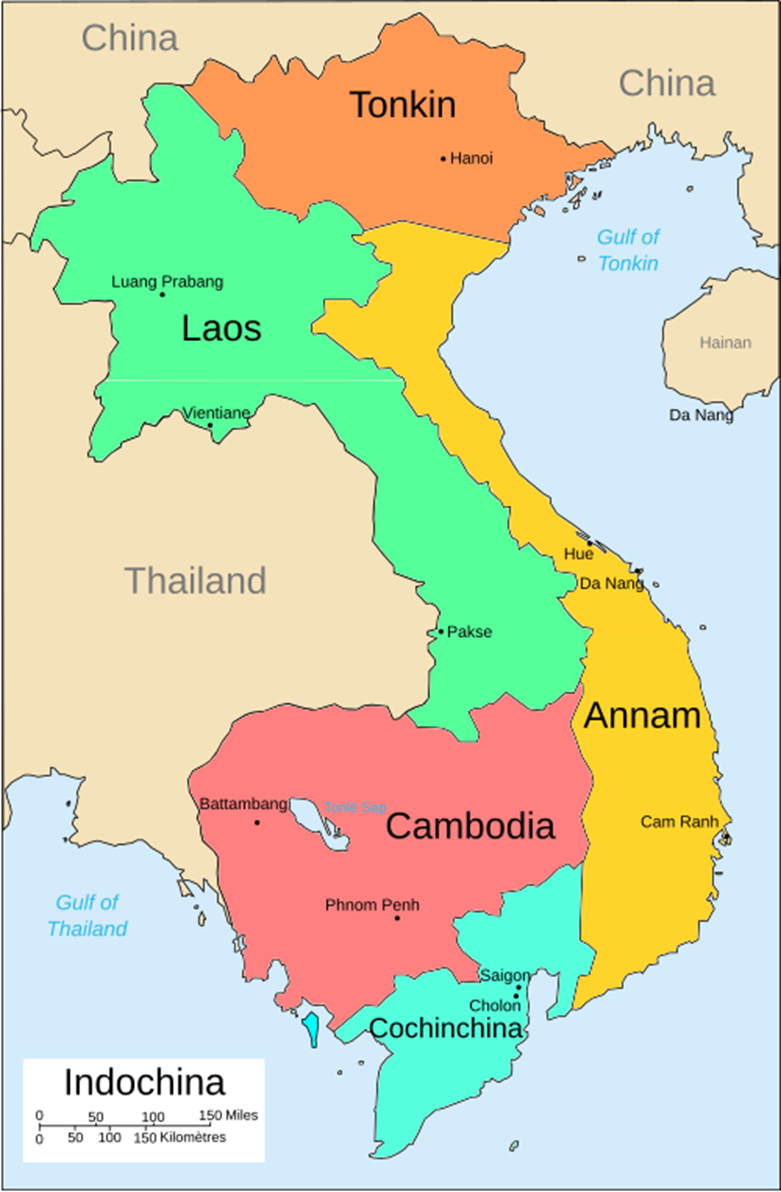
In the aftermath of World War II, the French empire was stumbling but not yet falling. Cambodia, nominally protected but functionally colonized, was lumped within French Indochina alongside Vietnam and Laos. While Ho Chi Minh’s Viet Minh took up weapons, Sihanouk sought a different battlefield — one of negotiation and symbolic resistance.
The late 1940s were a confusing time. Japanese occupation (1941–1945) had temporarily shattered the colonial order, and a taste of autonomy lingered in Cambodian memory. Yet by 1946, the French were back, determined to restore their authority under the banner of the “French Union.” Independence was now “imaginable,” but not yet “permitted.”
Even within Cambodia, opinion was divided. Some politicians believed gradual autonomy under French tutelage was safer. Others, particularly the young and ambitious, urged full sovereignty. Sihanouk, initially underestimated by both groups, surprised everyone.

Sihanouk’s Transformation: The Prince Becomes a Politician
A Young Monarch with a Mission
Crowned in 1941 at the tender age of 18, Norodom Sihanouk was initially selected by the French because they assumed he would be compliant. They could hardly have been more wrong. Behind the courteous smiles and royal pageantry, the young king harbored keen political instincts and a flair for public communication that foreshadowed his later media-savvy rule.
By 1949, he began to push the boundaries of what “constitutional monarchy” meant in a colonial context. When negotiations with Paris stalled, he decided to take matters into his own hands — literally boarding an airplane and setting off on what would become a whirlwind diplomatic marathon.
The “Royal Crusade” Takes Flight
Between 1952 and 1953, Sihanouk’s movements resembled less a king’s slow procession and more a campaign trail. He traveled through Laos, Vietnam, and Thailand, then on to France, the United States, and Canada, tirelessly lobbying for support. His mission: to convince the world that Cambodia’s independence was inevitable — and respectful diplomacy could achieve it peacefully.
The French authorities, faced with growing insurgencies elsewhere in Indochina, found themselves in a tricky position. Compared to the bloody conflicts raging next door, Sihanouk’s “royal crusade” looked almost gracious. Soon enough, it became politically expedient for Paris to grant Cambodia independence — starting with the return of administrative control over the army, finances, and foreign affairs.
A Diplomatic Victory, Not a Violent One
The Year 1953: Cambodia Reborn
By mid-1953, Sihanouk’s persistent diplomacy finally bore fruit. France, struggling to maintain its colonial grip amid rising unrest across Asia, conceded partial sovereignty step by step. On November 9, 1953 — now celebrated as Cambodia’s Independence Day — the French handed over full control to the Cambodian state. Not a single battle was fought. The event took place in Phnom Penh with ceremonial grace, punctuated by the lowering of the French flag and the rising of the Cambodian one. To many observers, it appeared sudden; in reality, it was the culmination of careful psychological and political maneuvering. Sihanouk framed himself as both a loyal ally to France and an independent sovereign of his people — a balancing act few have managed as elegantly.

Historians often describe Sihanouk’s strategy as a fusion of royal symbolism and diplomatic pragmatism. He leveraged his charisma to rally both the Cambodian public and moderate French officials, while simultaneously distancing himself from insurgent movements. By avoiding armed conflict, he preserved Cambodia’s resources and kept the country intact during a period when wars were tearing the region apart.
The “Royal Crusade for Independence” was therefore not just a victory of politics over power, but also a triumph of image-making. Sihanouk became the embodiment of modern Cambodian nationalism — at once traditional and modern, regal yet populist.
After Independence: The Monarchy Reinvented
From King to “Prince” to King Again
What followed was almost Shakespearian in complexity. Having achieved independence, Sihanouk soon abdicated in favor of his father in 1955, creating space to enter the political arena directly. He founded the Sangkum Reastr Niyum (People’s Socialist Community), a political movement that would dominate Cambodian politics for the next 15 years.
His strategy was remarkably modern: position himself as the indispensable link between past and future, tradition and progress. For a time, it worked brilliantly. Cambodia became a neutral state admired for its cautious diplomacy and cultural vitality.
While the later decades of Sihanouk’s life were marked by turbulence, exile, and shifting allegiances, his 1949–1953 campaign remains one of the rare examples of a peaceful and successful decolonization in Southeast Asia. It cemented his image as the “Father of Independence,” a title he relished and never relinquished.
For modern Cambodians, The Royal Crusade for Independence is not just a historical anecdote — it’s a foundational narrative of statehood. The story resonates precisely because it combines vision with diplomacy, courage with restraint. In a region too often defined by wars of liberation, Cambodia’s independence stands out for its royal diplomacy and near-total absence of bloodshed.
It also offers an enduring lesson for smaller nations navigating the pressures of larger powers: influence can be more effective than force, and charisma — when artfully deployed — can change the world.
The Royal Crusade for Independence remains one of modern Asia’s most astonishing political maneuvers — a peaceful revolution conducted with ceremony, speechcraft, and sheer royal determination. In outsmarting the colonial system that had once chosen him for his supposed pliancy, Sihanouk proved that even empires could be defeated by diplomacy and charm.
Sources & further reading / To know more
- David P. Chandler, A History of Cambodia – A concise, authoritative overview of Cambodia’s modern transformation and Sihanouk’s role within it.
- Milton Osborne, Sihanouk: Prince of Light, Prince of Darkness – A nuanced biography exploring the contradictions of Cambodia’s charismatic monarch.
- BBC Historical Features on French Indochina – Accessible background on decolonization movements in Southeast Asia.
- Royal Palace of Phnom Penh official exhibits – Displays relating to the independence ceremonies and diplomatic missions of 1953.
- Jean-Michel Filippi, “Royal Crusade to Independence” – Presentation of the Royal Crusade to Independence.
Pascal Médeville is a writer and digital publisher based in Cambodia. He explores Southeast Asian history, culture, and languages through his blogs and publications, notably Wonders of Cambodia and Khmerologie. His work combines historical storytelling with a taste for nuance, humor, and the endlessly fascinating intersections of politics and culture.