Wonders of Cambodia
  • Home
  • Culture
  • Cuisine
  • Tourism
  • Business
  • Life in Cambodia
  • 中文
  • ខ្មែរ
  • Français
  • Tiếng Việt
  • e-Books
No Result
View All Result
  • Home
  • Culture
  • Cuisine
  • Tourism
  • Business
  • Life in Cambodia
  • 中文
  • ខ្មែរ
  • Français
  • Tiếng Việt
  • e-Books
No Result
View All Result
Wonders of Cambodia
No Result
View All Result
Home Culture History

The Royal Crusade for Independence: How Norodom Sihanouk Outfoxed Colonial Power with Charisma and Politics

Pascal Medeville by Pascal Medeville
February 24, 2026
in History
Reading Time: 7 mins read
0

In the 1940s, few believed that Cambodia could regain full independence through diplomacy. Yet King Norodom Sihanouk engineered a masterstroke of political finesse and royal theatrics that turned the tide of history. This is the story of Cambodia’s “Royal Crusade for Independence.”

Introduction

It may sound dramatic — The Royal Crusade for Independence — and indeed it was. Between 1949 and 1953, King Norodom Sihanouk transformed from a youthful monarch with limited authority into a political virtuoso who achieved what once seemed impossible: the peaceful decolonization of Cambodia from French rule.

This article revisits that extraordinary chapter, not as an academic fossil buried in dusty archives, but as a compelling real-life drama filled with courage, self-reinvention, and cunning diplomacy. Readers curious about modern Cambodian history — and the art of achieving independence without firing a shot — will find much to enjoy here.

Let us rewind to a time when colonialism was beginning to crack, and one young king decided that patience was not a royal virtue.

King Norodom Sihanouk in 1952 (Norodom Sihanouk, gifted to Andre Kostelanetz, Public domain)

Setting the Stage: Cambodia Between Two Empires

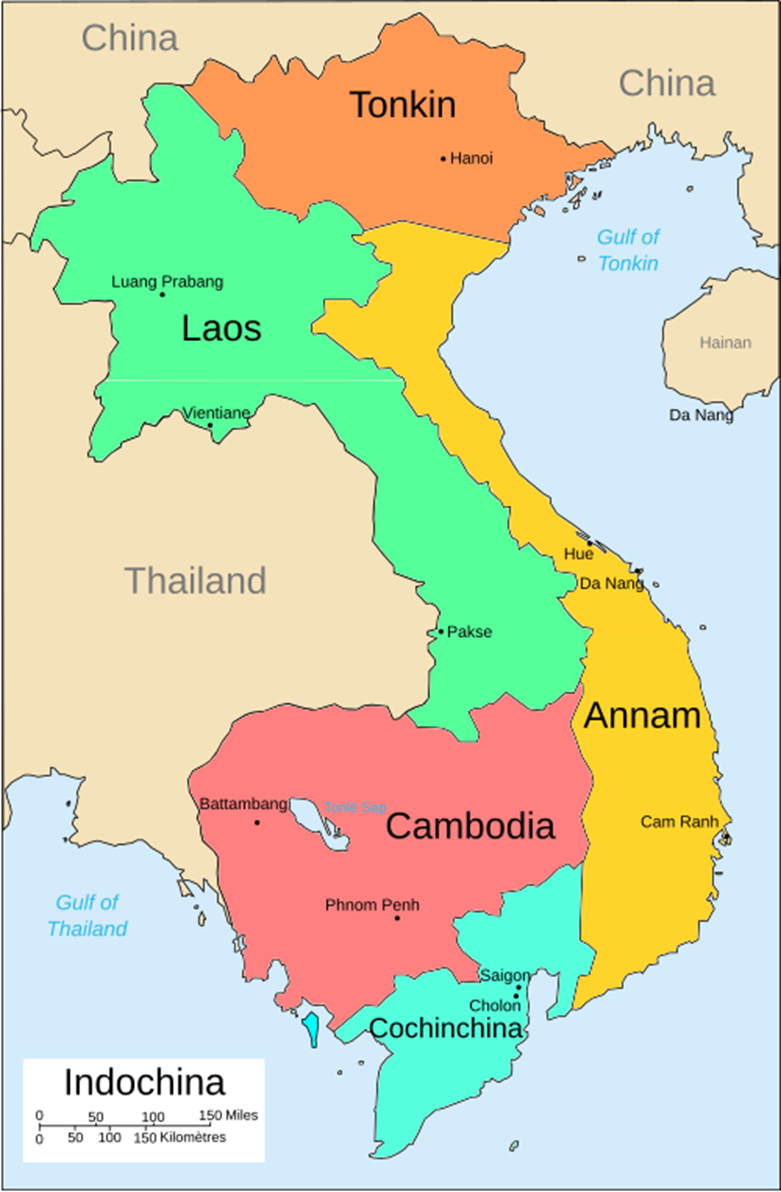
In the aftermath of World War II, the French empire was stumbling but not yet falling. Cambodia, nominally protected but functionally colonized, was lumped within French Indochina alongside Vietnam and Laos. While Ho Chi Minh’s Viet Minh took up weapons, Sihanouk sought a different battlefield — one of negotiation and symbolic resistance.

The late 1940s were a confusing time. Japanese occupation (1941–1945) had temporarily shattered the colonial order, and a taste of autonomy lingered in Cambodian memory. Yet by 1946, the French were back, determined to restore their authority under the banner of the “French Union.” Independence was now “imaginable,” but not yet “permitted.”

Even within Cambodia, opinion was divided. Some politicians believed gradual autonomy under French tutelage was safer. Others, particularly the young and ambitious, urged full sovereignty. Sihanouk, initially underestimated by both groups, surprised everyone.

Flag-map of Cambodia (Japanese occupation) (Дмитрий-5-Аверин, CC BY-SA 3.0)

Sihanouk’s Transformation: The Prince Becomes a Politician

A Young Monarch with a Mission

Crowned in 1941 at the tender age of 18, Norodom Sihanouk was initially selected by the French because they assumed he would be compliant. They could hardly have been more wrong. Behind the courteous smiles and royal pageantry, the young king harbored keen political instincts and a flair for public communication that foreshadowed his later media-savvy rule.

By 1949, he began to push the boundaries of what “constitutional monarchy” meant in a colonial context. When negotiations with Paris stalled, he decided to take matters into his own hands — literally boarding an airplane and setting off on what would become a whirlwind diplomatic marathon.

The “Royal Crusade” Takes Flight

Between 1952 and 1953, Sihanouk’s movements resembled less a king’s slow procession and more a campaign trail. He traveled through Laos, Vietnam, and Thailand, then on to France, the United States, and Canada, tirelessly lobbying for support. His mission: to convince the world that Cambodia’s independence was inevitable — and respectful diplomacy could achieve it peacefully.

The French authorities, faced with growing insurgencies elsewhere in Indochina, found themselves in a tricky position. Compared to the bloody conflicts raging next door, Sihanouk’s “royal crusade” looked almost gracious. Soon enough, it became politically expedient for Paris to grant Cambodia independence — starting with the return of administrative control over the army, finances, and foreign affairs.

A Diplomatic Victory, Not a Violent One

The Year 1953: Cambodia Reborn

By mid-1953, Sihanouk’s persistent diplomacy finally bore fruit. France, struggling to maintain its colonial grip amid rising unrest across Asia, conceded partial sovereignty step by step. On November 9, 1953 — now celebrated as Cambodia’s Independence Day — the French handed over full control to the Cambodian state. Not a single battle was fought. The event took place in Phnom Penh with ceremonial grace, punctuated by the lowering of the French flag and the rising of the Cambodian one. To many observers, it appeared sudden; in reality, it was the culmination of careful psychological and political maneuvering. Sihanouk framed himself as both a loyal ally to France and an independent sovereign of his people — a balancing act few have managed as elegantly.

Independence monument in Phnom Penh (©Pascal Médeville)

How He Did It

Historians often describe Sihanouk’s strategy as a fusion of royal symbolism and diplomatic pragmatism. He leveraged his charisma to rally both the Cambodian public and moderate French officials, while simultaneously distancing himself from insurgent movements. By avoiding armed conflict, he preserved Cambodia’s resources and kept the country intact during a period when wars were tearing the region apart.

The “Royal Crusade for Independence” was therefore not just a victory of politics over power, but also a triumph of image-making. Sihanouk became the embodiment of modern Cambodian nationalism — at once traditional and modern, regal yet populist.

After Independence: The Monarchy Reinvented

From King to “Prince” to King Again

What followed was almost Shakespearian in complexity. Having achieved independence, Sihanouk soon abdicated in favor of his father in 1955, creating space to enter the political arena directly. He founded the Sangkum Reastr Niyum (People’s Socialist Community), a political movement that would dominate Cambodian politics for the next 15 years.

His strategy was remarkably modern: position himself as the indispensable link between past and future, tradition and progress. For a time, it worked brilliantly. Cambodia became a neutral state admired for its cautious diplomacy and cultural vitality.

The Legacy of the Crusade

While the later decades of Sihanouk’s life were marked by turbulence, exile, and shifting allegiances, his 1949–1953 campaign remains one of the rare examples of a peaceful and successful decolonization in Southeast Asia. It cemented his image as the “Father of Independence,” a title he relished and never relinquished.

Why It Still Matters Today

For modern Cambodians, The Royal Crusade for Independence is not just a historical anecdote — it’s a foundational narrative of statehood. The story resonates precisely because it combines vision with diplomacy, courage with restraint. In a region too often defined by wars of liberation, Cambodia’s independence stands out for its royal diplomacy and near-total absence of bloodshed.

It also offers an enduring lesson for smaller nations navigating the pressures of larger powers: influence can be more effective than force, and charisma — when artfully deployed — can change the world.

Conclusion

The Royal Crusade for Independence remains one of modern Asia’s most astonishing political maneuvers — a peaceful revolution conducted with ceremony, speechcraft, and sheer royal determination. In outsmarting the colonial system that had once chosen him for his supposed pliancy, Sihanouk proved that even empires could be defeated by diplomacy and charm.

Sources & further reading / To know more

  • David P. Chandler, A History of Cambodia – A concise, authoritative overview of Cambodia’s modern transformation and Sihanouk’s role within it.
  • Milton Osborne, Sihanouk: Prince of Light, Prince of Darkness – A nuanced biography exploring the contradictions of Cambodia’s charismatic monarch.
  • BBC Historical Features on French Indochina – Accessible background on decolonization movements in Southeast Asia.
  • Royal Palace of Phnom Penh official exhibits – Displays relating to the independence ceremonies and diplomatic missions of 1953.
  • Jean-Michel Filippi, “Royal Crusade to Independence” – Presentation of the Royal Crusade to Independence.

About the author

Pascal Médeville is a writer and digital publisher based in Cambodia. He explores Southeast Asian history, culture, and languages through his blogs and publications, notably Wonders of Cambodia and Khmerologie. His work combines historical storytelling with a taste for nuance, humor, and the endlessly fascinating intersections of politics and culture.

Don’t miss our upcoming articles!

We don’t spam!

Check your INBOX or SPAM folder to confirm your subscription.

Tags: 1953Cambodia historyCambodian independenceCambodian monarchydecolonizationFrench IndochinaNorodom SihanoukPhnom PenhRoyal PalaceSoutheast Asia
ShareTweet
Previous Post

ភាសា៖ ស្រាយចំណងដ៏ចាក់ស្រែះ៖ អក្សរខ្មែរ និងអក្សរថៃ

Next Post

Picture of the day: Golden Sugar Palm Cakes of Cambodia

Pascal Medeville

Pascal Medeville

Author of the blog Wonders of Cambodia, I share my passion for Cambodia through stories, cultural insights, and personal reflections on the country. I'm also the founder of Simili Consulting, where we provide high-quality, professional translation services to international clients.

Related Posts

Rows of mature rubber trees in a plantation in Tbong Khmum Province, Cambodia, with a dirt road in the foreground and green vegetation surrounding the estate
History

French Introduction of Rubber Plantations to Cambodia: How Colonial Ambition Changed the Kingdom’s Landscape

July 19, 2026
Stone pyramid temple of Prasat Thom at Koh Ker, Cambodia, seen from the front with steep central stairway and green vegetation covering its tiers.
History

Who’s Who: Jayavarman IV, The King Who Moved Angkor

July 18, 2026
Kai Yuan Tong Bao (開元通寶) Tang dynasty copper‑alloy cash coins, heavily corroded, shown at high magnification in two paired front‑and‑back views with square central holes and partially legible Chinese characters, to document examples found at Angkor
History

History: Chinese Coins Reveal Hidden Stories of Angkor

July 18, 2026
Sideshow by William Shawcross
Books

Book: Sideshow: Kissinger, Nixon and the Destruction of Cambodia

July 7, 2026
Fourteenth century Sukhothai bronze Buddha statue seated cross-legged in meditation, right hand resting on knee, left hand in lap, with flame-like finial on top of the head.
History

Meet the Neighbors: A Short History of the Thai People

July 6, 2026
Black‑and‑white panoramic view of Pre Rup’s upper terrace at Angkor, showing the central stepped sandstone prasat flanked by two smaller brick towers under a dramatic cloudy sky.
History

Rajendravarman II: Warrior-King Who Reunified Angkor and Reshaped the Khmer Empire

July 19, 2026
Next Post
Picture of the day: Golden Sugar Palm Cakes of Cambodia

Picture of the day: Golden Sugar Palm Cakes of Cambodia

  • Trending
  • Comments
  • Latest
The French Protectorate of Cambodia (1863–1953): An Overview

The French Protectorate of Cambodia (1863–1953): An Overview

July 13, 2025
The Franco-Siamese Treaty of 23 March 1907: Borders, Politics, and the Return of Angkor

The Franco-Siamese Treaty of 23 March 1907: Borders, Politics, and the Return of Angkor

February 11, 2026
Cambodian-Vietnamese War (1978-1989)

Cambodian-Vietnamese War (1978-1989)

July 13, 2025
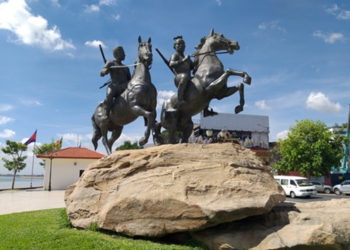
The Legend of Preah Ko Preah Keo: Guardians of Cambodia’s Lost Treasures

The Legend of Preah Ko Preah Keo: Guardians of Cambodia’s Lost Treasures

February 23, 2026
Kampot Province

Takeo Province: A Cradle of Cambodian History and Culture

3
Kratié Town on the Mekong: Colonial Echoes, River Life, and Irrawaddy Dolphins

Kratié Town on the Mekong: Colonial Echoes, River Life, and Irrawaddy Dolphins

3
Banteay Meanchey Province: A Gateway to Cambodia’s Rich Heritage

Banteay Meanchey Province: A Gateway to Cambodia’s Rich Heritage

2
Stung Treng Province: The Gateway to Cambodia’s Northern Wilderness

Stung Treng Province: The Gateway to Cambodia’s Northern Wilderness

2
Sandstone lintel at Prasat Neang Khmao in Takeo, Cambodia, showing a central mythic face flanked by naga bodies, floral scrolls, and tiny seated figures above, carved in 10th century Khmer Koh Ker style on a brick temple façade.

Wonders of Cambodia – Pictures of the Week: Flavors, Heritage and Everyday Beauty (July 13th~July 19th, 2026)

July 20, 2026
出土于吴哥遗址的唐代开元通宝铜钱样本,展示正反两面。钱币为圆形方孔铜钱,表面磨损和锈蚀较为明显,部分铭文仍可辨认,为研究唐代中国与吴哥王朝之间的贸易和文化交流提供了重要考古证据。

吴哥出土的中国古钱币,揭开了一个鲜为人知的历史真相

July 20, 2026
Traditional roasted chicken served at Phnom Chisor, Cambodia, prepared from naturally fed free-range chickens with herbs and local seasonings.

Picture of the day: Phnom Chisor Roasted Chicken: Cambodia’s Natural Flavor

July 20, 2026
Two halves of a ripe red-fleshed dragon fruit on a white plate, showing vibrant magenta flesh dotted with tiny black seeds, with whole dragon fruits in the background.

Dragon Fruit in Cambodia: A Complete Guide to the Kingdom’s Vibrant Superfruit

July 19, 2026

Recent News

Sandstone lintel at Prasat Neang Khmao in Takeo, Cambodia, showing a central mythic face flanked by naga bodies, floral scrolls, and tiny seated figures above, carved in 10th century Khmer Koh Ker style on a brick temple façade.

Wonders of Cambodia – Pictures of the Week: Flavors, Heritage and Everyday Beauty (July 13th~July 19th, 2026)

July 20, 2026
出土于吴哥遗址的唐代开元通宝铜钱样本,展示正反两面。钱币为圆形方孔铜钱,表面磨损和锈蚀较为明显,部分铭文仍可辨认,为研究唐代中国与吴哥王朝之间的贸易和文化交流提供了重要考古证据。

吴哥出土的中国古钱币,揭开了一个鲜为人知的历史真相

July 20, 2026
Traditional roasted chicken served at Phnom Chisor, Cambodia, prepared from naturally fed free-range chickens with herbs and local seasonings.

Picture of the day: Phnom Chisor Roasted Chicken: Cambodia’s Natural Flavor

July 20, 2026
Two halves of a ripe red-fleshed dragon fruit on a white plate, showing vibrant magenta flesh dotted with tiny black seeds, with whole dragon fruits in the background.

Dragon Fruit in Cambodia: A Complete Guide to the Kingdom’s Vibrant Superfruit

July 19, 2026
Wonders of Cambodia

Exploring Culture, Nature, and Spirit in the Land of Wonder.

Follow Us

Browse by Category

  • Architecture
  • Architecture
  • Art
  • Books
  • Business
  • Business
  • Cinema
  • Costume
  • Costume
  • Cuisine
  • Culture
  • Defense
  • Du lịch
  • e-Books
  • Education
  • Expat life
  • Fauna
  • Festival
  • Flora
  • Food providers
  • Français
  • Geography
  • Handicraft
  • Health
  • Histoire
  • History
  • Hotels
  • Khmer Stories
  • Khmer stories
  • Knowledge
  • Language
  • Last posts
  • Lịch sử
  • Life in Cambodia
  • Literature
  • Meet the neigbhors
  • Music
  • Pictures
  • Politics
  • Population
  • Press review
  • Professional services
  • Proverbs
  • Reference
  • Reference
  • Religion
  • Restaurants
  • Temples
  • Textile
  • Tiếng Việt
  • Tourism
  • Tourisme
  • Transport
  • Uncategorized
  • Vidéo
  • Video
  • Vie quotidienne
  • Who's who
  • ខ្មែរ
  • ទេសចរណ៍៖
  • បគ្គលល្បី
  • ប្រវត្តិសាស្ត្រោ
  • សៀវភៅ
  • 中文
  • 书籍
  • 历史
  • 商业
  • 旅游
  • 生活

Recent News

Sandstone lintel at Prasat Neang Khmao in Takeo, Cambodia, showing a central mythic face flanked by naga bodies, floral scrolls, and tiny seated figures above, carved in 10th century Khmer Koh Ker style on a brick temple façade.

Wonders of Cambodia – Pictures of the Week: Flavors, Heritage and Everyday Beauty (July 13th~July 19th, 2026)

July 20, 2026
出土于吴哥遗址的唐代开元通宝铜钱样本,展示正反两面。钱币为圆形方孔铜钱,表面磨损和锈蚀较为明显,部分铭文仍可辨认,为研究唐代中国与吴哥王朝之间的贸易和文化交流提供了重要考古证据。

吴哥出土的中国古钱币,揭开了一个鲜为人知的历史真相

July 20, 2026
  • About Us
  • Advertise
  • Privacy & Policy
  • Contact Us

© 2025 - Made with 💫 by TechFlow.

No Result
View All Result
  • Home
  • Culture
  • Cuisine
  • Tourism
  • Business
  • Life in Cambodia
  • 中文
  • ខ្មែរ
  • Français
  • Tiếng Việt
  • e-Books

© 2025 - Made with 💫 by TechFlow.