Estimated reading time: 6 minutes
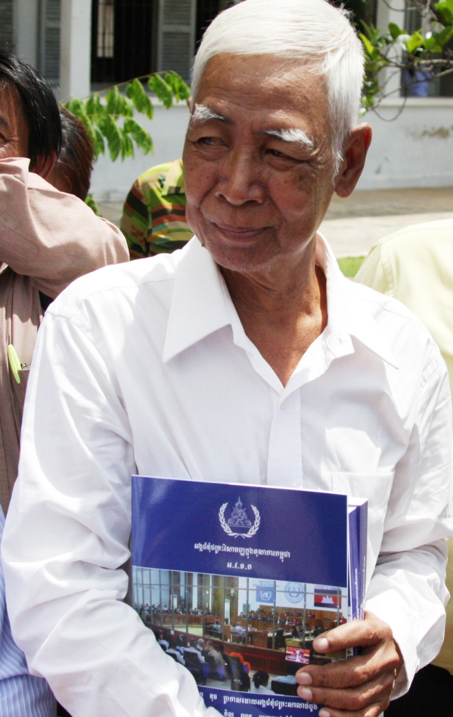
Vann Nath was far more than a survivor of the Khmer Rouge prison S-21. Through paintings, writing, and testimony, he preserved the human reality of Cambodia’s genocide and helped transform personal memory into a lasting call for justice.
Introduction
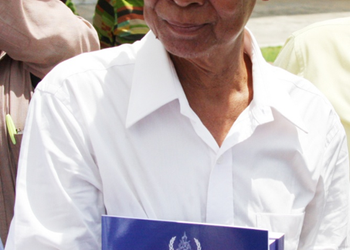
Vann Nath (Khmer: វ៉ាន់ណាត) was a Cambodian painter, writer, and human-rights advocate whose art became one of the most powerful visual records of the Khmer Rouge era. A survivor of Phnom Penh’s notorious S-21 prison, now the Tuol Sleng Genocide Museum, he used his experiences to document torture, imprisonment, grief, and survival.
His work holds a central place in Cambodia history and Khmer culture because it gave form to memories that many survivors found difficult, or impossible, to describe. Vann Nath’s paintings remain essential testimony to the violence of Democratic Kampuchea and to Cambodia’s continuing search for truth, dignity, and reconciliation.
Quick Facts
Full name: Vann Nath, វ៉ាន់ណាត
Born: 1946, Battambang Province, Cambodia
Died: September 5, 2011, Phnom Penh, Cambodia
Role: Painter, writer, genocide survivor, human-rights advocate
Historical period: French colonial aftermath, the Khmer Rouge period, and post-1979 Cambodia
Known for: Surviving S-21 by painting portraits of Pol Pot; creating paintings of prison atrocities; writing A Cambodian Prison Portrait: One Year in the Khmer Rouge’s S-21 Prison
Associated places: Battambang, Phnom Penh, Tuol Sleng Genocide Museum
Notable collaboration: Rithy Panh’s documentary S-21: The Khmer Rouge Killing Machine
Biography
Early life and artistic formation
Vann Nath was born into a poor family in Battambang Province in western Cambodia. His early interest in art was inspired by the painted murals and imagery he saw in Buddhist temples, an important source of visual culture in Khmer society. As a young man, he spent several years as a Buddhist monk before pursuing artistic training.
Before the Khmer Rouge took power in April 1975, Vann Nath worked as a painter in Battambang. He created landscapes, cinema posters, and commercial signs. This practical ability as a sign painter, developed outside elite art institutions, would later save his life.
Imprisonment at S-21
In January 1978, Khmer Rouge authorities arrested Vann Nath while he was working in a rice field. He was accused of being an enemy of the revolution and sent to S-21, the secret-security prison run by the Khmer Rouge in Phnom Penh.
S-21, also called Tuol Sleng, was administered by Kaing Guek Eav, widely known as Duch. Thousands of prisoners were interrogated, tortured, forced to confess, and then sent to execution sites. Only a small number are known to have survived.
Vann Nath was initially marked for execution. According to accounts of his imprisonment, Duch intervened with the instruction, “Spare the painter.” The Khmer Rouge needed an artist to produce portraits and sculptures of Pol Pot and other regime leaders. His artistic skill was therefore turned into forced labor, but it also allowed him to survive.
He escaped in January 1979 amid the collapse of the Khmer Rouge regime and the Vietnamese capture of Phnom Penh.
Major Contributions and Achievements
Painting the evidence of genocide
After liberation, Vann Nath painted scenes based on what he had witnessed at S-21. His canvases depict prisoners in shackles, forced interrogations, torture, hunger, fear, and death. They are disturbing works, but their purpose was not sensationalism. They made visible the experiences of victims whose lives had been erased by the regime.
Many of these paintings remain displayed at the Tuol Sleng Genocide Museum. For visitors, they provide an immediate and human visual account of what occurred inside the former prison.
Writing and testimony
In 1998, Vann Nath published A Cambodian Prison Portrait: One Year in the Khmer Rouge’s S-21 Prison. The memoir combined personal recollection with an appeal for historical truth. It became an important English-language and Cambodian reference for understanding everyday life, terror, and survival under the Khmer Rouge.
He also testified in Case 001 before the Extraordinary Chambers in the Courts of Cambodia, the UN-backed Khmer Rouge tribunal. The case tried Duch for crimes connected to S-21. Vann Nath’s testimony and visual work helped establish the enduring importance of survivor voices in Cambodia’s justice process.
Collaboration with Rithy Panh
Vann Nath appeared in Cambodian filmmaker Rithy Panh’s documentary S-21: The Khmer Rouge Killing Machine. In the film, he confronts former prison staff and asks how ordinary people became involved in the machinery of detention and violence.
These exchanges remain among the most emotionally significant records of post-genocide Cambodia. They show that memory is not only about recalling the past. It is also about demanding accountability and trying to understand how such crimes became possible.
Historical and Cultural Context
Vann Nath’s life was shaped by one of the darkest chapters in Southeast Asian history. Between 1975 and 1979, the Khmer Rouge ruled Cambodia as Democratic Kampuchea. Its radical social-engineering project targeted perceived political opponents, educated people, religious figures, artists, ethnic minorities, and countless ordinary citizens.
The regime attempted to destroy previous social structures, including family life, religion, artistic expression, markets, and formal education. In this context, Vann Nath’s survival as an artist was extraordinary. His later work also challenged the silence that often follows mass violence.
His paintings belong to Cambodia’s wider culture of remembrance, alongside survivor testimonies, Buddhist ceremonies for the dead, documentary film, archives, and the work of institutions such as the Tuol Sleng Genocide Museum.
Legacy and Influence
Vann Nath is remembered as a “living witness” whose art carried the memory of those who could no longer speak. His paintings helped ensure that S-21 would not become an abstract statistic or a distant historical site.
His legacy includes:
Paintings exhibited at the Tuol Sleng Genocide Museum in Phnom Penh
His 1998 memoir, a major survivor account of S-21
His testimony in the Duch trial
His contribution to Rithy Panh’s landmark documentary
A wider role in Cambodian human-rights advocacy and genocide education
Vann Nath died in Phnom Penh on September 5, 2011, after serious illness. His death was widely mourned as the loss of a crucial witness to the Khmer Rouge period.
Interesting Facts
Vann Nath’s ability to paint commercial signs and portraits in Battambang was the skill that led the Khmer Rouge to spare him at S-21. He was one of only a small number of known adult survivors of the prison.
His work was not confined to scenes of atrocity. He also painted works expressing Khmer resilience, prayer, peace, and collective hope.
His dialogue with former S-21 guards in Rithy Panh’s film became an important example of Cambodian cinema’s engagement with memory and justice.
About the Author
Pascal Médeville is a Cambodia-based editor, writer, and digital publisher with a longstanding interest in Khmer history, culture, heritage, and contemporary society. Through Wonders of Cambodia, he explores the people, places, traditions, and historical experiences that shape Cambodia’s identity, with particular attention to making complex subjects accessible to international readers.