Wonders of Cambodia
  • Home
  • Culture
  • Cuisine
  • Tourism
  • Business
  • Life in Cambodia
  • 中文
  • ខ្មែរ
  • Français
  • Tiếng Việt
  • e-Books
No Result
View All Result
  • Home
  • Culture
  • Cuisine
  • Tourism
  • Business
  • Life in Cambodia
  • 中文
  • ខ្មែរ
  • Français
  • Tiếng Việt
  • e-Books
No Result
View All Result
Wonders of Cambodia
No Result
View All Result
Home Culture History

Rajendravarman II: Warrior-King Who Reunified Angkor and Reshaped the Khmer Empire

Pascal Medeville by Pascal Medeville
July 5, 2026
in History, Who's who
Reading Time: 8 mins read
0

(Estimated reading time: 7-9 minutes)

Rajendravarman II was the 10th‑century Khmer king who brought Angkor back to life, reorganized a fragmented empire, and left enduring stone legacies across the eastern Angkor plain.
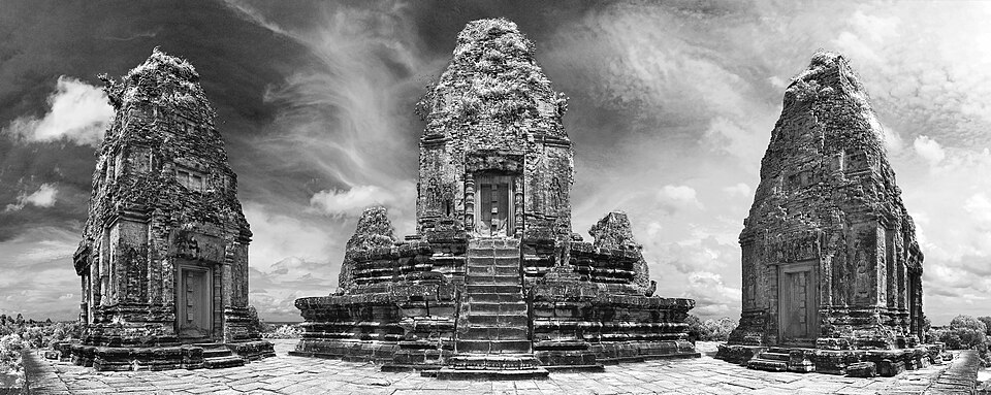
Rajendravarman II’s state temple Pre Rup: Central prasat with two of the four other prasats visible in front (Phillip Maiwald (Nikopol), CC BY-SA 3.0)

Introduction

Rajendravarman II (Khmer: រាជេន្ទ្រវរ្ម័នទី២) was a king of the Khmer Empire who ruled from 944 to 968 CE, overseeing a crucial phase of political reunification and temple construction in Angkor. He restored the royal capital to the Angkor region after decades of turmoil, laying the foundations for nearly a century of relative peace and prosperity in Cambodia’s history.

As a warrior‑king and astute administrator, Rajendravarman II strengthened centralized control over semi‑autonomous regional elites while commissioning major monuments such as Pre Rup and East Mebon. His reign marks a turning point between the early Angkorian struggles and the classical flowering of the Khmer Empire in mainland Southeast Asia.

Quick Facts

  • Full name (with Khmer script): Rajendravarman II (Khmer: រាជេន្ទ្រវរ្ម័នទី២)
  • Dates / reign: Ruled the Khmer Empire from 944 to 968 CE
  • Role / occupation: King of Angkor, ruler of the Khmer Empire, temple patron and military leader
  • Historical period: Early-mid 10th century Angkorian period, after the Koh Ker phase
  • Principal monuments: Pre Rup (state temple), East Mebon, contributions linked to Baksei Chamkrong, Bat Chum, early Srah Srang; Banteay Srei begun during his reign
  • Key achievements: Restored capital to Angkor, reorganized administration into more centralized provinces, expanded imperial territory, and initiated a long phase of stability.

Biography

Early Life and Lineage

Rajendravarman was born into a complex royal network that tied together the earlier Chenla heritage and the emerging Angkorian line. Inscriptions suggest he claimed descent from the Chenla royal line at Bhavapura, an early center often associated with the Sambor Prei Kuk region.

He appears to have been both uncle and first cousin to his predecessor Harshavarman II, reflecting the dense intermarriages of the Khmer elite. Before seizing the Angkorian throne, Rajendravarman likely ruled or governed Bhavapura as a powerful provincial or semi‑autonomous city‑state ruler.

Path to the Throne

The first half of the 10th century saw political fragmentation, with the royal center moving to Koh Ker under Jayavarman IV and subsequent conflicts among rival claimants. After Jayavarman IV’s death and the reign of Harshavarman II, Rajendravarman launched a campaign that culminated in his accession in 944, restoring the capital to the old Angkor-Yasodharapura area.

His reign ended around 968, possibly linked to unrest; some accounts mention a revolt around 958, though details remain unclear. He was succeeded by his young son, Jayavarman V, who ascended the throne at about ten years old.

Major Contributions and Achievements

Political Reunification and Administration

Rajendravarman II is widely credited with reuniting a fractured Khmer realm, consolidating authority over regional princes who had enjoyed considerable autonomy. Inscriptions and later interpretations suggest he reorganized the empire into more tightly controlled provinces, strengthening central administration across areas that now correspond to parts of Cambodia, southern Vietnam, Laos, Thailand, and even reaching towards southern China.

By bringing the capital back to Angkor, he set the stage for a sustained period of prosperity under his successors, with some historians noting that the stability he initiated lasted for nearly a century.

Military Campaigns and Expansion

Inscriptional evidence records Rajendravarman’s victories against Ramanya and Champa in 946 CE. Ramanya likely refers to Mon territories in eastern Dvaravati (in present‑day Thailand), while the campaign against Champa in present‑day central Vietnam included the seizure of a gold statue from the temple of Po Nagar.

He is described in one inscription as a great warrior whose sword was often blood‑stained and whose body was as hard as diamond, balancing firmness in punishment with “an ocean of compassion” for the innocent.

Temple Construction and Religious Policies

Rajendravarman II’s principal monuments are clustered in eastern Angkor, notably East Mebon and his state temple Pre Rup. East Mebon, built on an artificial island in the East Baray reservoir, is a mountain temple dedicated to Shiva and accessible only by boat at the time of construction. Pre Rup, consecrated around 961–962, served as his state temple and temple‑mountain, marking a new urban focus south of the East Baray.

He completed or contributed to other significant sites such as Baksei Chamkrong and the Buddhist complex Bat Chum, while work on Banteay Srei began during his reign under the direction of a Brahman priest rather than the king himself. Inscriptions portray him as an organizer of state religious rituals, including orders for collecting sacred oil (butter) used in temple ceremonies.

Historical and Cultural Context

Rajendravarman II ruled during the early Angkorian consolidation phase, following the experimental capital at Koh Ker and preceding the high classical era associated with kings like Suryavarman II and Jayavarman VII. The Angkor region, already anchored by Yasovarman I’s foundations and monumental reservoirs, had been partially abandoned or diminished for several decades before his return.

By re‑establishing Angkor as the political and ritual heart of the Khmer Empire, Rajendravarman II connected earlier Chenla legacies with the monumental Angkor we know today. His reign also reflects broader Southeast Asian dynamics, including interactions with Mon polities in Dvaravati and the Cham kingdoms, situating Cambodia within a vibrant regional network of trade, warfare, and religious exchange.

Legacy and Influence

Rajendravarman II’s most immediate legacy lies in the stable framework he created for his successors, particularly Jayavarman V, to develop Angkor’s architectural and cultural brilliance. Modern historians emphasize that while his temples may be less famous than Angkor Wat, his administrative and political reforms were crucial for the empire’s long‑term strength.

In today’s Cambodia, his name survives through key Angkor temples like Pre Rup and East Mebon, which remain popular with visitors exploring the eastern part of the archaeological park. These monuments embody not only his religious devotion but also the sophisticated engineering and artistic traditions of 10th‑century Khmer culture.

Interesting Facts and Anecdotes

  • Inscriptions depict Rajendravarman II as both a fierce warrior and a compassionate ruler, with poetic imagery likening his sword to a blood‑stained weapon of justice and his mercy to a vast ocean.
  • During his reign, sources mention that the Khmer Empire possessed 24 cities or pura, suggesting a wide network of urban centers integrated into his centralized system.
  • Banteay Srei, now celebrated as one of Angkor’s most finely carved temples, began under his reign but was led by a learned Brahman, highlighting the role of non‑royal elites in Khmer religious patronage.

About the Author: Pascal Medeville

This article is authored by Pascal Medeville, a multilingual content creator and digital publisher based in Phnom Penh, Cambodia, and founder of the Wonders of Cambodia platform. Drawing on his background in translation and cultural documentation in languages including Khmer, French, Chinese, and English, Pascal focuses on making Cambodia’s history and Khmer culture accessible to a global audience while maintaining local nuance and accuracy.

Don’t miss our upcoming articles!

We don’t spam!

Check your INBOX or SPAM folder to confirm your subscription.

Tags: Angkor kings biographyAngkor temple kingsCambodia 10th centuryCambodian historical figuresEast Mebon AngkorKhmer culture and religionKhmer Empire historyPre Rup temple historyRajendravarman IIWho’s who Wonders of Cambodiaរាជេន្ទ្រវរ្ម័នទី២
ShareTweet
Previous Post

Cambodia: A Visual Journal — Pictures of the Day from June 2026

Pascal Medeville

Pascal Medeville

Author of the blog Wonders of Cambodia, I share my passion for Cambodia through stories, cultural insights, and personal reflections on the country. I'm also the founder of Simili Consulting, where we provide high-quality, professional translation services to international clients.

Related Posts

Side profile portrait of Cambodian painter Chov Theanly, wearing a light grey T‑shirt and gazing thoughtfully upward against a smooth turquoise background
Art

Who’s who: Chov Theanly, Cambodia’s Painter of Quiet Determination

June 22, 2026
Overgrown four-faced Angkorian tower of Banteay Chhmar reflected in a tranquil baray, with Bayon-style smiling faces from the era of Jayavarman VII framed by lush Cambodian greenery.
Architecture

Picture of the day: Whispering Faces of Banteay Chhmar’s Tower

June 22, 2026
Red sandstone-style National Museum of Cambodia building with ornate Khmer roof, columns, and landscaped garden in front
Art

The Creation of the National Museum of Cambodia, A Colonial Vision Turned Cultural Treasure

June 17, 2026
Grassy inner yard of Côn Đảo Prison on Côn Sơn Island, Vietnam, bordered by a stone wall with a lone guard tower and forested mountains under a cloudy sky
History

Khmer Prisoners of Poulo Condore – Cambodia’s Forgotten Generation in a Vietnamese Island Prison

June 14, 2026
Black and white illustration of a classroom at the École cambodgienne in Paris, showing Cambodian male students in traditional garments standing and sitting at wooden desks while two European teachers supervise the lesson from the front and back of the room.
History

From École Cambodgienne to Colonial School: How Paris Tried to “Educate” Empire

June 13, 2026
Black and white photo of monk Khieu Chum speaking at a table with three journalists in a simple indoor setting
History

Who’s Who: Venerable Khieu Chum, the Monk Who Helped Topple a King

June 12, 2026

Leave a Reply Cancel reply

Your email address will not be published. Required fields are marked *

  • Trending
  • Comments
  • Latest
The French Protectorate of Cambodia (1863–1953): An Overview

The French Protectorate of Cambodia (1863–1953): An Overview

July 13, 2025
The Franco-Siamese Treaty of 23 March 1907: Borders, Politics, and the Return of Angkor

The Franco-Siamese Treaty of 23 March 1907: Borders, Politics, and the Return of Angkor

February 11, 2026
Cambodian-Vietnamese War (1978-1989)

Cambodian-Vietnamese War (1978-1989)

July 13, 2025
The Legend of Preah Ko Preah Keo: Guardians of Cambodia’s Lost Treasures

The Legend of Preah Ko Preah Keo: Guardians of Cambodia’s Lost Treasures

February 23, 2026
Kampot Province

Takeo Province: A Cradle of Cambodian History and Culture

3
Kratié Town on the Mekong: Colonial Echoes, River Life, and Irrawaddy Dolphins

Kratié Town on the Mekong: Colonial Echoes, River Life, and Irrawaddy Dolphins

3
Banteay Meanchey Province: A Gateway to Cambodia’s Rich Heritage

Banteay Meanchey Province: A Gateway to Cambodia’s Rich Heritage

2
Stung Treng Province: The Gateway to Cambodia’s Northern Wilderness

Stung Treng Province: The Gateway to Cambodia’s Northern Wilderness

2
Black‑and‑white panoramic view of Pre Rup’s upper terrace at Angkor, showing the central stepped sandstone prasat flanked by two smaller brick towers under a dramatic cloudy sky.

Rajendravarman II: Warrior-King Who Reunified Angkor and Reshaped the Khmer Empire

July 5, 2026
Homemade Cambodian soup in a white bowl, filled with minced pork, ivy gourd leaves, dried shrimp, and mushrooms in a clear broth on a wooden table

Cambodia: A Visual Journal — Pictures of the Day from June 2026

July 5, 2026
Close up of deep-fried beef tendon pieces on a red plate, sprinkled with sesame seeds and garnished with fried kaffir lime leaves at a small street side restaurant in Kampong Thom, Cambodia.

Picture of the day: Crunchy Cambodian Beef Tendon Street Snack

July 5, 2026
Archival sepia photograph of Ta Prohm temple at Angkor, showing a ruined stone sanctuary engulfed by jungle, with massive tree roots draped over carved walls and scattered blocks in the foreground.

From EFEO Outpost to Heritage Icon: A Short History of the Conservation d’Angkor

July 4, 2026

Recent News

Black‑and‑white panoramic view of Pre Rup’s upper terrace at Angkor, showing the central stepped sandstone prasat flanked by two smaller brick towers under a dramatic cloudy sky.

Rajendravarman II: Warrior-King Who Reunified Angkor and Reshaped the Khmer Empire

July 5, 2026
Homemade Cambodian soup in a white bowl, filled with minced pork, ivy gourd leaves, dried shrimp, and mushrooms in a clear broth on a wooden table

Cambodia: A Visual Journal — Pictures of the Day from June 2026

July 5, 2026
Close up of deep-fried beef tendon pieces on a red plate, sprinkled with sesame seeds and garnished with fried kaffir lime leaves at a small street side restaurant in Kampong Thom, Cambodia.

Picture of the day: Crunchy Cambodian Beef Tendon Street Snack

July 5, 2026
Archival sepia photograph of Ta Prohm temple at Angkor, showing a ruined stone sanctuary engulfed by jungle, with massive tree roots draped over carved walls and scattered blocks in the foreground.

From EFEO Outpost to Heritage Icon: A Short History of the Conservation d’Angkor

July 4, 2026
Wonders of Cambodia

Exploring Culture, Nature, and Spirit in the Land of Wonder.

Follow Us

Browse by Category

  • Architecture
  • Architecture
  • Art
  • Books
  • Business
  • Business
  • Cinema
  • Costume
  • Costume
  • Cuisine
  • Culture
  • Defense
  • Du lịch
  • e-Books
  • Education
  • Expat life
  • Fauna
  • Festival
  • Flora
  • Food providers
  • Français
  • Geography
  • Handicraft
  • Health
  • Histoire
  • History
  • Hotels
  • Khmer Stories
  • Khmer stories
  • Knowledge
  • Language
  • Last posts
  • Lịch sử
  • Life in Cambodia
  • Literature
  • Music
  • Pictures
  • Politics
  • Population
  • Press review
  • Professional services
  • Proverbs
  • Reference
  • Reference
  • Religion
  • Restaurants
  • Textile
  • Tiếng Việt
  • Tourism
  • Tourisme
  • Transport
  • Uncategorized
  • Video
  • Vidéo
  • Vie quotidienne
  • Who's who
  • ខ្មែរ
  • ទេសចរណ៍៖
  • បគ្គលល្បី
  • ប្រវត្តិសាស្ត្រោ
  • 中文
  • 书籍
  • 历史
  • 旅游
  • 生活

Recent News

Black‑and‑white panoramic view of Pre Rup’s upper terrace at Angkor, showing the central stepped sandstone prasat flanked by two smaller brick towers under a dramatic cloudy sky.

Rajendravarman II: Warrior-King Who Reunified Angkor and Reshaped the Khmer Empire

July 5, 2026
Homemade Cambodian soup in a white bowl, filled with minced pork, ivy gourd leaves, dried shrimp, and mushrooms in a clear broth on a wooden table

Cambodia: A Visual Journal — Pictures of the Day from June 2026

July 5, 2026
  • About Us
  • Advertise
  • Privacy & Policy
  • Contact Us

© 2025 - Made with 💫 by TechFlow.

No Result
View All Result
  • Home
  • Culture
  • Cuisine
  • Tourism
  • Business
  • Life in Cambodia
  • 中文
  • ខ្មែរ
  • Français
  • Tiếng Việt
  • e-Books

© 2025 - Made with 💫 by TechFlow.