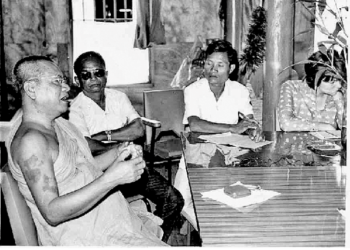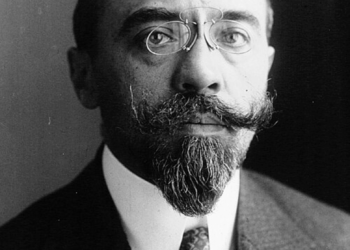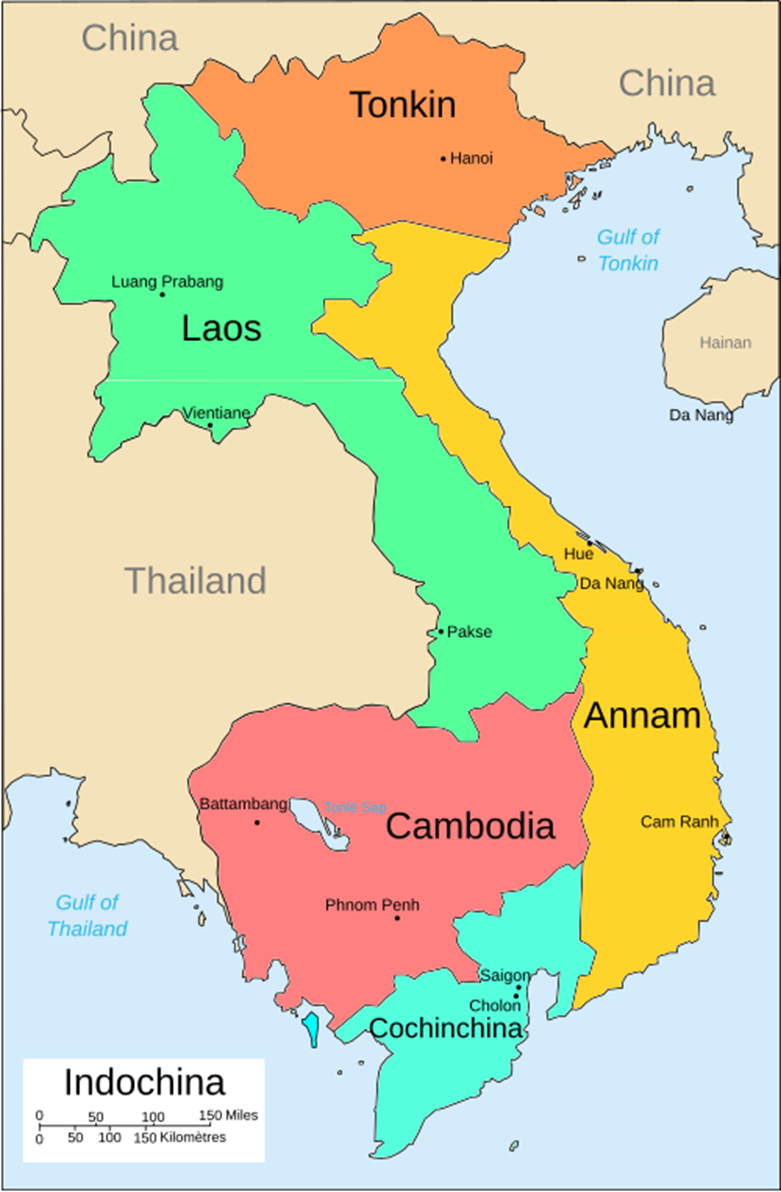
Norodom Sihanouk was more than Cambodia’s charismatic king and father of independence. A fluent French-speaking statesman, filmmaker and intellectual, he became one of the founders of institutional Francophonie and helped give the French language a new role in postcolonial Cambodia.
When people think of Norodom Sihanouk, they usually picture the charismatic Cambodian monarch who led his country toward independence, navigated the dangerous politics of the Cold War and became one of the most recognizable figures in modern Southeast Asian history.
Less often remembered is another dimension of his extraordinary career: Sihanouk was one of the founding figures of the modern Francophone movement.
For Sihanouk, French was not simply the language of the former colonial power. It became a language of diplomacy, international communication, culture and cooperation. His relationship with French reflected one of the great paradoxes of Cambodia’s twentieth century: the country sought to free itself from French colonial rule while retaining many of the intellectual and cultural connections created during the colonial period.
In 2026, as Cambodia prepares to host the 20th Summit of the Francophonie in November, Sihanouk’s role in the history of the French-speaking world deserves renewed attention. The summit will take place on November 15 and 16, 2026, and will be only the second Francophonie summit held in Asia after Hanoi in 1997.
A prince educated in French
Norodom Sihanouk was born in Phnom Penh on October 31, 1922, into the Cambodian royal family. His education was largely conducted within the French colonial educational system.
He attended the François Baudoin primary school in Phnom Penh before continuing his secondary education at the prestigious Lycée Chasseloup-Laubat in Saigon, where he studied subjects including Greek and Latin rhetoric.
This education gave the young prince something that would prove enormously valuable throughout his life: a sophisticated command of French and familiarity with the intellectual world of French Indochina.
In the Cambodia of his youth, French occupied an important position in administration, education and elite society. For a young member of the royal family destined eventually to play a major political role, mastering French was therefore much more than acquiring a foreign language.
It was acquiring access to the political and intellectual language of the time.
Sihanouk would later use that language remarkably effectively.
From colonial language to diplomatic instrument
Sihanouk’s relationship with France was never simple.
In 1941, at just 18 years old, he was selected to become King of Cambodia under the French protectorate.
Yet the young monarch eventually became one of the principal figures in the struggle for Cambodian independence.
Cambodia achieved full independence from France on November 9, 1953, following Sihanouk’s determined royal crusade for independence.
There is an apparent contradiction here.
How could a Cambodian nationalist who fought for independence remain such a prominent figure in the French-speaking world?
The answer lies partly in Sihanouk’s understanding of the distinction between French political power and the French language itself.
He could oppose colonialism without rejecting French culture. He could defend Cambodian sovereignty while using French to communicate with the international community. And he could regard the language of the former colonial administration as a useful instrument for a newly independent Cambodia.
This distinction would become particularly important in the decades that followed.
Sihanouk, the international statesman
After his abdication in 1955, Sihanouk remained at the center of Cambodian political life, eventually serving as head of state from 1960 to 1970. His political career would carry him far beyond the traditional role of a constitutional monarch.
French became one of the languages through which he presented Cambodia to the outside world.
He was an unusually international figure for a Southeast Asian leader of his generation. He met presidents, monarchs, diplomats and intellectuals across Europe, Asia and the wider world.
His ability to speak and write in French was particularly useful in an era when French remained a major diplomatic and intellectual language.
The catalogue of the Bibliothèque nationale de France records Sihanouk as an author and participant who wrote in French and English, in addition to his Khmer-language activities. It also records his remarkable range of activities as filmmaker, composer and singer.
This matters because Sihanouk’s Francophonie was not merely institutional. It was personal.
A king who wrote, filmed and composed
Sihanouk was one of those rare political figures whose cultural interests were almost as striking as his political career.
He wrote books and articles, made films, composed music and performed songs. His artistic activities gave him an unusual means of expressing Cambodian identity to international audiences.
The French-speaking world became one of the spaces in which this cultural diplomacy could operate.
The Bibliothèque Nationale de France’s catalogue includes numerous works connected with Sihanouk and documents his career as a filmmaker and composer.
This is an important part of his Francophone legacy. Sihanouk was not simply a politician who happened to speak French. He was an internationally minded cultural figure who used several languages and several artistic forms to project an image of Cambodia beyond its borders.
In this sense, French became one of the tools through which he could explain Cambodia to the world while simultaneously asserting its distinct identity.
From independence to Francophonie
The most important chapter in Sihanouk’s relationship with the French-speaking world came in the late 1960s.
At that time, a group of leaders from countries that had emerged from colonial rule began discussing how the French language could be placed at the service of international cooperation rather than domination.
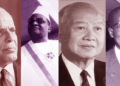
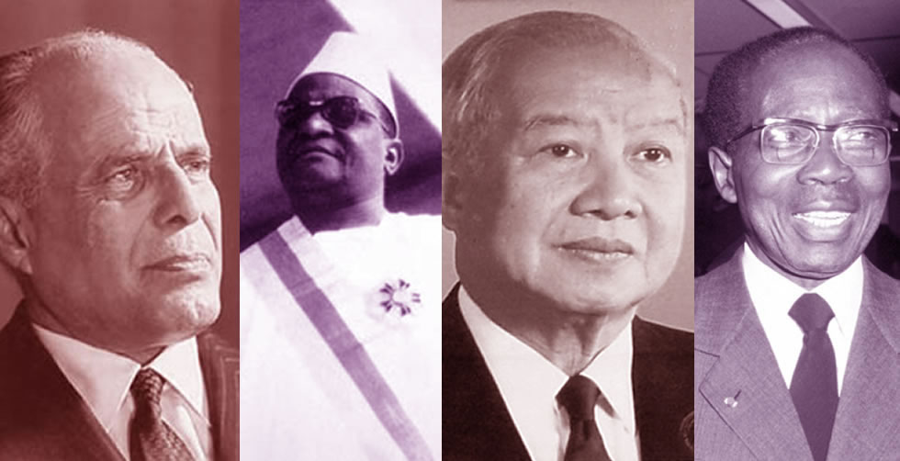
Among them were Léopold Sédar Senghor of Senegal, Habib Bourguiba of Tunisia, Hamani Diori of Niger and Norodom Sihanouk of Cambodia.
The Organisation internationale de la Francophonie itself describes these four statesmen as the founding figures of institutional Francophonie.
Their idea was significant.
The French language could survive decolonization, but its meaning could change. Instead of representing a political hierarchy between France and its former colonies, French could become a shared language connecting independent states.
The concept was put into institutional form on March 20, 1970, in Niamey, Niger, with the creation of the Agence de coopération culturelle et technique, or ACCT.
Representatives of 21 states and governments signed the convention establishing the organization. The ACCT would eventually evolve into today’s Organisation internationale de la Francophonie.
Sihanouk’s participation was therefore historically significant.
He helped turn French into something different from what it had been during the colonial period.
A Francophonie of equals
The founding philosophy of Francophonie was particularly relevant to leaders such as Sihanouk.
The objective was not simply to preserve French as an international language. It was to use French as a means of cooperation between cultures and nations.
The OIF describes the founders’ vision as one of using French to promote solidarity, development and dialogue among peoples and civilizations.
For Cambodia, this offered an attractive diplomatic framework.
The country could remain unmistakably Cambodian while participating in an international community in which French served as a common means of communication.
That distinction remains important today.
Cambodia’s Francophonie is not simply a historical remnant of the French protectorate. It is also the result of choices made by Cambodian leaders who considered French useful for education, diplomacy, culture and international cooperation.
Sihanouk was one of the most important among them.
The French language and Cambodian identity
Sihanouk’s attitude also illustrates a broader Cambodian experience.
The French colonial period profoundly influenced Cambodia’s educational and administrative institutions. Members of the Cambodian elite who received a French education acquired access to a world of European literature, political thought and international diplomacy.
But after independence, the relationship could be reinterpreted.
French no longer had to mean political subordination. It could coexist with Khmer nationalism.
Indeed, Sihanouk’s career provides a particularly vivid example of this transformation. He could be fiercely protective of Cambodian sovereignty while remaining culturally comfortable in French-speaking circles.
This was not necessarily a contradiction.
For Sihanouk, Cambodian identity was not something that had to be protected by closing the door to foreign languages. His career suggests instead that foreign cultural tools could be appropriated and placed at the service of Cambodian interests.
Cambodia’s continuing Francophone identity
Sihanouk’s legacy survived the extraordinary political upheavals that followed.
Cambodia became a member of the modern Organisation internationale de la Francophonie in 1993, while French continued to have an important role in areas such as medicine, higher education, law, diplomacy and international cooperation.
The country’s Francophone institutions also became part of a wider Southeast Asian network.
Cambodia hosted the first Francophonie Summit in Asia in Hanoi in 1997, alongside the other Asian members of the Francophone community. The decision to return to the region nearly three decades later is historically significant.
And now the Francophonie is coming to Cambodia itself.
From Sihanouk to the 2026 Francophonie Summit
The choice of Cambodia to host the 20th Summit of the Francophonie in 2026 has an obvious historical resonance.
The summit was awarded to Cambodia at the 2024 Villers-Cotterêts summit. The OIF and Cambodia subsequently signed an agreement governing the organization of the event, with Siem Reap initially designated as the host city. The official OIF calendar now lists November 15 and 16, 2026, as the dates of the summit. For logistical reasons, however, the decision was later made to hold the summit in Phnom Penh rather than Siem Reap.
The event will focus on peace and sustainable development, linking contemporary Francophone priorities with the particular experience of a country that has known war, genocide, reconstruction and peace.
There is something almost poetic about this. More than half a century after Sihanouk helped establish the institutional foundations of Francophonie, Cambodia is preparing to welcome the leaders of that same international community.
The country is no longer a former French protectorate hosting an event organized around a colonial language.
It is a sovereign Asian nation participating in and hosting a global organization whose membership extends far beyond the former French Empire.
The King who helped redefine French
Calling Sihanouk simply a “French-speaking king” therefore misses something important.
He was certainly a French-speaking monarch. His education, political career and cultural activities were deeply connected to the French language. But his historical importance lies elsewhere.
Sihanouk belonged to a generation that took the language of colonial administration and helped transform it into a language of postcolonial diplomacy.
Alongside Senghor, Bourguiba and Diori, he contributed to the idea that French could become a bridge between independent countries rather than a symbol of dependence.
That is one of the intriguing legacies of twentieth-century Cambodia.
The country fought France for independence, yet Cambodia did not simply abandon the French cultural world. Instead, figures such as Sihanouk helped reshape the relationship.
Today, French remains one of the languages through which Cambodia presents part of its history and culture to the world.
And in November 2026, when Francophone leaders gather in Cambodia, the presence of Norodom Sihanouk will be felt even if his name is not written on the summit agenda. The French-speaking king helped build that bridge. Cambodia is now standing on the other side of it.
Historical note
It is worth being precise about Sihanouk’s title in this context. Although he is commonly remembered as King Norodom Sihanouk, he had abdicated in 1955 and was serving as Cambodia’s head of state when the ACCT was created in 1970. The OIF therefore generally refers to him in its historical accounts as Prince Norodom Sihanouk, one of the fathers of institutional Francophonie.