Wonders of Cambodia
  • Home
  • Culture
  • Cuisine
  • Tourism
  • Business
  • Life in Cambodia
  • 中文
  • ខ្មែរ
  • Français
  • Tiếng Việt
  • e-Books
No Result
View All Result
  • Home
  • Culture
  • Cuisine
  • Tourism
  • Business
  • Life in Cambodia
  • 中文
  • ខ្មែរ
  • Français
  • Tiếng Việt
  • e-Books
No Result
View All Result
Wonders of Cambodia
No Result
View All Result
Home Culture Geography Fauna

The Asian Elephant in Cambodia: Guardian of the Forest and Symbol of Gentle Strength

Pascal Medeville by Pascal Medeville
February 21, 2026
in Fauna
Reading Time: 7 mins read
0

In the deep jungles and sacred mountains of Cambodia, the Asian elephant stands as a living emblem of resilience, memory, and quiet grace. Once royal companions and forest architects, these majestic creatures are now caught between tradition and survival. Join us on a journey through myth, ecology, and the long friendship between Cambodians and their elephants.

Asian elephant (Léodras, CC BY-SA 4.0)

Introduction

Few animals hold the Cambodian imagination quite like the elephant. Revered in temple bas-reliefs, remembered in royal processions, and still greeted as “Lok Ta” — a respectful elder — the Asian elephant (Elephas maximus, Khmer: ដំរី dâm-rei) occupies a unique space between the spiritual and the ecological.

This article is for travelers, conservation enthusiasts, and anyone curious about the deep connection between Cambodian landscapes and their most charismatic resident. Beyond admiring its might, understanding the elephant’s role in local culture and ecosystems helps us see why its survival matters — to Cambodia and beyond.

Today, the story of the Asian elephant is both beautiful and precarious: a tale of ancient reverence meeting modern challenges. Let’s explore how these remarkable beings continue to shape Cambodia’s forests, faiths, and future.

The Asian Elephant: Species Profile and Presence in Cambodia

A Majestic Yet Endangered Giant

The Asian elephant is smaller than its African cousin, sporting smaller ears and smoother skin — though no less charm. In Cambodia, wild populations are estimated between 400 and 600 individuals, mainly roaming through the Cardamom Mountains, Mondulkiri, and parts of the Virachey National Park.

They are highly intelligent, social animals that rely on deep forest habitats. Each herd is led by a matriarch, whose encyclopedic memory guides them to water, mineral licks, and food — sometimes across dozens of kilometers. Sadly, habitat fragmentation and human encroachment have reduced both range and numbers dramatically over the past century.

More Than a Wild Creature

Historically, elephants were semi-domesticated across Cambodia. They served kings, hunters, and travelers — hauling timber, carrying goods, and even joining ceremonial parades. In villages like Pu Trom (Mondulkiri), a few still live alongside the Bunong people, who treat them as family rather than livestock.

Though modern forestry no longer relies on elephant labor, their cultural and ecological importance remains immense — a delicate reminder that not all progress comes on four wheels.

Elephants in Cambodian Culture and Myth

Royal Symbolism and Sacred Meaning

In Cambodian history, elephants have often walked alongside kings. The White Elephant — a rare color morph — was a symbol of divine authority, believed to bless rulers with cosmic legitimacy. A monarch with a white elephant did not merely reign; he radiated prosperity.

Ancient carvings at Angkor Thom and Bayon Temple depict regal elephants in battle, processions, and forest scenes. These images served both as propaganda and poetry: reminders that power and nature were intertwined, and that kings were guardians, not exploiters, of the wild.

God Indra mounted of Araivata, the three-headed elephant, in Banteay Srei temple (©Pascal Médeville)

Memory in Folklore and Belief

In Buddhism, elephants embody patience and wisdom. The Buddha’s mother dreamt of a white elephant before his birth — a vision of rarity and enlightenment. To rural Cambodians, stories of elephants often carry moral weight: tales of loyalty, forgiveness, or the dangers of arrogance (especially from humans).

Even today, elephants appear in festivals, folk motifs, and tuk-tuk decorations. Their image bridges the ancient and the modern — a continuity few animals can boast.

The Ecological Role: Gardeners of the Cambodian Rainforest

Nature’s Heavy-Lifters

Elephants don’t only grace art — they maintain the forest itself. By trampling paths, dispersing seeds, and digging for minerals, they act as “ecosystem engineers.” Without them, Cambodia’s dense rainforests would lose crucial biodiversity.

Their digestive system is, shall we say, less than efficient — about half of what they eat passes right through, perfectly packaged for reforestation. In effect, they plant trees as they wander, ensuring forest regeneration despite human disruptions.

Conflict and Coexistence

But the relationship between elephants and humans is not without tension. Expanding plantations and roads push herds into farmland, where they may feast on banana groves or rice fields. This leads to human-elephant conflict, a growing issue in provinces like Mondulkiri and Ratanakiri.

Conservation projects such as the Elephant Valley Project focus on rehabilitating retired working elephants and helping local communities adapt. Encouragingly, eco-tourism initiatives now offer herders alternatives to exploitative labor, proving that compassion can also be economically sound.

Conservation Efforts in Cambodia

From Exploitation to Protection

Cambodia’s approach to elephant conservation has evolved markedly over the last two decades. Organizations like Wildlife Alliance, WWF Cambodia, and the Elephant Livelihood Initiative Environment (ELIE) are building bridges — between forest conservation, indigenous traditions, and sustainable livelihoods.

Projects include anti-poaching patrols, land corridor restoration, and education programs that help locals manage conflict peacefully. The focus is not only saving elephants but securing spaces where both people and pachyderms can thrive.

Ecotourism and Ethical Interaction

For visitors, the best way to help is also the most rewarding: ethical tourism. Sanctuaries such as Elephant Valley Project (Sen Monorom) let elephants roam freely without riding or tricks. Visitors can observe, feed, and bathe them respectfully — learning as much about humility as about wildlife.

Avoiding camps that promote performances or direct contact is key. The true magic of elephants is in their autonomy: watching them casually strip bamboo leaves or gossip through low rumbles is far richer than any “selfie moment.”

The Future of Cambodia’s Elephants

Small Steps, Big Ears

Cambodia’s forests are among Southeast Asia’s last great wilderness areas, yet they face encroachment from logging, mining, and development. Without strong protection, elephants will continue losing ground — both literally and symbolically.

Hope lies in combining local wisdom with modern science: replanting corridors between fragmented habitats, monitoring herds via GPS, and ensuring that elephant conservation benefits the communities living alongside them. Cambodia has the spiritual foundation and the biological wealth; what it needs now is continuity and care.

For those who listen closely, an elephant’s rumble still echoes through the forest. It’s a reminder that guardianship is mutual: as we protect them, they, in turn, preserve the heart of Cambodia’s wilderness.

Conclusion

The Asian elephant in Cambodia is more than a species — it’s a story of companionship, reverence, and resilience. Protecting it means protecting the forest, the culture, and a sense of balance that has endured for centuries. Long may the forests tremble under the weight of wisdom, not chains.

Sources & Further Reading

  • Wildlife Alliance – Elephant Conservation: Overview of current protection programs and field projects in the Cardamom Mountains.
  • WWF Cambodia: Reports and updates on elephant populations and biodiversity corridors.
  • Elephant Valley Project (Mondulkiri): Sanctuary information, volunteer opportunities, and visitor ethics.
  • IUCN Red List – Elephas maximus: Scientific data on population status, threats, and global distribution.

About the Author

Pascal Médeville is a writer and digital publisher based in Phnom Penh. He writes about Cambodian culture, history, and wildlife for Wonders of Cambodia and related projects. His works often explore where tradition meets modernity — whether in temples, kitchens, or tropical forests.

Don’t miss our upcoming articles!

We don’t spam!

Check your INBOX or SPAM folder to confirm your subscription.

Tags: Asian elephantCambodia WildlifeCambodian cultureCambodian natureCardamom mountainsEcotourismelephant conservationindigenous communitiesMondulkiriដំរី
ShareTweet
Previous Post

Picture of the day: Bánh Canh Breakfast in a Cambodian Market

Next Post

The Siamese-Cambodian War (1591–1594): When Angkor’s Shadow Still Loomed Over Ayutthaya

Pascal Medeville

Pascal Medeville

Author of the blog Wonders of Cambodia, I share my passion for Cambodia through stories, cultural insights, and personal reflections on the country. I'm also the founder of Simili Consulting, where we provide high-quality, professional translation services to international clients.

Related Posts

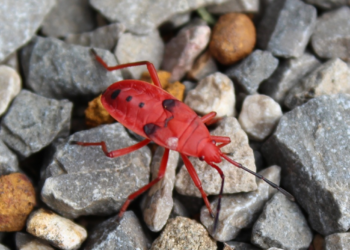
Bright red Probergrothius nigricornis kapok bug walking over mixed gray and brown gravel stones in Cambodia, showing black dorsal spots and slender antennae.
Fauna

Picture of the day: Scarlet Kapok Bug on Cambodian Stones

June 30, 2026
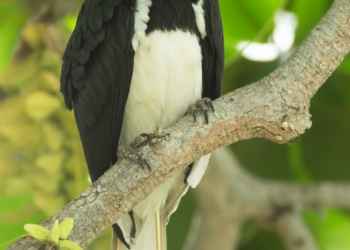
Oriental pied hornbill (Anthracoceros albirostris) perched on a tree branch in tropical foliage, showing its black-and-white plumage and large yellow casque.
Fauna

Fauna: Anthracoceros albirostris in Cambodia – The Oriental Pied Hornbill of the Kingdom

May 9, 2026
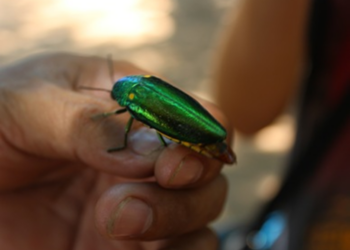
Close-up of a metallic green Sternocera ruficornis jewel beetle (សត្វកំភេ) perched on a person’s fingers in Kratie, Cambodia, with a softly blurred background.
Fauna

Picture of the day: Sternocera aequisignata, Jewel Beetle of Kratie

April 22, 2026
Picture of the day: Wild Bee Hives in Banteay Chhmar
Fauna

Picture of the day: Wild Bee Hives in Banteay Chhmar

February 19, 2026
Marble Goby in Cambodia: Characteristics, High Value and Cooking Tips for Oxyeleotris marmorata
Cuisine

Marble Goby in Cambodia: Characteristics, High Value and Cooking Tips for Oxyeleotris marmorata

February 4, 2026
Picture of the day: Vepricardium asiaticum: Cambodian Cockles
Cuisine

Picture of the day: Vepricardium asiaticum: Cambodian Cockles

February 11, 2026
Next Post
The Siamese-Cambodian War (1591–1594): When Angkor’s Shadow Still Loomed Over Ayutthaya

The Siamese-Cambodian War (1591–1594): When Angkor’s Shadow Still Loomed Over Ayutthaya

  • Trending
  • Comments
  • Latest
The French Protectorate of Cambodia (1863–1953): An Overview

The French Protectorate of Cambodia (1863–1953): An Overview

July 13, 2025
The Franco-Siamese Treaty of 23 March 1907: Borders, Politics, and the Return of Angkor

The Franco-Siamese Treaty of 23 March 1907: Borders, Politics, and the Return of Angkor

February 11, 2026
Cambodian-Vietnamese War (1978-1989)

Cambodian-Vietnamese War (1978-1989)

July 13, 2025
The Legend of Preah Ko Preah Keo: Guardians of Cambodia’s Lost Treasures

The Legend of Preah Ko Preah Keo: Guardians of Cambodia’s Lost Treasures

February 23, 2026
Kampot Province

Takeo Province: A Cradle of Cambodian History and Culture

3
Kratié Town on the Mekong: Colonial Echoes, River Life, and Irrawaddy Dolphins

Kratié Town on the Mekong: Colonial Echoes, River Life, and Irrawaddy Dolphins

3
Banteay Meanchey Province: A Gateway to Cambodia’s Rich Heritage

Banteay Meanchey Province: A Gateway to Cambodia’s Rich Heritage

2
Stung Treng Province: The Gateway to Cambodia’s Northern Wilderness

Stung Treng Province: The Gateway to Cambodia’s Northern Wilderness

2
Sandstone lintel at Prasat Neang Khmao in Takeo, Cambodia, showing a central mythic face flanked by naga bodies, floral scrolls, and tiny seated figures above, carved in 10th century Khmer Koh Ker style on a brick temple façade.

Wonders of Cambodia – Pictures of the Week: Flavors, Heritage and Everyday Beauty (July 13th~July 19th, 2026)

July 20, 2026
出土于吴哥遗址的唐代开元通宝铜钱样本,展示正反两面。钱币为圆形方孔铜钱,表面磨损和锈蚀较为明显,部分铭文仍可辨认,为研究唐代中国与吴哥王朝之间的贸易和文化交流提供了重要考古证据。

吴哥出土的中国古钱币,揭开了一个鲜为人知的历史真相

July 20, 2026
Traditional roasted chicken served at Phnom Chisor, Cambodia, prepared from naturally fed free-range chickens with herbs and local seasonings.

Picture of the day: Phnom Chisor Roasted Chicken: Cambodia’s Natural Flavor

July 20, 2026
Two halves of a ripe red-fleshed dragon fruit on a white plate, showing vibrant magenta flesh dotted with tiny black seeds, with whole dragon fruits in the background.

Dragon Fruit in Cambodia: A Complete Guide to the Kingdom’s Vibrant Superfruit

July 19, 2026

Recent News

Sandstone lintel at Prasat Neang Khmao in Takeo, Cambodia, showing a central mythic face flanked by naga bodies, floral scrolls, and tiny seated figures above, carved in 10th century Khmer Koh Ker style on a brick temple façade.

Wonders of Cambodia – Pictures of the Week: Flavors, Heritage and Everyday Beauty (July 13th~July 19th, 2026)

July 20, 2026
出土于吴哥遗址的唐代开元通宝铜钱样本,展示正反两面。钱币为圆形方孔铜钱,表面磨损和锈蚀较为明显,部分铭文仍可辨认,为研究唐代中国与吴哥王朝之间的贸易和文化交流提供了重要考古证据。

吴哥出土的中国古钱币,揭开了一个鲜为人知的历史真相

July 20, 2026
Traditional roasted chicken served at Phnom Chisor, Cambodia, prepared from naturally fed free-range chickens with herbs and local seasonings.

Picture of the day: Phnom Chisor Roasted Chicken: Cambodia’s Natural Flavor

July 20, 2026
Two halves of a ripe red-fleshed dragon fruit on a white plate, showing vibrant magenta flesh dotted with tiny black seeds, with whole dragon fruits in the background.

Dragon Fruit in Cambodia: A Complete Guide to the Kingdom’s Vibrant Superfruit

July 19, 2026
Wonders of Cambodia

Exploring Culture, Nature, and Spirit in the Land of Wonder.

Follow Us

Browse by Category

  • Architecture
  • Architecture
  • Art
  • Books
  • Business
  • Business
  • Cinema
  • Costume
  • Costume
  • Cuisine
  • Culture
  • Defense
  • Du lịch
  • e-Books
  • Education
  • Expat life
  • Fauna
  • Festival
  • Flora
  • Food providers
  • Français
  • Geography
  • Handicraft
  • Health
  • Histoire
  • History
  • Hotels
  • Khmer Stories
  • Khmer stories
  • Knowledge
  • Language
  • Last posts
  • Lịch sử
  • Life in Cambodia
  • Literature
  • Meet the neigbhors
  • Music
  • Pictures
  • Politics
  • Population
  • Press review
  • Professional services
  • Proverbs
  • Reference
  • Reference
  • Religion
  • Restaurants
  • Temples
  • Textile
  • Tiếng Việt
  • Tourism
  • Tourisme
  • Transport
  • Uncategorized
  • Vidéo
  • Video
  • Vie quotidienne
  • Who's who
  • ខ្មែរ
  • ទេសចរណ៍៖
  • បគ្គលល្បី
  • ប្រវត្តិសាស្ត្រោ
  • សៀវភៅ
  • 中文
  • 书籍
  • 历史
  • 商业
  • 旅游
  • 生活

Recent News

Sandstone lintel at Prasat Neang Khmao in Takeo, Cambodia, showing a central mythic face flanked by naga bodies, floral scrolls, and tiny seated figures above, carved in 10th century Khmer Koh Ker style on a brick temple façade.

Wonders of Cambodia – Pictures of the Week: Flavors, Heritage and Everyday Beauty (July 13th~July 19th, 2026)

July 20, 2026
出土于吴哥遗址的唐代开元通宝铜钱样本,展示正反两面。钱币为圆形方孔铜钱,表面磨损和锈蚀较为明显,部分铭文仍可辨认,为研究唐代中国与吴哥王朝之间的贸易和文化交流提供了重要考古证据。

吴哥出土的中国古钱币,揭开了一个鲜为人知的历史真相

July 20, 2026
  • About Us
  • Advertise
  • Privacy & Policy
  • Contact Us

© 2025 - Made with 💫 by TechFlow.

No Result
View All Result
  • Home
  • Culture
  • Cuisine
  • Tourism
  • Business
  • Life in Cambodia
  • 中文
  • ខ្មែរ
  • Français
  • Tiếng Việt
  • e-Books

© 2025 - Made with 💫 by TechFlow.