Wonders of Cambodia
  • Home
  • Culture
  • Cuisine
  • Tourism
  • Business
  • Life in Cambodia
  • 中文
  • ខ្មែរ
  • Français
  • Tiếng Việt
  • e-Books
No Result
View All Result
  • Home
  • Culture
  • Cuisine
  • Tourism
  • Business
  • Life in Cambodia
  • 中文
  • ខ្មែរ
  • Français
  • Tiếng Việt
  • e-Books
No Result
View All Result
Wonders of Cambodia
No Result
View All Result
Home Culture History

Meet the Neighbors: A Short History of the Thai People

Pascal Medeville by Pascal Medeville
July 6, 2026
in History, Meet the neigbhors
Reading Time: 8 mins read
0

(Estimated reading time: 7 minutes, just enough for a coffee in Siem Reap or Bangkok.)

From early Tai migrations to modern Thailand, this concise history explains who the Thai people are, how their kingdoms rose, and how culture, language, and politics shaped a nation closely linked to Cambodia and Southeast Asia.
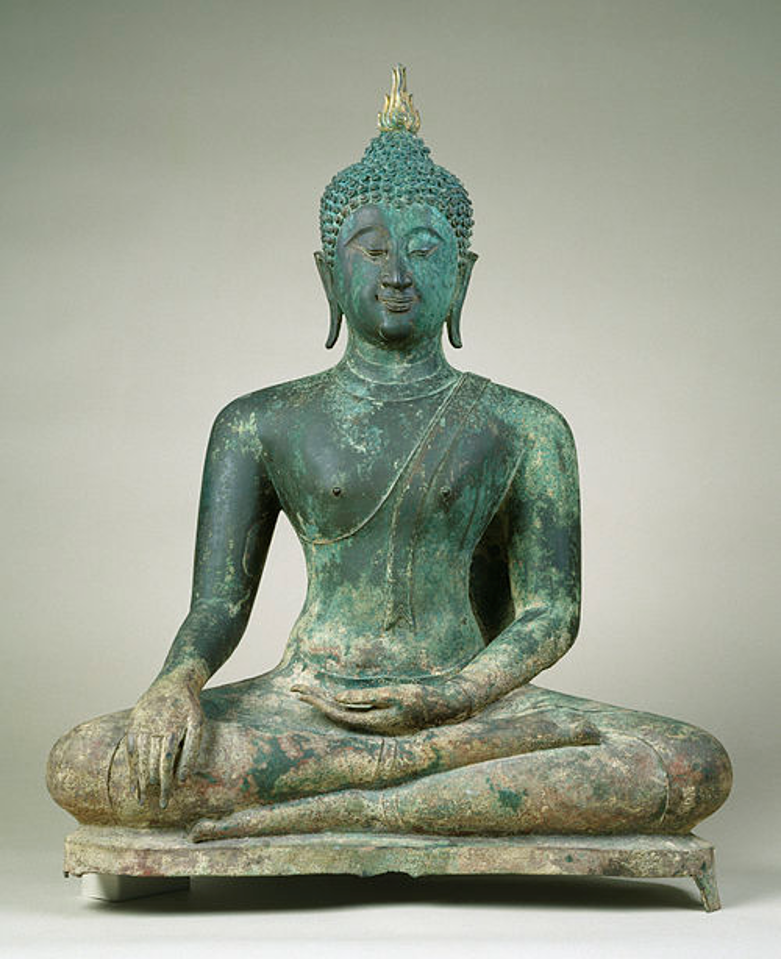
Bronze seated Buddha from Sukhothai, second half of the 14th century, in meditation posture with subtle green patina (Walters Art Museum, Public domain)

Introduction

If you live in Cambodia or travel often across mainland Southeast Asia, you quickly realize that borders are recent, but histories are deeply shared. The Thai people, our close neighbors to the west, have a story that intersects with Khmer, Lao, and Mon civilizations in ways that still shape the region today.

This article offers a clear and practical overview of the history of the Thai people. It is designed for readers who want to understand origins, major kingdoms, cultural foundations, and modern identity without getting lost in academic detail. Expect a few historical landmarks, some useful context, and a touch of perspective from someone based in Cambodia.

Origins of the Thai People

From Southern China to Mainland Southeast Asia

The Thai people belong to the Tai ethnolinguistic family, which likely originated in what is now southern China, particularly in Guangxi and Yunnan provinces. Linguistic evidence and historical records suggest that Tai-speaking groups began migrating southward between the 8th and 13th centuries.

This movement was not a single wave but a gradual diffusion. Small communities moved along river valleys, especially the Mekong and Chao Phraya basins, settling in fertile lands suitable for wet rice cultivation. This agricultural knowledge would become a cornerstone of Thai society.

Cultural Adaptation and Local Influence

As the Tai groups moved south, they did not arrive in empty lands. They encountered established civilizations such as the Mon and the Khmer. Rather than replacing them entirely, they absorbed and adapted many cultural elements.

  • Theravada Buddhism came largely through Mon influence.
  • Administrative models and court rituals drew heavily from the Khmer Empire.
  • Sanskrit and Pali vocabulary entered the Thai language via religious and royal contexts.

This blend of migration and adaptation explains why Thai culture feels both distinct and familiar across the region.

The Rise of Early Thai Kingdoms

Sukhothai: The First Thai Kingdom

The Kingdom of Sukhothai, established in the 13th century, is often considered the first true Thai state. Its founding is traditionally dated to 1238, when local leaders declared independence from Khmer rule.

King Ramkhamhaeng, one of Sukhothai’s most famous rulers, is credited with:

  • Promoting Theravada Buddhism as a unifying force
  • Developing the Thai script, based on earlier Indic and Khmer writing systems
  • Expanding trade and diplomatic relations

Sukhothai is often portrayed as a golden age of Thai culture, though this image is partly shaped by later national narratives.

Ayutthaya: Power and Cosmopolitanism

By the 14th century, Ayutthaya rose as a dominant power in the region. Founded in 1351, it became one of Southeast Asia’s most important kingdoms for over four centuries.

Ayutthaya was not an isolated kingdom. It was deeply connected to regional and global trade networks:

  • Chinese merchants traded ceramics and silk
  • Persian and Indian traders brought textiles and cultural influences
  • European powers, including the Portuguese and French, established diplomatic and commercial ties

The city itself was vast and cosmopolitan. Some European visitors described it as one of the largest cities in the world at the time.

However, Ayutthaya’s power also meant constant conflict, especially with neighboring states including Burma and, at times, Khmer territories. The kingdom fell in 1767 after a devastating Burmese invasion.

From Turmoil to Nation Building

The Thonburi Interlude

After the fall of Ayutthaya, a period of fragmentation followed. General Taksin emerged as a unifying figure and established the Thonburi Kingdom in 1768.

Though short-lived, this period was crucial. Taksin managed to:

  • Reunify much of the territory
  • Restore economic activity
  • Reestablish central authority

His reign ended in 1782, but it set the stage for the next era.

The Rattanakosin Era and Bangkok

In 1782, King Rama I founded the Chakri dynasty and established Bangkok as the capital. This marked the beginning of the Rattanakosin period, which continues to this day.

The new rulers consolidated power and rebuilt institutions inspired by Ayutthaya, while also adapting to changing regional dynamics. Bangkok grew into a political, cultural, and economic center.

Avoiding Colonization and Shaping Identity

A Diplomatic Balancing Act

One of the most striking aspects of Thai history is that Thailand, unlike its neighbors, was never formally colonized by a European power.

During the 19th century, as the British expanded in Burma and the French in Indochina, Siam found itself under pressure from both sides. Thai kings, especially Rama IV and Rama V, adopted a pragmatic approach:

  • Modernizing administration and infrastructure
  • Reforming the legal system
  • Engaging in strategic diplomacy with Western powers

This balancing act allowed Siam to maintain sovereignty, though it did lose some territories to colonial neighbors.

Reform and Centralization

King Chulalongkorn, or Rama V, played a key role in modernizing the country. His reforms included:

  • Abolishing slavery
  • Centralizing provincial administration
  • Introducing modern education systems

These changes helped shape a more unified national identity, which would later evolve into modern Thailand.

Language, Religion, and Cultural Foundations

The Thai Language

The Thai language is part of the Tai-Kadai family and remains central to national identity. Its script, developed during the Sukhothai period, reflects a blend of indigenous and Indic influences.

For those familiar with Khmer, some similarities in vocabulary and structure may feel recognizable, especially in formal or religious contexts.

Theravada Buddhism

Theravada Buddhism is the dominant religion in Thailand and deeply influences daily life, social values, and national identity.

Monasteries are not only religious centers but also cultural and educational institutions. Festivals, rituals, and even architecture reflect Buddhist principles.

The Monarchy

The Thai monarchy has long been a central institution. It is not only political but also symbolic, representing continuity and national unity.

While its role has evolved over time, especially with constitutional changes, it remains a powerful cultural presence.

Modern Thailand in a Regional Context

Nation, Economy, and Society

Today, Thailand is a dynamic country with a diverse economy that includes agriculture, manufacturing, tourism, and services. Bangkok stands as a major regional hub.

At the same time, regional identities remain strong. Northern, northeastern, and southern Thailand each have distinct cultural characteristics, influenced by historical ties with Laos, Cambodia, and the Malay world.

Relations with Cambodia and Neighbors

The relationship between Thailand and Cambodia is complex, shaped by centuries of interaction, both cooperative and conflictual.

Shared heritage sites, such as those influenced by the Khmer Empire, remind us that culture does not follow modern borders. Understanding Thai history helps contextualize these connections and tensions in a more nuanced way.

For content creators and cultural enthusiasts, this shared history offers rich material for storytelling, comparison, and deeper exploration.

Conclusion

The history of the Thai people is a story of migration, adaptation, and careful negotiation with both neighbors and global powers. For anyone living in or exploring Cambodia, understanding this history adds depth to everyday encounters across the border.

About the author

Pascal Médeville is a writer and digital publisher based in Cambodia. He focuses on Southeast Asian culture, history, and food, with a particular interest in connections between neighboring countries. Through Wonders of Cambodia, he explores stories that link past and present across the region.

Don’t miss our upcoming articles!

We don’t spam!

Check your INBOX or SPAM folder to confirm your subscription.

Tags: AyutthayaBangkok historyCambodia relationsSoutheast AsiaSukhothaiTai peoplesThai cultureThai historyថៃ
ShareTweet
Previous Post

Wonders of Cambodia – Pictures of the Week: Quiet Paths and Bold Flavors (June 29th~July 5th, 2026)

Pascal Medeville

Pascal Medeville

Author of the blog Wonders of Cambodia, I share my passion for Cambodia through stories, cultural insights, and personal reflections on the country. I'm also the founder of Simili Consulting, where we provide high-quality, professional translation services to international clients.

Related Posts

Black‑and‑white panoramic view of Pre Rup’s upper terrace at Angkor, showing the central stepped sandstone prasat flanked by two smaller brick towers under a dramatic cloudy sky.
History

Rajendravarman II: Warrior-King Who Reunified Angkor and Reshaped the Khmer Empire

July 5, 2026
Overgrown four-faced Angkorian tower of Banteay Chhmar reflected in a tranquil baray, with Bayon-style smiling faces from the era of Jayavarman VII framed by lush Cambodian greenery.
Architecture

Picture of the day: Whispering Faces of Banteay Chhmar’s Tower

June 22, 2026
Red sandstone-style National Museum of Cambodia building with ornate Khmer roof, columns, and landscaped garden in front
Art

The Creation of the National Museum of Cambodia, A Colonial Vision Turned Cultural Treasure

June 17, 2026
Grassy inner yard of Côn Đảo Prison on Côn Sơn Island, Vietnam, bordered by a stone wall with a lone guard tower and forested mountains under a cloudy sky
History

Khmer Prisoners of Poulo Condore – Cambodia’s Forgotten Generation in a Vietnamese Island Prison

June 14, 2026
Black and white illustration of a classroom at the École cambodgienne in Paris, showing Cambodian male students in traditional garments standing and sitting at wooden desks while two European teachers supervise the lesson from the front and back of the room.
History

From École Cambodgienne to Colonial School: How Paris Tried to “Educate” Empire

June 13, 2026
Black and white photo of monk Khieu Chum speaking at a table with three journalists in a simple indoor setting
History

Who’s Who: Venerable Khieu Chum, the Monk Who Helped Topple a King

June 12, 2026

Leave a Reply Cancel reply

Your email address will not be published. Required fields are marked *

  • Trending
  • Comments
  • Latest
The French Protectorate of Cambodia (1863–1953): An Overview

The French Protectorate of Cambodia (1863–1953): An Overview

July 13, 2025
The Franco-Siamese Treaty of 23 March 1907: Borders, Politics, and the Return of Angkor

The Franco-Siamese Treaty of 23 March 1907: Borders, Politics, and the Return of Angkor

February 11, 2026
Cambodian-Vietnamese War (1978-1989)

Cambodian-Vietnamese War (1978-1989)

July 13, 2025
The Legend of Preah Ko Preah Keo: Guardians of Cambodia’s Lost Treasures

The Legend of Preah Ko Preah Keo: Guardians of Cambodia’s Lost Treasures

February 23, 2026
Kampot Province

Takeo Province: A Cradle of Cambodian History and Culture

3
Kratié Town on the Mekong: Colonial Echoes, River Life, and Irrawaddy Dolphins

Kratié Town on the Mekong: Colonial Echoes, River Life, and Irrawaddy Dolphins

3
Banteay Meanchey Province: A Gateway to Cambodia’s Rich Heritage

Banteay Meanchey Province: A Gateway to Cambodia’s Rich Heritage

2
Stung Treng Province: The Gateway to Cambodia’s Northern Wilderness

Stung Treng Province: The Gateway to Cambodia’s Northern Wilderness

2
Fourteenth century Sukhothai bronze Buddha statue seated cross-legged in meditation, right hand resting on knee, left hand in lap, with flame-like finial on top of the head.

Meet the Neighbors: A Short History of the Thai People

July 6, 2026
Close view of an Preah Khan Apsara sandstone skirt showing grid based Kbach floral motifs that resemble elements of the modern Louis Vuitton monogram.

Wonders of Cambodia – Pictures of the Week: Quiet Paths and Bold Flavors (June 29th~July 5th, 2026)

July 6, 2026
Marble sculpture Shakuntala by Camille Claudel showing two nude lovers locked in a tender embrace, inspired by Kalidasa’s Sanskrit play, against a neutral museum background.

Picture of the day: Shakuntala Embrace by Camille Claudel

July 6, 2026
Black‑and‑white panoramic view of Pre Rup’s upper terrace at Angkor, showing the central stepped sandstone prasat flanked by two smaller brick towers under a dramatic cloudy sky.

Rajendravarman II: Warrior-King Who Reunified Angkor and Reshaped the Khmer Empire

July 5, 2026

Recent News

Fourteenth century Sukhothai bronze Buddha statue seated cross-legged in meditation, right hand resting on knee, left hand in lap, with flame-like finial on top of the head.

Meet the Neighbors: A Short History of the Thai People

July 6, 2026
Close view of an Preah Khan Apsara sandstone skirt showing grid based Kbach floral motifs that resemble elements of the modern Louis Vuitton monogram.

Wonders of Cambodia – Pictures of the Week: Quiet Paths and Bold Flavors (June 29th~July 5th, 2026)

July 6, 2026
Marble sculpture Shakuntala by Camille Claudel showing two nude lovers locked in a tender embrace, inspired by Kalidasa’s Sanskrit play, against a neutral museum background.

Picture of the day: Shakuntala Embrace by Camille Claudel

July 6, 2026
Black‑and‑white panoramic view of Pre Rup’s upper terrace at Angkor, showing the central stepped sandstone prasat flanked by two smaller brick towers under a dramatic cloudy sky.

Rajendravarman II: Warrior-King Who Reunified Angkor and Reshaped the Khmer Empire

July 5, 2026
Wonders of Cambodia

Exploring Culture, Nature, and Spirit in the Land of Wonder.

Follow Us

Browse by Category

  • Architecture
  • Architecture
  • Art
  • Books
  • Business
  • Business
  • Cinema
  • Costume
  • Costume
  • Cuisine
  • Culture
  • Defense
  • Du lịch
  • e-Books
  • Education
  • Expat life
  • Fauna
  • Festival
  • Flora
  • Food providers
  • Français
  • Geography
  • Handicraft
  • Health
  • Histoire
  • History
  • Hotels
  • Khmer Stories
  • Khmer stories
  • Knowledge
  • Language
  • Last posts
  • Lịch sử
  • Life in Cambodia
  • Literature
  • Meet the neigbhors
  • Music
  • Pictures
  • Politics
  • Population
  • Press review
  • Professional services
  • Proverbs
  • Reference
  • Reference
  • Religion
  • Restaurants
  • Textile
  • Tiếng Việt
  • Tourism
  • Tourisme
  • Transport
  • Uncategorized
  • Video
  • Vidéo
  • Vie quotidienne
  • Who's who
  • ខ្មែរ
  • ទេសចរណ៍៖
  • បគ្គលល្បី
  • ប្រវត្តិសាស្ត្រោ
  • 中文
  • 书籍
  • 历史
  • 旅游
  • 生活

Recent News

Fourteenth century Sukhothai bronze Buddha statue seated cross-legged in meditation, right hand resting on knee, left hand in lap, with flame-like finial on top of the head.

Meet the Neighbors: A Short History of the Thai People

July 6, 2026
Close view of an Preah Khan Apsara sandstone skirt showing grid based Kbach floral motifs that resemble elements of the modern Louis Vuitton monogram.

Wonders of Cambodia – Pictures of the Week: Quiet Paths and Bold Flavors (June 29th~July 5th, 2026)

July 6, 2026
  • About Us
  • Advertise
  • Privacy & Policy
  • Contact Us

© 2025 - Made with 💫 by TechFlow.

No Result
View All Result
  • Home
  • Culture
  • Cuisine
  • Tourism
  • Business
  • Life in Cambodia
  • 中文
  • ខ្មែរ
  • Français
  • Tiếng Việt
  • e-Books

© 2025 - Made with 💫 by TechFlow.