This week’s Pictures of the Week drift between kitchen and temple, insect and architecture, following Cambodia in its most everyday, unhurried moods. Together, these seven images trace a gentle line from village cooking fires to Angkor stone, showing how beauty appears in both a steaming bowl and a forgotten corner of a monument. The result is a portrait of a country where small details – a lotus stem, a kapok bug, a carved skirt – quietly anchor memory.
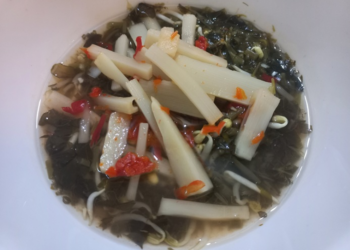
“Samla Prahae Khmer Vegetable Meat Soup” brings us straight to the family table, with a generous bowl of broth studded with village vegetables and pork. The fragrant base of lemongrass and turmeric, typical of samla prahae, turns a simple mix of greens and meat into something deeply comforting and unmistakably Khmer. You can almost feel the steam rising from the soup, hinting at slow mornings, fresh produce from the market, and the kind of meal that warms both body and memory.
In “Lotus Stem with Ground Pork, Cambodian Home Cooking”, crisp lotus stem slices embrace a savory layer of minced pork, creating a dish that is as textural as it is flavorful. The photograph speaks of thrift and creativity in the Cambodian kitchen, where humble pond plants become delicacies when paired with seasoned meat and a good wok. It is everyday cooking, but with the quiet elegance of lotus – a reminder that even the most modest homes carry traces of celebration.
“Luffa and Scrambled Eggs, Cambodian Comfort Food” turns to another village staple: the soft, pale green sponge gourd gently cooked with eggs into a tender stir-fry. This kind of dish is light, soothing, and familiar to many Cambodian households, ideal for a quick meal that still feels nourishing. The image captures the intimacy of comfort food, the kind of plate you might eat with rice at home rather than in a restaurant.
Street life comes into focus with “Crunchy Cambodian Beef Tendon Street Snack”, where deep‑fried tendon pieces pile up on a vivid plastic plate. Their golden, blistered surface reflects the bold, no‑nonsense character of Cambodian street food, especially in provincial towns. This is the kind of snack that pairs perfectly with a cold drink and conversation, revealing how resourcefulness and strong flavors define local eating habits on the go.
Nature claims its moment in “Scarlet Kapok Bug on Cambodian Stones”, a close view of a vivid Probergrothius nigricornis resting on weathered rocks. The insect’s bright red body and dark markings stand out sharply against a neutral, stony background, turning a simple footpath into a miniature stage. It’s a quiet reminder that rural Cambodia is full of small encounters like this, where a single bug becomes a flash of color in the landscape.
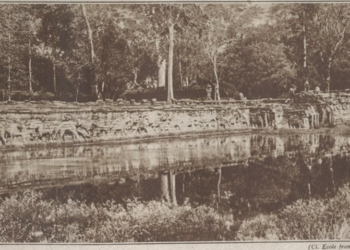
“Two Storied Pavilion at Preah Khan Temple” takes us into the heart of Angkor, showing the rare two‑storied structure with its round columns at Preah Khan. Long associated with the “Sacred Sword,” this unique pavilion reflects the grandeur and symbolism of Jayavarman VII’s city, standing today in a mix of ruin and resilience. The image evokes the feeling of wandering through a jungle temple and suddenly meeting a building unlike any other in Angkor – a quiet, stone‑built reminder of royal power.
Finally, “Apsara Skirt Motifs and the Louis Vuitton Connection” zooms into the carved floral patterns on an apsara’s stone sarong, drawing a visual parallel with the famous LV monogram. The suggestion is playful but thought‑provoking: that ancient Khmer kbach patterns may echo through global luxury branding today. Whether coincidence or inspiration, the image invites viewers to look more closely at Angkor’s decorative details and recognize their enduring sophistication.
Taken together, this week’s images weave a subtle tapestry of Cambodia – part kitchen, part roadside stall, part temple wall, part village stone. They show how the country’s character emerges in small, tangible things: a bowl of samla prahae, a crunchy tendon snack, a scarlet bug, a carved apsara skirt. Through these quiet scenes, Wonders of Cambodia’s weekly photo highlights invite you to slow down and notice the details that keep history, flavor, and everyday life so closely intertwined.