Wonders of Cambodia
  • Home
  • Culture
  • Cuisine
  • Tourism
  • Business
  • Life in Cambodia
  • 中文
  • ខ្មែរ
  • Français
  • Tiếng Việt
  • e-Books
No Result
View All Result
  • Home
  • Culture
  • Cuisine
  • Tourism
  • Business
  • Life in Cambodia
  • 中文
  • ខ្មែរ
  • Français
  • Tiếng Việt
  • e-Books
No Result
View All Result
Wonders of Cambodia
No Result
View All Result
Home Culture History

Khmer Prisoners of Poulo Condore – Cambodia’s Forgotten Generation in a Vietnamese Island Prison

Pascal Medeville by Pascal Medeville
June 14, 2026
in History
Reading Time: 6 mins read
0

(Estimated reading time: 6 to 8 minutes)

Poulo Condore is remembered as a Vietnamese prison island. Yet a small group of Khmer monks, journalists and activists were also exiled there – and they helped reshape Cambodian politics.
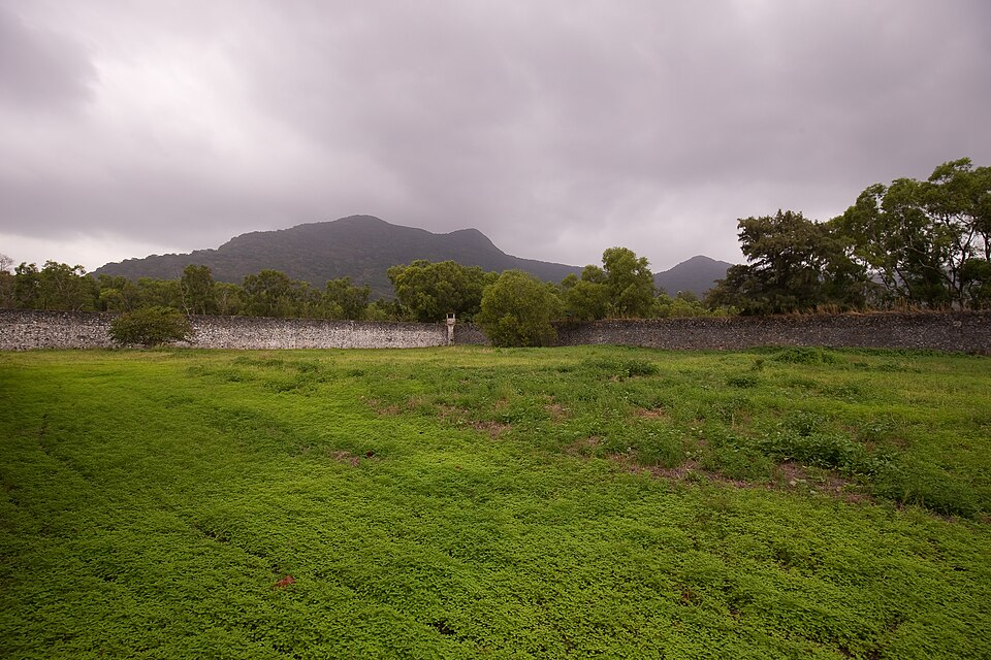
Côn Đảo Prison, established by the French colonial government in 1861 at Côn Sơn island, Vienam ([Tycho]  talk , http://shansov.net, CC BY-SA 3.0)

Poulo Condore (Côn Sơn today) usually appears in Cambodian memory only as a distant place of exile, a dot off the Vietnamese coast where “they sent our prisoners.” Yet for a small group of Khmer monks, journalists and activists, that island was not an abstraction but the place where their bodies broke and their political generation was forged.

A Vietnamese prison with Khmer prisoners

Under French colonial rule, Poulo Condore, known in Khmer as Kaoh Trâlach (កោះត្រឡាច), was designed above all to neutralize Vietnamese opponents of the regime. Convoys leaving Saigon or other ports carried a majority of Vietnamese political detainees, along with common‑law convicts from across Indochina. In most French and Vietnamese documents, Cambodians appear only as a minority – “Khmer,” “Cambodgiens” – folded into statistics.

And yet, when the colonial police moved to crush the first modern Khmer nationalist movements in the 1920s and 1940s, Poulo Condore was the natural destination. The island allowed the administration to remove “troublemakers” far from Phnom Penh and Kampong Chhnang and to cut them off from the growing networks of monks, students and journalists in the capital.

Hem Chieu: a monk turned martyr

The best‑known Cambodian prisoner associated with Poulo Condore is the monk Hem Chieu. A teacher and preacher linked to reformist circles at the Buddhist Institute, he became a moral reference point for the lay nationalists who would soon step into politics.

In July 1942, after he was arrested by the French for his sermons and perceived political influence, thousands of monks and laypeople marched in what became known as the “Umbrella Uprising.” The protest was dispersed and its organizers were rounded up. Hem Chieu was condemned by a military tribunal; his death sentence was commuted to life imprisonment with hard labor, and he was deported to the island prison. He died there the following year from illness in the brutal conditions of detention.

News of his death spread slowly back to Cambodia, but over time he entered nationalist memory as one of the first “martyrs” of the modern movement: a monk whose body vanished in a French colonial prison, but whose story continued to animate demonstrations, speeches and later commemorations.

Bun Chan Mol: writing the prison into Khmer memory

If Hem Chieu is the emblematic martyr, Bun Chan Mol is the voice. A young nationalist in the early 1940s, he was arrested after the same wave of agitation that followed Hem Chieu’s trial and deported along with other activists.

Later, Bun Chan Mol wrote a memoir whose title, Kuk Noyobay (“Political Prison”), would become famous among Cambodians interested in the origins of their independence struggle. In that book he described not only the discipline, hunger and sickness of detention, but also the daily improvisations that allowed prisoners to survive – conversations, clandestine classes, even boxing matches in which he became, as later accounts like to recall, something like the prison’s “kickboxing champion.”

For historians, Kuk Noyobay is precious because it is one of the very few Khmer‑language, first‑person accounts of life linked to Poulo Condore. Where French reports list “Indochinese prisoners” and Vietnamese memoirs focus on their own revolutionaries, Bun Chan Mol inserts the Khmer experience back into the shared penal space of the archipelago.

Pach Chhoeun: the journalist deported

Another figure connected to the Poulo Condore story is Pach Chhoeun, a journalist and later political actor. He was one of the forces behind Nagaravatta, the pioneering Khmer‑language newspaper that gave a written voice to the emerging urban middle class.

When the 1942 movement unfolded, Nagaravatta and its circle were deeply involved in articulating the grievances of monks and laypeople. After the crackdown, Pach Chhoeun was arrested and, in many accounts, included among those deported to the island. For him and others like him, imprisonment was not only punishment; it was an extension of their political education. The years spent in cells or work gangs hardened their opposition to the colonial state and deepened their contacts with Vietnamese and Lao activists facing the same repression.

Other Khmer figures in the Poulo Condore orbit

Beyond these better‑known names, several other Khmer personalities brush up against the history of the island prison.

Some sources point to earlier revolts, such as the 1925 uprising in Kampong Chhnang, whose leaders were reportedly sent to Poulo Condore. That episode reminds us that Khmer deportations did not begin with the Second World War; the island was already the endpoint for earlier waves of resistance.

Monks like Khieu Chum, linked to nationalist circles around the Buddhist Institute, moved in the same networks targeted by the French after the Umbrella movement. Even when a direct, documented stay on the island is uncertain, their movements and the arrests of their disciples created a web of connections tying Phnom Penh’s pagodas to the distant penal colony.

And over everything hangs the figure of Son Ngoc Thanh. He was not as a Poulo Condore prisoner himself, but many of those who rallied to him – or who would later join the Khmer Issarak – had passed through colonial prisons. Their time in detention, whether on the island or in closer jails, formed the human milieu from which postwar opposition would emerge.

A political generation forged in prison

Looking back from today, it is tempting to treat these deportations as footnotes in a story dominated by Japanese occupation, the brief “independence” of 1945, and the Geneva conference and independence years. But for the individuals concerned, Poulo Condore was central: a place where their health was broken, where friendships and alliances were sealed, and where the abstract idea of “Cambodian independence” was tested against hunger, disease and the daily brutality of guards.

Prisons and penal colonies were not only instruments of repression; they were also schools of politics. For the small group of Khmer prisoners sent to Poulo Condore, this was especially true. Their memories – whether written down like Bun Chan Mol’s, or transmitted orally through families and students – help explain why the post‑1945 nationalist scene in Cambodia was populated by men who already knew what it meant to face a firing line or a transport ship.

A Vietnamese museum with quiet Khmer ghosts

Today, visitors to the prison museum on Côn Sơn Island move through galleries that understandably focus on Vietnamese suffering and resistance. Vietnamese revolutionaries, martyrs and later leaders are named, photographed and framed in the narrative of national liberation.

The Cambodians are harder to find. For them, Poulo Condore was a chapter in a longer story that continued in Phnom Penh, Battambang, or in the forests with the Issarak. Their names are more likely to appear in Khmer memoirs, scattered articles, or in the footnotes of works on the Japanese period and the early independence movement.

Reconstructing their presence on the island is therefore an act of historical recovery: not to claim Poulo Condore as a “Khmer” site, but to acknowledge that the shadows in its cells did not all speak Vietnamese. Among them were Cambodian monks with shaved heads and folded robes, journalists with ink‑stained fingers, and young activists who would later become ministers, exiles, or victims of new regimes.

About the author

Pascal Médeville is a writer, translator and cultural historian based in Phnom Penh. He runs the “Wonders of Cambodia” project, exploring Cambodia’s past through multilingual articles, archival research and original storytelling, with a particular focus on the French protectorate, regional wars and the lives of people caught between empires.

Don’t miss our upcoming articles!

We don’t spam!

Check your INBOX or SPAM folder to confirm your subscription.

Tags: Bun Chan Mol Kuk NoyobayCambodian anti-colonial nationalismCambodian HistoryCambodian prisoners in Vietnamese prisonsCôn Sơn Island colonial prisonFrench protectorate in CambodiaHem Chieu Umbrella DemonstrationKhmer Issarak originsKhmer political prisonersPoulo Condore prisonកោះត្រឡាច
ShareTweet
Previous Post

Picture of the day: Burmese Grape on a Khmer Plate

Next Post

Wat Bo in Siem Reap: Murals, Monks and Quiet Magic by the River

Pascal Medeville

Pascal Medeville

Author of the blog Wonders of Cambodia, I share my passion for Cambodia through stories, cultural insights, and personal reflections on the country. I'm also the founder of Simili Consulting, where we provide high-quality, professional translation services to international clients.

Related Posts

Black and white illustration of a classroom at the École cambodgienne in Paris, showing Cambodian male students in traditional garments standing and sitting at wooden desks while two European teachers supervise the lesson from the front and back of the room.
History

From École Cambodgienne to Colonial School: How Paris Tried to “Educate” Empire

June 13, 2026
Black and white photo of monk Khieu Chum speaking at a table with three journalists in a simple indoor setting
History

Who’s Who: Venerable Khieu Chum, the Monk Who Helped Topple a King

June 12, 2026
Black‑and‑white studio portrait of Albert Sarraut in 1914, shown from the chest up in a dark suit, white shirt and patterned tie, facing the camera against a plain, dark background.
History

Who’s Who: Albert Sarraut, The Governor-General Who Wanted to “Modernize” Indochina

June 8, 2026
Single-story red building with Khmer-style tiled roof and verandah, formerly George Groslier’s residence and now RUFA’s dean office, surrounded by potted plants, trees and parked cars on a sunny day
Art

George Groslier and the Cambodian School of Arts: How a Colonial Vision Tried to “Save” Khmer Art

June 7, 2026
Statue of a robed Buddhist monk standing on a pedestal in front of a dark doorway and red wall, holding a closed umbrella and a book
History

Hem Chieu, the Monk Who Dared – Cambodian Nationalism in a Saffron Robe

May 31, 2026
Japanese Imperial Army troops and supply wagons advancing along a dirt road through rural Indochina in 1940, with mountains visible in the background
History

Imperial Japanese Control over Cambodia in World War II, From Quiet Garrison to Puppet Kingdom

May 30, 2026
Next Post
Back view of the vihara at Wat Bo pagoda in Siem Reap, showing a decorative archway with two gajasimha statues, stairway and lush green trees around the temple

Wat Bo in Siem Reap: Murals, Monks and Quiet Magic by the River

Leave a Reply Cancel reply

Your email address will not be published. Required fields are marked *

  • Trending
  • Comments
  • Latest
The French Protectorate of Cambodia (1863–1953): An Overview

The French Protectorate of Cambodia (1863–1953): An Overview

July 13, 2025
The Franco-Siamese Treaty of 23 March 1907: Borders, Politics, and the Return of Angkor

The Franco-Siamese Treaty of 23 March 1907: Borders, Politics, and the Return of Angkor

February 11, 2026
Cambodian-Vietnamese War (1978-1989)

Cambodian-Vietnamese War (1978-1989)

July 13, 2025
Working in Cambodia in 2026: Visas, Work Permits and Everyday Reality for Foreigners

Working in Cambodia in 2026: Visas, Work Permits and Everyday Reality for Foreigners

February 9, 2026
Kampot Province

Takeo Province: A Cradle of Cambodian History and Culture

3
Kratié Town on the Mekong: Colonial Echoes, River Life, and Irrawaddy Dolphins

Kratié Town on the Mekong: Colonial Echoes, River Life, and Irrawaddy Dolphins

3
Banteay Meanchey Province: A Gateway to Cambodia’s Rich Heritage

Banteay Meanchey Province: A Gateway to Cambodia’s Rich Heritage

2
Stung Treng Province: The Gateway to Cambodia’s Northern Wilderness

Stung Treng Province: The Gateway to Cambodia’s Northern Wilderness

2
Back view of the vihara at Wat Bo pagoda in Siem Reap, showing a decorative archway with two gajasimha statues, stairway and lush green trees around the temple

Wat Bo in Siem Reap: Murals, Monks and Quiet Magic by the River

June 14, 2026
Grassy inner yard of Côn Đảo Prison on Côn Sơn Island, Vietnam, bordered by a stone wall with a lone guard tower and forested mountains under a cloudy sky

Khmer Prisoners of Poulo Condore – Cambodia’s Forgotten Generation in a Vietnamese Island Prison

June 14, 2026
Close‑up of ripe yellow Burmese grapes (Baccaurea ramiflora, ផ្ញៀវ) on a white plate, one fruit opened to reveal its pale, juicy sweet‑sour flesh.

Picture of the day: Burmese Grape on a Khmer Plate

June 14, 2026
Black and white illustration of a classroom at the École cambodgienne in Paris, showing Cambodian male students in traditional garments standing and sitting at wooden desks while two European teachers supervise the lesson from the front and back of the room.

From École Cambodgienne to Colonial School: How Paris Tried to “Educate” Empire

June 13, 2026

Recent News

Back view of the vihara at Wat Bo pagoda in Siem Reap, showing a decorative archway with two gajasimha statues, stairway and lush green trees around the temple

Wat Bo in Siem Reap: Murals, Monks and Quiet Magic by the River

June 14, 2026
Grassy inner yard of Côn Đảo Prison on Côn Sơn Island, Vietnam, bordered by a stone wall with a lone guard tower and forested mountains under a cloudy sky

Khmer Prisoners of Poulo Condore – Cambodia’s Forgotten Generation in a Vietnamese Island Prison

June 14, 2026
Close‑up of ripe yellow Burmese grapes (Baccaurea ramiflora, ផ្ញៀវ) on a white plate, one fruit opened to reveal its pale, juicy sweet‑sour flesh.

Picture of the day: Burmese Grape on a Khmer Plate

June 14, 2026
Black and white illustration of a classroom at the École cambodgienne in Paris, showing Cambodian male students in traditional garments standing and sitting at wooden desks while two European teachers supervise the lesson from the front and back of the room.

From École Cambodgienne to Colonial School: How Paris Tried to “Educate” Empire

June 13, 2026
Wonders of Cambodia

Exploring Culture, Nature, and Spirit in the Land of Wonder.

Follow Us

Browse by Category

  • Architecture
  • Architecture
  • Art
  • Books
  • Business
  • Business
  • Cinema
  • Costume
  • Costume
  • Cuisine
  • Culture
  • Defense
  • Du lịch
  • e-Books
  • Education
  • Expat life
  • Fauna
  • Festival
  • Flora
  • Food providers
  • Français
  • Geography
  • Handicraft
  • Health
  • Histoire
  • History
  • Hotels
  • Khmer Stories
  • Khmer stories
  • Knowledge
  • Language
  • Last posts
  • Lịch sử
  • Life in Cambodia
  • Literature
  • Music
  • Pictures
  • Politics
  • Population
  • Press review
  • Professional services
  • Proverbs
  • Reference
  • Reference
  • Religion
  • Restaurants
  • Textile
  • Tiếng Việt
  • Tourism
  • Tourisme
  • Transport
  • Uncategorized
  • Video
  • Vie quotidienne
  • Who's who
  • ខ្មែរ
  • ទេសចរណ៍៖
  • បគ្គលល្បី
  • ប្រវត្តិសាស្ត្រោ
  • 中文
  • 书籍
  • 历史
  • 旅游
  • 生活

Recent News

Back view of the vihara at Wat Bo pagoda in Siem Reap, showing a decorative archway with two gajasimha statues, stairway and lush green trees around the temple

Wat Bo in Siem Reap: Murals, Monks and Quiet Magic by the River

June 14, 2026
Grassy inner yard of Côn Đảo Prison on Côn Sơn Island, Vietnam, bordered by a stone wall with a lone guard tower and forested mountains under a cloudy sky

Khmer Prisoners of Poulo Condore – Cambodia’s Forgotten Generation in a Vietnamese Island Prison

June 14, 2026
  • About Us
  • Advertise
  • Privacy & Policy
  • Contact Us

© 2025 - Made with 💫 by TechFlow.

No Result
View All Result
  • Home
  • Culture
  • Cuisine
  • Tourism
  • Business
  • Life in Cambodia
  • 中文
  • ខ្មែរ
  • Français
  • Tiếng Việt
  • e-Books

© 2025 - Made with 💫 by TechFlow.