Theravada Buddhism in Cambodia is the quiet rhythm behind daily life, from village pagodas and family altars to national holidays and school breaks. This article explores how Theravada took root in Cambodian history, how it survived wars and revolutions, and how it still shapes the way people live, celebrate, and make sense of the world.

Introduction: Why Cambodia Feels So Deeply Buddhist
Stay in Cambodia for more than a couple of days and you start to notice a pattern. Saffron‑robed monks glide past in tuk‑tuks. Temple loudspeakers chant before sunrise. Families stop briefly at a shrine on the way to the market. None of this is staged; it’s simply how the country breathes.
Theravada (Khmer: ថេរវាទ) Buddhism is behind these scenes. It structures the calendar, colors the language people use for good and bad actions, and quietly sets expectations about respect, generosity, and family duty. You don’t have to be Buddhist to feel it; it’s there in greetings, festivals, and the way people talk about karma and merit.
This article is for travelers, students, and the generally curious who want to understand what “Theravada Buddhism in Cambodia” means beyond pretty temple photos. We’ll walk through its history – from Angkor and royal cults to village pagodas – then look at everyday practice, key festivals, and the challenges and rebirth of Cambodian Buddhism in recent decades.
From Angkor to Theravada: How It All Started
Before Theravada: Hindu Gods and Mahayana Buddhas
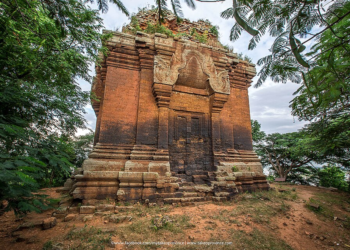
To understand Theravada’s role in Cambodia, it helps to start in a time when Theravada was not yet king. During the Angkorian period (roughly 9th-13th centuries), the Khmer Empire was officially Hindu, with strong Mahayana Buddhist influences at court. Angkor Wat itself was originally a Hindu temple dedicated to Vishnu, only later becoming a Buddhist site.

The kings sponsored grand temples, Sanskrit inscriptions, and elaborate rituals. Mahayana Buddhism also entered the royal sphere, especially under Jayavarman VII, but the system at the top was an aristocratic blend of Hindu gods, bodhisattvas, and royal cult. Ordinary villagers, meanwhile, mixed local spirit beliefs, ancestor worship and various “Buddhist” ideas in more flexible ways.
Theravada was present in the region, but it was not yet the dominant framework in Cambodia.
The Arrival of Theravada in the Khmer World
Theravada Buddhism came to mainland Southeast Asia through a long chain of connections stretching from Sri Lanka to the Mon kingdoms, then into present‑day Thailand and Laos, and eventually to Cambodia. Monks traveled, kingdoms fought and traded, and ideas moved with them.
A well‑known story tells how Jayavarman VII sent his son Tamalinda to Sri Lanka, where he was ordained and trained as a Theravada monk. When he returned, he brought back new teachings, new monastic models, and a simpler, Pali‑based vision of Buddhism. Whether every detail of that tale is historically exact or not, it captures what was really happening: Theravada ideas flowed into the Khmer realm, and over time they took root.
These new currents did not immediately replace existing practices. For a while, Theravada coexisted with Hindu and Mahayana traditions. But slowly, the balance shifted.
From Royal Cult to Village Pagoda
As Angkor’s political power declined in the 13th and 14th centuries, the religious landscape shifted too. Royal resources for giant temple projects dried up. Capitals moved. The old state cults lost their central role. In this long transition, Theravada Buddhism moved from being one current among many to becoming the main framework of religious life.
The new model was quite different:
- No more god‑king at the center of the universe.
- Instead, a network of local pagodas, each with its community of monks and laypeople.
- Emphasis on merit‑making, ethical conduct and support of the sangha (monastic community).
By the late post‑Angkor period, Cambodia had effectively become a Theravada kingdom. Over time, being Khmer and being Buddhist became closely intertwined in the popular imagination, even though religious life always kept layers of older spirit beliefs and Hindu echoes.

What Makes Cambodian Theravada Distinctive?
Pali Canon, Merit and a Very Practical Path
Like other Theravada traditions, Cambodian Buddhism looks to the Pali Canon as its main scriptural base. In theory, the path aims at nirvana through ethics, meditation, and wisdom. In daily life, most people focus on something more immediate: living well, doing good, and building up merit for this life and the next.
Merit (bon) is earned through:
- Offering food to monks on alms rounds
- Donating to build or repair pagoda buildings
- Sponsoring ceremonies for the dead, for newborns, or for major life transitions
- Allowing sons to ordain as monks, even temporarily, often as a gift to their parents
Merit isn’t a selfish affair. People routinely “share” it with ancestors, parents, and all beings. A ceremony is never just an individual spiritual act; it’s also a social event, reinforcing bonds between family, community, and the monastic order.
The Wat: Temple, School, Community Hub
The wat, or pagoda, is the central institution of Cambodian Theravada. It is at once:
- A sacred space for ritual, chanting, meditation and festivals
- A social hub where villagers meet, talk, and sometimes resolve conflicts
- An educational space, historically crucial for basic literacy and learning
For generations, ordaining as a monk was one of the main ways a Khmer man could study and gain status. Even today, spending some time in robes – whether weeks or months – is a point of pride for many families and a classic way to make merit.
The pagoda grounds also hold memory. Stupas contain the ashes of ancestors. Murals narrate scenes from the Buddha’s life or the Jataka tales. Old palm‑leaf manuscripts survive in special cabinets. When people say they are “going to the wat,” they are going to a place where religion, family history, and community life all intersect.

Theravada in Everyday Khmer Life
Etiquette, Respect and the Moral Atmosphere
Many aspects of Cambodian social behavior make more sense when you remember how deeply Buddhist values are woven into them. Respect for elders, patience, and the desire to avoid open conflict are not just “cultural habits” – they are constantly fed by Buddhist ideas about karma, intention and right speech.
You’ll notice, for example:
- The sampeah greeting, with hands joined and a bow, higher for monks and elders
- A tendency to avoid direct, angry confrontation in public, in favor of saving face
- Careful behavior in temples: removing shoes, sitting properly, not pointing feet at sacred images
Of course, people argue, gossip and lose their tempers like everywhere else. But when Cambodians comment on behavior – praising generosity, criticizing cruelty – they spontaneously reach for Buddhist notions of merit, demerit, and karmic results.
Spirits, Ancestors and a Layered Religious World
Cambodian Theravada doesn’t live alone in a tidy doctrinal box. It shares space with a whole ecosystem of spirits, ancestral cults, and older animist practices.
You often see:
- Neak ta shrines to local guardian spirits under big trees or at village crossroads
- Family altars with photos and offerings for ancestors, especially active during Pchum Ben
- Ritual specialists (not always monks) dealing with protection, healing, and fortune‑telling
From a strict textbook perspective, some of this looks “non‑Theravada.” On the ground, people are relaxed about it. Going to the pagoda, feeding the hungry ghosts of Pchum Ben, and consulting a spirit medium are simply different ways of taking care of relationships – with the living, the dead, and the invisible world around them.
Festivals: The Theravada Year in Cambodia
Chaul Chnam Thmey: New Year and New Merit
Cambodian New Year in April, Chaul Chnam Thmey, is the highlight of the religious year. It marks the end of the dry season and the start of a new year in both the civic and Buddhist sense.
Families:
- Visit pagodas to offer food and robes to monks
- Pour water over Buddha statues as a ritual cleansing of the old year
- Make offerings for ancestors
- Play traditional games, enjoy music, and, increasingly, engage in lively water‑fights
It’s a period when merit‑making, family reunions and sheer enjoyment blend seamlessly.
Rains Retreat and Kathina: Staying Put and Giving Robes
The rainy season retreat, vassa, begins around June or July. Traditionally, monks stay in their monasteries instead of traveling, devoting more time to study and meditation. The practical side is obvious: fewer muddy treks, fewer unplanned encounters with rice paddies.
At the end of vassa comes Kathina. Lay communities organize large robe‑offering ceremonies, sometimes with processions, music and decorated floats. The message is clear: the sangha relies on lay support, and laypeople rely on monks for guidance and blessings. Both sides renew that relationship.
Pchum Ben and the Hungry Ghosts
Pchum Ben, usually around September or October, is one of the most emotionally charged festivals. It is dedicated to the dead – especially ancestors, but also those who died violently, anonymously, or without descendants.
Over fifteen days, families visit multiple pagodas, often at dawn, bringing offerings for monks and for the wandering spirits believed to be temporarily closer to this world. It is Theravada with a strong ancestral and spiritual flavor: a time to remember, to give, and to soften the border between past and present.
The Khmer Rouge: Breaking the Chain
The Khmer Rouge period (1975–1979) almost destroyed Cambodian Buddhism. Monks were executed or forced to disrobe, pagodas were turned into prisons, warehouses or stables, and religious practice was banned. For a tradition so tightly woven into everyday life, this was not only religious persecution – it was an attempt to rip out a piece of the country’s identity.
An entire generation grew up with little or no normal contact with monks or Buddhist education. Some pagodas survived in heavily reduced form; others were wiped out altogether.
Rebuilding the Sangha and the Pagodas
After 1979, the slow work of reconstruction began. Pagodas had to be rebuilt, monks re‑ordained, basic texts recopied or imported from abroad. Elder monks who had survived became precious carriers of memory and knowledge. Neighboring Theravada countries, particularly Thailand and Laos, played a role in training new Cambodian monks.
Today, the picture is very different. Pagodas are once again ubiquitous, from city neighborhoods to tiny villages. Morning alms rounds, Kathina processions and New Year ceremonies are part of the everyday landscape. The scars of the past remain, but the monastic order has been restored to a level that would have seemed almost impossible in the early 1980s.
Smartphones, City Life and New Questions
Contemporary Cambodia doesn’t look like a frozen “Buddhist kingdom” in a museum. Monks carry smartphones, temples livestream ceremonies, and young Cambodians move between TikTok and temple visits with surprising ease.
This raises new questions. How can monastic discipline adapt to city life? What role can pagodas play in social issues like education, poverty, or climate change? How do Cambodian Buddhists relate to global meditation movements or ideas of “engaged Buddhism”?
There is no single answer. Some pagodas emphasize ritual and tradition; others run schools, youth programs or social projects. But in all these forms, Theravada remains a key reference point in conversations about right and wrong, suffering and hope.
Why It Matters If You’re Just Visiting
If you only see Angkor as ruins and monks as photogenic background, you miss what makes Cambodia truly interesting. Understanding the basics of Theravada Buddhism – merit, karma, the role of monks and pagodas – helps you interpret what you see and behave respectfully.
It explains why people leave food on plates at the pagoda, why they press their hands together when passing monks, and why festivals rearrange traffic and school schedules. With a bit of context, the country’s religious life turns from “colorful tradition” into a living, coherent way of being in the world.
Theravada Buddhism in Cambodia is not just a line in the constitution or a decorative layer on top of modern life. It is a living tradition that has accompanied the Khmer people from the days of Angkor through colonialism, war and reconstruction. It shapes greetings and festivals, family duties and moral judgments, grief and celebration. If you want to understand Cambodia beyond postcards and headlines, follow the path that leads through its pagodas, ceremonies and everyday acts of quiet faith – that’s where Theravada truly reveals itself.
Sources & further reading / To know more
- Buddhism in Cambodia – Historical overview
A clear timeline of how Buddhism developed in Cambodia, from Angkorian roots to modern Theravada practice. - Cambodian Buddhism: History and Practice (Ian Harris)
A detailed, research‑based look at Cambodian Theravada, its institutions, rituals, and recent transformations. - Studies on Cambodian Festivals and Ritual Life
Articles focused on Pchum Ben, New Year, Kathina and other festivals that structure the religious year. - Buddhism and Post‑Conflict Cambodia
Research on how monks and pagodas contributed to healing, education and social reconstruction after the Khmer Rouge. - Introductory Books on Theravada Buddhism
Accessible works explaining core Theravada concepts (karma, merit, monastic life) that help make sense of practice in Cambodia.
About the author
Pascal Médeville is a writer and digital publisher based in Cambodia. He writes mainly about Cambodian history, Theravada Buddhism, and everyday Khmer culture, with a particular interest in how temples, texts and street life connect. On Wonders of Cambodia, he focuses on thoughtful, in‑depth articles that help readers go beyond clichés and see the country in context.