Wonders of Cambodia
  • Home
  • Culture
  • Cuisine
  • Tourism
  • Business
  • Life in Cambodia
  • 中文
  • ខ្មែរ
  • Français
  • Tiếng Việt
  • e-Books
No Result
View All Result
  • Home
  • Culture
  • Cuisine
  • Tourism
  • Business
  • Life in Cambodia
  • 中文
  • ខ្មែរ
  • Français
  • Tiếng Việt
  • e-Books
No Result
View All Result
Wonders of Cambodia
No Result
View All Result
Home Culture History

History: Chinese Coins Reveal Hidden Stories of Angkor

Pascal Medeville by Pascal Medeville
July 18, 2026
in History
Reading Time: 3 mins read
0

What can a handful of ancient Chinese coins tell us about the Khmer Empire? New archaeological research uncovers surprising evidence that these coins played roles far beyond trade, offering fresh insights into daily life, spirituality, and cultural exchange in ancient Cambodia.
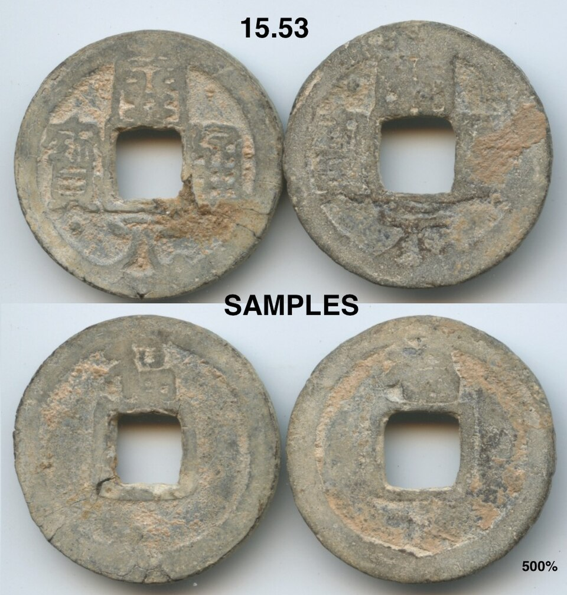
Kai Yuan Tong Bao (開元通寶), one the Tang dynasty coins found in Angkor (Scott Semans World Coins (CoinCoin.com), CC BY 3.0)

The temples of Angkor continue to amaze visitors with their magnificent architecture, but some of the most fascinating discoveries about Cambodia’s past are much smaller. A recent archaeological study has revealed that Chinese coins found throughout the Angkorian Khmer Empire tell a far richer story than historians once believed.

Rather than serving simply as money, these coins fulfilled a variety of roles within Khmer society. The findings challenge long-held assumptions about commerce in medieval Cambodia while highlighting the remarkable cultural connections between the Khmer Empire and neighboring regions.

For travelers, history enthusiasts, and anyone interested in Khmer culture, this research provides another compelling reason to appreciate the complexity of Cambodia’s extraordinary heritage.

More Than Currency in the Khmer Empire

For many years, scholars assumed that Chinese coins discovered at Angkor were evidence of a growing monetary economy. However, the latest research paints a far more nuanced picture.

By examining archaeological discoveries from temples, settlements, and ritual sites, researchers found that Chinese coins often appeared in contexts unrelated to everyday trade. Some were placed in foundation deposits beneath religious buildings. Others were used in ceremonies, kept as treasured objects, or valued for their symbolic meaning rather than their purchasing power.

The study suggests that the Angkorian Khmer Empire remained largely a non-monetized society, where barter, taxation in goods, and state redistribution continued to dominate economic life. Chinese coins entered Cambodia through regional trade networks, but their importance extended well beyond commercial exchange.

Cultural Exchange Across Asia

The presence of Chinese coins also reflects Cambodia’s place within a vibrant network of cultural and commercial connections that linked Southeast Asia with China for centuries. Merchants carried ceramics, metals, textiles, and luxury goods across maritime and overland routes. Alongside these products came ideas, technologies, religious practices, and objects that acquired new meanings as they reached different societies.

Within Khmer culture, imported coins were adapted to local traditions instead of simply functioning as foreign currency. Their use in rituals and sacred spaces demonstrates how international trade influenced Cambodian society while preserving distinctly Khmer beliefs and customs.

A New Perspective on Cambodia’s History

Archaeology continues to reshape our understanding of Cambodia’s remarkable past. This latest study encourages readers to view Chinese coins not merely as economic tools but as cultural objects that reveal stories of belief, diplomacy, trade, and everyday life.

Whether you are planning a journey to Angkor, studying Southeast Asian history, or simply fascinated by ancient civilizations, this research demonstrates that even the smallest artifacts can transform our understanding of one of the world’s greatest cultural treasures.

Read Mitch Hendrickson’s fascinating paper published in Asia Archeology, “Loose change? Evaluating the roles of Chinese coins in the Angkorian Khmer Empire” on Spring Nature website, here.

Don’t miss our upcoming articles!

We don’t spam!

Check your INBOX or SPAM folder to confirm your subscription.

Tags: Angkor archaeology discoveriesAngkor historical researchAngkorian Khmer EmpireCambodia ancient tradeCambodia archaeologyCambodia cultural heritageChinese coins in CambodiaKhmer culture and historyKhmer Empire historySoutheast Asia archaeology
ShareTweet
Previous Post

Picture of the day: Clay Pot Cambodian Breakfast in Phnom Penh

Next Post

Who’s Who: Jayavarman IV, The King Who Moved Angkor

Pascal Medeville

Pascal Medeville

Author of the blog Wonders of Cambodia, I share my passion for Cambodia through stories, cultural insights, and personal reflections on the country. I'm also the founder of Simili Consulting, where we provide high-quality, professional translation services to international clients.

Related Posts

Stone pyramid temple of Prasat Thom at Koh Ker, Cambodia, seen from the front with steep central stairway and green vegetation covering its tiers.
History

Who’s Who: Jayavarman IV, The King Who Moved Angkor

July 18, 2026
Sideshow by William Shawcross
Books

Book: Sideshow: Kissinger, Nixon and the Destruction of Cambodia

July 7, 2026
Fourteenth century Sukhothai bronze Buddha statue seated cross-legged in meditation, right hand resting on knee, left hand in lap, with flame-like finial on top of the head.
History

Meet the Neighbors: A Short History of the Thai People

July 6, 2026
Black‑and‑white panoramic view of Pre Rup’s upper terrace at Angkor, showing the central stepped sandstone prasat flanked by two smaller brick towers under a dramatic cloudy sky.
History

Rajendravarman II: Warrior-King Who Reunified Angkor and Reshaped the Khmer Empire

July 19, 2026
Overgrown four-faced Angkorian tower of Banteay Chhmar reflected in a tranquil baray, with Bayon-style smiling faces from the era of Jayavarman VII framed by lush Cambodian greenery.
Architecture

Picture of the day: Whispering Faces of Banteay Chhmar’s Tower

June 22, 2026
Red sandstone-style National Museum of Cambodia building with ornate Khmer roof, columns, and landscaped garden in front
Art

The Creation of the National Museum of Cambodia, A Colonial Vision Turned Cultural Treasure

June 17, 2026
Next Post
Stone pyramid temple of Prasat Thom at Koh Ker, Cambodia, seen from the front with steep central stairway and green vegetation covering its tiers.

Who’s Who: Jayavarman IV, The King Who Moved Angkor

Leave a Reply Cancel reply

Your email address will not be published. Required fields are marked *

  • Trending
  • Comments
  • Latest
The French Protectorate of Cambodia (1863–1953): An Overview

The French Protectorate of Cambodia (1863–1953): An Overview

July 13, 2025
The Franco-Siamese Treaty of 23 March 1907: Borders, Politics, and the Return of Angkor

The Franco-Siamese Treaty of 23 March 1907: Borders, Politics, and the Return of Angkor

February 11, 2026
Cambodian-Vietnamese War (1978-1989)

Cambodian-Vietnamese War (1978-1989)

July 13, 2025
The Legend of Preah Ko Preah Keo: Guardians of Cambodia’s Lost Treasures

The Legend of Preah Ko Preah Keo: Guardians of Cambodia’s Lost Treasures

February 23, 2026
Kampot Province

Takeo Province: A Cradle of Cambodian History and Culture

3
Kratié Town on the Mekong: Colonial Echoes, River Life, and Irrawaddy Dolphins

Kratié Town on the Mekong: Colonial Echoes, River Life, and Irrawaddy Dolphins

3
Banteay Meanchey Province: A Gateway to Cambodia’s Rich Heritage

Banteay Meanchey Province: A Gateway to Cambodia’s Rich Heritage

2
Stung Treng Province: The Gateway to Cambodia’s Northern Wilderness

Stung Treng Province: The Gateway to Cambodia’s Northern Wilderness

2
Stone pyramid temple of Prasat Thom at Koh Ker, Cambodia, seen from the front with steep central stairway and green vegetation covering its tiers.

Who’s Who: Jayavarman IV, The King Who Moved Angkor

July 18, 2026
Kai Yuan Tong Bao (開元通寶) Tang dynasty copper‑alloy cash coins, heavily corroded, shown at high magnification in two paired front‑and‑back views with square central holes and partially legible Chinese characters, to document examples found at Angkor

History: Chinese Coins Reveal Hidden Stories of Angkor

July 18, 2026
Brown clay pot filled with Cambodian sausage, two eggs, diced potatoes, and chopped onion, served on a woven rattan stand at a Phnom Penh café breakfast setting.

Picture of the day: Clay Pot Cambodian Breakfast in Phnom Penh

July 18, 2026
Crispy Cambodian fried bread topped with pork and fish cake, served with cucumber, cabbage, herbs and dipping sauces on a leaf lined tray at Maedy restaurant in Siem Reap.

5 Favorite Khmer Restaurants in Siem Reap (2026 Guide)

July 17, 2026

Recent News

Stone pyramid temple of Prasat Thom at Koh Ker, Cambodia, seen from the front with steep central stairway and green vegetation covering its tiers.

Who’s Who: Jayavarman IV, The King Who Moved Angkor

July 18, 2026
Kai Yuan Tong Bao (開元通寶) Tang dynasty copper‑alloy cash coins, heavily corroded, shown at high magnification in two paired front‑and‑back views with square central holes and partially legible Chinese characters, to document examples found at Angkor

History: Chinese Coins Reveal Hidden Stories of Angkor

July 18, 2026
Brown clay pot filled with Cambodian sausage, two eggs, diced potatoes, and chopped onion, served on a woven rattan stand at a Phnom Penh café breakfast setting.

Picture of the day: Clay Pot Cambodian Breakfast in Phnom Penh

July 18, 2026
Crispy Cambodian fried bread topped with pork and fish cake, served with cucumber, cabbage, herbs and dipping sauces on a leaf lined tray at Maedy restaurant in Siem Reap.

5 Favorite Khmer Restaurants in Siem Reap (2026 Guide)

July 17, 2026
Wonders of Cambodia

Exploring Culture, Nature, and Spirit in the Land of Wonder.

Follow Us

Browse by Category

  • Architecture
  • Architecture
  • Art
  • Books
  • Business
  • Business
  • Cinema
  • Costume
  • Costume
  • Cuisine
  • Culture
  • Defense
  • Du lịch
  • e-Books
  • Education
  • Expat life
  • Fauna
  • Festival
  • Flora
  • Food providers
  • Français
  • Geography
  • Handicraft
  • Health
  • Histoire
  • History
  • Hotels
  • Khmer Stories
  • Khmer stories
  • Knowledge
  • Language
  • Last posts
  • Lịch sử
  • Life in Cambodia
  • Literature
  • Meet the neigbhors
  • Music
  • Pictures
  • Politics
  • Population
  • Press review
  • Professional services
  • Proverbs
  • Reference
  • Reference
  • Religion
  • Restaurants
  • Temples
  • Textile
  • Tiếng Việt
  • Tourism
  • Tourisme
  • Transport
  • Uncategorized
  • Vidéo
  • Video
  • Vie quotidienne
  • Who's who
  • ខ្មែរ
  • ទេសចរណ៍៖
  • បគ្គលល្បី
  • ប្រវត្តិសាស្ត្រោ
  • សៀវភៅ
  • 中文
  • 书籍
  • 历史
  • 商业
  • 旅游
  • 生活

Recent News

Stone pyramid temple of Prasat Thom at Koh Ker, Cambodia, seen from the front with steep central stairway and green vegetation covering its tiers.

Who’s Who: Jayavarman IV, The King Who Moved Angkor

July 18, 2026
Kai Yuan Tong Bao (開元通寶) Tang dynasty copper‑alloy cash coins, heavily corroded, shown at high magnification in two paired front‑and‑back views with square central holes and partially legible Chinese characters, to document examples found at Angkor

History: Chinese Coins Reveal Hidden Stories of Angkor

July 18, 2026
  • About Us
  • Advertise
  • Privacy & Policy
  • Contact Us

© 2025 - Made with 💫 by TechFlow.

No Result
View All Result
  • Home
  • Culture
  • Cuisine
  • Tourism
  • Business
  • Life in Cambodia
  • 中文
  • ខ្មែរ
  • Français
  • Tiếng Việt
  • e-Books

© 2025 - Made with 💫 by TechFlow.