Wonders of Cambodia
  • Home
  • Culture
  • Cuisine
  • Tourism
  • Business
  • Life in Cambodia
  • 中文
  • ខ្មែរ
  • Français
  • Tiếng Việt
  • e-Books
No Result
View All Result
  • Home
  • Culture
  • Cuisine
  • Tourism
  • Business
  • Life in Cambodia
  • 中文
  • ខ្មែរ
  • Français
  • Tiếng Việt
  • e-Books
No Result
View All Result
Wonders of Cambodia
No Result
View All Result
Home Culture History

The Rise and Legacy of the Khmer Empire: Southeast Asia’s Ancient Powerhouse

Pascal Medeville by Pascal Medeville
March 21, 2026
in History
Reading Time: 6 mins read
0
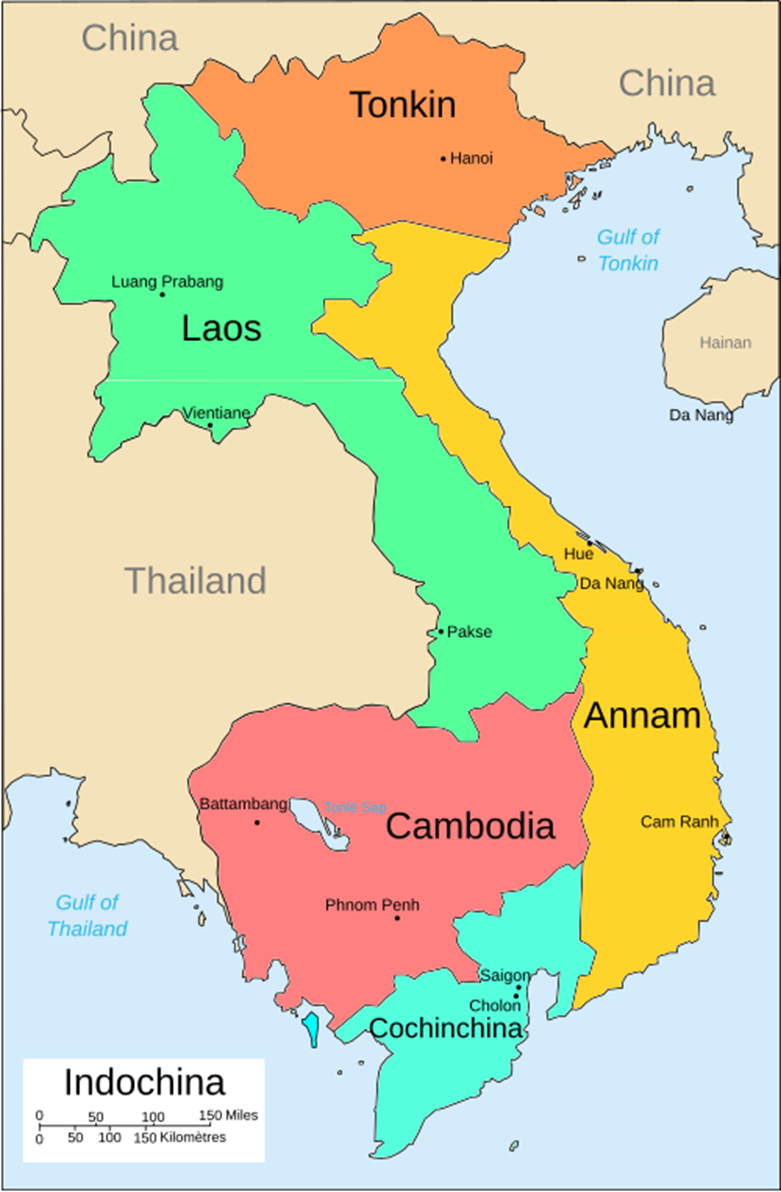
Map of Southeast Asia circa 900 CE, showing the Khmer Empire in red, Champa in yellow and Haripunjaya in light Green plus additional surrounding states (Jembezmamy, CC0, via Wikimedia Commons)

The Khmer Empire was one of Southeast Asia’s most influential civilizations, dominating large parts of the region from the early 9th to the mid-15th century. Its heartland was in what is now Cambodia, with Angkor as its legendary capital. The empire is renowned for its innovative urban planning, monumental architecture, and cultural legacy, which continues to shape Cambodian identity today.

Origins and Formation

The Khmer Empire emerged from the decline of the Chenla kingdom, which was itself the successor to the ancient state of Funan. Jayavarman II, a prominent Khmer prince, is traditionally credited with founding the empire. In 802 CE, he declared himself a “universal ruler” (chakravartin) on Phnom Kulen, symbolically breaking free from Javanese influence and instituting the devaraja (god-king) cult, which merged royal authority with divine status.

Political Organization and Administration

  • The empire at its peak encompassed modern Cambodia, parts of Laos, Vietnam, and Thailand.
  • A hierarchical society was ruled by the king, who presided over a sophisticated bureaucracy.
  • Society was stratified into noble families, military and high officials, administrators, artisans, farmers, and slaves.
  • The Khmer used an effective system of taxation—generally in rice—and conscripted labor for state projects.

Society and Economy

  • Most of the population were rice farmers, supported by extensive irrigation and hydraulic infrastructure.
  • The economy thrived on agriculture, particularly wet-rice cultivation aided by massive reservoirs (barays) and a complex network of canals.
  • Artisans, such as stone carvers, potters, goldsmiths, and weavers, contributed to both the local economy and the construction of monumental architecture.
  • Trade and diplomacy linked Angkor to regional powers like China and India.

Religion and Belief

  • Initially, Hinduism (particularly the worship of Shiva and Vishnu) shaped religious and political life.
  • The king was revered as a divine figure, with temple architecture and rituals reinforcing this status.
  • In the 12th–13th centuries, Mahayana Buddhism became prominent under Jayavarman VII, eventually giving way to Theravada Buddhism, which remains central in Cambodia today.
  • Temples were not just places of worship but also administrative and redistributive centers.

Urbanism, Architecture, and Art

Angkor, the empire’s capital, became the world’s largest pre-industrial city.

Major Monuments

  • Angkor Wat: Built by Suryavarman II, it is the largest religious monument on earth, celebrated for its harmony, intricate reliefs, and astronomical orientation.
  • Angkor Thom: Jayavarman VII’s grand city, including the Bayon temple, known for its iconic stone faces.
  • Other significant temples: Banteay Srei (noted for its fine carvings), Ta Prohm and Preah Khan (noted for being overgrown by jungle), and the stepped pyramid of Koh Ker.

Infrastructure

  • Sophisticated city planning featured grid layouts, ceremonial avenues, moats, and gigantic reservoirs.
  • Temples and waterworks were built in alignment with cosmological principles, reflecting the empire’s religious beliefs.

Notable Rulers

  • Jayavarman II (802–850): Founder of the empire, initiated the royal cult, and centralized power.
  • Indravarman I and Yasovarman I: Expanded irrigation systems and constructed major barays.
  • Suryavarman II (1113–1150): Built Angkor Wat, expanded militarily.
  • Jayavarman VII (1181–1219): Major builder, spread Buddhism, and developed healthcare and infrastructure.

Daily Life and Culture

  • Daily life centered on rice farming, religious festivals, temple-building, and artistic pursuits.
  • The arts flourished, especially classical dance (apsara), sculpture, and literature.
  • Society relied on communal labor for construction and maintenance of infrastructure.

Regional Relations and Military

  • The empire engaged in wars and alliances with neighboring states like Champa, Dai Viet, and Siam (Thailand).
  • Notably, Angkor was sacked by the Chams in 1177, but was later recaptured.
  • Diplomatic missions traversed as far as China and India.

Decline and Fall

Multiple factors led to the decline:

  • Environmental strain: Over-expansion of waterworks, deforestation, and droughts undermined agricultural stability.
  • Internal turmoil: Succession crises and the weakening of the god-king system reduced central authority.
  • External pressure: Invasions by Siamese, Chams, and Vietnamese eroded Khmer power.
  • Economic decentralization: Provincial lords gained autonomy, draining the core of its strength.

Angkor was captured by the Siamese in 1431. The center of Cambodian life shifted to the south, and the ruins of Angkor were gradually reclaimed by the jungle.

Legacy

  • The Khmer Empire’s architectural, cultural, and religious innovations are central to Cambodian heritage.
  • Angkor Wat is a national symbol and UNESCO World Heritage Site.
  • Modern Cambodians continue to draw on the legacy of their imperial ancestors for pride and identity.

This enduring civilization stands as a testament to the region’s rich history, blending Indian and indigenous influences into a unique and lasting cultural achievement.

Don’t miss our upcoming articles!

We don’t spam!

Check your INBOX or SPAM folder to confirm your subscription.

Tags: AngkorAngkor WatCambodian HistoryKhmer architectureKhmer EmpireKhmer kingsKingdoms of CambodiaSimili ConsultingSimili TranslationSoutheast Asian Empires
ShareTweet
Previous Post

Picture of the day: Flower of the morning glory

Next Post

Picture of the day: French Coquillettes au Gratin

Pascal Medeville

Pascal Medeville

Author of the blog Wonders of Cambodia, I share my passion for Cambodia through stories, cultural insights, and personal reflections on the country. I'm also the founder of Simili Consulting, where we provide high-quality, professional translation services to international clients.

Related Posts

Statue of a robed Buddhist monk standing on a pedestal in front of a dark doorway and red wall, holding a closed umbrella and a book
History

Hem Chieu, the Monk Who Dared – Cambodian Nationalism in a Saffron Robe

May 31, 2026
Japanese Imperial Army troops and supply wagons advancing along a dirt road through rural Indochina in 1940, with mountains visible in the background
History

Imperial Japanese Control over Cambodia in World War II, From Quiet Garrison to Puppet Kingdom

May 30, 2026
A close-up of a weathered sandstone door pillar at Prasat Krachap in Koh Ker, Cambodia, carved with lines of ancient Sanskrit script from a 928 CE inscription dedicating the temple to the deity Tribhuvanadeva
History

Sanskrit in Cambodia: How an Ancient Language Still Shapes Modern Khmer

May 18, 2026
Bas-relief at Bayon temple showing Khmer archers and crossbowmen marching in formation, carved in sandstone with detailed clothing and weaponry.
History

Picture of the day: Khmer Archers and Crossbowmen at Bayon

May 17, 2026
Map of Asia showing regions shaped by Indian cultural influence, with India and surrounding South and Southeast Asian countries highlighted.
Culture

Greater India and Cambodia: How Indian Civilization Shaped the Khmer World

May 3, 2026
Ancient sandstone pyramid-temple of Phimeanakas in Angkor Thom, Cambodia, with steep central stairway, weathered carvings and guardian statues, rising above the jungle trees under a bright blue sky.
History

The Decline of Angkor: How Southeast Asia’s Greatest Empire Slowly Faded

April 26, 2026
Next Post
Picture of the day: French Coquillettes au Gratin

Picture of the day: French Coquillettes au Gratin

  • Trending
  • Comments
  • Latest
The French Protectorate of Cambodia (1863–1953): An Overview

The French Protectorate of Cambodia (1863–1953): An Overview

July 13, 2025
The Franco-Siamese Treaty of 23 March 1907: Borders, Politics, and the Return of Angkor

The Franco-Siamese Treaty of 23 March 1907: Borders, Politics, and the Return of Angkor

February 11, 2026
Cambodian-Vietnamese War (1978-1989)

Cambodian-Vietnamese War (1978-1989)

July 13, 2025
Working in Cambodia in 2026: Visas, Work Permits and Everyday Reality for Foreigners

Working in Cambodia in 2026: Visas, Work Permits and Everyday Reality for Foreigners

February 9, 2026
Kampot Province

Takeo Province: A Cradle of Cambodian History and Culture

3
Kratié Town on the Mekong: Colonial Echoes, River Life, and Irrawaddy Dolphins

Kratié Town on the Mekong: Colonial Echoes, River Life, and Irrawaddy Dolphins

3
Banteay Meanchey Province: A Gateway to Cambodia’s Rich Heritage

Banteay Meanchey Province: A Gateway to Cambodia’s Rich Heritage

2
Stung Treng Province: The Gateway to Cambodia’s Northern Wilderness

Stung Treng Province: The Gateway to Cambodia’s Northern Wilderness

2
An elderly woman crouches beside a woven basket overflowing with bananas in a sunlit tropical village, while a wide‑eyed rabbit joyfully bounds toward her, banana peels scattered across the ground

Tales of the hare, part 1 – The Clever Rabbit and the Banana Seller

June 5, 2026
Close-up of tarticlette at La Guinguette de Siem Reap, a French-style potato, bacon, onion and raclette cheese gratin served in a black dish with green salad on the side in Siem Reap, Cambodia.

Picture of the day: Tarticlette Comfort at La Guinguette in Siem Reap

June 5, 2026
Sandstone 7th‑century Devi statue from Sambor Prei Kuk style, showing elegant Khmer feminine form with high jata hairstyle and sampot, displayed against a warm backdrop.

Picture of the day: Devi Statue from Sambor Prei Kuk Gracefully Reimagined

June 4, 2026
Illustration of a Cambodian folk scene at a riverside: a large fish leaps dramatically out of the water in the foreground while a rabbit watches from the grassy bank, and in the background a couple in traditional clothing stands near a stilted thatched house, suggesting a moment from a village proverb.

When the Rabbit Escapes and the Fish Slips Away: A Khmer Proverb about Greed

June 3, 2026

Recent News

An elderly woman crouches beside a woven basket overflowing with bananas in a sunlit tropical village, while a wide‑eyed rabbit joyfully bounds toward her, banana peels scattered across the ground

Tales of the hare, part 1 – The Clever Rabbit and the Banana Seller

June 5, 2026
Close-up of tarticlette at La Guinguette de Siem Reap, a French-style potato, bacon, onion and raclette cheese gratin served in a black dish with green salad on the side in Siem Reap, Cambodia.

Picture of the day: Tarticlette Comfort at La Guinguette in Siem Reap

June 5, 2026
Sandstone 7th‑century Devi statue from Sambor Prei Kuk style, showing elegant Khmer feminine form with high jata hairstyle and sampot, displayed against a warm backdrop.

Picture of the day: Devi Statue from Sambor Prei Kuk Gracefully Reimagined

June 4, 2026
Illustration of a Cambodian folk scene at a riverside: a large fish leaps dramatically out of the water in the foreground while a rabbit watches from the grassy bank, and in the background a couple in traditional clothing stands near a stilted thatched house, suggesting a moment from a village proverb.

When the Rabbit Escapes and the Fish Slips Away: A Khmer Proverb about Greed

June 3, 2026
Wonders of Cambodia

Exploring Culture, Nature, and Spirit in the Land of Wonder.

Follow Us

Browse by Category

  • Architecture
  • Architecture
  • Art
  • Books
  • Business
  • Business
  • Cinema
  • Costume
  • Costume
  • Cuisine
  • Culture
  • Defense
  • Du lịch
  • e-Books
  • Education
  • Expat life
  • Fauna
  • Festival
  • Flora
  • Food providers
  • Français
  • Geography
  • Handicraft
  • Health
  • Histoire
  • History
  • Hotels
  • Khmer Stories
  • Khmer stories
  • Knowledge
  • Language
  • Last posts
  • Lịch sử
  • Life in Cambodia
  • Literature
  • Music
  • Pictures
  • Politics
  • Population
  • Press review
  • Professional services
  • Proverbs
  • Reference
  • Reference
  • Religion
  • Restaurants
  • Textile
  • Tiếng Việt
  • Tourism
  • Tourisme
  • Transport
  • Uncategorized
  • Video
  • Vie quotidienne
  • Who's who
  • ខ្មែរ
  • ទេសចរណ៍៖
  • បគ្គលល្បី
  • ប្រវត្តិសាស្ត្រោ
  • 中文
  • 书籍
  • 历史
  • 旅游
  • 生活

Recent News

An elderly woman crouches beside a woven basket overflowing with bananas in a sunlit tropical village, while a wide‑eyed rabbit joyfully bounds toward her, banana peels scattered across the ground

Tales of the hare, part 1 – The Clever Rabbit and the Banana Seller

June 5, 2026
Close-up of tarticlette at La Guinguette de Siem Reap, a French-style potato, bacon, onion and raclette cheese gratin served in a black dish with green salad on the side in Siem Reap, Cambodia.

Picture of the day: Tarticlette Comfort at La Guinguette in Siem Reap

June 5, 2026
  • About Us
  • Advertise
  • Privacy & Policy
  • Contact Us

© 2025 - Made with 💫 by TechFlow.

No Result
View All Result
  • Home
  • Culture
  • Cuisine
  • Tourism
  • Business
  • Life in Cambodia
  • 中文
  • ខ្មែរ
  • Français
  • Tiếng Việt
  • e-Books

© 2025 - Made with 💫 by TechFlow.