(Estimated reading time: 8 minutes – just enough for a coffee and a quick trip from Phnom Penh to 1880s Paris, without the jet lag.)
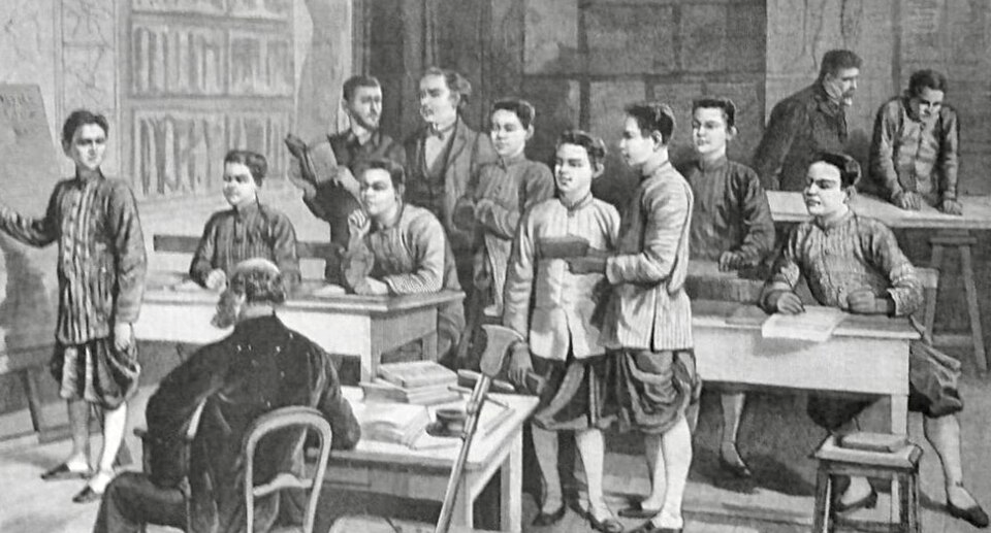
In the late 19th century, a curious institution appeared in Paris: the “École cambodgienne,” a small school meant to train colonial personnel through a Cambodian gateway. Within a few years, it morphed into the École coloniale, factory of imperial administrators. This article explores how a “Cambodian” school helped shape France’s colonial education project in Paris.
Introduction: A Cambodian School in the Heart of Paris
If you work on Cambodian history, “Paris” usually evokes EFEO scholars, dusty archives and expensive coffee, not something called an “École cambodgienne.” Yet in the 1880s, long before mass tourism to Angkor, Paris briefly hosted exactly that: a “Cambodian School” which would become the embryo of the famous École coloniale.
This article is for readers interested in colonial history, Southeast Asia and the strange ways European capitals turned distant protectorates into administrative laboratories. You will discover how a small, Cambodia-focused initiative in Paris became a central piece of the French imperial bureaucracy, and why this story still matters when we look at the entanglement between education and empire.
By the end, you should have a clear picture of how the École cambodgienne in Paris emerged, what it was meant to do, how quickly it outgrew its “Cambodian” label and how it opened the way to the École coloniale and later ENFOM (École nationale de la France d’outre-mer), the elite school that trained generations of colonial magistrates and administrators.
Setting the Scene: Empire, Education and Cambodia
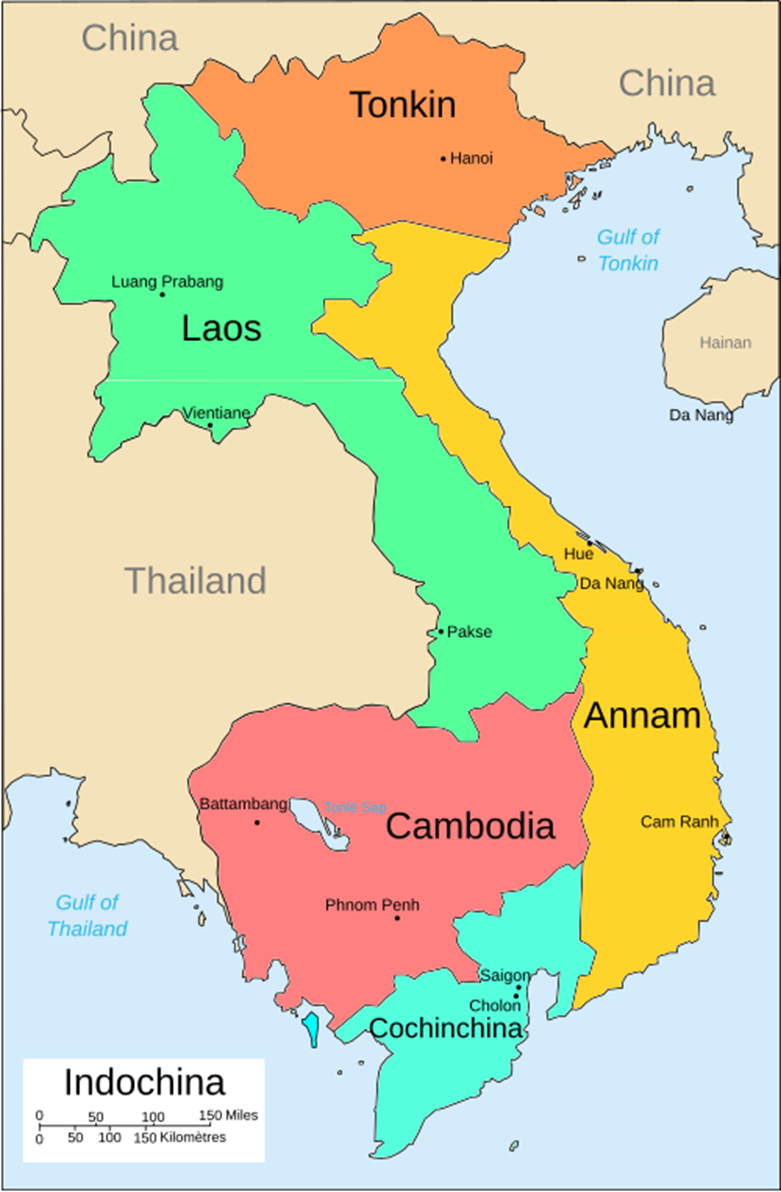
In the 1880s, France was consolidating its hold over Indochina, especially after the establishment of the Cambodian protectorate and the expansion in Tonkin and Annam. Colonial administrators quickly discovered that governing a vast empire required more than uniforms, medals and good intentions. It required trained personnel, able to navigate law, languages and local politics.
Within this context, the idea emerged to create an institution in Paris that would prepare staff specifically for colonial service, starting from a concrete case: Cambodia. The notion of an “École cambodgienne” might sound exotic, but in the minds of French officials it was above all a practical device: a pilot school that could be scaled up to serve a growing empire.
Auguste Pavie and the Cambodian gateway
The École cambodgienne is closely associated with Auguste Pavie, the explorer and administrator who played a central role in extending French influence in mainland Southeast Asia. Pavie had already experimented with training local employees for telegraph and administrative work in Cambodia before turning toward a more structured training program in Paris.
According to later institutional histories, the school that began with a Cambodian focus quickly acquired broader ambitions and eventually took the name “École coloniale,” indicating a shift from a single-protectorate experiment to an empire-wide training project. In other words, Cambodia functioned as the door through which France entered a more systematic approach to colonial education.
The École Cambodgienne in Paris: Origins and Ambitions
Sources on the exact beginnings are scattered, but several accounts converge on the mid‑1880s as the founding moment of the École cambodgienne in Paris. The initiative aimed initially at forming cadres for the “indigenous administration” of the Cambodian protectorate, which meant creating a pool of trained personnel familiar with both French norms and local realities.
Rather than just importing “raw” colonial subjects to be “civilized” in a Parisian showcase, the project sought to build a stable institutional framework to produce skilled employees for the colonial machine. One might say that the École cambodgienne was less a school of Cambodian culture, and more a school about how to make Cambodia administratively manageable.
A prototype for a broader colonial school
What makes the École cambodgienne historically significant is not its size, but its role as a prototype. Historians of the colonial school system underline that this first “Cambodian” institution very quickly led French officials to consider a more general “École coloniale” dedicated to all overseas territories.
In official narratives about the later École coloniale, the Cambodian phase is often treated as a preliminary chapter. It was then called the Cambodian School and its purpose was to train staff for the indigenous administration of the Cambodian protectorate, before becoming the École coloniale in 1889 with the mission of giving complementary training to colonial administrators and magistrates. Cambodia, in short, served as a test bed for a model that would soon be extended across the empire.
From École Cambodgienne to École Coloniale
The 1888–1889 institutional shift
The change from École cambodgienne to École coloniale is more than a simple rebranding. Around 1888–1889, the French government formalized the creation of an École coloniale as a public higher education institution in Paris, dedicated to training civil servants and administrators for the colonial empire. This move followed a growing recognition that colonial governance required specialized education in law, geography, languages and local customs.
One study notes that the original Cambodian school became the l’École coloniale in 1889, marking the transition from a narrow focus on the Cambodian protectorate to a broader imperial perspective. The institution now aimed to offer complementary training to administrators and magistrates bound for multiple territories, from Indochina to Africa.
Why keep “Cambodian” roots in an imperial project?
Interestingly, even later historical accounts of the École coloniale often recall its Cambodian origin, as if this early connection provided a kind of founding myth. For some colonial actors, the Indochinese protectorates, and especially Cambodia and Laos, were perceived as a privileged field of experimentation where new forms of indirect rule, legal pluralism and “protectorate-style” administration could be tested.
By tracing its lineage to the École cambodgienne, the École coloniale claimed a sort of pioneering experience in handling the complexities of administering non‑European societies. Of course, from a Cambodian perspective, one might be less enthusiastic about being used as a laboratory, but for Parisian reformers this was a badge of innovation rather than a confession of ethnocentrism.
Training Empire: What the Colonial School Became
From Cambodian prototype to imperial grande école
Once institutionalized, the École coloniale quickly developed into a prestigious grande école with selective entrance and a strong esprit de corps. Students admitted to the school followed demanding programs in colonial history, geography, law, economics and specialized knowledge about specific regions such as Indochina or Africa.
Over time, the school’s role expanded. In 1905, a dedicated magistrature section was created to train colonial judges whose legal knowledge would match the specific needs of colonial justice. The Indochinese origin of the school remained visible, since early on many graduates were destined for posts in Indochina, including Cambodia.
The long afterlife: from École coloniale to ENFOM
In 1934, the École coloniale officially became the École nationale de la France d’Outre‑mer (ENFOM), a name it kept until its disappearance in 1960. Throughout this period, it trained a relatively small but influential group of administrators and magistrates. Between 1889 and 1958, only 299 students enrolled in the magistrate track, and 266 actually served as colonial magistrates, which represented about 1 percent of all magistrates who served during that time.
Despite their small numbers, these graduates formed a highly cohesive elite. Studies show that, especially after decolonization, former ENFOM magistrates were overrepresented in top judicial positions in France, including the Cour de cassation and high‑ranking posts in major courts. In other words, a school that began as an “École cambodgienne” partly dedicated to Cambodia ultimately shaped not only colonial administration but also the post‑colonial French judiciary.
Why the École Cambodgienne Matters for Cambodian History
A Parisian mirror of Cambodian colonial policy
For historians of Cambodia, the École cambodgienne is a useful mirror that reflects how French authorities imagined their role in the protectorate. The early focus on training officers for the indigenous administration of the Cambodian protectorate encapsulates the colonial ambition to create an intermediary layer of personnel who would be loyal to the French state while embedded in local society.
This project raises familiar questions: Who was allowed to study? How were Cambodians represented in the curriculum? To what extent did this school reflect genuine interest in Cambodian society versus a purely instrumental approach to governance? The sources on the École cambodgienne are still relatively limited, but even institutional histories of the École coloniale acknowledge that its Cambodian phase was central to its identity.
From Phnom Penh to Paris and back
The story also reveals the two‑way movement between colony and metropolis. Administrative experiments in Cambodia helped justify building a school in Paris, while the graduates of that Parisian school were later sent back to Indochina, including Cambodia, as administrators or magistrates. The Cambodian protectorate thus contributed to shaping a metropolitan educational institution, which in turn reshaped colonial governance on the ground.
For researchers working on Cambodian legal and administrative history, this means that exploring the archives and publications of the École coloniale and ENFOM is essential to understanding who actually governed in Phnom Penh, Battambang or Siem Reap, and how they were trained to see the people they administered. The École cambodgienne may have been an early, modest experiment, but its legacy extends far beyond its original name.
The École cambodgienne in Paris began as a small, Cambodia‑focused initiative in the mid‑1880s and soon morphed into the École coloniale, and later ENFOM, a central institution in the French imperial project. By starting with Cambodia as a laboratory, French reformers developed an educational model that would train generations of colonial administrators and magistrates, influence Indochinese governance and leave a lasting imprint on the French judiciary itself.
(A presentation (in French) of the École cambodgienne is available online, on Persée website, here.)
Pascal Médeville is a writer and digital publisher based in Cambodia. He focuses on Cambodian history, Southeast Asian archives and the long shadows of colonial institutions on today’s societies. He writes regularly for Wonders of Cambodia, exploring how forgotten documents from Paris to Phnom Penh still shape the way we understand the region.