Between Siam, Vietnam and France, Cambodia spent ninety years walking a diplomatic tightrope. This new Wonders of Cambodia e-book unpacks the French protectorate (1863–1953), the Franco–Siamese treaties and the “return of Angkor” in clear, engaging prose. Perfect for travelers, students and history lovers who want more than postcard clichés – but less than a 600‑page academic brick.

Understanding the French Protectorate in Cambodia – Without Needing a PhD
What really happened between King Norodom’s “request for protection” in 1863 and Norodom Sihanouk’s independence in 1953? This e-book, A Quick Guide to the French Protectorate in Cambodia and the Franco–Siamese Treaties (1863–1953), is designed to answer that question in a way that is rigorous, readable and occasionally gently ironic.
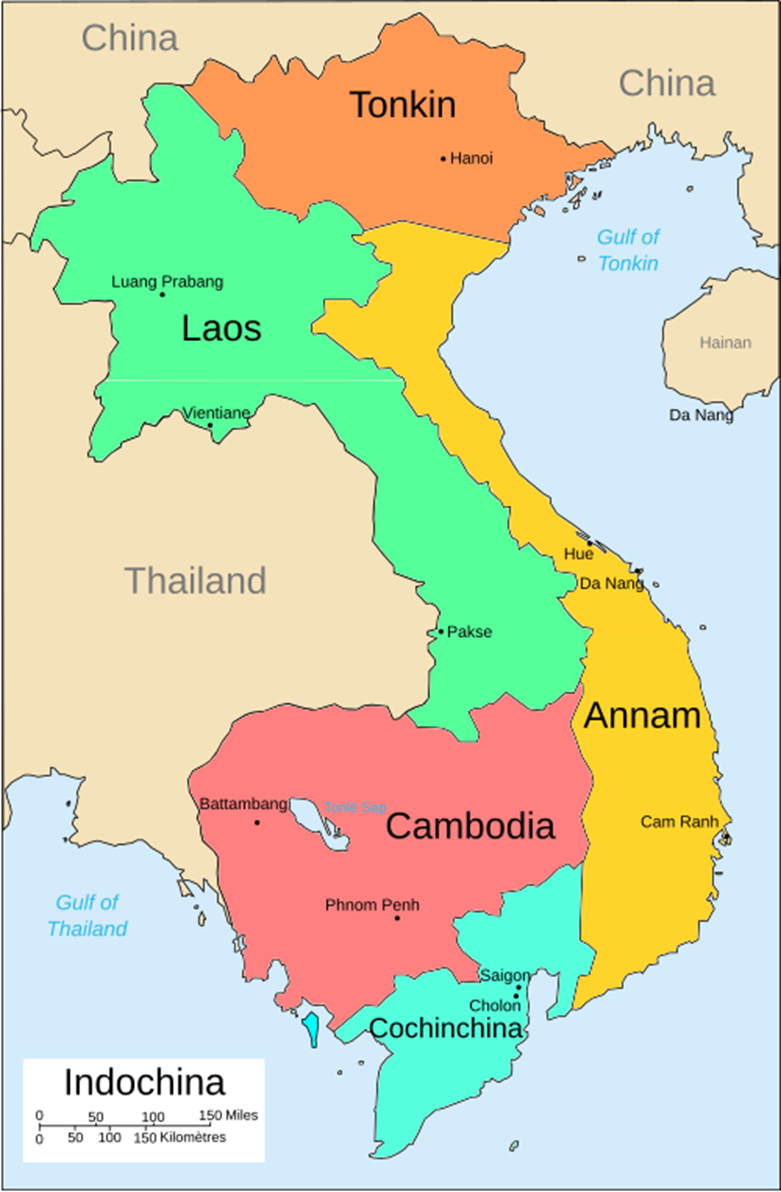
It traces how a small kingdom caught between Siam and Vietnam became a French protectorate, how borders were drawn and redrawn, and how Angkor left and then returned to the Cambodian map. Along the way, it follows the kings, residents, monks, scholars and villagers who had to navigate this hybrid order where power was shared – and not shared – between Phnom Penh and Paris.
If you are a traveler planning a trip to Angkor, a student of Southeast Asian history, or simply a curious reader who keeps wondering why Cambodian-Thai border disputes still invoke maps from 1907, this guide offers a compact yet substantial answer. It distills years of research and multiple Wonders of Cambodia articles into a single, practical volume you can actually finish before your next flight.
From Survival Between Siam and Vietnam to French “Protection”
The book opens with Cambodia in the nineteenth century: a weakened kingdom squeezed between an expansionist Siam in the west and Vietnam in the east. We see how kings in Phnom Penh played a precarious game of survival, paying tribute in several directions while trying to keep at least the royal regalia, if not all the provinces.
King Norodom’s position in the 1860s is examined in detail: dependent on Siamese support, constrained by regional politics, and increasingly tempted to look for a more distant, less territorial protector. This is the context for the famous (and infamous) year 1863, with both a secret treaty imposed by Siam and the treaty of protection with France that formally launched the protectorate.
Rather than painting France as a simple villain or savior, the e-book shows how “protection” quickly evolved into tutelage, then into something much closer to direct control. It explains the role of the Residents, the 1884 treaty that tightened French authority and the rebellions that followed when Cambodians realized just how expensive protection could become.
Everyday Life Under the Protectorate
One of the strengths of the guide is that it does not stay in chancelleries and treaty rooms. A whole chapter looks at what the protectorate meant in daily life: dual administration, tax reforms, corvée labor redirected to roads and public buildings, and the slow monetization of a largely rural economy.
Through short, vivid case studies – a rice farmer crushed by new tax demands, a clerk in Phnom Penh’s colonial offices, a monk teaching in a pagoda school, a Chinese shopkeeper in a provincial town – readers see how villagers, urban intermediaries and religious figures adapted, negotiated and occasionally resisted. Buddhist institutions remain central, but now framed within a colonial order that both respected and instrumentalized them.
The e-book also highlights key flashpoints such as the Bardez affair at Krang Leav in 1925, when a tax dispute turned into a deadly revolt and the only killing of a French Resident by Khmer villagers in the twentieth century. This episode illustrates how far resentment could go when humiliation, debt and hunger met an overzealous administrator.
Borders, Treaties and the “Return of Angkor”
For anyone interested in maps, borders and diplomatic chess, the chapters on the Franco-Siamese treaties of 1904 and 1907 are likely to be a favorite. They show how Siam, under King Chulalongkorn, tried to preserve its independence by giving up some territories while keeping others, and how France sought to consolidate Indochina and its self‑appointed role as “protector” of Khmer civilization.
The e-book explains what the 1904 treaty actually did, why it was incomplete, and how the 1907 treaty finally brought Battambang, Siem Reap and Sisophon – including Angkor – back under Cambodian administration within the framework of the protectorate. It also follows the practical consequences: boundary commissions in the field, administrative reorganization in the newly acquired provinces, and the expansion of French archaeological work at Angkor.
Crucially, it shows how the maps drawn in those years did not stay politely in the archive. They reappear decades later in disputes over sites like Preah Vihear, reminding us that what looked like narrow colonial negotiations has become the legal foundations of modern state borders.
Kings in a Tight Frame: Monivong and Sihanouk
The guide then turns to the late protectorate, focusing on King Sisowath Monivong and his role as monarch in a system where major decisions were taken by the Resident‑Superior and his advisers. We follow him through the relative stability of the 1920s and 1930s, the economic crisis, and the early stirrings of nationalist and reformist movements.
Monivong appears as a king of continuity: respected, symbolically central, but constrained in his ability to address deep social and economic tensions. His reign closes the “classical” protectorate era – that calm before the storm when France still believed its position in Indochina was solid.
Enter Norodom Sihanouk in 1941, initially chosen precisely because he seemed young and malleable. The e-book follows him through World War II, the uneasy coexistence between French and Japanese authorities, the short‑lived 1945 “Kingdom of Kampuchea” under Japanese sponsorship, and the return of the French.
Readers discover how anti‑colonial movements gained traction, how monks, students and journalists used demonstrations and newspapers to challenge the protectorate, and how opponents were shipped to remote Poulo Condore island, where prison became a political school. Figures like Bun Chan Mol, Hem Chieu, Son Ngoc Thanh and Prince Sisowath Youtévong appear as part of a broader, multi‑layered nationalist landscape.
The final chapters explain how Sihanouk transformed himself from ideal pupil of the protectorate into the self‑styled leader of a “Royal Crusade for Independence”. By mobilizing popular support, using international forums and exploiting France’s weakened position in the early 1950s, he secured full independence in November 1953 – within borders largely defined by the earlier Franco–Siamese treaties.
A Clear Framework for Modern Cambodian History
One of the recurring problems when approaching Cambodian history is that the protectorate is often treated as a preface to “what really matters” after 1953. This e-book takes the opposite view: to understand modern Cambodia – and even recent events – you need to understand how borders, institutions and political habits were shaped between 1863 and 1953.
By presenting a clear chronological structure – from Norodom’s appeal for protection to Sihanouk’s independence, with key turning points in 1884, 1904, 1907 and 1945 – the guide gives readers a solid backbone on which to hang more detailed knowledge later. Timelines, glossaries and appendixes make it easy to keep track of people, places and shifting alliances.
Accessible, Compact and Grounded in Cambodian Voices
This is not a neutral, disembodied colonial history: it is written from Cambodia, with a consistent effort to foreground Cambodian experiences, memory and scholarship. Case studies, portraits of key figures and references to Cambodian school materials show how these events are remembered locally today.
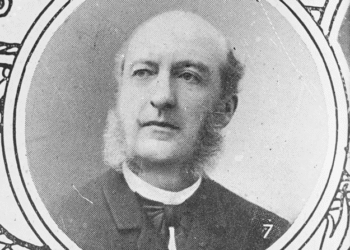
At the same time, it remains compact and accessible. Instead of footnotes every three lines, readers get a carefully curated bibliography and a selection of Wonders of Cambodia articles for deeper exploration: from overviews of the protectorate to detailed studies of the 1907 treaty, Étienne Aymonier or King Sisowath Monivong. The result is an ideal bridge between introductory tourism brochures and dense academic monographs.
Travelers and Expats in Cambodia
If you are living in Cambodia or visiting beyond a weekend in Siem Reap, this guide will help you make sense of what you see. Why does Angkor occupy such a central place in Cambodian identity? Why do border disputes with Thailand keep coming back? Why does Phnom Penh’s urban landscape mix colonial grids with royal pagodas and monumental boulevards? The answers lie, in large part, in the protectorate years.
Students, Teachers and History Enthusiasts
For students and teachers, the e-book offers a concise yet rich introduction to the period, with clear structure, key dates and definitions that make it suitable as a course companion or background reading. For history lovers, it provides enough diplomatic, social and intellectual detail to avoid frustration, while remaining light enough to read on a tablet or phone without eye‑strain or despair.
A Quick Guide to the French Protectorate in Cambodia and the Franco–Siamese Treaties (1863–1953) offers a clear, well‑structured introduction to one of the most decisive yet often misunderstood chapters of Cambodian history. By following the threads of diplomacy, everyday life, royal politics and nationalist movements, it shows how a “protectorate” transformed the kingdom’s borders, institutions and political imagination – and how those changes still echo in today’s Cambodia.
Pascal Médeville is a writer and digital publisher based in Cambodia, where he runs the Wonders of Cambodia project. He focuses on Cambodian history, heritage and everyday life, with a particular interest in how diplomatic treaties, colonial archives and local memory intersect. His work aims to make complex historical questions accessible to travelers, students and general readers who prefer sharp analysis wrapped in clear prose rather than academic jargon.
You can the presentation of this e-book and buy it (pdf format, launching price: USD 4.99 until March 15th) on payhip.
You can also buy it directly from Wonders of Cambodia. Contact us.