(Estimated reading time: 8 minutes — roughly the time it takes to walk from Angkor Wat’s west gate to its central tower, without stopping for photos (which you will).)
The fall of Angkor remains one of Southeast Asia’s most fascinating historical puzzles. Was it war, climate change, political instability – or all of the above? This article explores the gradual decline of the Khmer Empire, separating myth from evidence and offering a clear, modern understanding of how one of the world’s greatest civilizations transformed rather than simply vanished.

The decline of Angkor is often told as a dramatic collapse – a once-mighty empire abandoned to the jungle almost overnight. It is a compelling image, but like many good stories, it oversimplifies reality. The truth is slower, more complex, and arguably more interesting.
This article is for readers curious about Cambodian history, Angkor’s legacy, and the real forces that shaped the end of the Khmer Empire. By the end, you’ll have a clearer understanding of why Angkor declined, what actually happened to its population, and why the story still matters today.
Understanding Angkor at Its Peak
Before discussing its decline, it helps to appreciate what Angkor actually was.
Between the 9th and 13th centuries, Angkor was one of the largest pre-industrial urban centers in the world. Its success rested on three pillars:
- A highly sophisticated hydraulic system managing water across vast areas
- Strong kingship rooted in Hindu and later Buddhist cosmology
- Strategic control of regional trade routes
Angkor’s water management system – barays (reservoirs), canals, and moats – was not just impressive; it was essential. It regulated rice production, supported large populations, and symbolized divine order.
Think of Angkor less as a city and more as a vast engineered landscape.
Let’s address the elephant in the room: Angkor did not “collapse overnight.”
Archaeological evidence suggests a gradual transformation spanning the 13th to 15th centuries. Temples were not abruptly abandoned; instead, they were used, modified, and sometimes repurposed.
The shift was less a fall and more a slow reconfiguration of political and economic power.
Key Factors Behind the Decline of Angkor
Climate Change and Environmental Stress
Recent research has highlighted climate as a major factor.
Between the 14th and 15th centuries, the region experienced:
- Prolonged droughts
- Intense monsoon rains
- Unpredictable water cycles
Angkor’s hydraulic system, while advanced, was not infinitely adaptable. Infrastructure designed for stability struggled under extreme variability.

Inscriptions and sediment analysis show that canals became clogged, reservoirs damaged, and water flow increasingly difficult to manage.
Overextension of Infrastructure
Angkor’s strength – its vast water network – may also have been its weakness.
Maintaining such a complex system required constant labor and centralized control. As political cohesion weakened, maintenance likely declined.
A neglected canal is not just an inconvenience – it disrupts agriculture, weakens food security, and undermines the entire urban system.
Political and Religious Shifts
The Khmer Empire underwent significant ideological changes during this period.
- Earlier rulers promoted Hindu state cults centered on divine kingship
- Later periods saw the rise of Theravada Buddhism
This shift had real political consequences. Theravada Buddhism emphasizes personal devotion rather than centralized divine authority, which may have reduced the ideological power of kings.
Less divine king, more human ruler – and perhaps less control over a vast empire.
External Pressures and Regional Conflict
Angkor did not exist in isolation.
The rise of neighboring powers, particularly Ayutthaya (in present-day Thailand), introduced new military and economic pressures. The often-cited sack of Angkor in 1431 by Ayutthayan forces likely played a role – but not as a singular decisive event.
Rather than causing collapse, it accelerated an ongoing transition.
By the 14th and 15th centuries, maritime trade became increasingly important.
Angkor, located inland, was less well-positioned than emerging coastal centers. As trade routes shifted toward ports, economic gravity moved with them.
The future of Southeast Asia was increasingly maritime – and Angkor was built for a different era.
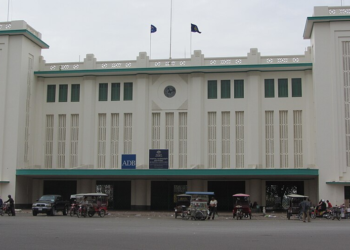
One of the most visible signs of Angkor’s decline was the shift of political power southward.
The establishment of Phnom Penh as a significant center reflects broader changes:
- Better access to riverine and maritime trade
- More flexible economic positioning
- Reduced dependence on massive hydraulic systems
This was not an escape from failure – it was an adaptation to new realities.
What Happened to Angkor’s Population?
Contrary to popular belief, the people of Angkor did not vanish.
They moved.
Many relocated toward the Mekong and Tonle Sap regions, integrating into new urban and economic centers. Cultural continuity remained strong, particularly in religion, language, and artistic traditions.
Angkor Wat itself was never truly abandoned – it became a Theravada Buddhist site and continues to function as a living religious monument today.
Archaeology and Modern Insights
Our understanding of Angkor’s decline has evolved significantly in recent decades.
Technologies such as LiDAR (light detection and ranging) have revealed:
- Hidden urban grids beneath the forest
- Previously unknown canals and reservoirs
- The vast scale of Angkor’s infrastructure
These discoveries reinforce a key idea: Angkor was not a compact city but a sprawling, low-density urban network.
And like many such systems, it was vulnerable to environmental and structural stress over time.
Lessons from the Decline of Angkor
The story of Angkor’s decline resonates beyond history.
It highlights how complex societies depend on:
- Environmental stability
- Infrastructure maintenance
- Adaptability to changing economic systems
Perhaps the most important takeaway is this: Angkor did not fail because it was weak, but because it was highly optimized for conditions that eventually changed.
That is a much more modern – and slightly uncomfortable – lesson.
The decline of Angkor was not a sudden fall into oblivion, but a gradual transformation shaped by climate, politics, economy, and human adaptation. Rather than disappearing, the Khmer world shifted southward, evolving into new forms while preserving deep cultural continuity that still defines Cambodia today.
Pascal Médeville is a writer and digital publisher based in Cambodia. He specializes in Southeast Asian history, Khmer culture, and regional heritage, with a focus on making complex topics accessible and engaging. He regularly writes about Angkor, Cambodian traditions, and historical transformations across the region.