Introduction: Cambodia’s Royal Institution
The House of Norodom stands as one of Southeast Asia’s most significant and enduring royal dynasties, embodying centuries of Cambodian sovereignty, cultural resilience, and political continuity. As the ruling royal house of Cambodia, the Norodom family has shaped the nation’s trajectory from colonial pressure to independence and beyond, with direct descendants of King Norodom (1860–1904) continuing to lead the Kingdom to the present day. Unlike dynasties that fragmented or lost relevance, the House of Norodom has maintained institutional legitimacy across vastly different political systems—from absolute monarchy to constitutional frameworks—making it a crucial anchor of Cambodian national identity.

Today’s monarch, King Norodom Sihamoni, represents the living embodiment of this tradition. Yet the dynasty’s strength lies not merely in contemporary leadership but in its foundational legacy. The story of the House of Norodom is fundamentally the story of modern Cambodia itself—a narrative intertwining court intrigue, foreign diplomacy, cultural preservation, and national determination against overwhelming external pressures.
The Founders: Ang Duong and the Birth of a Dynasty
The genealogy of the House of Norodom traces back to King Ang Duong (1796–1860), who reigned from 1848 until his death and is venerated in Cambodian collective memory as a visionary restorer of national pride. Ang Duong ascended the throne at a perilous moment in Cambodian history, when the kingdom faced existential threats from competing regional powers—Siam (modern-day Thailand) to the west and Vietnam to the east. Both neighbors maintained competing claims over Cambodian territory and internal affairs, reducing the Khmer state to a buffer zone rather than a sovereign nation.

Recognizing Cambodia’s vulnerability, Ang Duong pursued a calculated foreign policy aimed at revitalizing national institutions and exploring strategic alliances. He championed comprehensive legal reforms, revising Cambodia’s legal code for the first time in centuries. More profoundly, he undertook cultural restoration, reinforcing Buddhist institutional structures and promoting Khmer artistic and literary traditions—efforts that modern Cambodians credit with preserving national consciousness during an era of external domination. Although Ang Duong died before finalizing formal arrangements with France, his diplomatic outreach and institutional reforms established the intellectual groundwork for Cambodia’s later engagement with European powers.
Ang Duong’s progeny would become Cambodia’s two main royal branches. His eldest son, Prince Norodom, founded the House of Norodom; another son, Prince Sisowath, established the rival House of Sisowath. This familial branching would define Cambodian royal politics for the next century and a half.
King Norodom I: Establishing the Dynasty Amid Colonial Encroachment
Prince Norodom’s elevation to kingship in 1860 formally established the House of Norodom as a distinct institutional entity. Born in 1834 and educated in the Siamese royal court alongside his half-brother Sisowath, Norodom inherited not merely a crown but an impossible balancing act. The young king faced immediate obstacles: internal family rivals, Siamese political maneuvering, and the looming ambitions of French colonial interests in Indochina.
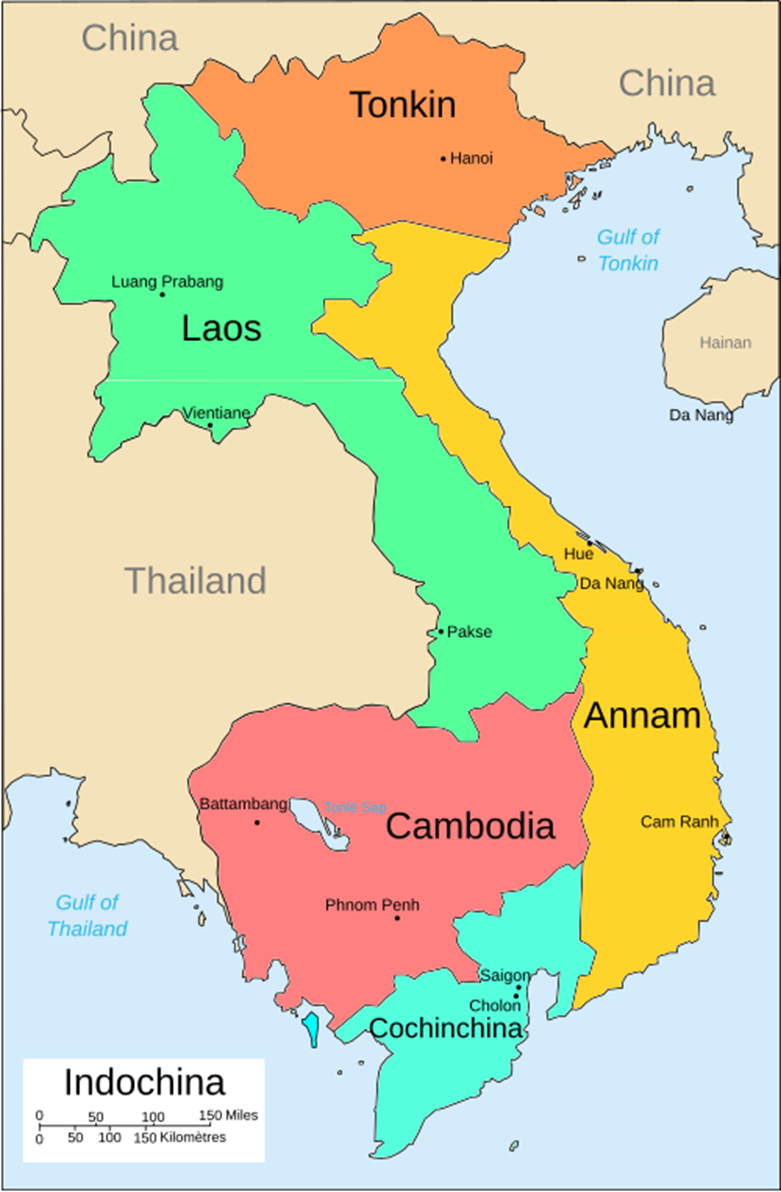
The most consequential act of Norodom’s reign came in 1863, when he signed a treaty with France establishing a French protectorate over Cambodia. This agreement, made partly out of necessity to counter Siamese pressure and secure his own position against domestic opponents, fundamentally transformed Cambodia’s sovereignty status. In exchange for French military protection and diplomatic recognition, Cambodia surrendered control of its foreign relations. This treaty initiated nearly ninety years of French colonial administration, gradually eroding royal autonomy.
The erosion accelerated in 1884 when French colonial authorities forced Norodom to sign an additional treaty, this time stripping him of direct control over public revenues, customs taxes, and state finances. The agreement, backed by French gunboats positioned menacingly at Phnom Penh, triggered widespread resentment across Cambodia. Despite these humiliations, Norodom attempted to preserve royal dignity and pursue internal reforms where French oversight permitted. He modernized civil administration, abolished slavery and commercial monopolies, and streamlined provincial governance—achievements that balanced pragmatic collaboration with France against the preservation of royal prerogatives.
Norodom’s reign lasted 43 years and 188 days, making it the longest verifiable reign in Cambodian history. Upon his death in 1904, he bequeathed to successors not a powerful kingdom, but an institution—the House of Norodom—invested with legitimacy, historical continuity, and cultural weight that even colonial subjugation could not entirely diminish.
The Interregnum and Return to Prominence: The Sihanouk Era
The dynasty’s fortunes shifted dramatically in 1941 when French colonial authorities selected an eighteen-year-old prince, Norodom Sihanouk, great-grandson of King Norodom I, to occupy the throne. The French choice was calculated: Sihanouk represented both royal houses, descending from both the House of Norodom and the House of Sisowath through his parents, thereby bridging competing dynastic claims and securing French-favored stability.

What the French did not anticipate was that Sihanouk would become Cambodia’s most consequential twentieth-century monarch and, arguably, the most prominent Southeast Asian ruler of his era. During World War II, Sihanouk navigated complex geopolitical pressures as Cambodia found itself contested territory between Japanese occupiers and Allied forces. His diplomatic acumen would prove decisive in Cambodia’s transition from colonial dependency to national independence.
In 1953, Sihanouk achieved what his predecessor King Norodom I had been unable to accomplish: full independence from France. This moment constituted the House of Norodom’s greatest triumph in nearly a century of subordination. Sihanouk’s successful negotiation of independence restored royal authority and national sovereignty simultaneously, conferring upon the House of Norodom a legitimacy rooted in national liberation rather than merely inherited tradition.
Following independence, Sihanouk abdicated the throne in 1955—a shocking decision that he justified as liberating himself from “palace intrigues” to engage more directly with Cambodian citizens. He allowed his father, Norodom Suramarit, to assume the kingship while Sihanouk operated as Head of State. After Suramarit’s death in 1960, Sihanouk reclaimed the position of head of state but never formally retook the throne, instead governing Cambodia during what became known as the Sangkum era (1955–1970). This period witnessed relative prosperity, cultural flourishing, and an attempt at non-aligned foreign policy balancing Cold War pressures.
The stability was deceptive. Internal instability, left-wing insurgency, and the spillover effects of the Vietnam War destabilized Cambodia’s political equilibrium. In 1970, a military coup led by General Lon Nol deposed Sihanouk and abolished the monarchy, establishing the Khmer Republic. Sihanouk, removed from power and living in exile, lent his symbolic authority to the Khmer Rouge, a choice that would haunt his legacy but demonstrated the enduring symbolic power of the House of Norodom—even in opposition, the crown remained the nation’s most legitimate institutional symbol.
Crisis and Restoration: The Khmer Rouge and Democratic Transition
The Khmer Rouge regime (1975–1979) represented an attempt to eradicate Cambodia’s feudal past, which meant targeting the royal family with particular ferocity. Sihanouk was briefly reinstated as a figurehead head of state before being placed under house arrest. Members of the Norodom family were imprisoned, executed, or forced into hiding. Princess Norodom Buppha Devi, the legendary classical dancer and holder of UNESCO recognition for Khmer dance preservation, was among those who survived the period through extraordinary resilience.
The regime’s fall in 1979 created space for royal restoration. Sihanouk, still commanding nationalist sentiment and institutional legitimacy, became crucial to Cambodia’s transition toward democracy and national reconciliation. The 1991 Paris Peace Accords, which ended Cambodia’s prolonged conflicts, provided for the monarchy’s restoration as a constitutional institution. In 1993, following United Nations-organized elections, Sihanouk was reinstated as king, a moment that symbolically closed the parenthesis of republican experiment and reaffirmed the House of Norodom’s centrality to Cambodian identity.
Sihanouk reigned until his abdication in 2004, when age and health concerns prompted his retirement. The Royal Council of the Throne then elected his son, Norodom Sihamoni, as his successor. Sihamoni, born in 1953 and educated in Prague, brought a quiet, intellectually refined temperament to the monarchy—a contrast to his father’s mercurial political engagement but no less important for Cambodia’s institutional stability.
Contemporary Legacy: King Norodom Sihamoni and Modern Monarchy
King Norodom Sihamoni’s reign, now spanning more than two decades, represents the contemporary iteration of the House of Norodom’s institutional presence. Unlike his father’s activist role, Sihamoni has emphasized constitutional monarchy principles, respecting democratic governance structures while providing symbolic national leadership. His background in the arts, including classical Cambodian dance and music, positions him as a cultural custodian—a role deeply resonant with the House of Norodom’s historical commitment to Khmer cultural preservation.
The House of Norodom’s significance extends beyond ceremonial functions. Four members of the dynasty have served as monarchs, and three have occupied the office of Prime Minister, including Sihanouk himself. These political achievements underscore that the dynasty was not merely decorative but central to Cambodia’s institutional development. The succession mechanisms governing the house—wherein the Royal Council of the Throne elects new monarchs from male descendants of nineteenth-century ancestors—reflect constitutional frameworks balancing hereditary legitimacy with institutional deliberation.
Cultural and National Significance
The House of Norodom’s enduring power lies fundamentally in its alignment with Cambodian cultural identity and historical consciousness. Throughout periods of colonial subordination, military dictatorship, and revolutionary violence, the crown remained the nation’s most universally recognized symbol. When other institutions fragmented—when political parties splintered, when governments collapsed, when military strongmen contested authority—the House of Norodom persisted as a stable referent of national continuity and sovereignty.
King Ang Duong’s eighteenth-century initiatives to revitalize Khmer legal and cultural institutions established a template that successive Norodom monarchs would follow: positioning the crown as guardian of national heritage while negotiating pragmatically with external powers. Norodom I’s navigation of French colonial constraints, Sihanouk’s negotiation of independence, and Sihamoni’s stabilization of constitutional monarchy all reflect variations on this foundational commitment.
Furthermore, the House of Norodom has maintained legitimacy across dramatically different political systems. The dynasty survived the transition from absolute monarchy to constitutional monarchy, from republican abolition to democratic restoration, and from Cold War geopolitical contestation to contemporary regional integration. Few dynastic institutions globally demonstrate comparable institutional flexibility.
Conclusion: An Eternal Institution
The House of Norodom represents one of Southeast Asia’s most consequential royal institutions, a dynasty whose internal political dynamics and external diplomatic achievements shaped modern Cambodia’s trajectory. From King Ang Duong’s nineteenth-century cultural revival through King Norodom I’s navigation of colonial subordination, Sihanouk’s negotiation of independence, and Sihamoni’s constitutional stewardship, the House of Norodom has consistently positioned itself as the embodiment of Cambodian national identity and sovereignty.
The dynasty’s resilience—its capacity to maintain institutional legitimacy across centuries of profound disruption—testifies to the deep cultural and symbolic investments Cambodian society maintains in the monarchy. In an era when traditional institutions globally face legitimacy challenges, the House of Norodom endures as a symbol of national continuity, cultural custodianship, and institutional stability. Understanding this dynasty is inseparable from understanding modern Cambodia itself.