The history of Chenla (Khmer: ចេនឡា, Chinese: 真腊/真臘), a transitional but pivotal polity in Southeast Asia, is enshrouded in mystery: it is both legend and archaeological puzzle. Existing from the late sixth to the early ninth century, Chenla connects the maritime glories of Funan to the monumental empire of Angkor. Though its outlines are chosen from a tapestry of Chinese court reports, stone inscriptions, and rich myth, Chenla’s legacy endures in the cultural DNA of the Khmer people and Cambodia’s land itself.

Beginnings: From Funan’s Umbra to Sovereignty
On the lush floodplains of the lower Mekong, Funan flourished as a cosmopolitan maritime state from the first to the sixth century. But as Funan’s star faded around 550 CE, internal discord and waning trade routes opened the way for ambitious vassals. It is here that the name “Chenla” takes shape, first recorded in Chinese documents as a northern domain under Funan’s sway. The king Bhavavarman I emerges as the legendary founder, a figure stretching both legend and documented regnal lists. Under his leadership, and later Mahendravarman, Chenla asserted its independence, absorbing Funan and unifying allied principalities within its own growing sphere.
Geography and Organization
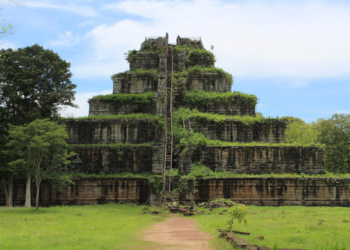
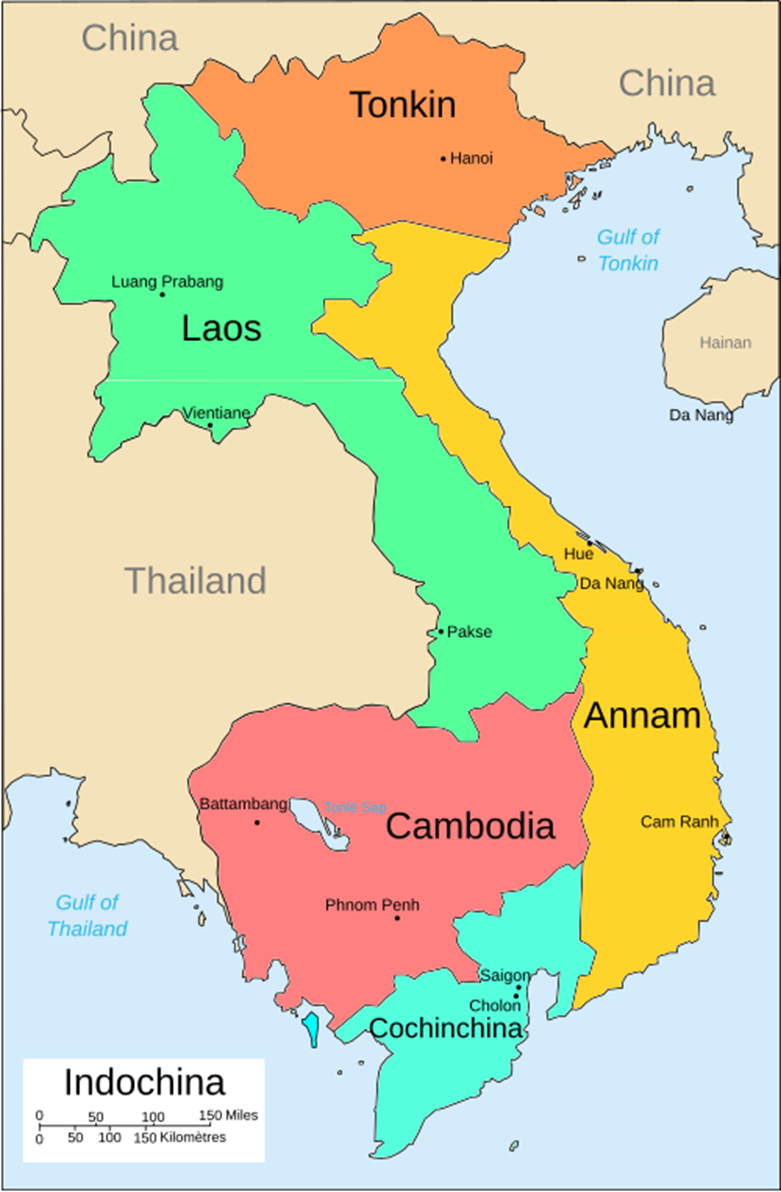
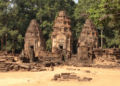
Unlike the coastal openness of Funan, Chenla was landlocked in the heartland of the Mekong and its tributaries—a geography that shaped its priorities, organization, and worldview. Its capital, Ishanapura, rose in the region near modern-day Kampong Thom. Royal inscriptions—clear and sometimes triumphal—point to a society where Hindu cosmology, indigenous animism, and a nascent Khmer script converged. Chinese court chronicles, with their foreign eyes, saw Chenla as an inland polity, its people cultivating rice and marshaling elephants rather than ships. This inland orientation fostered new forms of administration and monumental architecture, setting precedents that the Angkor period would refine.
Zenith Under Jayavarman I
Chenla’s greatest consolidation arrived beneath the reign of Jayavarman I, an energetic monarch whose three-decade rule in the late 7th century marks the zenith of Chenla’s power. Known for his bold statecraft and building projects, Jayavarman I extended his influence north to the Laotian plateau and west to the Dangrek mountains. His court issued a flurry of inscriptions and endowed countless religious foundations, fusing the Indian world of Shiva and Vishnu with Khmer traditions. Under his guidance, the patchwork of petty chieftains and lords was drawn closer into the orbit of a central authority, though never quite extinguishing the centrifugal pull of local dynasts.
Fracture: Land and Water Chenla
The integration gained under Jayavarman I could not outlast his death. Soon after 681 CE, the sources speak of Chenla splitting into two—the inland “Land Chenla” and the southerly “Water Chenla,” a division both geographical and political. Land Chenla encompassed the upland plains and northern regions, whereas Water Chenla hugged the lower Mekong and the coast, inheriting Funan’s former maritime culture. Internal succession disputes, combined with external threats such as the rising Javanese power and regional rivals like Champa, further eroded Chenla’s already loose knit.
Chinese annals tell of this period as one of unrest and fragmentation. Warlords and rival kingdoms vied for influence; inscriptions, once abundant, became scarce. Water Chenla, exposed to Javanese raids, would eventually become subordinate or absorbed, while Land Chenla’s succession of rulers proved tenuous.
Culture: Religion, Language, and Legacy
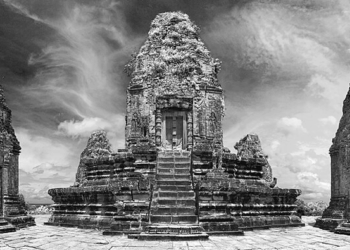
Chenla’s cultural character was a syncretic tapestry. The royal cults and temple architecture reflected a deep immersion in Hindu ideas brought via India, yet these were perpetually filtered through local sensibilities. Stone and brick sanctuaries, statues, and inscriptions signal a society of religious and artistic vitality. The earliest Khmer script emerges in this period, its forms adapted for royal decrees and religious foundations that sought legitimacy from heaven and the king alike.
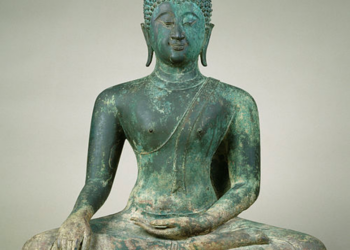
Polity and religion merged: the king was not merely a temporal leader, but the pivot of cosmic forces—a tradition magnified by his roles as both protector and donor. Buddhism also found its footing, rooted deeply enough that its imagery remains in art and iconography from this time.
The Twilight of Chenla and the Dawn of Angkor
By the late 8th century, Chenla’s history blurs. Water Chenla, battered by pirates and the ambitions of the thalassocratic Shailendra dynasty, effectively disappears from chronicles, while Land Chenla faces both population displacement and elite contest. Yet, from this fractured field, a new synthesis was emerging. The figure of Jayavarman II—likely a scion of both Chenla and its turbulent rivals—would rise, moving between regions, building alliances, and ultimately declaring a new era.
In 802 CE, Jayavarman II crowned himself “Chakravartin”—world-ruler—on Phnom Kulen. This act is conventionally seen as the close of the Chenla era and the true beginning of the Khmer Empire. The experiments in kingship, religion, and social organization conducted in this “pre-Angkorian” period provided the institutional and spiritual bedrock for Angkor’s extraordinary achievements.
Conclusion: Chenla’s Enduring Footprint
Chenla is best understood less as a monolithic state and more as a crucible: an incubator of ideas, elites, and forms. It transformed the polities and people of the lower Mekong, providing the strong yet flexible structures on which later Cambodian history would be built. Despite the gaps and ambiguities in its story, Chenla’s emergence, transformation, and legacy endure in Cambodia’s landscape, in its language, and in the living traditions of the Khmer people.
PS: It is important to note that the name “Chenla” (真腊/真臘, Zhēnlà) continued to be used in Chinese records up until the Ming dynasty. As a result, the Chinese annals do not distinguish between the period of the Chenla kingdom and that of the Khmer Empire; both were frequently referred to simply as “Chenla” in official documents. The modern Chinese name for Cambodia (柬埔寨, Jiǎnpŭzhài) only appeared in late sixteenth-century sources. This historical naming convention can sometimes cause confusion when interpreting Chinese texts about ancient Cambodia, as the transition from Chenla to the Khmer Empire is not clearly demarcated in these sources.