Wonders of Cambodia
  • Home
  • Culture
  • Cuisine
  • Tourism
  • Business
  • Life in Cambodia
  • 中文
  • ខ្មែរ
  • Français
  • Tiếng Việt
  • e-Books
No Result
View All Result
  • Home
  • Culture
  • Cuisine
  • Tourism
  • Business
  • Life in Cambodia
  • 中文
  • ខ្មែរ
  • Français
  • Tiếng Việt
  • e-Books
No Result
View All Result
Wonders of Cambodia
No Result
View All Result
Home Culture

Kampong Thom Province: Heart of Cambodia’s Rich Culture and Nature

Pascal Medeville by Pascal Medeville
July 13, 2025
in Culture, Geography
Reading Time: 5 mins read
0

Kampong Thom (កំពង់ធំ) is one of Cambodia’s most diverse and historically significant provinces. Located in the center of the country, it stretches across a broad swathe of flatlands and lush countryside between Phnom Penh and Siem Reap. Known for its ancient temples, thriving agricultural communities, and rich ecosystems, Kampong Thom provides a profound window into Cambodia’s past and present.

Geography and Climate
Covering approximately 13,814 square kilometers, Kampong Thom is the second-largest province by land area after Mondulkiri. The province is bordered by Preah Vihear and Siem Reap to the north, Kratie to the east, Kampong Cham and Kampong Chhnang to the south, and the mighty Tonle Sap Lake to the west. This central position has historically made Kampong Thom an important transit point and a fertile agricultural region.
Its tropical climate is characterized by two main seasons — a wet season from May to October and a dry season from November to April — making it ideal for rice cultivation and other crops like corn, cassava, and rubber. Kampong Thom’s landscape is mostly flat with patches of forest, especially toward its northern reaches. Here, the Phnom Tnout and Phnom Tbaeng forest areas offer dense woodlands and small hills, providing a home for diverse flora and fauna, including some endangered species.

Historical Significance
Kampong Thom has long been regarded as one of Cambodia’s most significant historical provinces. Its name, derived from Khmer, translates to “Great Port” — an acknowledgment of its central role in ancient trade routes and river transportation. The province was once a major settlement area for the Chenla Kingdom (6th-9th centuries), which predated the Angkor Empire and had a deep influence on Cambodian architecture and culture.
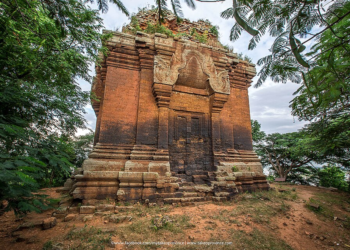
A visit to Kampong Thom is like stepping back into that early medieval world. The province is dotted with ancient temple sites built centuries before Angkor Wat. Chief among these is the Sambor Prei Kuk temple complex, a UNESCO World Heritage Site. Sambor Prei Kuk, located around 25 kilometers north of Kampong Thom town, consists of hundreds of red-brick Hindu and Buddhist temples. The structures were constructed in the 7th century and exhibit a unique style that would eventually influence the famed Angkorian architecture. The intricate bas-reliefs and inscriptions show a sophisticated level of artistry and dedication.
Additionally, Kampong Thom was once a central part of the Khmer Rouge regime. Visiting the region, you can also understand some of the scars left by that turbulent period. Memorials and local stories recall the hardship endured by Cambodians in Kampong Thom, making it an important stop for those wishing to comprehend the full breadth of Cambodian history.

Kampong Thom City
Kampong Thom’s capital is Stung Sen, often simply referred to as Kampong Thom City. Situated along the Stung Sen River — a key tributary of the Tonle Sap — this city is more than a stopover for those traveling between Phnom Penh and Siem Reap. It is a charming and rapidly developing town that reflects both traditional Cambodian life and modern aspirations.
In Kampong Thom City, visitors will find lively local markets offering fresh produce and handicrafts, cozy guesthouses and hotels, as well as restaurants serving traditional Khmer cuisine. Fishing is an important occupation for locals, owing to the nearby Tonle Sap, and Kampong Thom is famous for its freshwater fish dishes.

Natural Wonders and Ecotourism
Kampong Thom is one of Cambodia’s most promising ecotourism destinations. Beyond its historical sites, the province boasts rich biodiversity and natural beauty. The Tonle Sap Biosphere Reserve extends into Kampong Thom, providing wetlands that support a variety of wildlife. Birdwatchers will appreciate the opportunity to see rare waterbirds like the greater adjutant, milky stork, and spot-billed pelican — all of which thrive around the lake and its surrounding floodplains.
Additionally, Kampong Thom contains Prey Lang Wildlife Sanctuary, one of Southeast Asia’s most significant lowland evergreen forests. Stretching into neighboring provinces, Prey Lang is home to diverse wildlife including gibbons, slow lorises, and myriad birds and insects. The forest is considered sacred by the Kuy indigenous people, who have relied on its resources for generations. However, this sanctuary faces ongoing threats from illegal logging and land encroachment. Conservation groups and local communities work tirelessly to protect this vital forest, and ecotourism tours help support these initiatives.
There’s also Phnom Santuk, the most sacred hill in Kampong Thom, located about 17 kilometers from the city. A staircase leads visitors to its summit, where Buddhist pagodas and reclining Buddha statues offer panoramic views of the countryside. The path is often populated with playful monkeys that greet tourists on their climb.

Local Communities and Culture
Kampong Thom’s people — predominantly ethnic Khmer — are mostly engaged in agriculture, producing rice, vegetables, fruits, and rubber. Traditional village life is still very evident in the rural areas, where wooden houses on stilts rise over rice paddies and ox carts roll along dirt paths. Visitors can experience genuine Khmer hospitality as locals welcome them into their homes or offer simple homestays.
The province is also home to several indigenous Kuy communities who have lived in this region long before the rise of the Khmer Empire. The Kuy people maintain their unique cultural practices, dress, and beliefs. Local organizations and NGOs sometimes arrange cultural exchange programs to promote sustainable tourism and support the livelihoods of these communities.

Development and Modernization
Kampong Thom has seen significant modernization over the past two decades. The improvement of National Highway 6, which passes through the province and links Phnom Penh and Siem Reap, has accelerated trade and tourism. Improved road infrastructure and increased investment in electricity and telecommunications have brought new opportunities, especially for the youth.
Education is also a priority. Several schools, training centers, and NGOs focus on improving literacy and skill-building for the province’s next generation. Kampong Thom University and local vocational training programs aim to boost professional skills among the rural youth and support sectors like agriculture, hospitality, and IT.
Despite this progress, Kampong Thom remains one of Cambodia’s less-developed provinces, with income levels lower than urban centers like Phnom Penh or Siem Reap. Many residents continue to depend on subsistence farming and fishing. However, with its rich resources and central location, Kampong Thom holds considerable potential for sustainable growth through responsible tourism, eco-agriculture, and light industries.

Kampong Thom is Cambodia in microcosm — ancient history, natural beauty, warm local culture, and new aspirations for a prosperous future. Visitors who take the time to explore this province will discover a hidden gem where crumbling pre-Angkorian temples lie deep in the forest, traditional villages bustle with everyday life, and an unspoiled environment teems with wildlife.
Whether you come for its historical significance at Sambor Prei Kuk, its scenic hikes up Phnom Santuk, its eco-adventures in Prey Lang Wildlife Sanctuary, or simply to enjoy the warmth of the locals, Kampong Thom offers a rich and memorable Cambodian experience. In short, Kampong Thom is not just a place to pass through — it is a destination in its own right, brimming with stories that stretch back centuries and communities that are building toward a brighter future.

Don’t miss our upcoming articles!

We don’t spam!

Check your INBOX or SPAM folder to confirm your subscription.

Tags: Kampong Thomprovinces of CambodiaSambor Prei Kukកំពង់ធំ
ShareTweet
Previous Post

Électricité du Cambodge announces power cuts from June 26th to June 29th, 2025

Next Post

Cambodia in the World Factbook

Pascal Medeville

Pascal Medeville

Author of the blog Wonders of Cambodia, I share my passion for Cambodia through stories, cultural insights, and personal reflections on the country. I'm also the founder of Simili Consulting, where we provide high-quality, professional translation services to international clients.

Related Posts

Sandstone 7th‑century Devi statue from Sambor Prei Kuk style, showing elegant Khmer feminine form with high jata hairstyle and sampot, displayed against a warm backdrop.
Art

Picture of the day: Devi Statue from Sambor Prei Kuk Gracefully Reimagined

June 4, 2026
Illustration of a Cambodian folk scene at a riverside: a large fish leaps dramatically out of the water in the foreground while a rabbit watches from the grassy bank, and in the background a couple in traditional clothing stands near a stilted thatched house, suggesting a moment from a village proverb.
Culture

When the Rabbit Escapes and the Fish Slips Away: A Khmer Proverb about Greed

June 3, 2026
Close-up of a Siem Reap artisan using metal chisels and a wooden mallet on a leather panel to create traditional sbaek thom Khmer shadow puppets.
Art

Picture of the day: Chisels of Sbaek Thom Artisans in Siem Reap

June 2, 2026
Statue of a robed Buddhist monk standing on a pedestal in front of a dark doorway and red wall, holding a closed umbrella and a book
History

Hem Chieu, the Monk Who Dared – Cambodian Nationalism in a Saffron Robe

May 31, 2026
Close-up of pale cream and pink Pithecellobium dulce (âmpil tœk) flowers blooming on a leafy branch in rural Cambodia, softly blurred green background.
Flora

Picture of the day: Manila Tamarind Blossom in Cambodia

May 31, 2026
Japanese Imperial Army troops and supply wagons advancing along a dirt road through rural Indochina in 1940, with mountains visible in the background
History

Imperial Japanese Control over Cambodia in World War II, From Quiet Garrison to Puppet Kingdom

May 30, 2026
Next Post

Cambodia in the World Factbook

  • Trending
  • Comments
  • Latest
The French Protectorate of Cambodia (1863–1953): An Overview

The French Protectorate of Cambodia (1863–1953): An Overview

July 13, 2025
The Franco-Siamese Treaty of 23 March 1907: Borders, Politics, and the Return of Angkor

The Franco-Siamese Treaty of 23 March 1907: Borders, Politics, and the Return of Angkor

February 11, 2026
Cambodian-Vietnamese War (1978-1989)

Cambodian-Vietnamese War (1978-1989)

July 13, 2025
Working in Cambodia in 2026: Visas, Work Permits and Everyday Reality for Foreigners

Working in Cambodia in 2026: Visas, Work Permits and Everyday Reality for Foreigners

February 9, 2026
Kampot Province

Takeo Province: A Cradle of Cambodian History and Culture

3
Kratié Town on the Mekong: Colonial Echoes, River Life, and Irrawaddy Dolphins

Kratié Town on the Mekong: Colonial Echoes, River Life, and Irrawaddy Dolphins

3
Banteay Meanchey Province: A Gateway to Cambodia’s Rich Heritage

Banteay Meanchey Province: A Gateway to Cambodia’s Rich Heritage

2
Stung Treng Province: The Gateway to Cambodia’s Northern Wilderness

Stung Treng Province: The Gateway to Cambodia’s Northern Wilderness

2
Sandstone 7th‑century Devi statue from Sambor Prei Kuk style, showing elegant Khmer feminine form with high jata hairstyle and sampot, displayed against a warm backdrop.

Picture of the day: Devi Statue from Sambor Prei Kuk Gracefully Reimagined

June 4, 2026
Illustration of a Cambodian folk scene at a riverside: a large fish leaps dramatically out of the water in the foreground while a rabbit watches from the grassy bank, and in the background a couple in traditional clothing stands near a stilted thatched house, suggesting a moment from a village proverb.

When the Rabbit Escapes and the Fish Slips Away: A Khmer Proverb about Greed

June 3, 2026
Avion de la compagnie AirAsia peint en rouge avec la mention Cambodia sur le fuselage, volant dans le ciel avant l’atterrissage

A New boost for Cambodia tourism

June 3, 2026
Rectangular plate of Cambodian rice sautéed with finely chopped garlic, served on a wooden table in a small Kampong Thom street restaurant.

Picture of the day: Kampong Thom Garlic Fried Rice Comfort

June 3, 2026

Recent News

Sandstone 7th‑century Devi statue from Sambor Prei Kuk style, showing elegant Khmer feminine form with high jata hairstyle and sampot, displayed against a warm backdrop.

Picture of the day: Devi Statue from Sambor Prei Kuk Gracefully Reimagined

June 4, 2026
Illustration of a Cambodian folk scene at a riverside: a large fish leaps dramatically out of the water in the foreground while a rabbit watches from the grassy bank, and in the background a couple in traditional clothing stands near a stilted thatched house, suggesting a moment from a village proverb.

When the Rabbit Escapes and the Fish Slips Away: A Khmer Proverb about Greed

June 3, 2026
Avion de la compagnie AirAsia peint en rouge avec la mention Cambodia sur le fuselage, volant dans le ciel avant l’atterrissage

A New boost for Cambodia tourism

June 3, 2026
Rectangular plate of Cambodian rice sautéed with finely chopped garlic, served on a wooden table in a small Kampong Thom street restaurant.

Picture of the day: Kampong Thom Garlic Fried Rice Comfort

June 3, 2026
Wonders of Cambodia

Exploring Culture, Nature, and Spirit in the Land of Wonder.

Follow Us

Browse by Category

  • Architecture
  • Architecture
  • Art
  • Books
  • Business
  • Business
  • Cinema
  • Costume
  • Costume
  • Cuisine
  • Culture
  • Defense
  • Du lịch
  • e-Books
  • Education
  • Expat life
  • Fauna
  • Festival
  • Flora
  • Food providers
  • Français
  • Geography
  • Handicraft
  • Health
  • Histoire
  • History
  • Hotels
  • Khmer Stories
  • Khmer stories
  • Knowledge
  • Language
  • Last posts
  • Lịch sử
  • Life in Cambodia
  • Literature
  • Music
  • Pictures
  • Politics
  • Population
  • Press review
  • Professional services
  • Proverbs
  • Reference
  • Reference
  • Religion
  • Restaurants
  • Textile
  • Tiếng Việt
  • Tourism
  • Tourisme
  • Transport
  • Uncategorized
  • Video
  • Vie quotidienne
  • Who's who
  • ខ្មែរ
  • ទេសចរណ៍៖
  • បគ្គលល្បី
  • ប្រវត្តិសាស្ត្រោ
  • 中文
  • 书籍
  • 历史
  • 旅游
  • 生活

Recent News

Sandstone 7th‑century Devi statue from Sambor Prei Kuk style, showing elegant Khmer feminine form with high jata hairstyle and sampot, displayed against a warm backdrop.

Picture of the day: Devi Statue from Sambor Prei Kuk Gracefully Reimagined

June 4, 2026
Illustration of a Cambodian folk scene at a riverside: a large fish leaps dramatically out of the water in the foreground while a rabbit watches from the grassy bank, and in the background a couple in traditional clothing stands near a stilted thatched house, suggesting a moment from a village proverb.

When the Rabbit Escapes and the Fish Slips Away: A Khmer Proverb about Greed

June 3, 2026
  • About Us
  • Advertise
  • Privacy & Policy
  • Contact Us

© 2025 - Made with 💫 by TechFlow.

No Result
View All Result
  • Home
  • Culture
  • Cuisine
  • Tourism
  • Business
  • Life in Cambodia
  • 中文
  • ខ្មែរ
  • Français
  • Tiếng Việt
  • e-Books

© 2025 - Made with 💫 by TechFlow.