
Introduction
Oddar Meanchey Province (ឧត្តរមានជ័យ) is a fascinating blend of Cambodia’s ancient heritage and modern resilience. Situated in the remote northwest, this province — often bypassed by mainstream tourism — offers remarkable historical sites, unique landscapes, and a poignant narrative shaped by both past glories and recent challenges. As Oddar Meanchey grows in significance for eco-tourism, heritage preservation, and cross-border commerce, it is fast becoming a destination worth exploring. This comprehensive guide highlights the province’s geography, history, culture, tourist attractions, and ongoing development.
Geography and Environment
Nestled along the Thai border, Oddar Meanchey spans approximately 6,158 square kilometers, making it one of Cambodia’s more isolated yet ecologically diverse provinces. The dramatic Dangrek Mountain range forms its northern and western borders, serving as both a natural barrier and a habitat for rare wildlife. Central and southern Oddar Meanchey open up into arable plains and river valleys, ideal for rice cultivation and other agricultural pursuits.
This region was once dominated by lush, tropical forests. Today, while deforestation remains a concern, extensive wildlife sanctuaries such as Kulen Brahmadeb and Sangh Rukkhavan safeguard biodiversity and support community-based conservation efforts. Initiatives like REDD+ have been piloted here, aiming to curb forest degradation and establish Oddar Meanchey as a model for sustainable resource management in Cambodia.
A Storied History
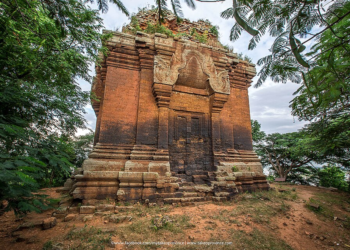
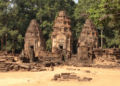
Oddar Meanchey boasts a history as dramatic as its landscapes. It was an outpost of the great Khmer Empire, evident in ancient temple ruins like Prasat Ta Moan Thom — a spectacular Angkorian-era temple complex perched near the Dangrek Mountains, once dedicated to Shiva. This historical depth connects Oddar Meanchey to Cambodia’s broader civilization and cultural roots.
The province’s modern history, however, is marked by turbulence. During the Khmer Rouge regime, Oddar Meanchey endured decades of conflict, displacement, and hardship. The infamous border town of Anlong Veng became the Khmer Rouge’s last bastion, serving as the hideout for leaders like Pol Pot and Ta Mok well into the late 1990s. Only after the implementation of the “win-win policy” in 1998 did Oddar Meanchey achieve peace and full integration into Cambodia.
Recent archaeological excavations have uncovered over 1,200 ancient artifacts, reinforcing the province’s historical significance and opening new opportunities for cultural tourism and research.
Demographics and Economy
Traditionally a sparsely populated backwater, Oddar Meanchey’s demographics shifted rapidly after the 1990s, as relative peace encouraged in-migration from across Cambodia. Its people are primarily ethnic Khmer, though the area is home to minority communities that add to its cultural diversity.
Agriculture remains the backbone of Oddar Meanchey’s economy. Rice paddies, cassava fields, and plantations dot the rural landscape, while livestock and forest products offer supplementary income. The busy Ou Smach international checkpoint on the Thai border has spurred cross-border trade, facilitating a gradual shift toward commerce and small-scale industry. The rise in eco-tourism and historical tourism also promises new revenue streams for locals.
Cultural Heritage and Modern Identity
Literally meaning “Victory Province” — a name celebrating the country’s survival and triumph over adversity — Oddar Meanchey’s cultural landscape intertwines ancient Khmer traditions with the resilience of a post-conflict society. Traditional Khmer holidays are celebrated alongside unique local festivals, shaped by centuries of interaction with neighboring Thailand.
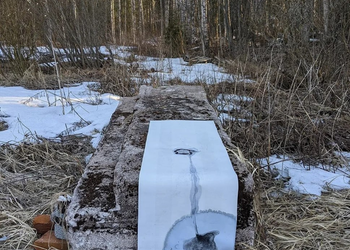
Heritage sites are central to Oddar Meanchey’s identity. Ancient temples like Prasat Ta Moan Thom, relics from the Angkor era, and landmarks tied to the Khmer Rouge — such as Pol Pot’s grave and Ta Mok’s house in Anlong Veng — draw visitors interested in both history and remembrance.
Emerging Tourism in Oddar Meanchey
Oddar Meanchey is carving a niche as an alternative Cambodian travel destination. The province’s historical and eco-tourism sites are gradually gaining attention:
- Historical Tourism: Visitors can tour Anlong Veng’s Khmer Rouge legacy sites, explore ancient temples, and immerse themselves in stories of Cambodia’s modern rebirth.
- Eco-Tourism: With its extensive forests, wildlife sanctuaries, and authentic rural landscapes, Oddar Meanchey is ideal for adventurous travelers seeking off-the-beaten-path natural beauty.
- Border Tourism: Ou Smach has developed into a lively hub for casinos, hotels, and shopping—attracting both traders and leisure visitors.
Crucially, tourism here remains sustainable and less commercialized than in Siem Reap or Phnom Penh, giving travelers rare insights into Cambodia’s everyday life and history.
Challenges and Development
Despite progress, Oddar Meanchey still faces critical challenges. Deforestation, land disputes, and environmental degradation persist amid rapid migration and development. Infrastructure, access to healthcare, and education require ongoing investment, supported by both government initiatives and international aid.
Nonetheless, the province is making strides. REDD+ projects, community forestry, and new archaeological finds contribute to sustainable economic opportunities while preserving the integrity of its natural and cultural resources.
Conclusion
Oddar Meanchey Province encapsulates Cambodia’s journey of survival, regeneration, and quiet determination. From its Angkorian past to its pivotal role in recent history, the province offers a unique tapestry of culture, nature, and resilience. As Cambodia’s “hidden gem,” Oddar Meanchey holds immense potential for those seeking authentic experiences away from the crowds—a place where history, community, and the future come together.
Whether you are a historian, eco-tourist, or traveler in search of the unknown, Oddar Meanchey Province presents a compelling invitation to discover a side of Cambodia seldom seen but never forgotten.