
Hinduism in Cambodia has a profound historical significance, despite being a minority religion today with roughly 1,000 to 15,000 followers, mainly among the Indian community.
Historical Development:
- Early Introduction: Hinduism entered Cambodia as early as the 1st century CE, brought primarily by Indian traders and Brahmin priests through maritime trade and cultural exchanges. By the 4th century, it became well established, particularly among the ruling elite.
- Funan and Chenla Kingdoms: The Kingdom of Funan (1st–6th century CE) was the first Indianized state in Cambodia, where Hinduism blended with local customs. Indian Brahmins introduced Shaivism, Vaishnavism, Sanskrit, and rituals, laying the groundwork for a Hindu cultural landscape. This influence persisted and deepened in the subsequent Chenla kingdom (6th–9th century CE).
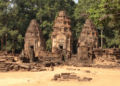
- Khmer Empire: The height of Hindu influence came under the Khmer Empire (9th–15th centuries). Kings such as Jayavarman II adopted the Devaraja (God-King) concept, styling themselves as earthly manifestations of Shiva or Vishnu to legitimize their rule. During this period, the construction of grand Hindu temples flourished, with Angkor Wat standing as the most iconic example—a temple originally dedicated to Vishnu. The use of Sanskrit and the worship of Shiva, Vishnu, and Brahma were hallmarks of Khmer state religion and court culture.
- Society and Governance: Hinduism shaped Khmer society’s hierarchy, modeled loosely on the caste system, and influenced governance, law, and art. The state’s reliance on elaborate irrigation and agricultural systems allowed for the creation of architectural marvels like Angkor Wat, justified by the divine authority claimed by Hindu kings.
Decline and Syncretism:
- By the 14th century, the royal family’s conversion to Theravada Buddhism marked the gradual decline of Hinduism as the state religion. Yet, the transition was not a simple replacement: many Hindu rituals, stories (notably the Ramayana, locally “Reamker”), festivals, and artistic motifs became entwined with Cambodian Buddhism and folk traditions. Today, syncretic rituals like the Royal Plowing Ceremony, Hindu-influenced dances, and the depiction of Hindu deities are part of Cambodia’s cultural identity.
Contemporary Cambodia:
- Cambodia is now overwhelmingly Theravada Buddhist (about 80%). Hinduism is practiced by a small minority, often among resident Indians, but Hindu gods and iconography, including statues of Shiva, Vishnu, and Brahma, remain integral to Cambodia’s architectural and cultural legacy.
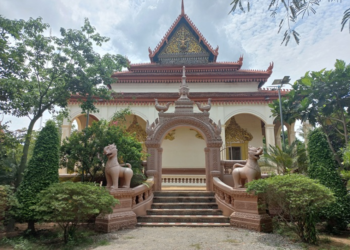
- Many Hindu temples and statues, relics of the Khmer era, attract tourists and serve as reminders of Cambodia’s Hindu past. In some cases, these are even incorporated within Buddhist worship spaces, reflecting the syncretized spiritual landscape.
Key Monuments and Legacy:
- Angkor Wat: Originally dedicated to Vishnu, later converted to Buddhist use, this temple preserves extensive Hindu iconography and cosmology in its art and layout.
- Other Sites: Numerous temples, such as those at Phnom Kulen and Preah Vihear, also feature Hindu deities, especially Shiva and Brahma.
Cultural Impact:
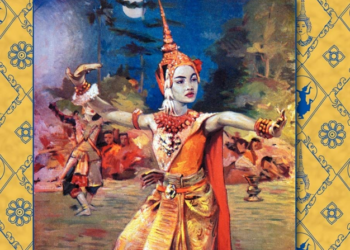
- Hindu epics and stories, especially the Ramayana, underlying Cambodian traditional drama and classical dance.
- Hindu rituals and ceremonies remain integral to royal and national festivals.
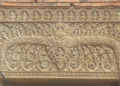
- Artistic expressions, including temple sculpture, reliefs, and architecture, celebrate Hindu deities and mythology within a characteristically Khmer style.
In summary, Hinduism profoundly shaped early Cambodian civilization, particularly during the Khmer Empire, leaving lasting artistic, religious, and societal legacies that continue to influence Cambodian culture and identity today, even as Buddhism remains dominant.