A new week of “Pictures of the Week” traces Cambodia as a meeting place of worlds: foreign flavors folded into local life, ancient deities watching over modern streets, and museum halls sharing space with busy kitchens. Through these seven images, we move between Siem Reap and Phnom Penh, from temple bas‑reliefs to plates of crisp rice and bitter melon, all tied together by memory, heritage, and quiet everyday moments. Together, they sketch a Cambodia that is at once rooted in Angkor and open to the wider world.
“Tunisian Brik with Egg & Tuna, Kilimandjaro, Siem Reap” shows a golden triangular pastry cracking open to reveal a soft egg yolk and savory tuna, echoing childhood evenings and the sound of crisp malsouka in a faraway kitchen. This brik on a Siem Reap table becomes more than a dish: it is a bridge between Tunisian home cooking and Cambodia’s temple town, proof that personal memory can travel and settle comfortably in new landscapes.
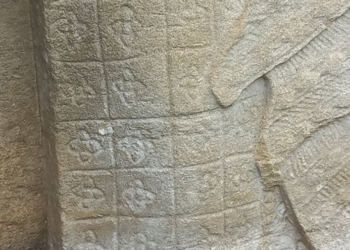
“Yama at the Terrace of the Leper King” takes us to the hidden walls of Angkor Thom, where the god of death sits in contemplative judgment among worn sandstone figures. In the narrow corridors of the Terrace of the Leper King, Yama’s calm gaze turns the ancient bas‑reliefs into a kind of quiet mirror, inviting visitors to slow down and measure their own journeys against centuries of Khmer history.
“Na Taing at Kraya Angkor, A Phnom Penh Classic” brings royal‑style crispy rice to a modern Phnom Penh restaurant, with purple‑and‑white crackers ready to soak up a rich coconut and peanut curry. This plate feels both refined and familiar, tying everyday comfort food back to Angkor‑era court cuisine and reminding us how old royal flavors still live on in today’s capital.
“Bayon-Style Prajnaparamita at Phnom Penh’s National Museum” stands in quiet grace, a 12th‑century sandstone goddess recently returned from the Denver Art Museum to her Cambodian home. Her soft curves and serene expression embody the refinement of Bayon art, while her restitution story speaks to a broader movement of bringing scattered Khmer masterpieces back to their own cultural landscape.
“Bitter Melon Salad in Phnom Penh” captures a plate where pale green slices of bitter melon meet lime, herbs, and savory toppings, turning an acquired taste into a refreshing urban dish. It is the kind of food that reveals Cambodia’s love of balance – bitter, sour, salty, and crisp – served in a city where markets, street stalls, and family kitchens constantly reinterpret traditional ingredients.
“Golden Apsara – René Piot’s Cambodian Dancer (1922)” introduces us to a French painter’s vision of a Cambodian dancer, bathed in gold and filtered through early 20th‑century eyes. The image reminds us that Angkorian dance and apsara imagery have long fascinated visitors, raising questions about how foreign artists have framed Cambodian beauty and how modern Cambodians reclaim and reinterpret those images today.
“Nom Cheung Chrouk – Cambodian Pork Trotter Cake with Teochew Roots” offers a dense, glossy slice of savory cake, where sticky textures and gentle spices speak to Teochew influence woven into Khmer home cooking. It is a dish that feels festive and intimate at once, a reminder that Cambodia’s culinary identity has been shaped by generations of Chinese migrants adapting their recipes to local tastes and ingredients.
Taken together, this week’s images trace a Cambodia that thrives at the crossroads: Tunisian brik beside Angkor bas‑reliefs, Teochew‑inspired cakes alongside royal‑style rice, a French painting of an apsara neighboring a repatriated Khmer goddess. Food and faith, personal nostalgia and national heritage all overlap, from Siem Reap’s restaurant tables to Phnom Penh’s museum galleries. In these quiet encounters, Cambodia appears not as a fixed postcard, but as a living, evolving tapestry of flavors, stories, and returning memories.