Wonders of Cambodia
  • Home
  • Culture
  • Cuisine
  • Tourism
  • Business
  • Life in Cambodia
  • 中文
  • ខ្មែរ
  • Français
  • Tiếng Việt
  • e-Books
No Result
View All Result
  • Home
  • Culture
  • Cuisine
  • Tourism
  • Business
  • Life in Cambodia
  • 中文
  • ខ្មែរ
  • Français
  • Tiếng Việt
  • e-Books
No Result
View All Result
Wonders of Cambodia
No Result
View All Result
Home Culture History

Who’s who: Kaundinya I, first king of Funan

Pascal Medeville by Pascal Medeville
February 12, 2026
in History, Who's who
Reading Time: 6 mins read
0

Kaundinya I (Khmer: កៅណ្ឌិន្យ), a.k.a. Preah Thong (Khmer: ព្រះថោង) is renowned as the legendary Indian Brahmin prince who co-founded the ancient kingdom of Funan—present-day southern Cambodia and parts of Vietnam—after marrying the Naga princess Soma, probably during 1st century CE. This union not only established Cambodia’s oldest known royal dynasty, but also marked a profound fusion between local traditions and Indian influences, laying the foundation for Khmer civilization and cultural identity.

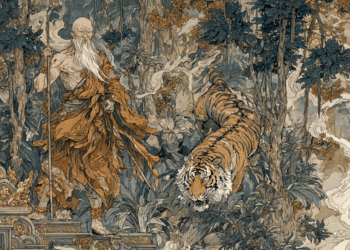
An interpretation of Kaundinya I by AI

Origin Myth and Historical Foundations

According to both historical records and poetic legend, Kaundinya I was an Indian Brahmin, often linked to the coastal region of ancient Kalinga (today’s Odisha) or to royal lineages from further north in India. Some sources describe him as a prince, others as a merchant, notably skilled in Hindu ritual and martial prowess. The story is primarily drawn from Chinese annals (like the Liangshu 《梁书》) and early Cambodian inscriptions.

Kaundinya’s fateful journey began when he and his companions sailed across the Bay of Bengal, likely seeking trade with Southeast Asia’s rich and diverse cultures. Their adventure soon turned dramatic: local ruler Soma, a Naga princess (naga: serpent deity), led a naval assault against Kaundinya’s ship, then commanded a people believed to be indigenous to the Mekong Delta region.

The Encounter and Marriage

After fierce confrontation, Kaundinya’s skills and wisdom impressed Soma. Rather than perpetuating violence, the encounter turned diplomatic and romantic. Soma, struck by Kaundinya’s courage and reputedly guided by a prophecy that foretold her marrying a foreigner, offered peace—and her hand in marriage. Their union became both a mythic and historical explanation for Funan’s foundation as a kingdom.

This marriage symbolized more than romance: it physically and spiritually united the powers of earth and water, native and foreign, in the Khmer imagination. Soma embodied land and fertility, while Kaundinya brought knowledge of law, governance, and new religious rituals, representing the early intrusion of Indian influence into Southeast Asia.

Establishment of the Funan Kingdom

Through their alliance, Kaundinya and Soma established Vyadhapura (near today’s Ba Phnom), the capital of Funan, around the 1st century CE, making it one of Southeast Asia’s earliest state formations. Their dynasty and descendants would rule Funan for centuries. It is notable that succession and royal legitimacy in Funan initially followed the female (matrilineal) line, with Soma’s lineage providing the right to rule.

The legend further explains why the naga (serpent) became such a powerful motif throughout Khmer art, temple iconography, and ritual. The “marriage of the naga” was later echoed in centuries of royal court ceremonies, especially at Angkor, reinforcing the mystic ancestry of later Khmer kings.

Syncretism and Cultural Fusion

Kaundinya’s marriage to Soma is often interpreted by historians as a symbol of the fusion between India’s civilizational innovations—including writing, political institutions, and Hindu-Buddhist thought—and indigenous local belief systems centered on animism and ancestral spirits. The kingdom of Funan thus emerged as a remarkably syncretic civilization, blending Sanskrit with ancient Khmer, importing Indian gods, myths, and art, and adapting these to the Southeast Asian context.

Many aspects of the Funanese court, religious rituals, and governance were directly inspired by Indian prototypes, yet always adapted to local realities. Over time, the dominance of naga symbolism and veneration of local deities persisted, woven into the later temples and state ideology of the Khmer empire.

Chinese Accounts and Archaeological Evidence

Much of what is concretely known about Kaundinya and Funan comes from Chinese envoys’ reports, notably the accounts by Kang Tai and Zhu Ying in the 3rd century CE. These chronicles describe Funan as a prosperous kingdom engaged in extensive maritime trade with India and China, producing rice, silk, gold, and other goods. The Chinese also recorded the legend of Funan’s creation, and traced subsequent royal lineages back to Kaundinya and Soma.

Archaeological discoveries—such as the ruins of Vyadhapura and associated artifacts—confirm the presence of early Indian cultural items, inscriptions in both Sanskrit and ancient Khmer, and funerary practices reminiscent of both Indic and Austroasiatic traditions. These findings reinforce the interpretation of Funan as a hybrid society, a crossroads of cultures.

The Legacy of Kaundinya I

Kaundinya’s story is not just an account of ancient conquest or exotic marriage, but a creation myth foundational to Cambodian self-understanding. Later Cambodian kings traced their legitimacy to this union, and the motif of the foreign hero marriage to a local princess appears repeatedly in Khmer folklore, palace rituals, and Buddhist literature.

The connection to the naga (serpent deities) not only provided mythical authority, but also ensured the political and religious order of the Khmer people was anchored in both land and water, as reflected by the grand temples, bas-reliefs, and waterworks of subsequent eras, particularly Angkor. The marriage ritual “Preah Thong and Neang Neak” is still referenced today in both Khmer weddings and state ceremonies.

Historiographical Interpretations

Modern scholars debate many details—whether Kaundinya’s origins were Brahminical or royal, how much Indian influence really shaped early Funanese society, and to what extent the myth serves to legitimize later Khmer kingdoms by evoking a divine and foreign ancestry. Some argue that the legend reflects local agency and creative adaptation as much as outside intervention.

Recent academic work emphasizes the importance of reading Funan’s story not only as “Indianization,” but as the mutual and dynamic interplay of Indian and Southeast Asian peoples, generating new forms of language, polity, and art.

Continuing Cultural Impact

Kaundinya I’s name and story live on in numerous forms: Khmer wedding rituals, national creation myths, temple reliefs showing naga-wrapped staircases, and the naming of prominent Cambodian institutions. His tale, intertwined with that of Soma, underlines the Cambodian ethos of cultural resilience, openness, and syncretism.

In summary, Kaundinya I stands as a foundational hero of Cambodian history—his legendary voyage, union with Soma, and the creation of Funan continue to inspire national pride, research, and reinterpretation, not only in Cambodia, but in the larger context of Southeast Asian and world history.

Don’t miss our upcoming articles!

We don’t spam!

Check your INBOX or SPAM folder to confirm your subscription.

Tags: ancient KhmerCambodian HistoryFunanIndian influence in CambodiaKaundinya INaga legendPreah ThongQueen Somaកៅណ្ឌិន្យព្រះថោង
ShareTweet
Previous Post

Picture of the day: Lily Pond Mosaic

Next Post

Geographical distribution of Buddhist sects across Asia

Pascal Medeville

Pascal Medeville

Author of the blog Wonders of Cambodia, I share my passion for Cambodia through stories, cultural insights, and personal reflections on the country. I'm also the founder of Simili Consulting, where we provide high-quality, professional translation services to international clients.

Related Posts

Red sandstone-style National Museum of Cambodia building with ornate Khmer roof, columns, and landscaped garden in front
Art

The Creation of the National Museum of Cambodia, A Colonial Vision Turned Cultural Treasure

June 17, 2026
Grassy inner yard of Côn Đảo Prison on Côn Sơn Island, Vietnam, bordered by a stone wall with a lone guard tower and forested mountains under a cloudy sky
History

Khmer Prisoners of Poulo Condore – Cambodia’s Forgotten Generation in a Vietnamese Island Prison

June 14, 2026
Black and white illustration of a classroom at the École cambodgienne in Paris, showing Cambodian male students in traditional garments standing and sitting at wooden desks while two European teachers supervise the lesson from the front and back of the room.
History

From École Cambodgienne to Colonial School: How Paris Tried to “Educate” Empire

June 13, 2026
Black and white photo of monk Khieu Chum speaking at a table with three journalists in a simple indoor setting
History

Who’s Who: Venerable Khieu Chum, the Monk Who Helped Topple a King

June 12, 2026
Black‑and‑white studio portrait of Albert Sarraut in 1914, shown from the chest up in a dark suit, white shirt and patterned tie, facing the camera against a plain, dark background.
History

Who’s Who: Albert Sarraut, The Governor-General Who Wanted to “Modernize” Indochina

June 8, 2026
Single-story red building with Khmer-style tiled roof and verandah, formerly George Groslier’s residence and now RUFA’s dean office, surrounded by potted plants, trees and parked cars on a sunny day
Art

George Groslier and the Cambodian School of Arts: How a Colonial Vision Tried to “Save” Khmer Art

June 7, 2026
Next Post
Geographical distribution of Buddhist sects across Asia

Geographical distribution of Buddhist sects across Asia

  • Trending
  • Comments
  • Latest
The French Protectorate of Cambodia (1863–1953): An Overview

The French Protectorate of Cambodia (1863–1953): An Overview

July 13, 2025
The Franco-Siamese Treaty of 23 March 1907: Borders, Politics, and the Return of Angkor

The Franco-Siamese Treaty of 23 March 1907: Borders, Politics, and the Return of Angkor

February 11, 2026
Cambodian-Vietnamese War (1978-1989)

Cambodian-Vietnamese War (1978-1989)

July 13, 2025
Working in Cambodia in 2026: Visas, Work Permits and Everyday Reality for Foreigners

Working in Cambodia in 2026: Visas, Work Permits and Everyday Reality for Foreigners

February 9, 2026
Kampot Province

Takeo Province: A Cradle of Cambodian History and Culture

3
Kratié Town on the Mekong: Colonial Echoes, River Life, and Irrawaddy Dolphins

Kratié Town on the Mekong: Colonial Echoes, River Life, and Irrawaddy Dolphins

3
Banteay Meanchey Province: A Gateway to Cambodia’s Rich Heritage

Banteay Meanchey Province: A Gateway to Cambodia’s Rich Heritage

2
Stung Treng Province: The Gateway to Cambodia’s Northern Wilderness

Stung Treng Province: The Gateway to Cambodia’s Northern Wilderness

2
Illustrated scene of a hare calmly sitting on the head of a large crocodile as it floats along a brown river, with traditional stilt houses and palm trees in rural Cambodia in the background

Tales of the hare, part 3 – The Hare and the Crocodile, A Khmer Trickster Tale

June 19, 2026
Bowl of nom banhchok Kampot rice noodles topped with dried shrimp, chopped spring rolls, and ground peanuts, served alongside a plate of fresh herbs, bean sprouts, cucumber, and dipping sauce on a pale green tablecloth.

Picture of the day: Nom Banhchok Kampot, A Refreshing Cambodian Noodle Classic

June 19, 2026
柬埔寨对中国公民实施为期四个月(6.15-10.15)的免签试点,单次可停留14天。了解新政详情、智能通关流程及其对中柬旅游和经济合作的深远影响。

柬埔寨对华免签新政落地:简化通关促旅游,目标吸引60万中国游客

June 18, 2026
Stone naga friezes and weathered carvings at Neak Poan temple in Angkor, framed by laterite steps, potted plants, and the green edge of the surrounding baray.

Picture of the day: Neak Poan’s Entwined Serpents – A Quiet Sanctuary in Angkor

June 18, 2026

Recent News

Illustrated scene of a hare calmly sitting on the head of a large crocodile as it floats along a brown river, with traditional stilt houses and palm trees in rural Cambodia in the background

Tales of the hare, part 3 – The Hare and the Crocodile, A Khmer Trickster Tale

June 19, 2026
Bowl of nom banhchok Kampot rice noodles topped with dried shrimp, chopped spring rolls, and ground peanuts, served alongside a plate of fresh herbs, bean sprouts, cucumber, and dipping sauce on a pale green tablecloth.

Picture of the day: Nom Banhchok Kampot, A Refreshing Cambodian Noodle Classic

June 19, 2026
柬埔寨对中国公民实施为期四个月(6.15-10.15)的免签试点,单次可停留14天。了解新政详情、智能通关流程及其对中柬旅游和经济合作的深远影响。

柬埔寨对华免签新政落地:简化通关促旅游,目标吸引60万中国游客

June 18, 2026
Stone naga friezes and weathered carvings at Neak Poan temple in Angkor, framed by laterite steps, potted plants, and the green edge of the surrounding baray.

Picture of the day: Neak Poan’s Entwined Serpents – A Quiet Sanctuary in Angkor

June 18, 2026
Wonders of Cambodia

Exploring Culture, Nature, and Spirit in the Land of Wonder.

Follow Us

Browse by Category

  • Architecture
  • Architecture
  • Art
  • Books
  • Business
  • Business
  • Cinema
  • Costume
  • Costume
  • Cuisine
  • Culture
  • Defense
  • Du lịch
  • e-Books
  • Education
  • Expat life
  • Fauna
  • Festival
  • Flora
  • Food providers
  • Français
  • Geography
  • Handicraft
  • Health
  • Histoire
  • History
  • Hotels
  • Khmer Stories
  • Khmer stories
  • Knowledge
  • Language
  • Last posts
  • Lịch sử
  • Life in Cambodia
  • Literature
  • Music
  • Pictures
  • Politics
  • Population
  • Press review
  • Professional services
  • Proverbs
  • Reference
  • Reference
  • Religion
  • Restaurants
  • Textile
  • Tiếng Việt
  • Tourism
  • Tourisme
  • Transport
  • Uncategorized
  • Video
  • Vidéo
  • Vie quotidienne
  • Who's who
  • ខ្មែរ
  • ទេសចរណ៍៖
  • បគ្គលល្បី
  • ប្រវត្តិសាស្ត្រោ
  • 中文
  • 书籍
  • 历史
  • 旅游
  • 生活

Recent News

Illustrated scene of a hare calmly sitting on the head of a large crocodile as it floats along a brown river, with traditional stilt houses and palm trees in rural Cambodia in the background

Tales of the hare, part 3 – The Hare and the Crocodile, A Khmer Trickster Tale

June 19, 2026
Bowl of nom banhchok Kampot rice noodles topped with dried shrimp, chopped spring rolls, and ground peanuts, served alongside a plate of fresh herbs, bean sprouts, cucumber, and dipping sauce on a pale green tablecloth.

Picture of the day: Nom Banhchok Kampot, A Refreshing Cambodian Noodle Classic

June 19, 2026
  • About Us
  • Advertise
  • Privacy & Policy
  • Contact Us

© 2025 - Made with 💫 by TechFlow.

No Result
View All Result
  • Home
  • Culture
  • Cuisine
  • Tourism
  • Business
  • Life in Cambodia
  • 中文
  • ខ្មែរ
  • Français
  • Tiếng Việt
  • e-Books

© 2025 - Made with 💫 by TechFlow.