Introduction: Cambodia’s Dramatic Mountain Frontier
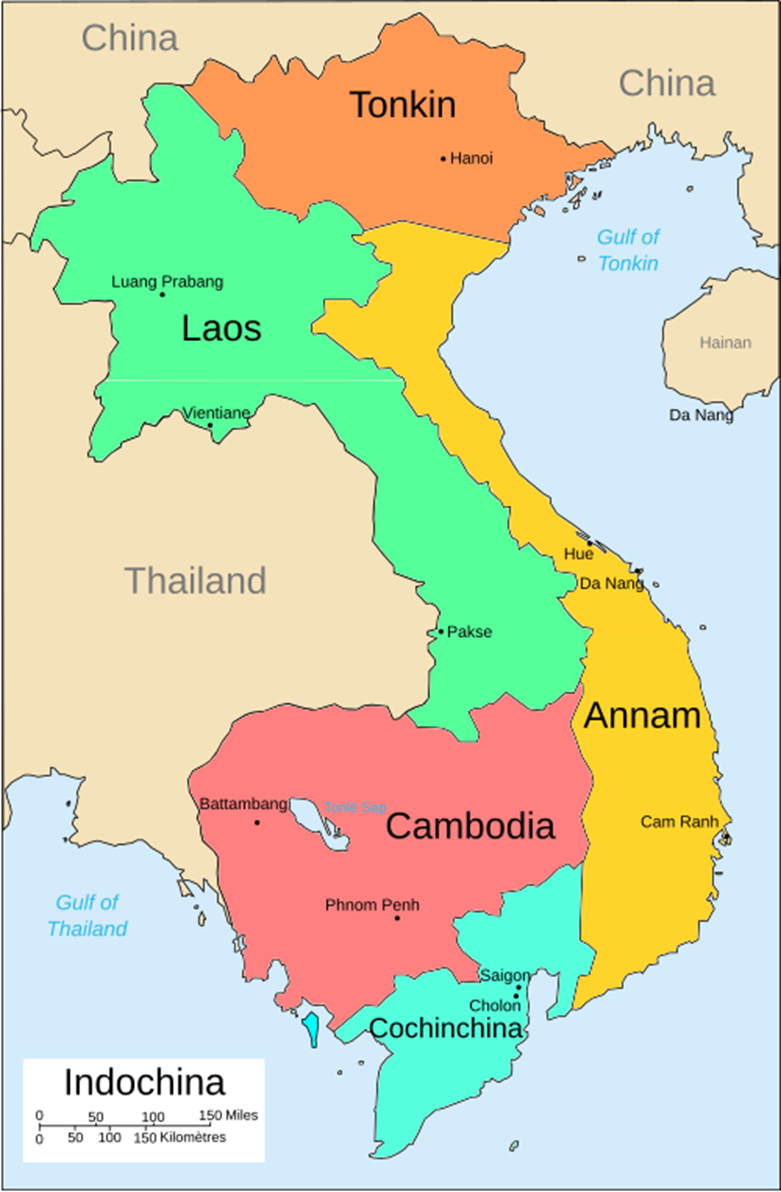
The Dangrek Mountains (Khmer: ជួរភ្នំដងរែក) form a natural barrier between Cambodia and Thailand, rising abruptly from Cambodia’s northern plains as a dramatic 525-meter escarpment. This forested range stretches over 320 kilometers from the Mekong River westward, its peaks averaging 450 to 600 meters in elevation. Despite their relatively modest height compared to Southeast Asia’s towering cordilleras, the Dangrek range commands extraordinary historical, cultural, and spiritual significance. Perched atop these mountains sits Preah Vihear Temple, one of the world’s most spectacularly positioned temples and a UNESCO World Heritage Site. The mountains also echo the weight of Cambodia’s tragic modern history—Anlong Veng, nestled in these very hills, served as the final stronghold of the Khmer Rouge regime.

For visitors and cultural researchers alike, the Dangrek Mountains represent far more than geological boundaries. They embody centuries of Khmer imperial ambition, surviving spiritual devotion, and the region’s complex geopolitical tensions. Understanding these mountains means understanding a critical chapter of Southeast Asian history and heritage.
Geography and Geology: Nature’s Border Wall
The Dangrek Mountains present one of Southeast Asia’s most distinctive geographical features: an asymmetrical escarpment. The range slopes gradually northward toward Thailand’s Mun River with gentle gradients, but plummets dramatically southward to the Cambodian plain below—a 525-meter drop that creates one of the region’s most visually striking natural barriers.
Geologically, the mountains consist primarily of massive sandstone interspersed with slate and silt deposits. The highest peak, Phu Khi Suk, reaches only 753 meters at the eastern extremity near the Cambodia-Thailand-Laos tripoint border intersection. Other notable summits include Phu Khok Yai (693m), Phu Chep Thong (692m), and Phu Tangok (689m), names that reflect both Thai and Khmer linguistic heritage.
The watershed line along the Dangrek escarpment nominally marks the international boundary, though the actual political border has been subject to extensive historical disputes—most notably the landmark 1962 International Court of Justice ruling regarding Preah Vihear Temple’s ownership.

Forest Ecosystems and Environmental Challenges
The Dangrek range is predominantly clothed in dry evergreen forest, mixed dipterocarp forest, and deciduous dipterocarp woodland. Tree species including Pterocarpus macrocarpus, Shorea siamensis, and Xylia xylocarpa var. kerrii form the dominant canopy, creating landscapes of considerable ecological value. The region supports populations of wild hog, deer, barking deer, rabbits, squirrels, gibbons, and civets, though habitat loss has significantly diminished wildlife populations.
However, these forests face severe contemporary pressures. Illegal logging of phayung (Siamese rosewood), highly valued in Thai and Chinese furniture industries, remains endemic despite official protections. Additionally, forest fires sweep through the drier zones seasonally, and the area remains contaminated with landmines from multiple conflict periods—including the K-5 Belt, a defensive line laid by Cambodian authorities during the 1980s to prevent Khmer Rouge infiltration from Thailand.
Preah Vihear: The Temple on the Clouds
Preah Vihear, literally “the vihāra of the gods,” ranks among Cambodia’s most magnificent architectural achievements and one of the world’s most dramatically positioned temples. Constructed atop a sheer cliff 525 meters above the Cambodian plains, the temple complex stretches 800 meters along a unique north-south axis—an unusual orientation among Khmer temples that were typically built with east-facing sanctuaries.

Construction began in the 9th century, with the earliest surviving structures dating from the Koh Ker period (early 10th century). However, the temple reached its architectural apex during the 11th and 12th centuries under Kings Suryavarman I and Suryavarman II, when the majority of standing structures were completed. The temple was originally dedicated to the Hindu god Shiva in his manifestations as the mountain deities Sikharesvara and Bhadresvara, though Buddhist elements were subsequently incorporated after the region’s religious transition.
The temple’s approach comprises five gopuras (gateway towers), each marking a change in elevation as visitors ascend toward the sanctuary. The climb itself symbolizes the spiritual journey toward the sacred realm. The fourth gopura features a masterpiece of Khmer stone carving: a detailed depiction of the Churning of the Sea of Milk, one of Hinduism’s most profound cosmological narratives. The complex concludes with the sanctuary perched on the clifftop’s southern edge, positioned 625 meters above sea level, commanding panoramic views of the Cambodian plains stretching endlessly northward.
The International Court of Justice Dispute (1962)
Preah Vihear became the focal point of Cambodia-Thai geopolitical tensions when borders were demarcated in the early 20th century. While the 1904 Franco-Siamese treaty stipulated that the border should follow the watershed line of the Dangrek range, a 1908 French map showed the temple on the Cambodian side. Thailand later occupied the site militarily, setting the stage for a decades-long dispute.
In 1962, the International Court of Justice ruled 9-3 that the temple belonged to Cambodia, basing its decision on Thailand’s long acquiescence to the 1908 map. Despite Thai protests and mass demonstrations, Cambodia took formal possession in 1963. However, disputes reignited after UNESCO inscription in 2008, leading to further military skirmishes in 2011 and most recently during the 2025 Cambodia-Thailand border conflict, when the temple reportedly sustained substantial damage from Thai military actions.
The temple lies 140 kilometers from Angkor Wat and 418 kilometers from Phnom Penh. Access is now exclusively from the Cambodian side, via a road completed in 2003. Admission costs approximately $10 USD; local transport options include motorbikes ($10) or pickup trucks ($25) for the steep ascent.
The climb remains demanding, requiring physical fitness to navigate the 163-stone-slab steps and steep gradients. The reward—unobstructed vistas across an endless green plain, combined with intimate proximity to masterwork Khmer architecture—justifies the effort for travelers seeking authentic Southeast Asian cultural experiences.
Anlong Veng: Cambodia’s Tragic Modern History
While Preah Vihear represents the ancient glory of the Khmer Empire, Anlong Veng symbolizes Cambodia’s devastating 20th-century trauma. Located 125 kilometers north of Siem Reap in the Dangrek Mountains’ forested foothills, Anlong Veng served as the final stronghold of the Khmer Rouge regime.
After Vietnam’s 1989 military withdrawal from Cambodia, the Khmer Rouge regrouped in the Dangrek Mountains, establishing Anlong Veng as their primary military and administrative center. The town remained an active Khmer Rouge stronghold throughout the 1990s, containing one of the war’s earliest “killing fields” where thousands of suspected defectors were executed between 1993 and 1997 under Ta Mok’s command.
In 1997, General Ta Mok arrested Pol Pot for ordering the execution of a top-ranking leader. Following a brief show trial, Pol Pot died under house arrest on April 15, 1998, and was subsequently cremated near Anlong Veng. His death effectively collapsed the Khmer Rouge movement; the final guerrilla forces surrendered to the Cambodian government in 1999, ending three decades of continuous conflict.
Historical Sites and Dark Tourism
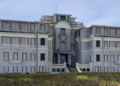
Today, Anlong Veng functions as a sober reminder of Cambodia’s past and a site of pilgrimage for those understanding the regime’s final chapter. Preserved historical sites include the ruins of Pol Pot’s trial building, his residence and cremation site, Ta Mok’s command compound, and the residences of other senior Khmer Rouge leadership. The Khmer Rouge Documentation Center (DCCAM) has established protective markers and educational signage at fourteen major historical sites comprising over 1,200 hectares.
Visiting Anlong Veng offers profound educational experiences for those interested in genocide studies, Cold War Southeast Asia, and reconciliation processes. Many tours include opportunities to meet former Khmer Rouge soldiers, now reintegrated into civilian society, whose testimonies provide irreplaceable historical context.
Visiting the Dangrek Mountains: Practical Considerations
The dry season (November to March) offers optimal conditions for mountain travel, with reduced landslide risk and better road access. The rainy season (May to October) renders some routes impassable and increases health risks from waterborne illnesses.
A comprehensive Dangrek Mountains itinerary typically combines Preah Vihear Temple with Anlong Veng, often integrated with visits to other northern temples including Koh Ker and Beng Mealea. Most travelers base themselves in Siem Reap (140 kilometers south) and undertake day trips or overnight tours.
While main routes are now secure, landmine contamination remains a concern in certain forest areas. Visitors should remain on marked trails and avoid off-path exploration. The steep ascent to Preah Vihear requires moderate physical fitness; elderly visitors or those with mobility limitations should assess their capacity beforehand.
Conclusion: Sacred Mountains, Contested Borders
The Dangrek Mountains encapsulate Cambodia’s essential narrative: ancient imperial magnificence, natural beauty, tragic modern history, and ongoing resilience. Preah Vihear stands as a testament to Khmer architectural genius and spiritual devotion, while Anlong Veng memorializes both Cambodia’s suffering and its hard-won peace. For travelers seeking to understand Cambodia beyond Angkor Wat, the Dangrek Mountains provide irreplaceable cultural, historical, and spiritual encounters—a journey that transforms understanding of Southeast Asia’s complex past and present.