Son Ngoc Thanh is one of those Cambodian names everyone cites and few really explain. Nationalist hero, Japanese collaborator, republican dreamer, Khmer Serei leader, twice prime minister for painfully short spells… he appears at every turning point, then vanishes into exile or prison. This article offers a clear, reader‑friendly tour through his long, elusive political life.

Introduction: Why Son Ngoc Thanh Matters
Once you venture beyond the classic Angkor‑to‑Khmer‑Rouge storyline, Son Ngoc Thanh (Vietnamese: Sơn Ngọc Thành; Khmer: សឺង ង៉ុកថាញ់) quickly appears as one of the most puzzling actors in Cambodian history. He edited a nationalist newspaper in the 1930s, briefly led a Japanese‑backed government in 1945, organized resistance in the forests, and came back as a republican prime minister in the early 1970s.
This article is for readers who want to understand who Son Ngoc Thanh really was, without drowning in jargon or Cold War acronyms. You will discover his trajectory from Khmer Krom intellectual to guerrilla leader, his complicated relationship with Sihanouk and Lon Nol, and the ideas that drove him across four decades of upheaval.
By the end, you should be able to place Son Ngoc Thanh firmly in your personal “who’s who” of modern Cambodia: not a secondary character, but a key thread tying together colonial resistance, republican experiments, and the regional conflicts of the Vietnam War era.
Early Life: A Khmer Krom Intellectual in a Colonial World
From Cochinchina to Phnom Penh
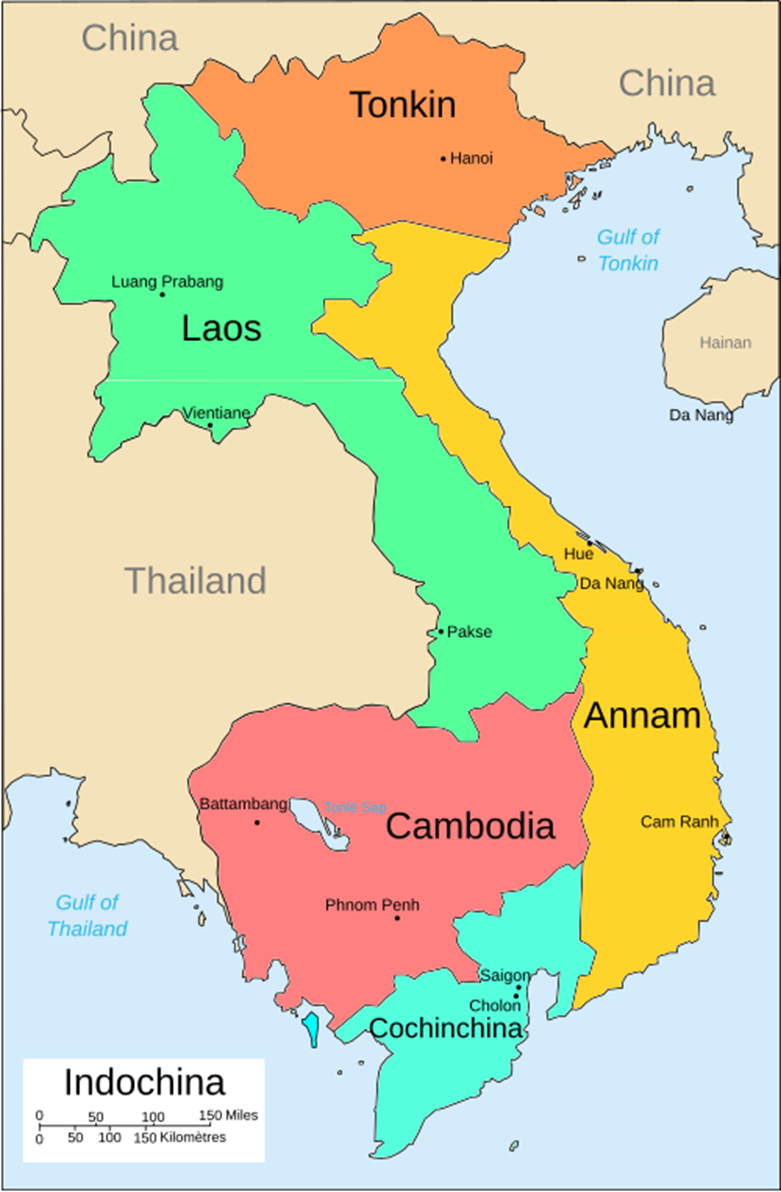
Son Ngoc Thanh was born in what is today southern Vietnam, among the Khmer Krom communities living under Vietnamese and French administration. That experience of being both Khmer and politically marginal would shape his sense of grievance and his enduring focus on national dignity.
He received a French education and studied law, which gave him the language and tools of the colonial system, as well as exposure to republican ideas. Returning to Cambodia, he worked at the Buddhist Institute in Phnom Penh — an institution that was quietly becoming a hub for Khmer intellectual life. For a young nationalist, this was the perfect place to combine culture, language, and politics.
Nagara Vatta and the Rise of Print Nationalism
In the mid‑1930s, together with Pach Chhoeun and other like‑minded figures, Son Ngoc Thanh helped launch Nagara Vatta, a Khmer‑language newspaper. It promoted the use of Khmer, discussed social and political issues, and pushed against the limits of French colonial rule.
In a context where French and Vietnamese dominated administration and the printed word, a Khmer‑language paper was already a statement. Thanh’s evolution from librarian to editor marks his first transformation: from quiet intellectual to public nationalist, armed not with a rifle but with a printing press and a fondness for pointed editorials.
World War II: From Exile to Brief Prime Minister
Japan, Exile, and the 1945 “Independence”
The Second World War cracked open the French colonial empire, and Cambodian nationalists, including Son Ngoc Thanh, tried to exploit those cracks. His growing activism, and his contacts with Japanese circles, eventually pushed the French to remove him from the scene; he spent time in Japan during the war years.
In March 1945, under Japanese pressure, King Norodom Sihanouk proclaimed Cambodia’s independence. When Thanh returned, he joined the Japanese‑backed government and became foreign minister. For him, this was a chance to move from nationalist commentator to a central role in what looked, at least briefly, like a new independent state.
After Japan’s surrender in August 1945, the entire structure propping up the independence experiment collapsed. In the ensuing confusion, Son Ngoc Thanh became prime minister of Cambodia. It was his first time heading a government, and it lasted only a few weeks before Allied forces restored French authority.
By October 1945, Allied troops had entered Phnom Penh, reasserted French control, and arrested Thanh. He was deported and effectively neutralized, while Sihanouk returned to the center of the political stage. Yet the memory of a nationalist prime minister who had refused to bow to the French made Son Ngoc Thanh a symbolic reference for later opposition movements.
Guerrilla Years: From Issarak Milieus to Khmer Serei
Fragmented Resistance after the War
In the late 1940s and early 1950s, various anti‑French groups operated under the broad label of “free Khmer” resistance, often referred to as Issarak. They were an eclectic collection: left‑leaning forces linked to the Viet Minh, nationalist militias, and local warlords with more guns than ideology.
Son Ngoc Thanh emerged as one of the nationalist poles around which some resistance leaders gathered. He tried to unify these currents under his authority, with mixed success; the resistance world remained fragmented, and personal, regional and ideological rivalries were never far below the surface.
Once Sihanouk had negotiated independence in 1953, many former resistance leaders reconciled with the monarchy and entered the new political game. Thanh refused. For him, Sihanouk’s “royalist” nationalism was both too personal and insufficiently republican.
From the early 1950s onward, Thanh and his followers regrouped as Khmer Serei (“Free Khmer”), operating from remote areas and, increasingly, from neighboring countries such as Thailand and South Vietnam. This movement developed into a long‑term, anti‑monarchist guerrilla and propaganda force, broadcasting on radio and occasionally making headlines with defections or border incidents.
Seen from Phnom Penh, Thanh became the archetype of the stubborn outsider: the man in the forest whose fighters were never strong enough to topple the regime, but always present enough to irritate it and attract the interest of foreign intelligence services.
Republican Return: Son Ngoc Thanh under Lon Nol
The overthrow of Sihanouk in 1970 and the proclamation of the Khmer Republic were a turning point. On paper, this was the world Son Ngoc Thanh had argued for: a republican, anti‑communist regime distancing itself from the monarchy and aligning with Western and regional allies.
He returned to Phnom Penh and became an adviser to General Lon Nol, the new strongman. Old grudges against Sihanouk were suddenly irrelevant; the challenge now was to build a viable republican state while fighting growing communist insurgencies and managing heavy dependence on American support.
In 1972, amid political turmoil and Lon Nol’s health problems, Son Ngoc Thanh was appointed prime minister of the Khmer Republic. It was his second time in the job, and history proved even less generous than in 1945.
Thanh never built a mass party or strong institutional base in Phnom Penh. He lacked both a firm grip on the army and a broad constituency beyond his old networks. Within a few months, he was pushed out of office and sidelined. It was a familiar pattern: called in during a crisis, given too little time and too few tools, then discarded when he became inconvenient.
After leaving Phnom Penh again, he settled in South Vietnam. When that state collapsed in 1975, he was arrested by the new communist authorities and eventually died in detention in 1977 — a quiet, almost footnote‑like end to a career that had intersected with nearly every major turning point in mid‑20th‑century Cambodian politics.
Ideas and Reputation: How to Read Son Ngoc Thanh
Nationalist, Republican, Anti‑Communist
If we try to distill Son Ngoc Thanh’s political identity, three elements stand out. First, he was a committed Khmer nationalist, shaped by his Khmer Krom upbringing and intensely sensitive to issues of language, culture, and territorial dignity.
Second, he was an unapologetic republican and critic of the Cambodian monarchy. From his refusal to align with Sihanouk in the 1950s to his embrace of the Khmer Republic in 1970, he consistently pushed for a vision of the nation that did not revolve around a royal figure.
Third, he was deeply anti‑communist. That positioned him as a potential ally for Thailand, South Vietnam, and the United States during the Cold War, especially as they searched for non‑communist Cambodian figures who were both credible and willing to cooperate. The relationship was never perfectly smooth, but it gave Thanh resources and a regional role that went beyond Cambodia’s borders.
Son Ngoc Thanh’s legacy remains contested. Some remember him as a principled nationalist who never sold out to the monarchy or to communism. Others see a man whose alliances with the Japanese and later with Western‑backed networks compromised his credibility. Still others note that, for all his determination, he never built the sort of broad, rooted political movement that could sustain his ideas over time.
Yet if we step back from this hero‑versus‑villain debate, Thanh becomes a revealing prism. Through him, we see how Cambodian nationalism was pulled between empire, monarchy, republicanism, and the Cold War. He embodies the road not taken: a non‑royalist, non‑communist project that never fully came into its own, but left its footprints across several decades of conflict.
Why Son Ngoc Thanh Belongs in Your Cambodian “Who’s Who”
Knowing who Son Ngoc Thanh was helps make sense of several recurring puzzles in Cambodian history. He explains why nationalism in Cambodia did not naturally and unanimously flow into Sihanouk’s royalist narrative. He shows that, long before the Khmer Rouge, there were already radical alternatives to both colonial rule and monarchy.
If you work with Cambodian history, write about the region, or simply want to understand how small countries get pulled apart by big geopolitical currents, Thanh is a useful companion. His story connects the Buddhist Institute and Nagara Vatta to forest guerrillas, border politics, and the republican experiments of the early 1970s.
He also reminds us that historical memory is selective. Depending on the period, he has been celebrated, vilified, or discreetly forgotten. Putting him back into the picture makes modern Cambodian history more complex — but also more accurate and, frankly, more interesting.
From Khmer Krom intellectual to guerrilla leader, from Japanese‑backed minister to twice‑brief prime minister, Son Ngoc Thanh’s trajectory runs through almost every layer of Cambodia’s 20th‑century drama. Understanding his life clarifies how nationalism, monarchy, republicanism, and Cold War pressures collided and overlapped in Cambodia. Add him to your “who’s who,” and the country’s modern history suddenly acquires at least one extra dimension — and a decidedly stubborn protagonist.
Pascal Médeville is a writer and digital publisher based in Cambodia. He focuses on Southeast Asian history, language and culture, with a particular interest in how individual lives intersect with broader political shifts. On Wonders of Cambodia, he often writes long‑form portraits of historical figures like Norodom Sihanouk and Lon Nol, and now Son Ngoc Thanh, to make complex Cambodian stories accessible to a wider audience.
Wonders of Cambodia – related articles you might like:
- “Norodom Sihanouk: the Father of the Independence of Cambodia” – A full portrait of the king‑turned‑politician whose life mirrored Cambodia’s journey from protectorate to post‑Khmer Rouge monarchy.
- “The Royal Crusade for Independence: How Norodom Sihanouk Outfoxed Colonial Power with Charisma and Strategy” – A closer look at Sihanouk’s diplomatic campaign that secured independence in 1953.
- “Who’s Who: Lon Nol, From Soldier to ‘Marshal of the Republic’” – The rise and fall of the general who overthrew Sihanouk and presided over the Khmer Republic.
- “The 1970 Cambodian Coup d’État: The Fall of Sihanouk and the Descent into War” – How the coup that brought Lon Nol to power reshaped Cambodia’s place in the Vietnam War and set the stage for civil conflict.